Monday, December 27, 2021

Combining Half-Orcs and Half-Elves Into One Category... The Blooded

When it comes to fantasy species in RPGs there is never more debate than you find around the so-called "half" options. Whether it's arguing about which species can have children with which, what powers their offspring inherit, or stating that you need X amount of a bloodline in order to qualify for these species at all, these arguments often get pretty far into the weeds.

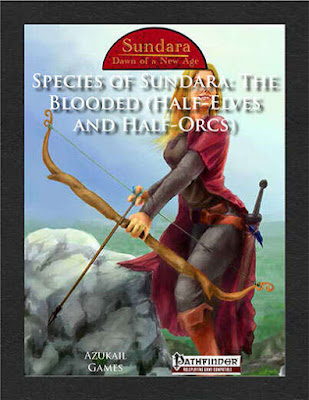
It was with these discussions in mind that I recently created the Blooded for my Sundara setting... a category of species that I hope gives more players more freedom, and expands options in a way that everyone can enjoy.
Because more options leads to better games all-around!

Before we get too deep into the latest release, don't forget to sign up for my weekly newsletter. If you've got a little extra dosh, and you want to help me keep the content coming, then consider becoming a Patreon patron, too!

Lastly, if you want to make sure you're following all of my followables, make sure you stop by my Linktree, too!

What Are The Blooded?


I've been putting out more and more setting expansions with the Species of Sundara splat books for Pathfinder, and so far I've covered elves, dwarves, orcs, and halflings (and if you prefer the DND 5E versions you can get them here at elves, dwarves, orcs, or halflings). And in those books I've made it clear when individuals are capable of having children with other species, and when they aren't. Elves, for example, are capable of having children with any other sentient species... some partners may take more work (and pose more risk) but it is possible. While orcs are not as capable as elves, the fact that they can have so many children of mixed heritage is one of the reasons so many people believe that orcs were created by the elves (or, in some tales, that orcs were elves who had transformed themselves far enough away from their base species that they became something entirely new).

This, of course, led to the "half" question that has led to so many debates around so many tables. So I thought I would change things up with the creation of the Blooded as a category of creature.
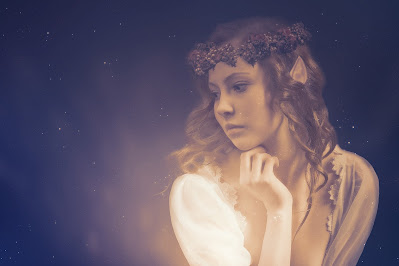
My great-grandmother always said we had elven blood...

First and foremost, this eliminates the "half" idea that one parent was one species and the other parent was a different species. The status of "Blooded" simply means that whatever your heritage, it is dominant enough that particular traits manifested in you, conferring the species template. So someone may have had elven ancestors on their grandfather's side, but it's not until their birth that those traits manifested. Alternatively, someone might have orcish blood on their mother's side, but it doesn't become dominant until they've had children.

In addition to the Blooded not necessarily being the specific, first-generation offspring of an elf or an orc with another species, this species option makes it clear that anyone capable of having children with elves and orcs may fit under this category. This means you may have Blooded who are small-sized, combining halflings and elves. You may have an orcish child of elven blood. And so on, and so forth, according to the limitations put out in the respective splats. Other than those rules, and the fact that you only gain elven or orc blood as the dominant part of your Blooded heritage, the sky's the limit!

Lastly, there's been this pervasive idea in RPGs that so-called half-elves and half-orcs are always outsiders or outcasts in some way, shape, or form. Half-elves are stifled by their elven culture, and fetishized or misunderstood by humans. Half-orcs are sneered at by "true" orcs, and feared by humans. We've seen this time and time again, and I kicked this idea right to the curb.

Each of the five cultures laid out for elves and orcs has specific names and social niches for the Blooded within their ranks. I expanded on them, listing alternative species traits and abilities to represent their unique heritages, and talked a bit about the sort of treatment they receive, and the expectations (or lack thereof) that are placed on them. Because the Blooded aren't some new and strange phenomenon, so the cultures of Sundara have grown and changed over time to accommodate them.

And because I seem to have forgotten to put the link in here in the first place, check out The Blooded for both Pathfinder Classic, as well as Dungeons and Dragons 5E!

Don't Forget To Check Out The Rest of Sundara As Well!


I'm taking a short break from Sundara for the holidays, but I'll be coming back to add more to the setting once I'm back home and stuck in for more heavy lifting.  But while you wait, consider checking out the stuff that's already come out to bring yourself up to date while you get ready for new cities, new species, items, and more!

- Ironfire: The City of Steel (Pathfinder and 5E): Built around the Dragon Forge, Ironfire is where the secret to dragon steel was first cracked. The center of the mercenary trade in the region, as well as boasting some of the finest schools for teaching practical sciences, Ironfire is a place where discovery and danger walk hand in hand!

- Moüd: The City of Bones (Pathfinder and 5E): An ancient center of trade and magic, Moüd was lost to a cataclysm, and then buried in myth. Reclaimed by the necromantic arts of the Silver Wraiths guild, this city has once again become a place teeming with life. Despite the burgeoning population, though, it is the continued presence of the undead that helps keep the city running, ensuring that Moüd is not swallowed up once more.

- Silkgift: The City of Sails (Pathfinder and 5E): Built on the cottage industry of Archer cloth (an extremely durable material used for sails, windmills, etc.), Silkgift is a place that prizes invention and discovery. From gravity batteries that store the potential of the wind, to unique irrigation systems, to aether weapons, the city positively churns out discoveries... and then there's the canal they cut through the mountains that makes them a major center of trade across the region.

- Hoardreach: The City of Wyrms (Pathfinder and 5E): A center of power across an entire region, Hoardreach is ruled over by a Cooperation of five different dragons. A place for refugees and outcasts of all sorts, Hoardreach boasts some of the most unusual citizens and creations from across Sundara. Infamous for their sky ships, which require the cast-off scales and unique arcane sciences of the Dragon Works to take to the air, one never knows just what they'll find in this city built atop a mountain.

- Archbliss: The City of The Sorcerers (Pathfinder and 5E): A floating city in the sky, Archbliss has been a refuge for sorcerers for thousands of years. It's only in relatively recent years that the city has allowed those from the ground below who lack the power of a bloodline to join them in the clouds. However, while there are certainly amazing wonders to behold, there is a darkness in Archbliss. Something rotting away at its heart that could, if not healed, bring the city crashing to the ground once more.

Gods of Sundara (available for Pathfinder and DND 5E): In a world with no alignment, and where the gods are often genuinely mysterious forces that are far too large for mortals to truly comprehend, the divine feels genuinely strange and unknown... something that really does have to be taken on faith. This supplement provides a sample pantheon for Sundara, but also provides instructions on how to easily make your own gods in a world where you can't cast a spell and tell whether someone is good or evil.

Like, Follow, and Stay in Touch!


That's all for this week's Moon Pope Monday. To stay on top of all my content and releases, make sure you subscribe to my newsletter at the bottom of the page!

Again, for more of my work, check out my Vocal archive, and stop by the YouTube channel Dungeon Keeper Radio. Or if you'd prefer to read some of my books, like my cat noir thriller Marked Territory, its sequel Painted Cats, my sword and sorcery novel Crier's Knife or my latest short story collection The Rejects, then head over to My Amazon Author Page!

To stay on top of all my latest releases, follow me on FacebookTumblrTwitter, and now Pinterest as well! To support my work, consider Buying Me a Ko-Fi, or heading to The Literary Mercenary's Patreon page to become a regular, monthly patron. That one helps ensure you get more Improved Initiative, and it means you'll get my regular, monthly giveaways as a bonus!

Monday, December 20, 2021

Games Workshop Should Have Gotten on The Community Use Bandwagon By Now

Folks who can read between the lines know that over the past few years I've become something of a Warhammer 40K fan. While I don't play the minis game, I've been enjoying the lore and learning about the setting, and I did recently join a Black Crusade campaign. Part of what allowed me to really dig into the world and start finding enjoyment in it was the vibrant community of fan creators. From lore videos on YouTube, to animations depicting important events, it was an introduction that let me move at my own pace, and to find elements that really appealed to me. I even made a few contributions of my own, such as my character conversion guides for the Imperial Commissar, the Death Korps of Krieg, and the Catachan Jungle Fighters. I also wrote a few fan stories, like Waking Dogs: A World Eaters Tale about what happens when one of the Blood God's berserkers remembers what he used to be, and is very upset about it. Or Almost, a tale about a Cadian trooper who refuses to give up, which was dramatized by A Vox in The Void below!


However, if you are also a fan of this Games Workshop property, then you know about the demolition that recently occurred. For those who aren't familiar I'm going to do my best to break it down, and to make a suggestion as to what I think a better course of action would have been. A course of action that I think Games Workshop could still take in order to undo some damage, and win back some positive regard from fans and creators alike.

Before I get into it, make sure you subscribe to my weekly newsletter to stay on top of all my latest releases. And if you have a little extra cash this holiday season, consider becoming a Patreon patron so I can keep the lights on and the wolf from the door. Lastly, if you want to be sure you're following all of my followables, check out my Linktree!

Warhammer +, And What Went Down


For those who have been living under a rock (or who aren't a big part of this community), Warhammer 40,000 has been going strong for decades. With minis war games, board games, novels and short stories, video games, at least one official film, and dozens of other properties, there's always been a strong thread of ingenuity and creativity among the fans. Whether it was kitbashing together different minis to create unique looks, building terrain out of literal garbage, or making all kinds of unique art and stories of their own to tell, there's real passion among folks who enjoy the grim darkness of the far future.

In the past this was encouraged by Games Workshop (with unique creations often being featured in White Dwarf magazine, among other publications), or at the very least tolerated. And while there had been moves more recently to try to limit the impact of fan creations on their product and sales (such as not allowing 3rd-party or 3D-printed designs in official tournaments and such), it seemed to have been more of an irritation than a serious problem for a lot of the fan base.

Then they decided to drop a bomb.

And it looked like some Exterminatus-level shit.

The short version is that there has been a large community of fan creators who made a variety of projects. From channels like Baldermort's Guide To Warhammer (for fellow lore lovers), to readers like A Vox in The Void, to perhaps the most famous fan-created thing right now Astartes, there were people who put time, energy, sweat, and blood into making things they thought were cool. And a lot of people had built up an audience on platforms like YouTube and Patreon to help them keep making cool fan content.


Then Games Workshop changed their policies.

More to the point, they made it abundantly clear that fan animations were no longer allowed. And while some creators received an opportunity to contract with the company (something that had a very shady vibe to it given the alternatives), others were put under serious legal threat. And while this was initially about animators, it seemed like GW might be willing to wipe out creators across the board, dealing a huge, self-inflicted blow to their own community. After all, these creators were essentially doing a ton of free advertising and PR for Warhammer 40K as a product, bringing in all sorts of fans who may otherwise never have engaged with the property at all... and for some reason the company suddenly decided that was a problem instead of a benefit.

The why of all this quickly became apparent. Games Workshop wanted to get into the streaming game, it seems, and their Warhammer + program would have been in competition with a lot of fan creations (many of which are far more beloved than similar things produced by the company itself). While the service comes with shows besides animation including painting tutorials, access to a lot of digital content, etc., this whole clumsy consolidation of power appears to have been an attempt to sweep the board so that fans would feel compelled to subscribe to this service in order to get their fix.

And hoo boy did it not go over well. At all.

What They Should Have Done Instead


There has been a huge problem with streaming services of late, particularly for those coming to the party at this stage of the game. Because the more services there are, and the more subscriptions someone needs, the more it's going to cost... and the whole point of subscribing to a streaming service is to save money by not paying for cable, movie rental, etc. If someone just wants exclusive content, and they don't want to pay yet another streaming subscription, they're just going to pirate it... and if the company making that exclusive content has angered the fans of the content in question then they're more likely to pirate it out of spite. I don't know if that was brought up in any business meetings, but it would have been the first thing out of my mouth if someone had asked what the potential fallout from these kinds of actions could be.

I'm just saying, the numbers don't look good.

In their defense, Games Workshop appeared to realize they were hemorrhaging fans, so they softened up a little bit. They put out rules about fan-made animations, communicated more openly with creators whose work and livelihoods seemed in peril, and didn't push as hard as they'd been threatening to. The damage was done to a lot of people's goodwill, though.

However, I think that the company made a gross miscalculation trying to make their own streaming platform in the first place. Because at the end of the day, they make games, not movies and TV shows. What they should have done instead was to create a community use platform so that all those eager fans could keep making cool content, while also ensuring that GW gets a tithe for the use of their intellectual property.

Again, if I'd been in a meeting to offer advice, I would have suggested creating something like The Administratum Archive as a kind of community-use version of the Black Library. Let fans create 3rd-party rulebooks and splats, supplements for games like Necromunda or Assassinorum, write stories, put out RPG products, and even make animations. Allow those fan creators to sell those things, and to take a percentage of the profit the same way Paizo does with Pathfinder Infinite, or how Onyx Path does with Storyteller's Vault, or how Wizards of The Coast does with DMs' Guild. It makes you money without all that much extra effort, it lets you gauge who the fans want for future potential creators, and it gives you ideas for things you can choose to make official or not going forward.

Would this make the company as much money as Warhammer +? I have no idea, as I don't have the internal numbers. However, what I do know is that a community use platform is basically free money if you have a large number of active fans who are making stuff that you can capitalize on. Because you, as the company, don't have to do any work in this situation. You don't make the videos, write the books, or drum up attention... but you get a cut of the action all the same. And, in this case, it would have had the added benefit that it would have looked like Games Workshop was giving its fans a chance to step up and get paid for all their hard work, even if it meant they were subtly taking a cut of all the action the way a mob boss does from outside dealers who operate on their turf.

And if there's anyone from Games Workshop who comes across this blog who thinks this is a great idea, feel free to make it happen. I want this as much as any other creator because it would open up a whole new sandbox for me to play in, and at the end of the day that's what we all really want.

Like, Follow, and Stay in Touch!


That's all for this week's Moon Pope Monday. To stay on top of all my content and releases, make sure you subscribe to my newsletter at the bottom of the page!

Again, for more of my work, check out my Vocal archive, and stop by the YouTube channel Dungeon Keeper Radio. Or if you'd prefer to read some of my books, like my cat noir thriller Marked Territory, its sequel Painted Cats, my sword and sorcery novel Crier's Knife or my latest short story collection The Rejects, then head over to My Amazon Author Page!

To stay on top of all my latest releases, follow me on FacebookTumblrTwitter, and now Pinterest as well! To support my work, consider Buying Me a Ko-Fi, or heading to The Literary Mercenary's Patreon page to become a regular, monthly patron. That one helps ensure you get more Improved Initiative, and it means you'll get my regular, monthly giveaways as a bonus!

Monday, December 13, 2021

Meaningful Choice is The Cornerstone of a Game

There is a piece of advice I've encountered more than once both in gaming groups and on advice panels, which is that Game Masters should rely on the Illusion of Choice as a way to save themselves extra work and heavy lifting. And while it seems like a good idea (especially since it's a tactic recommended in products like The Lazy Dungeon Master and Return of The Lazy Dungeon Master), there is a serious flaw in it as a main strategy.

Because when someone sees through the illusion, your whole game can come crashing down.

What's in the mist? Well it's... ugh... something. I assure you.

As always, folks who want to stay on top of all my updates should subscribe to my weekly newsletter. And if you've got a bit of dosh to throw around this holiday season, consider becoming a Patreon patron so I can keep the lights on, and the bills paid. If you want to follow all of my followables, then take a second to check out my Linktree as well!

And for folks who want to get my advice in video format, consider checking me out on TikTok under TableTopTips!

The Illusion of Choice, and Game Breakdown


To start off with, the Illusion of Choice means that no matter what players choose to do, or which option they take, you've already pre-determined the result. If they leave by the Eastern road out of town, they come to the city of Arendt. And if they leave by the Western road... they come to the same city. North or south, doesn't matter where they go, that city is the destination on the map in front of them. You might have to change the name of the city itself, but it's going to be the same map, the same NPCs, etc. All you did was put a fake moustache on it and hope nobody notices.

The Illusion of Choice is, put bluntly, just sleight of hand to disguise the rails the game is on. Because when all is said and done, it doesn't really matter what the players choose to do, or what options they take. You, as the Game Master, have already determined which creatures they're going to encounter, what dungeons they're going to delve into, and how the game is going to go. It doesn't matter if they fight off the first wave of orc bounty hunters, you'll just summon more until they're eventually captured. It doesn't matter which treasure chest of three they choose when given a chance to select a reward, it will always be the +2 sword. And so on, and so forth.

Which vial do you choose? It doesn't matter, they're all poisoned.

Now, just like with the use of illusions in our games themselves, this can sometimes be an effective strategy. As long as you can keep the players distracted with your left hand, and they can't see what you're doing with your right, the legerdemain works. However, as soon as your players see through the illusion and realize the campaign is on rails, there's a good chance that things start breaking down quickly. Particularly if they start testing the limits of the illusion to see whether they actually have free choice at all.

One of the major advantages of tabletop RPGs over video games, reading a book, or watching a movie, is that a player gets to participate in shaping the narrative. They create their character, control the character's actions, and affect the world as best they can. But when you take away that agency, rendering their choices immaterial to the progression of the game, the players are no longer really participating in the game. Sure they're rolling dice to swing swords and slinging spells, but they're just passing a series of pre-determined events that won't be altered by what they do in any meaningful way.

It's a trick. At the end of the day the reason the Illusion of Choice is often received so poorly is that you're tricking your players into thinking their actions mattered when it turned out they didn't. It's the same reason players tend to get upset with a Game Master who just plucks a number out of the air during a fight scene, and decides that's how many round the fight will go regardless of tactics used or damage dealt. Or why players are often less-than-enthused by Game Masters who toss out a riddle, and wait for the players to say or do something entertaining enough for them to consider it solved. Because in the end they didn't really succeed, because there was no pre-determined state of success. They could have just sat there picking their noses and achieved largely the same effect.

Lay It Out Beforehand... Trust Me


I've been a Game Master, and I've written modules like False Valor, The Curse of Sapphire Lake, and Ghosts of Sorrow Marsh. I know first hand just how tough it can be to fill in all the details, prepare every monster, and keep a list of NPCs on-hand to ensure the players always have a consistent world with organic plot and development around them. It takes a lot of prep, a lot of balancing, and a lot of feverish note-taking. By comparison the Illusion of Choice is so much easier and simpler.

And that's true, as long as you manage to pull of the trick with your audience none the wiser. But as soon as they catch the pigeon up your sleeve, the magic is ruined.

As with any other piece of RPG advice you see on this blog, remember, I don't know your group. I don't know the tastes of folks you play with, or what the deal breakers are for your table. With that said, I can say that every time I've seen players realize that choice was nothing but an illusion it immediately tanked their interest in a game. They may not have quit, but they were just marking the sessions until the campaign was over and they could play something different.

If you're interested in more advice like this, don't forget to check out 100 Tips and Tricks For Being a Better Game Master, as well!

Like, Follow, and Stay in Touch!


That's all for this week's Moon Pope Monday. To stay on top of all my content and releases, make sure you subscribe to my newsletter at the bottom of the page!

Again, for more of my work, check out my Vocal archive, and stop by the YouTube channel Dungeon Keeper Radio. Or if you'd prefer to read some of my books, like my cat noir thriller Marked Territory, its sequel Painted Cats, my sword and sorcery novel Crier's Knife or my latest short story collection The Rejects, then head over to My Amazon Author Page!

To stay on top of all my latest releases, follow me on FacebookTumblrTwitter, and now Pinterest as well! To support my work, consider Buying Me a Ko-Fi, or heading to The Literary Mercenary's Patreon page to become a regular, monthly patron. That one helps ensure you get more Improved Initiative, and it means you'll get my regular, monthly giveaways as a bonus!

Saturday, December 11, 2021

What Lines Will Your Character Cross in Pursuit of Their Goals?

For the past year I've been releasing a new supplement for my Sundara: Dawn of a New Age setting every month. While I've covered locations and species galore, one of the releases that put my brain into a whole different gear was Gods of Sundara, because it was this book where I made it clear that this is a world and setting without alignment... a place where there is no such thing as universal good or universal evil. And while there are spirits and powers, gods and outsiders, there are no angels or devils. What is good and what is evil, what is right and what is wrong, needs to be determined by individuals for themselves.

This isn't a new take on morality in RPGs by any stretch of the imagination. However, thinking about a game in this manner gave me an interesting perspective. Because a lot of us have an idea of our character's morality, but we don't always ask how it's going to act under pressure. Or, in other words, how far will they go in pursuit of their goals?

Rules? Oh, those don't apply to me.

Before we get into the details, don't forget to sign up for my weekly newsletter! Also, if you have the spare cash and you'd like to make my holiday, consider becoming a Patreon patron as well.

Lastly, if you want to make sure you're following all my followables, make sure you check out my Linktree as well!

How Badly Do You Want It?


There was a comic I saw a long time ago where two men were talking. One said to the other, "I really want to be rich." The other said, "Then go rob a bank." The first man was appalled by this, "I can't do that, that would be wrong!" The second shrugged and said, "Then I guess you don't want to be rich that badly, do you?"

Guess not.

The comic went on with the second man listing different immoral (or at least highly questionable) things the first man could do to get rich. He said no every time, but it was never because he disagreed that doing this thing would, in fact, put a lot of money in his bank account. It was always because the act was deplorable, or harmful to other people. It showed that, while the individual would have liked to be wealthy, he was not willing to compromise his morals in order to satisfy that want.

While the first character didn't come out and state his morality, we saw it in what he was willing to do. And this is something we don't always think about when it comes to our characters. We think about their goals and their driving motivations, but we don't always ask what they'd be willing to do in order to achieve them. Or, more specifically, what they wouldn't be willing to do.

For instance, say you have a common sellsword who dreams of one day being knighted, and climbing the ranks of the aristocracy to become a noble. How far are they willing to go in pursuit of this goal? Will they guard caravans against desperate people, using lethal force if necessary? Will they accept the patronage of a corrupt, or even wicked, nobleman if it means they're one step closer to their ultimate end? Who are they willing to oppress or kill as long as they can step over those bodies on their road to the castle? Is the title, the prestige, and the position more important than what they had to do to get there? And if not, then where do they draw the line?

Or, to reach back to the advice I gave in both 5 Tips For Playing Better Paladins and 5 Tips For Playing Better Clerics, it's one thing to have vows and a stated code of morality. But if those things are never tested, or put under any kind of pressure, then how strong can they truly be?

Everyone Has Their Own Lines


Something that's worth pointing out is that every character should have their own lines in the sand, and where they draw those lines should be informed by their culture, their religion, their history, and their experience. And while those reasons may seem arbitrary to other people, it's important that the rules have some internal consistency to the character themselves.

As an example, someone raised by a street gang who had to steal for a living may have no compunctions against theft in general, but they draw a hard line at stealing from friends and family because they're the only ones you've got on the street. Alternatively you might have someone who grew up in a strict warrior culture, with specific rules and codes about managing shame and demanding satisfaction for insults given. How much of that clings to them, and how much they care about once they're not living within that society may vary, though. Someone may feel that violence is wrong, and that there is no worse act than taking another person's life... but do they feel strongly enough to stand by that principle when they're in danger? When a loved one is in danger? What about when someone near and dear to them has been killed?

Lastly, it's important to ask what happens when a person crosses a line. Do they feel bad? Did the ends justify the means? Do they resolve to never do it again... or does it get easier to cross it because the last time you did it achieved the ends you wanted? Does it change their morality in meaningful ways, re-orienting their position as they go forward?

These breaking-point situations are often what creates some of the greatest drama in our stories, because it makes us ask whether a character's morals hold strong, or if they go further than we, their comrades, or even the antagonist expected them to go in order to achieve their goals. So take a moment and ask yourself what your character is going to do when the chips are down, and a decision needs to be made.

Like, Follow, and Stay in Touch!


That's all for this week's Fluff post!

For more of my work, check out my Vocal archive, and stop by the YouTube channel Dungeon Keeper Radio. Or if you'd prefer to read some of my books, like my alley cat thriller Marked Territory, it's sequel Painted Cats, my sword and sorcery novel Crier's Knife or my recent short story collection The Rejects, then head over to My Amazon Author Page!

To stay on top of all my latest releases, follow me on FacebookTumblrTwitter, and now Pinterest as well! To support my work, consider Buying Me a Ko-Fi, or heading to The Literary Mercenary's Patreon page to become a regular, monthly patron. That one helps ensure you get more Improved Initiative, and it means you'll get my regular, monthly giveaways as a bonus!

Monday, December 6, 2021

You're Not Missing My Updates (They're Over on Vocal)

Long-time readers know that I generally update this blog twice a week, once on Mondays, and once on either Friday or Saturday. Sometimes the weekend post gets wiped out because of a convention or other major event where I just can't sit down at my desk long enough to put some text on the page, but when that happens the Crunch, Fluff, Table Talk, or Unusual Character Concepts post usually goes up the following Monday.

However, you may have noticed there have been some... gaps on this page of late. You're not imagining things, but I wanted to take this week to let folks know what I've been changing up, why I'm changing it, and what sort of results I'm trying to generate with this shift in approach.

And like everything else, it's been a roll of the dice.

Before I get into the details, as always, make sure you sign up for my weekly newsletter if you want to get all of my updates, and if you've got a little extra cash to toss around for the holidays you should consider becoming a Patreon patron to help me keep the blog going.

And if you want to be sure you're following all of my followables, check out my Linktree!

Vocal, And Return on Investment


I've been running Improved Initiative for quite a few years, and while my content, style, and organization have changed over time, one thing has remained the same... the blog doesn't really put any money in my pockets. Even if you don't have AdBlock on (and to the six of you that turned it off, my thanks), the ads that run on this site pay terribly. We're talking like $25 a year or so on a blog that (to toot my own horn a bit) draws between 20k and 50k views a month.

So if you wondered why it was I'm always pushing my Patreon page, my Ko-Fi link, or supplements like the Inns and Tavern Bundle or Evil Incorporated: 10 Pentex Subsidiaries, it's because the blog itself doesn't really earn any money on its own.

No student loans here, but definitely a cat who needs his treats.

As a way to shake things up a bit, I started experimenting with putting some of my regular, weekly updates over in my Vocal archive instead of on Improved Initiative, linking them in the master lists when the article goes live. I started with Table Talk, starting with That One Time My Bard Made The Dungeon Master's Girlfriend Jealous, and then I put the first 3 installments of the Silver Raven Chronicles up (my group's run through the Hell's Rebels adventure path). I also put a few of my Unusual Character Concepts posts up there, such as The Anti-Party and The Possessed, and I also put my most recent Crunch installment Tips For Writing RPG Character Conversions there as well.

For the record, it's been a bastard and a half to get eyes on The Silver Raven Chronicles. So if you haven't read any of the installments yet make sure you check out Devil's Night, From The Ashes, and The Raven's Nest. It would be greatly appreciated!

Why did I do this, you ask? Put simply, return on investment.

As a Vocal+ member, I make roughly $6 per 1k reads my articles on that site get. While it's true that they'd be more visible if I put them here on my blog, all the traffic in the world does you no good if it doesn't actually generate anything. I could write a blog entry that pushes all kinds of buttons and gets 20k hits in the space of a weekend, but it won't give me anything for my trouble. I could publish that same article on Vocal, get half the traffic, and still have $60 in my back pocket for the weekend's work.

Is This Blog Dying?


No, not in the slightest.

While I'm probably going to keep both my Table Talk and Unusual Character Concepts on Vocal (at least in the near future), Fluff, Crunch, and my Monday posts are going to keep showing up here. Mostly this change in platform for some of my articles is just me trying to diversify my income streams so I can keep doing what I'm doing, and ensure that rent gets paid. Because while I know I have fans out there who love my RPG work, as well as folks who want to see me release more novels, I'm trying to work smarter instead of harder.

Especially since I've been going at about 130% since last March, and I really need to take my foot off the gas a bit before something blows in my brain. There will be more of an update on that later, but the short version is that with so many clients going silent during the pandemic (and all the work I'd already done for them just not getting paid for) I've been on more of a scramble than normal. While I'm by no means on top of that, it's important to acknowledge that you can only run in the red for so long before you burn yourself out... and that isn't something I want to do.

As such, you're going to see me trying some new things, expanding into different areas, and trying to get better results. All I ask from you fine folks is that you keep giving me your eyeballs, and help me get back up on my feet before the rising tide comes for me.

Until then, though, go check out my Vocal archive! It's got over 200 articles in it, and if you haven't been there yet it should keep you scrolling for quite a few hours to come!

Like, Follow, and Stay in Touch!


That's all for this week's Moon Pope Monday. To stay on top of all my content and releases, make sure you subscribe to my newsletter at the bottom of the page!

Again, for more of my work, check out my Vocal archive, and stop by the YouTube channel Dungeon Keeper Radio. Or if you'd prefer to read some of my books, like my cat noir thriller Marked Territory, its sequel Painted Cats, my sword and sorcery novel Crier's Knife or my latest short story collection The Rejects, then head over to My Amazon Author Page!

To stay on top of all my latest releases, follow me on FacebookTumblrTwitter, and now Pinterest as well! To support my work, consider Buying Me a Ko-Fi, or heading to The Literary Mercenary's Patreon page to become a regular, monthly patron. That one helps ensure you get more Improved Initiative, and it means you'll get my regular, monthly giveaways as a bonus!

Monday, November 29, 2021

Halflings of Sundara: Making Hobbits That I Actually Want To Play

Long-time readers have probably seen me mention a time or two that I didn't grow up with Tolkien's body of work the way a lot of RPG players and fantasy fans did. I was more of a pulp fiction kid, with Burroughs, Lovecraft, Howard, and others forming the body of what influenced me when it came to fantasy. I saw the animated Hobbit when I was little, sure, but it just sort of slid right off my brain. It wasn't until I was in high school and the Lord of The Rings films started dropping that I really came back into contact with the father of high fantasy.

And I remember, as the films went on, why it was I hadn't identified with them much when I was younger. Because while there's a badass ranger who's the long-lost heir of a great kingdom, a dwarven prince constantly trying to prove his worth, and an elven renegade with an unerring eye, the story absolutely insists that we follow around these three-and-a-half-foot-tall farm kids who are in over their heads and utterly unqualified for the task they've volunteered for.

You make some poor decisions when you smoke too much Longbottom leaf...

Now, as someone who understands literary analysis and who knows Tolkien's history during global conflicts, I understand the overarching message of the story. I get how the hobbits were meant to be the everyman characters, out-of-their-depth in something far larger than they were. However, while we had to change the name to halflings when we put them in our RPGs due to copyright reasons, there's still a lot of the same DNA passed down by Bilbo and Frodo in these characters. And while halflings have changed over the years and editions, they represented a particular challenge for me. So my goal was to create a version of these creatures that I actually liked, and which appealed to me as a player.

And that was not a small thing, pun very much intended.

Before I go any further into this week's update, though, make sure you sign up for my weekly newsletter if you want to get all of my latest and greatest. If you've got a little dosh to spare, you could also become a Patreon patron to help me keep the wheels turning!

Or for those who want to get all of my nonsense in one place, check out my Linktree!

Reimagining Community and Creativity


At their core, halflings have remained a species that's most often about curiosity, heart, and community. There have been variations or extreme takes (I'm looking at you, Kender), but that's generally been the through line of most of what I've seen done with this species. So when I sat down to work on them for Sundara I asked how I could keep that core of what they've been (and what inspired them in the first place), while still making them an organic part of this setting overall?

For those who've gotten their copies of Species of Sundara: Halflings (available for Pathfinder as well as for Dungeons and Dragons 5E) I like to think I managed pretty well.

And if you don't have a copy yet, go get one!

The first thing I did was to reimagine the origin story of this species. While there's no true authority in Sundara saying explicitly where any particular species did or didn't come from, the most common myths told about halflings is they were created during the sculpting of the dwarves. The ancient giants were so focused on the dwarves that they didn't noticed the chips and pebbles that had come off during their carving... and those small chips were what became halflings.

However much truth their is to this tale, dwarves have historically treated halflings more like distant cousins than they have as mere neighbors. This has meant their communities often live and work side by side, and that halflings (as a whole) are often well-versed in many of the same techniques and skills of their dwarven neighbors.

This gave halflings an origin story and a broad history (though there's still some debate as to just how factual it might be). From there I moved out into different cultures and communities, attempting to add some variety to these creatures. From the Vale who lived among the hills shepherding huge herds of sheep and riding their shaggy gray hounds, to the Suff Folk with their green skin living in secret burrows in the deep forests, to Barreners in their ruined cities, Skycatchers atop their lonely mountains, or Tidelings who spend the majority (if not the whole) of their lives upon the sea, there's a wide variety of ways these clever creatures have changed and adapted to fit environments across Sundara.

In the end, I think that this book definitely achieved what I set out to achieve. It gave halflings an organic place in the setting, and it spiraled out showing how they've taken on new and different forms across the world as they made homes and interacted with other species, cultures, etc. And, in the end, made halflings that felt more varied and less stereotypical than what we tend to see in other settings where Tolkien's name might have been filed off but we can still see the impression it left behind.

Remember To Check Out The Other Species of Sundara!


If you enjoy my take on halflings, and you want to see what other changes I've made to the core species we're all so used to, make sure you take a moment to check out the rest of the Species of Sundara series that's been coming out the past few months! And if you like them, don't forget to check out the rest of my Sundara: Dawn of a New Age setting as well!

- Elves of Sundara (Pathfinder and DND 5E): Elves are one of the most quintessential fantasy creatures... but if you want to see more than just high elves, wood elves, and elves of the sun and moon, then this supplement has you covered!

- Dwarves of Sundara (Pathfinder and DND 5E): The children of the primordial giants who were meant to fill in the details of the world they'd made (or so the myths say) there are as many kinds of dwarves as their are kinds of giants... and possibly more, depending on who is keeping count.

- Orcs of Sundara (Pathfinder and DND 5E): Supposedly a creation of the elves, none can say for certain exactly how or why orcs have been made. What most agree on is that these creatures are far more than most may think at first glance.

Like, Follow, and Stay in Touch!


That's all for this week's Moon Pope Monday. To stay on top of all my content and releases, make sure you subscribe to my newsletter at the bottom of the page!

Again, for more of my work, check out my Vocal archive, and stop by the YouTube channel Dungeon Keeper Radio. Or if you'd prefer to read some of my books, like my cat noir thriller Marked Territory, its sequel Painted Cats, my sword and sorcery novel Crier's Knife or my latest short story collection The Rejects, then head over to My Amazon Author Page!

To stay on top of all my latest releases, follow me on FacebookTumblrTwitter, and now Pinterest as well! To support my work, consider Buying Me a Ko-Fi, or heading to The Literary Mercenary's Patreon page to become a regular, monthly patron. That one helps ensure you get more Improved Initiative, and it means you'll get my regular, monthly giveaways as a bonus!

Monday, November 22, 2021

Is This What It Feels Like To Be a Grognard? (Deja Vu and DND 5E)

Being an old hand at anything feels strange. Because on the one hand I always feel like I just became a member of a hobby (or even a profession) a few years ago. Then I take a step back, look at my timeline, and realize that no, I really have been here long enough for an entirely new generation or two to crop up and come into the hobby behind me.

Before we go much further, I'm going to try to follow my own advice in 5 Things You Can Do To Be a Better Ambassador For Your Hobby and not just grouse about things. However, I keep getting the strangest sense of deja vu, and I just felt compelled to talk about it this week.

Even in death, I still play.

As always, if you want to stay on top of all my content, make sure you sign up for my weekly newsletter. Also, if you'd like to help me keep the wheels turning, consider becoming a Patreon patron!

Lastly, if you want to check out all my info in one place, I've recently acquired a Linktree page... so drop in if you like getting everything from a single source!

Wait, We're Having THIS Debate Again?!


For those not familiar with the term, a grognard refers to an older member of most hobbies (and of RPGs in particular) who has chosen their particular style or edition and opts not to move on with the changing flow of the hobby. Whether it's folks who are perfectly happy with the first edition of DND and have been playing it for decades, those who grew up on 2nd edition in the 80s and don't like what came after, or folks like me who came in during the 3.0/3.5 transfer and found their happy place there or with Pathfinder's first edition, we can sometimes feel strange and dated when our tastes are compared with what's popular in current gaming circles.

The term itself traces back to the French military, and when capitalized it refers to the imperial guard formed by Napoleon. Something I went into more detail on back in What is a Grognard? for those who didn't see it.

THaCO? Only a few of us left know that name...

While I definitely have my preferred styles of gaming and play (I like crunchy games with a lot of customization, and where the GM is more of a referee and less of an author, for those who are wondering), I also make my living designing supplements and additional content for roleplaying games. As such, while I may choose not to play certain games or editions for my own entertainment, I still have to read, understand, and keep up on all these changes to make certain I can handle any contracts that might come my way.

And though the 5th Edition of Dungeons and Dragons isn't new by any stretch of the imagination (I've moved twice since the playtest, and there's rumbles about the 6th edition already), it is responsible for bringing in one of the largest generations of players into the hobby. That's a good thing, and I won't knock any edition for acting as a solid recruitment tool to expand what it both my favorite pastime, and the primary way I pay my rent.

But without getting too critical, the 5th Edition feels like a greatest hits list of all the things Dungeons and Dragons has already done before. They gave us Ravenloft and the Forgotten Realms, the Warlock and the Artificer, and every time Wizards announced they were going to be putting out some shiny new content it turned out to be something that was just a re-tooling of a class, adventure, setting, or archetype that was already old when I joined the hobby nearly two decades ago.

Perhaps as a natural result of that, it feels like players are even having the same arguments that tables were having back when I still didn't know the difference between my skill synergies and my saving throws.

Atheist Clerics, Celibate Bards, and Emotionless Barbarians


If you've been a part of any RPG boards, social media groups, etc., chances are good you've come across the debate over the atheist cleric. In short, it's a cleric who draws their power from commitment to an idea or philosophy, rather than one who forms a bond with a god in a traditional sense. The arguments over this have been raging for weeks in my feed... and I have this weird feeling that people aren't aware this was settled forever and a day ago?

Seriously, ask the old timers. We have citations for these arguments.

Way back when Pathfinder first came out, there was text in the rulebook specifically addressing this. It was also handled back in the 3.5 edition with various prestige classes and expansions. Hell, just before the latest round of debates hit, I addressed the way this is often done poorly in Addressing The Fantasy Atheist. So I felt understandably baffled that there were so many people shouting about this when as far as I could tell there should have been at least a few grognards raising their voice to let these newer players know this wasn't a new conversation, and there was already a lot of established reading on the subject.

But then I started noticing other echoes that gave me the same, weird feeling.

There were people arguing about how barbarian rage worked, and what forms it could take. An argument I first had about 17 years ago (and it was considered a dead horse then, too), and one which I expanded on two years back when I wrote 50 Shades of Rage: Reflavoring The Barbarian's Signature Ability. There's been arguments about bards that don't play music, and who use dance, poetry, or rhetoric are somehow invalid even though there have been archetypes and suggestions for doing these very things for several editions, and none of these extra limitations are backed up by text in the book.

Pick a class, a species, or nearly any concept, and people are still having the exact same debates they've been having for years now. But, more importantly, it feels from reading the comments and interacting with some of the more vocal individuals that a majority of folks are convinced they're the first individuals to have these ideas, or to raise these points.

Though I'm not old enough to be a grandpa grognard, I've been at this long enough that I think I could be considered a wise and world-weary uncle. So I'd like to offer some uncle-y advice to folks out there with regards to gaming; before you get really revved up about an idea, direction, or debate, ask someone who's been in the hobby for a while. I guarantee you that we've got stories to share, and we'll save you a lot of time, energy, and community outrage.

Like, Follow, and Stay in Touch!


That's all for this week's Moon Pope Monday. To stay on top of all my content and releases, make sure you subscribe to my newsletter at the bottom of the page!

Again, for more of my work, check out my Vocal archive, and stop by the YouTube channel Dungeon Keeper Radio. Or if you'd prefer to read some of my books, like my cat noir thriller Marked Territory, its sequel Painted Cats, my sword and sorcery novel Crier's Knife or my latest short story collection The Rejects, then head over to My Amazon Author Page!

To stay on top of all my latest releases, follow me on FacebookTumblrTwitter, and now Pinterest as well! To support my work, consider Buying Me a Ko-Fi, or heading to The Literary Mercenary's Patreon page to become a regular, monthly patron. That one helps ensure you get more Improved Initiative, and it means you'll get my regular, monthly giveaways as a bonus!