Showing posts with label ST. Show all posts

Monday, January 24, 2022

Why Game Masters Should Understand Terror, Horror, and Revulsion

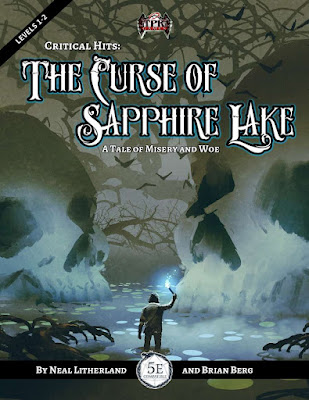
For those just joining us, I like horror games. Not only that, but I'm also a big fan of introducing horror themes and stories into settings that are not explicitly horror games themselves. So while I've got plenty of World of Darkness content out there, such as Evil Incorporated: 10 Pentex Subsidiaries for Werewolf: The Apocalypse lovers, or 100 Resources and Rumors to Find on SchreckNet for Vampire: The Masquerade players and STs, I've also got modules for Dungeons and Dragons 5th Edition like The Ghosts of Sorrow Marsh or The Curse of Sapphire Lake. That's in addition to writing horror short stories for years, and incorporating a lot of elements of the genre into my other, longer books.

It's why I wanted to talk this week about how a lot of Game Masters out there misunderstand what makes a horror game work, and to discuss some of the terminology of what makes horror work in a way that might make things clearer, and easier to understand.

And if you need a bit of a guide, grab some of my supplements!

Before we get into the nitty gritty this week, don't forget to sign up for my weekly newsletter to get all my updates right in your inbox. Also, if you've got a bit of spare cash that you'd like to use to help keep the wheels turning, consider becoming a Patreon patron!

Lastly, to be sure you're following all of my followables, check out my LinkTree!

Dread, Terror, Horror, And Why It Matters


One of the primary mistakes that I think a lot of Game Masters make when they decide they want to run a horror game (whether it's specifically written as a horror game or merely one that will have horror themes and elements) is that they focus on trying to actually scare their table. To shock them in some way, shape, or form.

I want to start this off right now by saying that is precisely the wrong attitude to take to running a quality horror game. It's the equivalent of a movie putting in a lot of jump scares to keep the audience's blood pressure spiking, or including gross-out or exploitative content for no reason other than to make the audience uncomfortable. Your goal shouldn't be to slap your players across the face with what's going on... rather, it should be to draw them into the dark waters, and make them wonder what's swimming in there with them.

No, seriously guys, did you hear that?

This is where we get into the terminology. And while it isn't perfect, this is a setup discussed in Danse Macabre by Stephen King. put it pretty well. I'm paraphrasing, but his breakdown took the following, basic form:

- Terror: Terror points at future events that haven't happened, but which one is afraid of happening. It could be specific ("Oh god, what if the minotaur finds me in this labyrinth?") or vague ("Ships disappear here all the time, and no one knows why... what if we're next?"), but it's future-focused. Might be the distant future or the immediate future, but the situation in question hasn't happened yet.

- Horror: Immediate. Horror is what most of us think of as that point where we jump, we scream, and where the event is here, right now (when the werewolf charges out of the mist, the graboid explodes from the ground, etc.).

- Revulsion: Revulsion is a third category that's usually referred to as the cheap thrill, or the attempt to hit the gag-reflex. It's a quick shock that puts adrenaline in your system, or which attempts to go right for the lizard brain. Revulsion can also be backward-looking, however, where one thinks of things they've already seen or experienced (Kurtz moaning, "the horror... the horror," in Heart of Darkness is a good example).

There are discussions to be had on this, and some people might suggest alternative terminology, phrasing, etc., but I find this structure tends to work pretty well. Also, despite the name of the genre (horror), it's actually more important to cultivate terror in order to make one of these games work... both in the short and in the long-term.

Plant The Seed, And Let It Grow


The thing with a horror game (as opposed to horror the emotion) is that you can't just sit people down and throw a bunch of decaying zombies, masked serial killers, and threats to life and limb down on the table and expect them to have a positive reaction. Or even much of a reaction beyond, "... okay?" A horror game more than almost any other kind of game requires investment from your players. You need to establish the stakes, and make sure they've bought in as completely as anyone can.

And then you need to start priming the pump.

This is the end goal, not your starting point.

As the Game Master, you need to use all the elements at your disposal to begin inducing that necessary terror. Sometimes it can be heavy (the small hamlet on the swamp with the mist rolling in, and locals telling tales about monsters kidnapping people) or it can be subtle (local news reports in the background, or gossip at a frat party about some kind of fracas in one of the dorms), but you need to lead the table down into the muck. You don't start with horror or revulsion, because those things with no build-up is just a jump scare; cheap, forgettable, and often annoying. Horror or revulsion with build-up, though, becomes the thing players talk about for ages once they've put their dice away and moved on to something else.

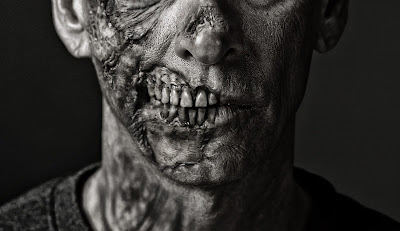
There's an old saying about horror movies; the monster is more frightening the less you see of it. From Jaws to Alien, there's nothing scarier than the viewer's mind filling in the blanks on their own. The same is true when we talk about horror games. Because terror is often a result of little hints being dropped, or of the temperature being increased bit by bit on the pot that is the game. It's is what you get when the PCs stumble across the band of renegade orc warriors they were planning to fight, only to find them torn limb from limb by something far more dangerous. It's what happens when they meet an NPC with just enough knowledge to be afraid of what's coming, and who tells them it's already too late... if they know this much, they've been marked. It's what starts making them paranoid that the terror hasn't come upon them yet, but knowing in their hearts that it will... sooner or later, it will.

The benefit of terror is that it acts like a marinade for the horror to come. If you just took your monster reveal, or your big scare, and served it up all by itself, you probably wouldn't get too much of a reaction. But if you spent some time marinating your table in terror, making them listen to legends, having them hear the screams, watching as they tried to go deeper and deeper only to wonder too late if they can turn back, then even a minor horror is going to be enhanced by all that lead up.

Something to think about when it comes time to run a "horror game" and you want to have clearer language. Because while it might be more accurate to say you want to run a game with dark themes relying on building dread as the PCs circle ever-closer to the reveal of horror, and then have to live with what they experienced and survived, that isn't the way a lot of us talk about what we expect from a game.

But clear communication can often be a big help in getting you from concept to execution!

Also, for those looking for more GM advice, don't forget to take a flip through 100 Tips and Tricks For Being a Better Game Master!

Need More Horrific Supplements?


For all the folks out there who need some extra resources and tools for adding to their games and settings, I've been putting out all kinds of horror-related content the past few years. In addition to the examples in the intro, consider checking out:

- 13 Fiends: A Baker's Dozen of Devils: If you want unusual outsiders just waiting to make bargains with the unwary, then this one has you covered. References to it also show up in 100 Cults to Encounter, for those who are looking for shadowy organizations to pepper your world with.

- 100 Kinfolk Bundle: Kinfolk are the backbone of garou society in Werewolf: The Apocalypse, and this bundle has over 1,300 NPCs for you to fill your setting with! And if you enjoy this game, consider picking up a copy of Tales From The Moot as well!

- 100 Strange Sights to See in The Hedge: An entry for all my Changeling: The Lost fans out there, this one is for the storytellers who just can't pluck out surreal events off the top of their head. It pairs quite well with 100 Hobs To Meet in The Hedge as well as 100 (Mostly) Harmless Goblin Fruits and Oddments to Find in The Hedge should you want a more complete package!

Like, Follow, and Stay in Touch!


That's all for this week's Moon Pope Monday. To stay on top of all my content and releases, make sure you subscribe to my newsletter at the bottom of the page!

Again, for more of my work, check out my Vocal archive, and stop by the YouTube channel Dungeon Keeper Radio. Or if you'd prefer to read some of my books, like my cat noir thriller Marked Territory, its sequel Painted Cats, my sword and sorcery novel Crier's Knife or my latest short story collection The Rejects, then head over to My Amazon Author Page!

To stay on top of all my latest releases, follow me on FacebookTumblrTwitter, and now Pinterest as well! To support my work, consider Buying Me a Ko-Fi, or heading to The Literary Mercenary's Patreon page to become a regular, monthly patron. That one helps ensure you get more Improved Initiative, and it means you'll get my regular, monthly giveaways as a bonus!

Monday, January 18, 2021

Game Masters, Make Sure You Run The Setting Everyone Agreed To Play

This Monday I'd like to take a moment to address all the game masters out there. This applies to all of us, no matter which systems we prefer, or what settings we use. I want all of us to take a moment, and ask ourselves a simple question regarding our games.

"What is in the setting?"

"Whatever I say is in it," is not an appropriate answer.

This isn't a rhetorical question, either. Because I can tell you that the worst arguments I've had with game masters and storytellers across the board has been over what should be a simple, fundamental understanding. But there are a lot of us who bring our own preconceptions (and sometimes our misconceptions) to the game, and that can cause serious problems when the game you're trying to run is not the game everyone else showed up to play.

I'll give you some examples in a minute. Before that, though, take a second to sign up to my weekly newsletter so you don't miss any of my updates! And, as usual with discussions like this, those who completely make their own worlds and settings, you are mostly excused from this... provided, of course, your settings remain consistent once the game actually begins.

Magic, Technology, World Canon, and Tone


There is one example for what I'm talking about that I come across basically every other week due to the parts of the Internet in which I live, and it is game masters who are running Pathfinder games who seem to have confused Golarion for Middle Earth in terms of just exactly how rare spellcasters, magic items, non-humans, and other fantastical elements of the setting happen to be.

Because, in the minds of these game masters there should only be a few actual spellcasters in any given region of the world. Non-humans should be weird and unusual sights, often stoking panic, unless we're specifically in places where they are the dominant species. Magic items are rarities never seen by the common citizenry, and they are only to be wielded by those of great wealth or power.

And absolutely NONE of that describes Golarion as it's written. At all.

Seriously... it's all in the books.

You don't have to delve deep into the setting guide to realize these things, either. Golarion as a setting is a bubbling cauldron of high magic nonsense and insanity! Practically every nation of note has a mage's college of some variety (telling you there are enough students year after year to fill the ranks of an academy), there's an entire region that's filled with a semi-permanent gateway into the abyss (depending on if you completed Wrath of The Righteous yet or not), a fascist government literally propped up by the forces of hell, a nation of nearly-endless night watched over by a Hellraiser-style god, a meteorite that can allow someone to transcend mortality... you get the idea.

Golarion, as a setting, is meant to be a kitchen sink of nonsense and possibility. Your party might have a sorcerer birthed in a graveyard who wields the forces of death, a one-eyed gunslinging paladin, a barbarian with a great ax and a cybernetic arm he took from a robot he fought in a crashed spaceship, and a druid who has reincarnated for nearly a thousand years to maintain the eternal balance of nature... and none of that is outside the setting canon. It's all in the game, right there in black-and-white, often with specifically laid out paths and options for players to use.

It's not a low-fantasy setting, but if you approach it like one it will feel like you're trying to run a totally different game than the players agreed to if they're going off what's written in the book.

Oh don't worry, I've got more examples.

I see this sort of attitude in World of Darkness and Chronicles of Darkness games all the time, too. A storyteller is running a game set in the modern day (or even back in the late 1990s), but when players start tooling up with high-caliber weaponry and body armor instead of using diplomacy, stealth, or even a more magical route (for characters who have access to unique powers), suddenly the ST starts making all sorts of noises about how those options aren't available, or won't work. Rather than rewarding the players for using the options presented in the game, they instead want to get salty about how a riot shotgun or an incendiary grenade suddenly let the players dole out a lot more harshness than they'd anticipated, reducing a threat to ashes... even though it is precisely those modern advances that makes regular mortals the most dangerous things in the setting (in large enough numbers, anyway).

Shady arms deals and flying lead are as much a part of the setting as smoky backrooms and drippy sewers, and while there should be complications (illicit arms require time and resources to acquire, they tend to draw a lot of attentions, enemies will escalate the same way the players do, etc.), just denying that this is part of the setting doesn't make your game better. It just discourages players, and highlights what routes you will and won't accept for solving problems as the ST.

Perhaps the most common example of this that I come across, though, is when the person running the game changes the setting history and tone without checking with the players to be sure they're on board with that fundamental shift.

This can take all sorts of forms. From instituting new tribal social bands and customs for Werewolf: The Apocalypse, to declaring that the god Aroden isn't dead in Pathfinder (or in more extreme situations that Zon Kuthon was never corrupted to become what he is now), to cutting out all of the loss of humanity and horror elements from Vampire: The Masquerade so that it feels more like Assassin's Creed with fangs, I've seen this happen in a dozen different ways across a dozen different games.

Now, I'm not rendering judgment on these changes. If they're what you want to do to make your game more enjoyable for your table, shine on and do your thing... but talk to your players before you make changes that they're going to have to deal with.

Communication Really Is Key


The first rule of RPGs is that you can always change the game to suit your table... but that needs to be done with the approval and consent of your group. It's a fundamental aspect of the game that you all need to be on the same page about before you go forward, because if you're not it's going to lead to nothing but problems as surely as if you said you wanted to run a political thriller and your players rocked up to the table with the A-Team.

I can be diplomatic. When I want to be.

So before you change anything you should have a clear understanding of what's actually in the book. Then, once you understand the game, setting, lore, mechanics, etc. as they exist, you can discuss what you want to change, limit, alter, and tweak to make things work the way you want them to with the players around your table.

Just remember that it is your responsibility as the person in the big chair to communicate to your players what is going to be different... and what is going to be the same. Because if you ask someone, "Hey, want to join my Masquerade game?," but you don't tell them that you're running it more like a superheroes-with-fangs setting, then a player who showed up expecting body horror, angst, drama, and the dark midnight of the soul is going to be less than pleased.

My two cents, the more you're going to change, the better you need to understand the game, and the more communication there needs to be. Because just altering some notes in tone, or changing one or two minor details probably isn't going to be a big deal... but the more fundamental your changes are, and the wider the ripples go, the more important it is you have your players' full buy-in and support.

Trust me... it's better to check twice than to just assume people will go with it, "For the good of the game." Because players only have so much trust, and that's not a currency you want to spend casually.

Like, Follow, and Stay in Touch!


That's all for this week's Moon Pope Monday. To stay on top of all my content and releases, make sure you subscribe to my newsletter at the bottom of the page!

Again, for more of my work, check out my Vocal archive, and stop by the YouTube channel Dungeon Keeper Radio. Or if you'd prefer to read some of my books, like my cat noir thriller Marked Territory, my sword and sorcery novel Crier's Knife or my latest short story collection The Rejects, then head over to My Amazon Author Page!

To stay on top of all my latest releases, follow me on FacebookTumblrTwitter, and now Pinterest as well! To support my work, consider Buying Me a Ko-Fi, or heading to The Literary Mercenary's Patreon page to become a regular, monthly patron. That one helps ensure you get more Improved Initiative, and it means you'll get my regular, monthly giveaways as a bonus!

Tuesday, March 24, 2020

DMs, Learn To Take Your Foot Off The Brake

About a year and change ago, I was grumbling that no one was running LARPs for Changeling: The Lost out in my neck of the woods anymore. All of my friends sitting around the table agreed that it would be great if someone would step up and start a new game. Since all eyes were on me, I realized that since I was the one who spoke the desire aloud, I was the one who now had to make it a reality if I wanted it to happen.

And that was when the brainstorming began.
I spent the next several months laying the ground work for the setting, digging up all the digital copies of the books that I had, and talking to my players about the sorts of things they wanted to see. I incorporated those things into the overall sandbox, and started putting out the word that I was looking for even more players to populate the game once it was ready. As more folks expressed interest, though, I kept getting the same question over and over again.

"So what are the house rules you're using?"

And my answer was, with the exception of clarifying which double-printed merit I was using, none. I wanted to run the game as the book laid it out. If folks wanted to give their characters a certain fighting style, I was all for that. If they wanted to put together a bizarre combination of seeming and kith, or if they wanted to join an entitlement that was usually kept under lock and key, I would work with them to make sure they found an in for their character.

In short, it was my job to facilitate the characters my players actually wanted to have, and I did not see how laying out dozens of pages of provisos and conditions was going to help that.

At first I didn't think anything of it when my players smiled, happy that I'd told them absolutely, they can use this ability that's clearly in the book as long as they pay the XP cost for it. But it happened so many times that I started to realize something... practically everyone who signed up to play in my game is used to a storyteller saying no. Not, "as long as you use this responsibly," or, "eventually, once you've earned it," but just a flat-out no. No to mechanics that already exist in the book, and are more often than not a core part of the game. Mechanics that, on a larger scope, are just ripples in the pond in terms of the what they can do.

I would like to take today's entry to reach out to all the storytellers whose reaction is to say no. This message is for you.

Take Your Foot Off The Brake


Let the players drive. You're here to facilitate their fun.
For all the DMs out there who like to hold tight to the reins, and who are even now leaving comments about how you had to change X, Y, and Z mechanics because of your game structure, group, setup, etc. just stop, and take a moment to listen to what I've got to say. Don't get defensive, or make justifications, just listen to what I've got to say here; one DM to another.

First of all, as I've said before, if you are running a homebrew setting that deviates from the core material of a game in certain, meaningful ways, then obviously there are going to be absences or restrictions in order to make sure the setting and rules agree with each other. If your DND game takes place in a world with no angels, devils, or demons in existence, you don't have tieflings and aasimar as character options. That's simple cause and effect, and not what I'm talking about.

What I am talking about is balancing the scales. Whenever you change a game from how it's written and presented, you need to ask yourself what you're giving your players, and what you're taking away from them. Because every change that affects what mechanics players can use, what sort of characters they can play, etc., is directly taking away their options and limiting their choices. So, to compensate for taking something away, ask what you're giving them in return.

It might be something simple, such as running a world that's a majority human, but you make a bunch of different bloodlines so that different humans all have different and unique templates. You might want to run a Pathfinder game without guns or gun-capable classes, but instead of just ignoring the lore you rewind the world's timeline and run the game before the discovery of black powder so that players can experience the last days before Aroden died and the setting of Golarion was plunged into chaos. Whatever you're taking away needs to have a specific rationale, and it needs to be compensated for in some way if it impacts your players' choices.

Also, Let Your Players Feel Special


It's what keeps them coming back for more.
I said this back in If You Don't Want Your Players To Win, Get Out of The DM Chair!, but it bears repeating here. Every villain you field, and every challenge you present, is supposed to be overcome. The goal is not for you to stymie your players, or to make them bleed for every inch of ground they cover. This isn't a game of attrition where you grudgingly give your players a victory every now and again (unless they specifically signed up for that, naturally). Generally speaking, the players are supposed to win when all is said and done.

And, in line with that, they should feel special when they're doing it... because they're the main characters of this story!

I have lost track of the number of storytellers I've met who, because they were frustrated that their players were actually accomplishing the challenges they put in front of them, decided to start eliminating options or refusing to allow certain classes and abilities out of the core books of their games. I've seen World of Darkness STs who have dialed firearms down to pea shooters so they didn't "destroy" encounters too easily, Dungeons and Dragons DMs who have out-and-out refused to let rogues get their sneak attack because it's "too overpowered," and Pathfinder GMs who ban paladins entirely because they can't deal with smite as an ability.

If the reason you restrict things as a dungeon master or storyteller is so that the players don't win too easily, may I suggest instead that you stop giving them a steady diet of nails, and then act surprised when they hit them with a hammer?

But this is literally the problem I was made to solve!
Let's go back to Changeling for a moment. The game is a modern fantasy or modern horror, depending on how you spin the flavor, but that means it exists in the modern world. If you want to build the ultimate swordsman, or the most dangerous gunslinger, there is absolutely nothing stopping you from putting together a laundry list of abilities that turn you into death on two legs for any mortal opponent, and which would make you a significant threat even to other supernatural enemies.

What would I gain, as a storyteller, from stopping a player from pursuing those abilities?

Sure, it would mean I don't have a wizened Doc Holliday or an ogre version of Inigo Montoya to deal with, but what have I given my player in exchange? Nothing. It's possible that a player who wanted to field one of these concepts might play something different, but will their heart be in it the way it would have been if I'd said yes? Even if that yes came with conditions that staggered out their badassery, ensuring they had to complete training and character arcs to become that thing they sought? Probably not, because I asked them to settle for their second choice... and why? Because I didn't want a character that could shoot too well, or buckle too much swash?

This is a secret I have for all my fellow storytellers who can't take their foot off the brake; you always have a bigger trump card up your sleeve than your players do.

If a player builds a sniper, make a Predator for them to stalk and be stalked by. If you have a Conan, give them a brute mauler to contend with. If the player builds their character to be a shadow player of wealth and influence, create a corporation to act as their nemesis and challenge them. Don't negate their strengths outright, but present them something that challenges them. You can literally make anything, and you have access to unfettered resources! This goes double for tabletop games over LARPs, because it means everyone at the table will have a need to bring out their strengths, and they'll all get a moment to shine while pushing along the plot.

Does it take more work to do this? Absolutely. Can it get frustrating? Sometimes. But when you are the storyteller, your job is to facilitate everyone else at the table playing their characters and sharing in the story, not to take away their pens because you don't like the color they wanted to write in.

Closing Note


To make sure I'm crystal clear, here, I am not saying that DMs who homebrew their games are doing it wrong. I'm not saying that restricting player options means you're a bad DM. I am not saying there is only one right way to play a game. We can all literally do whatever we want, as long as it makes our tables happy.

What I am asking is for all the dungeon masters and storytellers to take a step back, and ask what reason they're using to justify changes at their tables when those changes negatively impact their players' options and choices. Are you legitimately making those changes because they improve the game, and make the setting or story better? Or are you making those changes to eliminate things you personally don't want to deal with, or because you think someone might misuse it in the future?

Because if it's all about you, then you might want to check with your players to see how your proposed changes impact them. The game should be about them and their characters, after all, because without the main characters all the setting and plot in the world won't make a single lick of difference.

Like, Follow, and Stay in Touch!


That's all for this week's Moon Pope Monday! I have a feeling it will stimulate some spirited conversations, but this is something I felt should be put out there.

For more of my work, check out my Vocal archive, and stop by the YouTube channel Dungeon Keeper Radio. Or if you'd prefer to read some of my books, like my sword and sorcery novel Crier's Knife or my latest short story collection The Rejects, then head over to My Amazon Author Page!

To stay on top of all my latest releases, follow me on FacebookTumblrTwitter, and now Pinterest as well! To support my work, consider Buying Me a Ko-Fi, or heading to The Literary Mercenary's Patreon page to become a regular, monthly patron. That one helps ensure you get more Improved Initiative, and it means you'll get my regular, monthly giveaways as a bonus!

Monday, June 10, 2019

5 Common Disruptive Actions in RPGs (And How To Counter Them as a DM)

When we sit down to play, most of us are here to have fun telling a story. Sometimes that story is dark and serious, and sometimes it's light-hearted and a little ridiculous. A lot of the time it's somewhere in between. And while everyone should be allowed to contribute to the story in ways that make them happy as players, there are those times when your players push the Don't button. Sometimes it's an accident, sometimes they don't know any better... and sometimes they do it just to see what you'll do.

Your move, "Dungeon Master."

Ideally, if someone keeps poking at that button, you'll be able to sit down and talk to them as an adult and to explain why it's becoming a problem in game. However, sometimes you need to be able to roll with the punches as they come your way. The most common punches I've seen, and methods of rolling I've found effective, are as follows.

#1: My Character Wouldn't Be Interested in That


I'm just gonna sit here in the bar. Drinking. Alone.
 
This is one of the most common irritations in gaming for a dungeon master. You spend a lot of effort putting together the story, the enemies, the plans, and then when you drop the hook in front of the party one player decides, nah, I'm not biting that.

It's hard to get the game going if someone isn't willing to get on the plot bus, and it's generally seen as good form for a player to find some reason for their character to go out with the rest of the party even if it's a bit outside their wheel house. Whether it's the money-driven mercenary deciding he wants to show the town that he's not such a bad guy, or the usually timid cleric finding his spine when other people are putting themselves in danger, sometimes you need to stretch a bit to keep the game going.

How To Roll With It...


Ideally, this is something you should take care of beforehand by making sure everyone's character has proper motivations that are driving them toward your game's goals. I even provide this for DMs who pick up my Critical Hits modules False Valor and The Curse of Sapphire Lake by making sure a "Why Are You Here?" section is the first thing in the module, after the introductory text. This ensures that everyone who is at the game table has some motivation to immediately jump in, and avoids this behavior entirely.

If you don't have that luxury (sometimes you just don't get a chance to preempt a problem), then take the player aside and ask what would motivate them. Ask for some knives, like I mentioned back in Build Your PC Backstory Using Knife Theory. If they're a merc, ask them if they owe anyone a favor, or have an outstanding tab anywhere in town; it might be as simple as the barkeep offering to wipe that bill they owe that gets them off their butt and into the game. If they're a noble PC who decides this isn't their job, you can literally pull in someone of higher status who tells them to go do it.

And so on, and so forth. You can even find examples of outfits to use, and NPCs to bring in, with 100 Random Mercenary Companies or 100 Nobles to Encounter.

Sometimes players have only thought of one, specific thing that will jump start their PC's actions. Sit down with them and try to get them to provide two or three, assuming you can't work up a personality profile that will let you know what strings to tug on before the game starts.

#2: It's Not Illegal, I'm a PC!


Haters gonna hate!
 
There's no two ways about it; the player characters are the central figures of the story you're telling. Whether they're heroes, villains, or somewhere in between, they are the individuals we're focusing on in this collaborative exercise. And sometimes players let that go to their heads, assuming that they can do what they want without repercussions.

One of the most common versions of this is the thief who steals anything that isn't nailed down. They pick every pocket they come across, and spend all of their time scheming on how to rob shopkeepers blind. Alternatively you have the hulking barbarian, the entitled fighter, or the haughty sorcerer who believes that they can crush any NPC who doesn't give them the respect they feel they're due.

This isn't always a problem, depending on the situation. But when it becomes a pattern of behavior, it can very quickly grow into a major headache for you as the DM.

How To Roll With It...


The first thing you should do, as a DM, is to give players who want to do what I call a Grand Theft Auto run a single warning. Even if it's just as simple as, "You want to punch a member of the town guard because he told you to peace bind your weapon? Even though you can clearly see there are a dozen soldiers at this gate?"

Nine times out of ten, a player will get the message letting them know that if something is a crime in the real world, it's likely still a crime in the game world, and it will be acted on accordingly.

Sometimes players will nod, accept your warning, and attempt to go through with their action anyway. When this happens (and it will, sooner or later), you should let it. And then follow the natural consequences of the action the player chose to take.

I talked about this in Let Them Reap What They Sow (Actions and Consequences in RPGs) a while ago, but it's worth repeating. Players need to have agency, and that includes agency to do things that are ill-advised, or which you find annoying. But the actions they take should have appropriate consequences. The thief might get away with stealing a purse or two, if they roll well, but if they get caught stealing, make sure there are consequences for that. If the party bruiser decides to beat up the innkeep because he didn't like the man's tone, ask who saw that, and what other dominoes start to fall. Do the party find there's a bounty on their heads, and that they need to flee the town? Do merchants refuse to sell to them? And so on, and so forth.

Actions have consequences, good and bad. Make sure your players know that before you start, so they aren't surprised when things happen.

#3: I Seduce It!


What's a lich like you doing in a crypt like this?
 
This is one of those old jokes that, deep down, has some truth in it. Maybe it's because a player is new, and didn't get that this bardic trope is not how you're supposed to play the character. Maybe it's because your player has an inappropriate understanding of your game's boundaries, and figures what's the point in having a huge, ugh, charisma if you can't throw it around a little bit?

Whether you are willing to allow this sort of action to work in a place where it fits the game (the sorceress acting as distracting arm candy so the rogue can work the room and steal the major's dungeon key, for example) is up to you. However, if this is becoming disruptive, you should probably have a talk with the player about it.

How To Roll With It...


Aside from having that talk with your player, the other thing you should make clear is that seduction is a very personalized thing. Just because you have a high Charisma score, or a baller skill check, that doesn't mean you can get an NPC's interest. Especially if they're really not into the sort of thing you're offering (the NPC is attracted to another gender, is asexual, or simply prefers a body or personality type that a certain character doesn't fit). And in the case of some of the more ridiculous scenarios (the ones involving vampires, demons, hydras, etc.), simply make it clear that no matter how high the player rolls, that isn't going to work.

Social skills aren't mind control, and they don't allow the PCs to tug NPCs strings like puppets. If your player wants to go with a femme fatale sort of PC, or a smooth-talking secret agent, don't rain on their parade... but make sure they understand the limits of their build, the game's rules, and the tone you're going for.

#4: That's Not How That Works!


According to the errata on page 116...
 
I will fully admit that when it comes to players who read rule books from cover to cover, I am definitely one of those folks. More often than not, I'm the person the rest of the table asks about how certain mechanics work, because it's sort of my job to know those things at this point in my life. However, there's a difference between being asked how a certain thing works, and telling the DM how something works. Especially because you, as a player, don't have the entire picture from your side of the screen.

On the other hand, if you are running a game mechanic differently than it's written in the book (or ignoring an ability that a player has which can interrupt or alter what your monsters are doing), then that isn't something you want to shout-down or ignore. It can quickly erode trust in you as a DM, and it can make the players feel like the rules don't matter. Striking a balance can be difficult on this one.

How To Roll With It...


That doesn't mean it can't be done, though.

The best thing you can do in this instance is to set some ground rules for how the back-and-forth on this goes. It may even be necessary to go back to your classroom days and ask that a player with an objection or a question raise their hand, and wait for you to call on them so you aren't constantly getting interrupted by, "Actually, according to..." from the other end of the table while you're in the middle of resolving something or trying to do math.

The other thing I recommend (which has worked out very well at my tables) is to insist that before a player raises an objection that they look up the associated rule or ability first, and re-read it. This cuts out all arguments resulting from a player mis-remembering something, and often times the refresher is important. It also means they have the chapter and verse right there for you to look at when they raise their objection.

Lastly, make a ruling based on their question. Sometimes it might simply be, "Yes, according to that ability description, you should take half damage from fire. The fire from this particular salamander, though, deals you full damage." This lets them know you didn't forget or overlook a rule, but there is something at play behind the screen that they don't know about.

All rulings will stand until the end of that night's game. If it turns out you made a mistake (say the PC instantly died, but really they should have simply been knocked out), then you can work with the player to rectify it. But in the heat of the moment is not the time for an argument, and after the, "Question, relevant section of the book, ruling," steps have been taken, that's it. No more objections, no buts. That conversation will (and should) happen later, preferably between game sessions if possible.
 
For more on this approach, I'd recommend taking a look at Table Attorneys Vs. Rules Lawyers: How To Be Fair Without Bogging Down Your Game!

#5: But That's What My Character Would Do!


Yolo, scrubs!
This is, without a doubt, the most irritating thing you can hear out of someone's mouth as the DM. As I said in The Dangers of The Phrase "I'm Just Playing My Character", most players who fall back on this defense are trying to have their cake and eat it, too. They get the fun of doing something mean-spirited, selfish, stupid, or otherwise disruptive, but they want to hold it at arm's length and claim they weren't really responsible.

After all, it's what the character would do.

How To Roll With It...


No. Straight up, flat out, no.

Staying true to your character is all well and good, but you, as a player, are the one who decides their actions. You are also the one who chose to bring that character to this game. And, as with the, "my character wouldn't be interested in that," example up top, you can almost always find a reason for your character not to do whatever mean-spirited, selfish, stupid, etc. action you're about to take if you think about it.

Fiction is filled with these little moments. The Phantom shows mercy, and allows Christine to escape with Raul. Frankenstein's monster sits at the side of the creator he loves and hates, mourning his passage. Jonah Hex decides to clap a bounty in irons and haul him back to town thinking what the hell, let's try bringing someone in alive for once.

Complex characters are capable of being many things. If the character you brought to the table is solely motivated by being a jerk, causing problems, or taking the piss out of other people's fun, that's on you for choosing to play that character. And as a DM you should make it clear that players don't get to sidestep blame when they're the ones behind their character's actions.

In Closing


That's all for this week's Moon Pope Monday. Hopefully you enjoyed the film, and it provides you all with the same sort of inspiration it did me!

For more of my work, check out my Vocal and Gamers archives, and stop by the YouTube channel Dungeon Keeper Radio. Or if you'd prefer to read some of my books, like my sword and sorcery novel Crier's Knife, then head over to My Amazon Author Page!

To stay on top of all my latest releases, follow me on FacebookTumblrTwitter, and now Pinterest as well! To support my work, consider Buying Me a Ko-Fi, or heading to The Literary Mercenary's Patreon page to become a regular, monthly patron. That one helps ensure you get more Improved Initiative, and it means you'll get my regular, monthly giveaways as a bonus!

Monday, February 25, 2019

The Best Design Idea White Wolf Ever Had (Villain Theory 101)

Though it may not be the titan of roleplaying games that it once was, White Wolf still stands as one of the best-known brands, and creator of some of the most engaging games out there. Because if you didn't start your gaming career slinging spells and steel in Dungeons and Dragons, chances are good your first experience was baring your fangs in Vampire the Masquerade, howling at the moon in Werewolf the Apocalypse, or navigating the fine line between the impossible and the banal in Changeling the Dreaming.

Changeling: The Lost has a very special place in my heart.
While these games (and the half dozen or so I didn't mention) were all unique spheres within the ever-growing world of dark fantasy and bleeding horror found in the shadows, I'd like to talk about one idea that sprang up in several of the game lines. One idea that is a godsend to the storyteller, and that you should add to the arsenal you keep behind the screen to help when designing campaigns.

The idea of the Ever-Present Threat.

What Is The Ever-Present Threat?


The short version is that the Ever-Present Threat is something that hangs over the game, and that affects every character at the table. They may respond to it in different ways, and take different actions to deal with it, but the Ever-Present Threat is not a single foe that can be vanquished. It is something that is so powerful, or so de-centralized, that it can never truly be said to be defeated. While it might sleep, or be staved off for a time, it will always be back in the end.

I'd like to take a look at two of White Wolf's games here, and how one is (at least in my opinion) greatly hampered by the lack of an Ever-Present Threat, while the other is enhanced by that threat being up-front and in your face. All right, so, let's begin at the beginning with Vampire.

In Vampire, both Masquerade and Requiem, you are a vampire. It is now your job to navigate the shadows of the world, find allies, avoid repercussions from your enemies, and to play the games of power, influence, and prestige that may devolve into brutal savagery and bloodshed.

You know, vampire shit.
The trouble with this setup is that if you're the storyteller, then you have to work extra hard to corral a bunch of players toward the same goal. Even if their interests align for the moment, or they have some other reason to work together, the setting is fluid enough that it can feel like herding cats. Especially when, because you're immortal, you could go to sleep until today's problem is no longer a problem.

Now, contrast that with the Werewolf the Apocalypse setup. If you've never played the game, well, you're a werewolf. However, every tribe of werewolves is on the front lines of a secret war with the Wyrm, a force of corruption, chaos, and destruction. The end times are coming, and if you don't push back the tide of the Wyrm and its servants then the world will burn, and everything will be destroyed.

THAT is a setup that immediately gets you invested. Not only that, but it makes it clear that even if two characters don't like each other, they're both proud members of team Save The World when all is said and done.

After all, what really IS the alternative here?
You don't have to go that extreme with it, either. As another example, in Changeling the Lost, you are a changeling. You were, at some point, stolen by an otherworldly, god-like being from another dimension, and changed in fundamental ways. You managed to escape back to the real world, but you still bear the scars and powers you were given. And you know your Keeper is out there, somewhere... even if you killed yours, there are Others aplenty, always eager to retake one who got away.

In both of these examples, the Ever Present Threat is something that is big enough that it affects every character at the table, but also vague enough that you can't simply charge the stronghold to try to slay it. It hangs over the game, helping set the tone, but it can also be used by the storyteller to help create cohesion between the characters, and to create challenges players are instantly invested in, or afraid of. Your pack of werewolves bickering amongst each other? Well, they're sent on a mission to slay a corrupted boar that's been sighted in the ruins of Chernobyl. Along the way they have a common foe, and they learn to work together to get over their issues. Or if your changelings are getting a little too complacent behind their walls of money, private security, and mortal barriers, that's when they awake in the middle of the night to find a messenger of the Raven Queen. She has sent an invitation... refusing would lead to dire consequences, but accepting may not be that much safer.

And so on, and so forth.

Cultists, and Cthulhu


I'd like to switch gears for a second, and mention the Call of Cthulhu setting as a way to tie this up. Because the Great Old Ones are foes that exist, and their colossal, cosmic presence lurks in every corner of the mythos setting. And while they can be defeated (typically by disrupting rituals, strengthening ancient wards, or in some cases committing suicide before your mind can be used as a gateway), you don't fight Cthulhu. Even with the most potent of modern weapons at your command, and a score of ancient, eldritch talismans, if the Sleeper awakens, it's game over.

Oh hell... who let Wilbur make a call?
You aren't supposed to kill the cosmic gods of the mythos, though. You're supposed to solve their mysteries, and while you may be able to kill their cultists (if you're a hard-bitten team of Delta Green enforcers, for example), and you might be able to slay a mythos monster with some good dice rolls and the proper ritual, that's as far as you go.

The trick here is to give your players victories against the Ever-Present Threat, but not to defeat the threat itself. You close the door, you seal the gate, you bargain with Dormamu, and you emerge victorious. Possibly broken, bleeding, and mad, but victorious nonetheless. That's important, because making progress against an unending threat can light a fire under players to do more. But if you emphasize that nothing they do will make a difference in the grander scheme of things, then they're going to wonder why they bother rolling the dice in the first place.

Unify Your Players, Provide Instant Motivation


Your Ever-Present Threat can be a lot of different things. It might be the zombie apocalypse that's swept the world. It might be the demons that lurk, trying to peel open the gates of hell enough to escape. It could be Cthulhu, or the True Fae, or the Wyrm and its minions. It could be the Titans and their servants, if you're a fan of Scion.

Whatever your Ever-Present Threat is, it immediately gives your players context for the fight they're in, and why they need to step up to do their part. Because an Ever-Present Threat has touched everyone's lives in some way. It isn't something you can just sidestep, and carry on with your day. It is something that affects every decision a character makes, and which is always there in the background; constant storm clouds, making you wonder if today is the day that lightning strikes.

You can't fight the storm... but every day you hold it off is another day you've won. Which is why, if you've ever found yourself asking, "Well, now what do I do?" once your players have completed a particular arc, you might want to consider using one of these Threats. Because it reacts, moves, and changes, providing constantly new challenges to the PCs, and it saves you so much effort stringing your campaign together.

Additional Reading


For folks who are curious about additional topics, or even supplements, that build on these ideas, consider the following:

- 5 Tips For Running Better World of Darkness Games: The World of Darkness is dripping with atmosphere, and it can be hard to get your game just right. So check this one out if you want to make sure you avoid the obvious mistakes for this setting.

- 5 Tips For Creating Fantasy Towns and Cities: I've been doing a lot of settlement design, particularly for supplements like Towns of Sundara. So check this one out if you want your settlements to feel more organic and lived-in!

- 100 Tips and Tricks For Being a Better Game Master: Pretty much what it says on the tin. I've got 10 years or so if the advice I've field-tested myself, all condensed into a single, easy-to-read supplement for Game Masters new and old!

Like, Follow, and Stay in Touch!


That's all for this week's Moon Pope Monday. To stay on top of all my content and releases, make sure you subscribe to my newsletter at the bottom of the page!

Again, for more of my work, check out my Vocal archive, and stop by the YouTube channel Dungeon Keeper Radio. Or if you'd prefer to read some of my books, like my cat noir thriller Marked Territory, its sequel Painted Cats, my sword and sorcery novel Crier's Knife or my latest short story collection The Rejects, then head over to My Amazon Author Page!

To stay on top of all my latest releases, follow me on FacebookTumblrTwitter, and now Pinterest as well! To support my work, consider Buying Me a Ko-Fi, or heading to The Literary Mercenary's Patreon page to become a regular, monthly patron. That one helps ensure you get more Improved Initiative, and it means you'll get my regular, monthly giveaways as a bonus!

Friday, January 26, 2018

The Worst Werewolf Game I Ever Ran

Most of my stories here on Table Talk are about my experiences as a player. I've been pretty fortunate in my gaming career that most of my time spent behind the DM screen has been positive. However, there is a particular story that I think holds a lot of lessons in it. Names have been changed to protect people whom I feel are overall good gamers, but happened to walk into a perfect storm of the blind leading the blind in the following situation.

Werewolves and White Elephants


This story begins around Christmas many years ago. I'd been invited to a white elephant party, and had hemmed and hawed over whether or not I was going to attend. I decided to come at the last minute, and since I had neither the spare cash for a gift, or the time to pick something up, I put an I.O.U. for a one-shot game in an envelope. Any system the recipient wanted a one-shot in that I had access to, and could reasonably run, I would do.

The rabbit hole went pretty far down on that request.
The guy who wound up with my white elephant gift (let's call him Geoff) really wanted to play a Werewolf: The Forsaken game. I was pretty solid on my new World of Darkness lore, even though werewolf wasn't one I'd delved too deeply into. I asked him if he was sure, and told him all right, I'd have something ready to run in a month. He got a handful of players together, and I started the conversation rolling on who they were, and what was befalling them.

The Setup


It bears mentioning that I tend to emphasize the dark parts of the World of Darkness when I run a game. Not that awful, heinous things are always happening to PCs or their close friends (because graphic depictions of torture, sexual assault, etc. are not something I would inflict on my players, and they're crass from a storytelling perspective), but rather that the world is threadbare and desperate. The greedy are greedier, the needy are needier, and you should take nothing at face value. There are mysteries within conspiracies, and you should keep your friends close, and your enemies closer.

Starting off on a positive note here!
With that said, the handful of players put together their characters. They had most of the moon signs, and a pretty solid smattering of the tribes. No one had requested any crazy magic items or out-there gifts or merits, so I didn't have to have any debates with anyone. And, as I requested, everyone put themselves in a pack. And Geoff was the alpha. mostly because he was the one who'd requested the game, and because he was the one with the most system mastery.

I did something else, as well. I gave the players free dots in Allies and Mentor, attaching them all to important NPCs and working those connections into their backstories. Part of this was for my convenience as a storyteller, but another part of it was more insidious. More on that later.

So, this pack received a call from a highly-placed ally in New York City. An Iron Master alpha, he's known as the Iron Wolf. Partly for his refusal to back down, but also because he's the head of a major firearms company who does custom work for supernatural clients. Heavily involved in the city's politics, there is a small crisis going on at the moment. A crisis he wants the PCs to come and help with, since they owe him a favor for setting them up on their own plot of land upstate. As hooks go, it was pretty standard.

Into The Belly of The Beast


The pack got their gear, and headed into the big city. Geoff, who had taken a merit that let him see the spirit world with one eye and the material world with the other, chose to leave this ability active at all times. I asked him if he was sure. When he said yes, I described the decaying nature of the spirits as they headed into the city. The way everything became hard-edged, and feral, made dirty and harsh by its proximity to the pounding heart of the Big Apple. And then, as they got into the city proper, Geoff saw there was a colossal hole rent in the spiritual realm over the island of Manhattan. A swirling vortex where something terrible had torn the fabric of reality, leaving a gaping wound in the sky.

That's enough to leave anyone a little shook up. He decided to turn the merit off at that point... at least for a bit.

The pack parked at the Iron Wolf's HQ, and were met by one of his lieutenants. A warmaster who'd trained one of the pack's hitters, Ivan Ivanovich was known to most simply as the Black Russian. He ushered the pack up, and they were given the task they were being asked to complete.

All right yuse mugs, it's exposition time!
About a week ago, there had been a meeting arranged between some of the Iron Wolf's pack, and one of the local vampires; an old Dark Ages warlord named Michael Thorsson who held relentless grip on parts of the city. There was an uneasy peace, and the goal of the meeting was to make sure that peace held. As a show of good faith, they'd even met on the vampire's turf. No one who went to the meeting had come back, though. Thorsson said they'd never showed, and that he had no idea what had happened to them.

The party's job was to go, and independently investigate the incident. To find what had happened to the missing werewolves, and to get the facts without bias. Major players were dealing with the incident that led to the spiritual tear in the fabric of the world next door, so what would usually be a matter of great importance was a little lower on the priority ladder right then. The Iron Wolf gave the pack encrypted phones to contact him with, should they find something, and he sent another of his betas with them to act as a guide to the city should they need someone to show them around.

So... What Do?


When I'd been asked to run a werewolf game, I made sure to open up the world as much as possible. If the pack started running data searches on key figures in the city, I had dossiers prepared. If they wanted to go to Thorsson's nightclub where he held court and arrange a meeting, I had the stats for his ghouls, and the man himself, fully prepped. If they wanted to reach out to their Allies or Mentors for aid, I knew what would happen. If they tried to contact other werewolves in New York, I had them drawn up. If they went off the tracks entirely and tried to contact other vampires, changelings, or the mage community, I had that prepped, too.

In short, I had a huge mental map with all the major players, creatures, potential encounters, and everything in it. I had prepared for everything... except what actually happened.

So... what do you do?
I asked the pack what they did. The players looked at Geoff. Because while he may have had the most knowledge of the game mechanics, it didn't seem he really had any idea how to go about investigating such an open-ended plot. After several, long moments of silence he suggested they go to the warehouse where the meeting was supposed to happen, and sniff around?

A logical course of action. I said sure, they could find it no problem. So the pack headed out to the waterfront, took on their wolf shape, and did a walk around the block. They found a chain link fence with razor wire, half a dozen guards inside, and two or three trying and failing to be inconspicuous around the block. Geoff even turned his merit back on to glance into the spirit world. Because his initial plan was to simply phase out of one world, sneak in, and then push back into the material realm.

What he saw was that the fence, on the spirit side, was a series of pikes with bloody, moaning heads atop them. They felt potent, and wrong, but not dangerous. The sight of opposition on the other side (especially opposition that wasn't from the werewolf purview and which was an unknown factor) stopped the initial plan cold. Even though the heads did nothing but act as a spiritual alarm, and they could have been avoided through the proper use of gifts, or through properly applied violence.

Instead, the pack decided to bluff its way in. A task that was awkward, stilted, and which resulted in them totally blowing their cover. The guard, knowing something was up, agreed to let them in with a smile. As soon as the pack was inside the warehouse, though, they heard a huge bar being thrown over it, trapping them inside. The clock's ticking, and someone doesn't want them to get out. Of course, they were where they wanted to be.

Blood and Secret Tunnels


Figuring that they may as well do what they came there to do, the pack puts its wolf skins back on, and starts sniffing around. They smelled blood right away, and it definitely belonged to other werewolves. Some high successes later, and they found a secret tunnel that looks like it goes down into an old Prohibition smuggling run. Just as they open it up, they heard several SUVs pull up outside. They smell sweat, fear, and a lot of gun oil. Nothing they couldn't actually have dealt with (it seemed the players continually forgot they were werewolves, and thus top of the food chain in most circumstances), but they decided to scamper down the hole into darkness below.

It's okay... I have a plan for this!
Once they're down the hole, the pack hears the nervous voices of a dozen gunmen up above. No one was willing to go down after them, so they closed the door, locked it from above, and muttered that they'll catch them on the other side. Again, this is a full pack of werewolves... a wooden door with a deadbolt wouldn't stop them from waiting a while, and then busting up through the floor if they chose to. But they decided, instead, to follow the blood trail that continued on in the tunnel. Not only that, but they find the tunnel was stamped with Thorsson's sigil, marking it as his territory. So far, so expected.

At least until the blood trail goes off one way, and the vampire ganglord's mark goes off another way. The pack decided to follow their noses, and they found a bizarre scene. A dozen piles of ash and charred bone, some with scraps of cloth in them, filled the hallway. The ash smells corrupt, and rotten, but there's also a strong smell of ozone in the area. It is quite unnatural, and unpleasant. They also found a misshapen skull with elongated fangs. And, in the middle of it all, a severed arm that definitely belonged to one of the missing werewolves. On the arm is a watch, which Geoff correctly identified as an item that captures a scene in time for future study. Not only that, but the watch currently has a scene in it. A scene that could be replayed by any of them to get some insight into what, exactly, this dead werewolf had seen. Was it evidence that Thorsson had betrayed them? A shot of the murderers? A final message for those who eventually found him?

Well, they never knew. Because upon finding this clue they nodded, said, "Yep, that's a clue all right," then put it in their pocket and never looked at it.

Giving Some Direction


It was around this point that I realized the pack was looking for more in the way of direction from me. So I decided to pull a lever I'd put in place for just such a situation, and had one of their phones ring. While underground. From an unrecognized number. Something that I'd made very clear when I handed the devices out wasn't possible. Geoff answered, and a voice his character has never heard before told him specifically that the pack is in danger. Down the tunnel is a vault door. Go through it, and run for the stairs. Do not linger, and do not go back the way they came. Do not trust the Iron Wolf, he is telling you lies.

Maybe that will get things going, yes?
The pack found the vault door, sure enough, and went through it into an abandoned train station. It's clearly been turned into someone's living space. It reeked with an unnatural aroma, which was very similar to what was in the tunnel near all the dead vampires. Rather than bolting for the stairs, as the mysterious called suggested they do, everyone took their time. They weren't being stealthy, mind you, they were just walking slowly. So, since they chose to ignore the warning they were given, that was when the lights go out. Except for a figure walking toward them. A hulking man, with the unkempt beard and matted hair of a hobo. Geoff, who still had his merit on from the fence, also sees the burning fire within him. A white, unnatural light that sparks and snaps from his steel teeth, down through mismatched limbs that each carry a unique corruption all their own.

When presented with such a terror, what does the pack do? Make occult checks to understand what the hell they're looking at? Transform and fight their way past him? Tuck tail and book it for the stairs, which are clearly in sight? Parley, and hope that the creature is more civilized than it looks?

Well, mostly they just sat and stared. Finally the NPC tried to talk to the thing, and rolled just well enough that it decided to leave them be. Then the spook house got rolling again, and they ran up the stairs to street level. Anticlimactic, but hey, I could be more specific if that was what it took.

The Conspiracy Explained


Geoff's phone rang again, and the same mysterious voice told him he was being followed. The pack was given confusing directions that had them double-back several times, until finally they found themselves in front of a steel-reinforced door in a blind back alley. The door opened, and a figure stood in the arch. Skinny, red-eyed, and more than a little mad, he stared at them and gave them a small flash of his fangs. He smelled like the other things, and there was no mistaking the vampire. He hung up the phone, and shuffled back inside, beckoning the pack to follow him.

Which they do... with neither question, nor violence.
Anathema is the creature's name, and he's been nursing one of the werewolves who escaped the slaughter in the tunnel. She was alive, mostly insensate, and hadn't so much as been pricked by the nosferatu's fangs. He went back to organizing his red web of conspiracies, speaking all the while. He told Geoff again not to trust the Iron Wolf. He's been engaged in some kind of shady deals, and likely set up the members of his pack who went to the meeting. The goal was to kill them, but Anathema isn't sure why. To start a war with Thorsson? To garner sympathy from the other packs in the city who have had tense relationships with him? Or perhaps it's related to the mage sanctum that was defiled, and the wound it left behind. He doesn't know, but his final warnings to the pack were not to trust their benefactor, and to not come back to this place again.

Then he shut the door in their face.

So What Did They Do?


After being told repeatedly not to trust the Iron Wolf, and with the surviving werewolf mewling and moaning not to take her back to him (and clearly looking distrustful of the beta who was sent with as the party's "guide"), the first thing they do is call him up, and tell them they found a survivor.

I planned for every eventuality... except this one...
They call him up, and he sends a car to come get them. In the interim they don't question the surviving witness (the only one who has first-hand knowledge of what went down). They just wait patiently, get in the car, and ride back to the headquarters they were at earlier. They hand off the survivor, and never asked where she's being taken, or what they're planning on doing for or to her. Nor does anyone question why, as soon as they hand her over, she goes limp, as if she's resigned to her fate.

At that point they take the elevator upstairs, walk straight up to the Iron Wolf's desk, and give him a full run down of everything they saw and did. That's when Geoff took out the mystical watch he found, and clicks the button to review what was saved in it.

The watch held a scene of its owner spying on the Iron Wolf, and his beta, as they made a deal with a creature from the deepest, darkest parts of the spirit realm. Evidence that they gave their allegiance and aid to the sort of things they're supposed to be fighting against. Because this entity promised to give their children physical bodies (for those who don't know, werewolves are forbidden from mating in this setting because they give birth to ravenous spirit monsters... and these two essentially made a deal with a literal devil to keep having inbred werewolf babies).

Now getting the plot development they'd been given hours ago out of game, and revealing it right in front of what turns out to be the villain, no one knows what to do. Of course, the first thing the Iron Wolf does is pull a huge hand cannon out of his desk drawer, and start blasting away with silver rounds.

Then, finally, something happened.

Unfortunately, what happened was that the assassin who'd literally been following them the whole time (until they lost him by following the vampire's instructions, only to pick him back up again when they called the villain and told him where they were), burst in through the window behind them. While there were a lot of pack members, there weren't enough of them to deal with a gunslinger with silver hollow points before he took one of them down. They managed to destroy his body, only to realize that this was one of the spiritual abominations the Iron Wolf had created. And while they'd been distracted, the alpha was now opening the secret door to the shrine that anchored his wicked master in this place.

Wisely, they took to their heels.

In the elevator, the handful of remaining pack members find the Black Russian. He seems completely unfazed by the carnage, and the raw aura of evil emanating from his alpha's back room. When the pack demands he help them escape, he shrugs, and hits the button for the garage level. He plucks a set of car keys off the wall, and leads them to a van. Geoff demands to know why he's helping them. Ivan only shrugs and asks why he wouldn't help them. Despite being one of the lieutenants of this whole operation, and showing no surprise at anything he saw in his alpha's office, the pack just accepts that.

Then they ask Ivan to drive them back to Anathema's lair. A place he specifically told them not to return to.

They manage to remember the directions to get back, and they find the door unlocked. Bizarrely, though, the interior is empty except for a scrap of paper on the floor. All the filing cabinets, the webs of newspaper clippings, and banks of computers are completely gone. Instead of carefully sniffing around, Geoff walks in, and picks up the note. He has enough time to read the phrase, "I told you not to come back here," before the shaped charges go off, detonating the place.

Wounded and burned, the pack piles back into the van while Ivan leans on the hood smoking a cigarette and texting on his phone. They shout for him to drive. He nods, and hits the car lock button, before detonating the C-4 inside the van, and killing everyone inside.

The Lessons


There are several lessons to learn here. First, from a DMing perspective. Make absolutely sure that your players want (and are prepared for) the kind of game you're presenting to them. Later review made it clear to me that, though the players had asked for a Forsaken game, that didn't necessarily mean they wanted a game that was an open-world sandbox, that involved tracking down and solving conspiracies, or which was filled with darkness and betrayal. Those were things I assumed were part-and-parcel to being a World of Darkness game, and that assumption was likely what led to so many player freezes when they were presented with choices, and warnings. What I should have done was conduct a survey asking them what sorts of plots, themes, and roles they would most like to see in the game, and the kind of feel they wanted.

With that said, when NPCs expressly tell you that you're walking into a trap, don't be surprised when it blows up in your face.

That's all for this week's Table Talk. Hopefully the mistakes I made as a DM, and the mistakes my players made in this scenario, illuminate what not to do for some folks. If you're interested in more content from yours truly, check out my Vocal archive, or head over to the YouTube channel Dungeon Keeper Radio where I work with other gamers to put together fun skits, advice, and world building videos. If you want to stay on top of my latest releases, then follow me on Facebook, Tumblr, and Twitter. Lastly, if you want to help support me, head over to The Literary Mercenary's Patreon page, or click the following like to Buy Me A Coffee