Showing posts with label language. Show all posts

Monday, January 24, 2022

Why Game Masters Should Understand Terror, Horror, and Revulsion

For those just joining us, I like horror games. Not only that, but I'm also a big fan of introducing horror themes and stories into settings that are not explicitly horror games themselves. So while I've got plenty of World of Darkness content out there, such as Evil Incorporated: 10 Pentex Subsidiaries for Werewolf: The Apocalypse lovers, or 100 Resources and Rumors to Find on SchreckNet for Vampire: The Masquerade players and STs, I've also got modules for Dungeons and Dragons 5th Edition like The Ghosts of Sorrow Marsh or The Curse of Sapphire Lake. That's in addition to writing horror short stories for years, and incorporating a lot of elements of the genre into my other, longer books.

It's why I wanted to talk this week about how a lot of Game Masters out there misunderstand what makes a horror game work, and to discuss some of the terminology of what makes horror work in a way that might make things clearer, and easier to understand.
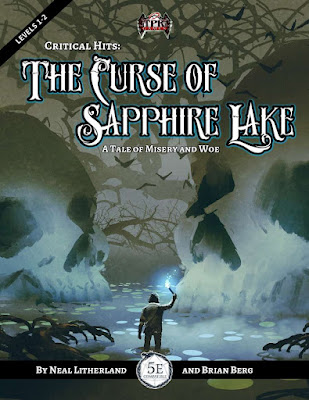
And if you need a bit of a guide, grab some of my supplements!

Before we get into the nitty gritty this week, don't forget to sign up for my weekly newsletter to get all my updates right in your inbox. Also, if you've got a bit of spare cash that you'd like to use to help keep the wheels turning, consider becoming a Patreon patron!

Lastly, to be sure you're following all of my followables, check out my LinkTree!

Dread, Terror, Horror, And Why It Matters


One of the primary mistakes that I think a lot of Game Masters make when they decide they want to run a horror game (whether it's specifically written as a horror game or merely one that will have horror themes and elements) is that they focus on trying to actually scare their table. To shock them in some way, shape, or form.

I want to start this off right now by saying that is precisely the wrong attitude to take to running a quality horror game. It's the equivalent of a movie putting in a lot of jump scares to keep the audience's blood pressure spiking, or including gross-out or exploitative content for no reason other than to make the audience uncomfortable. Your goal shouldn't be to slap your players across the face with what's going on... rather, it should be to draw them into the dark waters, and make them wonder what's swimming in there with them.
No, seriously guys, did you hear that?

This is where we get into the terminology. And while it isn't perfect, this is a setup discussed in Danse Macabre by Stephen King. put it pretty well. I'm paraphrasing, but his breakdown took the following, basic form:

- Terror: Terror points at future events that haven't happened, but which one is afraid of happening. It could be specific ("Oh god, what if the minotaur finds me in this labyrinth?") or vague ("Ships disappear here all the time, and no one knows why... what if we're next?"), but it's future-focused. Might be the distant future or the immediate future, but the situation in question hasn't happened yet.

- Horror: Immediate. Horror is what most of us think of as that point where we jump, we scream, and where the event is here, right now (when the werewolf charges out of the mist, the graboid explodes from the ground, etc.).

- Revulsion: Revulsion is a third category that's usually referred to as the cheap thrill, or the attempt to hit the gag-reflex. It's a quick shock that puts adrenaline in your system, or which attempts to go right for the lizard brain. Revulsion can also be backward-looking, however, where one thinks of things they've already seen or experienced (Kurtz moaning, "the horror... the horror," in Heart of Darkness is a good example).

There are discussions to be had on this, and some people might suggest alternative terminology, phrasing, etc., but I find this structure tends to work pretty well. Also, despite the name of the genre (horror), it's actually more important to cultivate terror in order to make one of these games work... both in the short and in the long-term.

Plant The Seed, And Let It Grow


The thing with a horror game (as opposed to horror the emotion) is that you can't just sit people down and throw a bunch of decaying zombies, masked serial killers, and threats to life and limb down on the table and expect them to have a positive reaction. Or even much of a reaction beyond, "... okay?" A horror game more than almost any other kind of game requires investment from your players. You need to establish the stakes, and make sure they've bought in as completely as anyone can.

And then you need to start priming the pump.
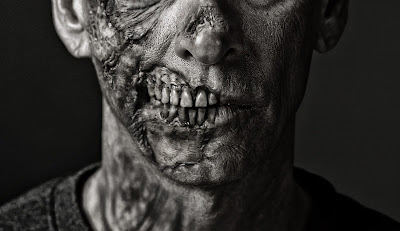
This is the end goal, not your starting point.

As the Game Master, you need to use all the elements at your disposal to begin inducing that necessary terror. Sometimes it can be heavy (the small hamlet on the swamp with the mist rolling in, and locals telling tales about monsters kidnapping people) or it can be subtle (local news reports in the background, or gossip at a frat party about some kind of fracas in one of the dorms), but you need to lead the table down into the muck. You don't start with horror or revulsion, because those things with no build-up is just a jump scare; cheap, forgettable, and often annoying. Horror or revulsion with build-up, though, becomes the thing players talk about for ages once they've put their dice away and moved on to something else.

There's an old saying about horror movies; the monster is more frightening the less you see of it. From Jaws to Alien, there's nothing scarier than the viewer's mind filling in the blanks on their own. The same is true when we talk about horror games. Because terror is often a result of little hints being dropped, or of the temperature being increased bit by bit on the pot that is the game. It's is what you get when the PCs stumble across the band of renegade orc warriors they were planning to fight, only to find them torn limb from limb by something far more dangerous. It's what happens when they meet an NPC with just enough knowledge to be afraid of what's coming, and who tells them it's already too late... if they know this much, they've been marked. It's what starts making them paranoid that the terror hasn't come upon them yet, but knowing in their hearts that it will... sooner or later, it will.

The benefit of terror is that it acts like a marinade for the horror to come. If you just took your monster reveal, or your big scare, and served it up all by itself, you probably wouldn't get too much of a reaction. But if you spent some time marinating your table in terror, making them listen to legends, having them hear the screams, watching as they tried to go deeper and deeper only to wonder too late if they can turn back, then even a minor horror is going to be enhanced by all that lead up.

Something to think about when it comes time to run a "horror game" and you want to have clearer language. Because while it might be more accurate to say you want to run a game with dark themes relying on building dread as the PCs circle ever-closer to the reveal of horror, and then have to live with what they experienced and survived, that isn't the way a lot of us talk about what we expect from a game.

But clear communication can often be a big help in getting you from concept to execution!

Also, for those looking for more GM advice, don't forget to take a flip through 100 Tips and Tricks For Being a Better Game Master!

Need More Horrific Supplements?


For all the folks out there who need some extra resources and tools for adding to their games and settings, I've been putting out all kinds of horror-related content the past few years. In addition to the examples in the intro, consider checking out:

- 13 Fiends: A Baker's Dozen of Devils: If you want unusual outsiders just waiting to make bargains with the unwary, then this one has you covered. References to it also show up in 100 Cults to Encounter, for those who are looking for shadowy organizations to pepper your world with.

- 100 Kinfolk Bundle: Kinfolk are the backbone of garou society in Werewolf: The Apocalypse, and this bundle has over 1,300 NPCs for you to fill your setting with! And if you enjoy this game, consider picking up a copy of Tales From The Moot as well!

- 100 Strange Sights to See in The Hedge: An entry for all my Changeling: The Lost fans out there, this one is for the storytellers who just can't pluck out surreal events off the top of their head. It pairs quite well with 100 Hobs To Meet in The Hedge as well as 100 (Mostly) Harmless Goblin Fruits and Oddments to Find in The Hedge should you want a more complete package!

Like, Follow, and Stay in Touch!


That's all for this week's Moon Pope Monday. To stay on top of all my content and releases, make sure you subscribe to my newsletter at the bottom of the page!

Again, for more of my work, check out my Vocal archive, and stop by the YouTube channel Dungeon Keeper Radio. Or if you'd prefer to read some of my books, like my cat noir thriller Marked Territory, its sequel Painted Cats, my sword and sorcery novel Crier's Knife or my latest short story collection The Rejects, then head over to My Amazon Author Page!

To stay on top of all my latest releases, follow me on Facebook, Tumblr, Twitter, and now Pinterest as well! To support my work, consider Buying Me a Ko-Fi, or heading to The Literary Mercenary's Patreon page to become a regular, monthly patron. That one helps ensure you get more Improved Initiative, and it means you'll get my regular, monthly giveaways as a bonus!

Saturday, September 11, 2021

Weapon Synergy: An Alternative to "Exotic" Weapons in Your Pathfinder Game

I've touched on a lot of different aspects of Pathfinder over the years. From spells, to skills, to character builds, to blow-by-blow playthroughs on campaigns, it seems like there's always something new to talk about. This week I wanted to focus on something that's always bothered me because it's both a limiting factor on mechanics, but also because it's one of those times where the mechanical limitation juts up so high that I can't cover it over with story reasons to make it blend into the background.

So today we're going to talk about "exotic" weapons, why I don't think they work, and some ways to adjust this for your game.

One man's exotic is another man's common.

For folks who want to help me keep the content flowing, consider becoming a Patreon patron! And if you want to make sure you don't miss any of my updates, then make sure you sign up for my weekly newsletter as well.

Let's Talk About "Exotic"


Folks who've been watching the development and changes in RPGs for the last little while have no doubt noticed there have been attempts to stop the use of "race" to differentiate between creatures, and to try use words like "species" instead. I'm doing this myself in my Species of Sundara series (the elf book is out for Pathfinder Classic and DND 5E for those who haven't checked it out yet). However, a lot of designers are digging deeper, and trying to find ways to change both the mechanics as well as the language we use to be more inclusive, and to leave behind older terms and ideas that have baggage attached to them.

I'd argue that "exotic" weapons are worth looking at for this reason.

Some weapons are more "exotic" than others.

There's a long list of exotic weapons in Pathfinder, and it covers everything from firearms, to sleeve launchers, to whips. However, as you look through the list, certain commonalities in general weapon type start cropping up. Weapons in this category tend to be associated with a certain species, or associated with a certain culture. And while one can argue that weapons that aren't widespread, or which require specialized training to use should be restricted, the problem comes with the use of the word exotic, and with how it may or may not apply to the story you're telling, and the background a character has.

Because at the end of the day, a lot of the weapons we see in these charts are very similar to one another in practice and use. The techniques for using a bastard sword aren't all that different from the ones involving a katana, a tetsubo and a greatclub are close enough that they probably couldn't legally get married, and the difference between a rope gauntlet, a cestus, and a standard gauntlet are so small as to be nearly laughable. The separation between them seems to be pretty arbitrary, and all it does is frustrate players, or force them to find workarounds to get the proficiencies they want, often at the expense of necessary resources.

So how do we make this more amenable without just throwing the baby out with the bath water?

Weapon Synergy


If you played Dungeons and Dragons back in the days of 3.5, chances are you remember the idea of skill synergy. Basically it said that, because you have been trained so well in skill X, and skill X is similar to skill Y, you will receive a bonus to represent this transfer of ability and knowledge. It was an idea that got left behind, but I think it could be reused to what I'm calling Weapon Synergy.

This feels unusual... but not all that unusual.

The idea behind this mechanic is that if a character is proficient in a particular weapon (or even armor) that is similar to a rarer or more unusual weapon, then that skill and ability transfers over. So if you're already proficient with the short sword, for example, then you would also be proficient with the wakizashi, gladius, and any other weapons of a similar style and type where the techniques and training would transfer relatively easily. The scimitar transfers over to the cutlass, the saber, etc. for the purposes of mechanics. If you are already proficient with both the sickle and the longsword, then a temple sword may take some getting used to, but not that much. If you're already familiar with punch daggers, then an ax gauntlet or a scissore isn't really that much different.

You could, if you wanted to, limit this feature so that players can only claim a certain amount of synergies at a time. Perhaps they only get 1 per so many points of Base Attack Bonus (every odd number seems fair), with additional bonuses from those who receive the Weapon Training background. Maybe they take a -1 instead of a -4 when using the synergistic weapon rather than the type they trained with. Those are just suggestions off the top of my head, but generally speaking, I don't see being able to use a wider variety of gear to be that much of a problem for the average game.

Whether you choose to limit it, or have it apply across the board, this idea can save you a lot of frustration when it comes to letting your players really untie the limitations placed on what they can and can't fight with. Because while some weapons have fun abilities or unique bonuses, none of them are so game breaking that allowing them to be used without spending a precious feat slot first will break the game.

I say this on behalf of everyone who's wasted a much-needed slot so they can one-hand a bastard sword.

"Uncommon" Instead of "Exotic"


The other thing I'd suggest is to use the category of "uncommon" weapons instead of "exotic". Because as I pointed out above, if you look at a lot of the exotic weapon choices (aside from things like the whip, the net, etc.) you basically have a weapon list that centers humans from a Western(ish) European setting as the default normal. And if a weapon or fighting style falls too far outside of that baseline, it trips and falls into the "exotic" category.

And the question that never seems to get asked is, "Exotic to whom, exactly?"

While I advocate using uncommon weapons as a designation, I would also suggest that this category should fluctuate based on where a game takes place, and where a character is actually from. Because if you have a character who was raised and trained in a particular culture, or by a particular species, then that would actually flip-flop what they consider to be normal and exotic. A noble warrior from an Eastern-inspired nation may never have seen the equivalent of the Dane ax with its 1d12 damage, but the katana would be the weapon he was trained to fight with, and to carry as his sidearm. Someone raised by orcs, or elves, or gnomes, might find the weapons and fighting styles of their adopted family and community came more naturally to them. And so on, and so forth.

This requires a lot more work on your part as a GM, and it means you need to communicate more with your players. You could even, if you wanted, have them trade proficiencies based on their unique backgrounds so they are customizing their history instead of using their backstory to just get free proficiencies that others at the table don't. But with so much of our games wrapped up in violence and the threat of violence, what our PCs bring to the battlefield matters. And there are so many fun, unique character concepts that people have just left behind because it took too many resources to make the more "exotic" choices work in their games.

Lastly, while we're on the subject of "exotic" weapon builds, my Tips For Building a Whip-Wielding Swashbuckler just got itself a facelift. If you want to see some of the gymnastics you have to go through to really crank up some unusual weapon choices, this guide makes a pretty good case for it in my opinion.

Like, Share, and Follow For More!


That's all for this week's Crunch topic! For more of my work, check out my Vocal archive, and stop by the YouTube channel Dungeon Keeper Radio! Or if you'd like to read some of my books, like my alley cat noir novel Marked Territory, my sword and sorcery novel Crier's Knife or my latest short story collection The Rejects, head over to My Amazon Author Page!

To stay on top of all my latest releases, follow me on Facebook, Tumblr, Twitter, and now on Pinterest as well! And if you'd like to help support me and my work, consider Buying Me A Ko-Fi or heading over to The Literary Mercenary's Patreon page to become a regular, monthly patron! Even a little bit of help can go a long way, trust me on that one.

Saturday, June 12, 2021

Fun With Languages and Accents (A Trick I Used in a Darklands Game)

Every game master out there has at least one moment where they improvised something the table really liked, and which just clicked into place. Sometimes it's a big deal, like an unexpected plot twist, or a huge set piece they just spun out of nothing. Other times, though, it's the small details that leave you patting yourself on the back.

That was what happened to me when I took my players down into the Darklands.

Things get weird down there, where the light doesn't reach.

As always, if you want to stay on top of all my latest releases, make sure you sign up for my weekly newsletter! And for those who want to help make sure that I can keep putting new and fresh stuff out there from week to week, consider supporting me on Patreon as well.

A Whole New World


The idea for this campaign started with wanting to take my players to a unique part of the Golarion setting for Pathfinder. While there was an adventure path that took place in the Darklands (the massive subterranean realm that was like a literal underworld through huge swaths of the setting), there was so much of it still to explore. The theme of the game was that it would have heavy survival elements, in addition to the goals the party was trying to achieve. That meant it was one of those games where I wanted people to track their food and water, their carrying capacity, their ammunition, etc. A big part of the challenge was going to be resource use and conservation while in a place that was so utterly alien to most of them (one member of the party, acting as guide, was a svirfneblin come up from below).

And hostile... let's not forget about that.

A pair of characters in the game were a wandering, crossbow wielding human mercenary, and his adopted goblin daughter. He'd found her on a job, realized it was just a sprog, and took her with him rather than leave her to the mercy of the elements, and human prejudices. Neither of them had any idea where she came from, but even as a goblin she looked a little unusual. She didn't quite map to any of the clans or tribes they'd come across, and it was put forth that it would be fun to find out more about where she came from at some point on the journey into the subterranean realms.

The party had managed to survive the first four or five levels, and they were engaged in a battle with gargoyles who were guarding a bridge over a chasm, when a mysterious figure leaped down from atop a nearby wall. Masked and wearing goggles, the small figure wielded a spear, and had a utility belt of strange, unusual items. Providing necessary aid at a clinch moment, he helped drive off the gargoyles. When he removed his mask, the figure was a long-limbed, spindly-fingered goblin. A goblin who looked far more like our party member than any of those who dwelt closer to the surface had.

The issue came when he tried to talk to them, and of course no one could understand the combinations of clacking teeth, clucking tongue, and deep throaty growls. After all, they were more than a mile below ground, and none of them (even the guide) had been to this section of the Darklands before... why would they understand him? In response the party's goblin tried some of the surface dialect she'd picked up, as did her adopted dad. The new goblin tilted his head, frowned, and mouthed a few words silently before grinning.

"What's shaking daddy-o? Saw you and the hep round were in some serious shade and thought maybe you could use a few fingers, right? Call me Spider, all the rats and scaps round here do!"

What followed was one of the more amusing sessions I've ever had figuring out how to make players work for their understanding, but keeping it fun and light instead of frustrating.

Fun With Linguistics


One thing I always try to avoid when I run games is the idea of a monoculture, which seems to be particularly prevalent among non-human creatures in a lot of RPGs. Perhaps the most obvious example of this is the idea of racial languages like "elven," "dwarven," "orc," and "goblin". Just living in America I know that a majority of the population technically speaks English, but talking to someone in Chicago, versus talking to someone in Ohio, and then talking with someone from the Alabama/Florida line, or deep in Texas country, it's likely you'll run into a fair bit of confusion.

This is something I try to represent when it comes to linguistic drift, local dialects, and other aspects of communication when players are going far afield from where they're more comfortable. And I know I'm not the only game master who does this (I know there's plenty of folks who reach for the "thee" and "thou" when they want something to sound antiquated), but if there was one piece of advice I would give it's to change up the communication style and structure.

With Spider, I didn't want my players to feel I'd just rendered all of their languages and specialties useless because they only applied to the surface. The idea was to make Spider's lingo (and that of the rest of his tribe, if they'd ever reached them) sound outdated and confusing, but more like you were trying to have a conversation with a greaser from the 50's than to converse with a character in Shakespeare. Because it wasn't just that the words were different, it was that there were concepts in the Darklands that didn't have an equivalent on the surface, so the players needed to pick them up via context (and the occasional Intelligence/Linguistics check). Much like how there are certain ideas from 70-80 years ago that just wouldn't make sense to us today if they weren't explained.

While it started as an off-the-cuff gag, it actually turned into a whole session of fascinating roleplaying as the party tried to really pick up what Spider was laying down. Information about their current situation was exchanged (how they needed to root out the gargoyles to pass this area), but most of it was just interpersonal stuff and light RP. Stuff that still probably would have happened had I not gone all-in on an odd speech pattern, but which would have been wrapped up and forgotten about in relatively short order.

So, my advice to fellow game masters, think about how people speak in a given area. Not just the accent and word choice, but what's the culture that informs the way they think and act? Is there something simple you could map it onto to provide a kind of real world meta-reference for the players? Because at the end of the day, the way creatures talk is a lot like hit points; it's an approximation for our understanding. So get creative with it, and go a little nuts!

Speaking of Avoiding Monocultures...


This experience is actually something I'm planning on weaving into my Sundara: Dawn of a New Age RPG setting for both Pathfinder Classic and Dungeons and Dragons 5th Edition. In addition to tossing out alignment entirely, I'm also breaking down as many monoculture ideas as possible... and part of that means there's going to be a lot of languages in this setting (which will emphasize players finding ways to communicate as a potential challenge).

I'm currently working on the first of a new line of supplements titled Species of Sundara, but while you wait on that, I've got several fun location splat books that have already dropped! And while they're intended for use with the overall setting as it grows, you can use them (as well all the story and mechanical goodies they contain) in whatever setting you happen to be running! So if you haven't grabbed your copies yet, consider checking out the following:

- Ironfire: The City of Steel (Pathfinder and 5E): Built around the Dragon Forge, Ironfire is where the secret to dragon steel was first cracked. The center of the mercenary trade in the region, as well as boasting some of the finest schools for teaching practical sciences, Ironfire is a place where discovery and danger walk hand in hand!

- Moüd: The City of Bones (Pathfinder and 5E): An ancient center of trade and magic, Moüd was lost to a cataclysm, and then buried in myth. Reclaimed by the necromantic arts of the Silver Wraiths guild, this city has once again become a place teeming with life. Despite the burgeoning population, though, it is the continued presence of the undead that helps keep the city running, ensuring that Moüd is not swallowed up once more.

- Silkgift: The City of Sails (Pathfinder and 5E): Built on the cottage industry of Archer cloth (an extremely durable material used for sails, windmills, etc.), Silkgift is a place that prizes invention and discovery. From gravity batteries that store the potential of the wind, to unique irrigation systems, to aether weapons, the city positively churns out discoveries... and then there's the canal they cut through the mountains that makes them a major center of trade across the region.

- Hoardreach: The City of Wyrms (Pathfinder and 5E): A center of power across an entire region, Hoardreach is ruled over by a Cooperation of five different dragons. A place for refugees and outcasts of all sorts, Hoardreach boasts some of the most unusual citizens and creations from across Sundara. Infamous for their sky ships, which require the cast-off scales and unique arcane sciences of the Dragon Works to take to the air, one never knows just what they'll find in this city built atop a mountain.

What's Next on Table Talk?


That's it for this installment of Table Talk! What would you like to see next? Or do you have your own story you'd like to share with folks?

For more of my work, check out my Vocal archives, as well as the YouTube channel Dungeon Keeper Radio where I help out from time to time. Or, to check out books like my hard-boiled cat noir novel Marked Territory, its sequel Painted Cats, my sword and sorcery novel Crier's Knife or my recent short story collection The Rejects, head over to My Amazon Author Page!

To stay on top of all my latest releases, follow me on Facebook, Tumblr, and Twitter, as well as on Pinterest where I'm building all sorts of boards dedicated to my books, RPG supplements, and greatest hits. Lastly, to help support me and my work, consider Buying Me A Ko-Fi, or heading over to The Literary Mercenary's Patreon page to become a regular, monthly patron! Even a little donation can have a big impact.

Sunday, November 19, 2017

De-Coupling The Idea of Race And Nation in RPGs

There is a particular trope in science fiction and fantasy that shows up a lot at our gaming tables. Chances are you've seen it, especially if you're a fan of a Tolkien-style setup. The way this trope works is that a particular culture (typically a non-human one, but human neighbors are not immune from this trope) is set up as having a particular thing that's noteworthy about them. You know, like how all Klingons (space orcs) are heavy metal tribal warriors, and how Vulcans (space elves) are aloof, logical, and tend to be generally better than humans at everything.

You know, like how ALL noblemen are inherently better than commoners.
Whatever the thing this race/culture/etc. is good at is referred to as their hat. It is immediately recognizable, completely unique, and every member of that population has it. And it's just fine for a generalized shorthand... but it sort of falls apart once you start interacting with people on an individual basis.

Things Get Better Once You Take Off The Hats


Fantasy games, especially games like Pathfinder, are loaded with hats. Having elven and orc as languages is a primary example. While we can largely blame Tolkien for it, the idea that all members of a given race inherently speak one language (except humans, of course, because humans are all different) is kind of ridiculous. Ditto the racial proficiency benefits that allow gnomes or dwarves to just naturally be good with certain weapons. Even if they come from parts of the world where those weapons would be improbable, unwieldy, or just not as useful. The biggest offenders, though, are when characters treat their race as the equivalent of a nation. Like there is only ever one culture, and one norm, and every member of that race you encounter will be aware of that culture, and those norms.

Here, I'll let Trope Talks explain the ins and outs of this one.


Got it? Lovely!

So how do you take off your character's hat? Or the NPCs' hats, if you're the DM? Well, the easiest way is to de-couple the idea of race from the idea of nation, and to introduce nuance and variety.

Adding Depth Always Helps


I hit on some of this a while back over on The Literary Mercenary with my post Tear Down The Monoliths, but that was meant more for writing than for gaming. So how do you introduce more depth and nuance into an RPG setting in order to avoid the idea that (except for PCs and the occasional important NPC) all members of a race, culture, etc. are more or less the same?

Well, the first thing you should do is de-couple the idea of race (the people) with the idea of nation (a physical location with specific borders). If you ever have an entire country that's made up strictly of only one kind of creature (the reclusive elven kingdom, the swarming orc horde, etc.) ask why? Because a small group of creatures, say a mostly nomadic tribe or even a small town, could easily remain homogeneous. Especially if they're self-sufficient, and have minimal interaction with outsiders. But in order to grow, they'll require a lot of resources. That typically means there will be trade, diplomatic relations with their neighbors (including war), and it means that people will want to come to be a part of what's being created. So the bigger a nation is, and the more land it brings together, the smaller the chances are of it being completely (or even mostly) homogeneous.

That is not to say that creatures from a given area don't share a culture. They absolutely do, even if as individuals they don't share all the same values, desires, goals, etc. But that area should influence who a character is in order to avoid playing into the excuse of the hat. For instance, you're playing a elf from Hardhome, so of course you're good with a longbow. So are many other folks there; archery is the nation's official national past time. So you're a dwarf who favors a hammer, eh? Well, yeah. When you were part of the Hilltop Guardians, you were a breacher. It was your job to batter down the door so your teammates could rush into the gap and capture criminals.

In short, make what you do about how you were raised, and where you're from, instead of using the excuse, "Well, I'm an X, so I'm just naturally good with a Y."

Another good step to take is to come up with alternatives to racial languages. It's more work on the DM's behalf, but try breaking them up into different dialects across the world. Yes, the Granite Kings popularized the characters and style of the Horrang language (snidely referred to by some as high-dwarven), but as the empire branched out, and citizens went to other parts of the world, it broke off and changed. Used mainly among scholars, and certain isolated pockets of the region, the language isn't dead, but it is rarely used in the everyday anymore. Make it clear that languages for other races are the same as for humans; they grow, they change, and they spread, becoming more or less common depending on trade, prominence of the home nation, the spread of its people, etc., etc.

This has the side benefit that skills like Linguistics, and magic like Comprehend Languages, become even more useful for those who invest in them.

Lastly, take the time to show players that given races and cultures aren't monoliths in your setting. Show NPCs as individuals, who may adhere to some of these sweeping generalizations, but not to others. Have a gnome who is calm, and difficult to excite, but who can fixate on objects of curiosity with an intensity that marks him as a genius in any field he chooses to enter. Give us a half-orc who uses his inherited strength and toughness to become a champion athlete, and who speaks out about non-violent solutions to the problems the world faces. Give us an elf who's damaged and volatile, who's seen hundreds of companions die of wounds and age, and whose unsurpassed skill on the battlefield is just as much a curse as a blessing as he forgets there is a way to live without a sword in his hand.

If It Ain't Broke, Don't Fix It


This is, of course, assuming that having a nation or planet of hats is an issue you've had at your table. Some games work perfectly well when they lean on this trope. Especially if it's a way to make an entire group of creatures irredeemable, so no one raises the issue of whether it's morally acceptable to slaughter the bad guys wholesale. However, if you like the idea of mixing up the formula, and jettisoning hats that, while functional, can make parts of the game world feel stilted and shallow, it's often a good idea to follow that impulse.

That's all for this week's Fluff post. If you're in the market for even more gaming content from yours truly, why not check out my Gamers archive, or head over to Dungeon Keeper Radio to check out some of the episodes I have the privilege to be part of? If you want to stay up-to-date on my latest releases, follow me on Facebook, Tumblr, and Twitter. Lastly, if you'd like to support Improved Initiative, head over to The Literary Mercenary's Patreon page to become a patron. $1 a month makes a big difference, and gets you some sweet gaming swag as a thank you!

Sunday, July 19, 2015

What's In A Name? How Your Character's Class is Limiting Your Creativity

Language is a funny thing in RPGs; we get a particular image in our minds, and then we never question whether or not the image we have is the only way things can be. For example, when you look at the Rage class feature, what comes to mind? Chances are good you thought of a hulking brute, howling and foaming at the mouth while attacking everything in reach. But Rage can be a lot of different things, from a physical transformation into a partially inhuman creature (through Rage powers that give you animalistic or demonic features), a no-holds-barred performance where you give this fight everything you've got, or even something as odd as a sub-routine that only takes over when you're threatened (as I talked about in The Android Barbarian).

It's the little things that we all accept without question that trip us up. That's why if you want to have a freeing experience the next time you create a new character, make sure you never, ever mention that character's class once you've sat down at the table.

What's In A Name?


More often than not we think of our characters in terms of their classes. Hakar is a ranger, so he is good in nature and he's a tracker. Beldrake is a sorcerer, so she has a great force of personality, and she will be physically weak and unarmored. Tim is a cleric, so all he's going to do is go on about his god, he'll pray quietly in the morning, and he'll heal the party.

Sir Troll Knight is a samurai and he... wait a second...
The point here is that we tend to use class as a shorthand for a stereotypical list of traits. Bards sing and are charming, rogues are dexterous and sly, paladins are church knights who refuse to break the law, etc. But if you take a step back from this accepted setup, you realize that in a lot of cases you have significantly more freedom with who your character is and how he or she operates than you think you do. Nowhere is it written that rogues can't be big, burly leg breakers who wield bastard swords. Bards don't have to be foppish and delicate, particularly given the training it takes to accomplish many of their acrobatic feats. Did you know that just calling the samurai a knight completely eliminates most people's problems with the class?

Dungeon masters do this, too, and it can broadcast to the players what a certain NPC's mechanical makeup is. That's why when I wrote the guide 100 NPCs You Might Meet At The Tavern I tried to include a few characters whose true skills and abilities simply don't match the first impression you get of them.

Who Are Your Characters, And What Do They Do?


Let's come at the issue from another direction in order to better illustrate it. Don't pick a class for your character first; instead, pick a profession. Something they would use their collection of class features and abilities to pursue.Let's say, for example, your character is a bounty hunter. That's a solid, adventuring trade, yes?

How does this character succeed at that job? Does he make the rounds of the taverns, listening to rumors and collecting tips about where a wanted person has gone to ground? Does she dog a person's trail, tracking them as much by scent and spoor as by the marks of their passage? Does your bounty hunter use magic to track the quarry, making it impossible to hide for long?

All of these are valid methods of building a man hunter. Whether you're a diviner, an oracle, a ranger, a rogue, a ninja, a bard, or a slayer, those are just the mechanics that fill out the bones beneath the flesh of your story. And like all mechanical bones they are most effective when no one sees them, or even suspects that they're there.

People's Example #1
When was the last time you asked what your character did before you asked what the character's class and stats were? For example, are you a bodyguard? A traveling thug for hire? Are you a treasure hunter? A spy? Are you a bandit? A burglar? Were you a war-drummer or a flute player with an army? Are you a soldier? A tailor? A tinker?

To belabor the point, let's take another example. Say that you wanted to play a wandering do-gooder. You know, the have sword, will travel sort of person. You could do this with a lot of different classes, but you decide to play a paladin. As we all know, in order to be a paladin you have to be of lawful good alignment, you have to follow a righteous god, and you have to maintain a certain code. Nowhere in the class's description, however, does it say you have to join a holy order. It doesn't say that you have to be trained by other paladins, or that you have to add the words paladin of (insert god here) every time you introduce yourself to someone. Nor does it say you must follow laws that clash with your code, or that you have to try and convert other people to your worship, or that you can't join the rest of the party in the tavern or the brothel (barring specific, completely-optional oaths that would be broken by intoxication and fornication respectively).

So what does that mean for your traveling hero? Well, perhaps he joined a great crusade (like fighting demons at the World Wound), and found both faith and strength in a foxhole. Maybe he was lost in the wilderness, ready to starve, when he was rescued by the intervention of Erastil. So now he lives his life doing the same, trying to help the lost and endangered of the world. Maybe she grew up in Cheliax and chose to embrace Iomede as a way of trying to make her country a better, nobler place, and to show that not everyone would sit idly by while devils made decisions in the upper echelons of power.

You know what else that means, though? It means that if you don't want to play a paladin loaded down with a foundry worth of steel, and who isn't blazing with holy symbols, you can do that, too. In fact, if you want to be a stealthy bowman who calls on the power of the divine to guide your hand and empower your arrows when hunting wickedness, nowhere in the book does it say you can't do that. It's just that focus on how the class is often depicted (and what other players feel the class should be) often blinds us to the different ways we have available to play it.

Beneath The Skin, Outside The Box


If you feel like your games are getting stagnant, it might be because you're relying a little too much on the names of your classes and abilities, and not enough on what makes up your actual character.

There are those who call me... Jeb.
The next time you sit down at your table, and everyone is introducing their characters, think of something to call them other than their class (even if their class name is applicable). Instead of being Erin the bard, why not introduce yourself as Erin Silverstrings, harper, tale-teller, and seeker of adventure? Instead of opening up your dialogue by saying you're Mortran the wizard, why not something like Mortran the Sage? Instead of telling everyone you're Dirk, Inquisitor of Abadar, why not give yourself a job title like Dirk, Accountant of the Missing?

Your class name is handy when you're discussing things out of game... but if you want to get better roleplaying in, and free your mind to create truly different concepts, stop focusing on what so many people say these classes should be, and instead ask what they could be if you just thought about them a little differently.


As always, thanks for stopping in! To keep up on all my latest make sure to follow me on Facebook, Tumblr, and Twitter, and if you want to support Improved Initiative then go to The Literary Mercenary's Patreon page to become a patron today!