Showing posts with label archetype. Show all posts

Saturday, April 23, 2022

Breaking Down The New Tricks Available in "Sellswords of Sundara"

Normally when I settle in for my Crunch update I talk about combinations I've already discovered in a game's system, or I offer a new way to look at strategy using a game's rules. As some folks around here may already know, though, my Sellswords of Sundara splat recently dropped for both Pathfinder Classic and Dungeons and Dragons 5th Edition. And while there's a lot of fun story and engaging world building in there for my Sundara: Dawn of a New Age setting, there's also 10 archetypes/subclasses in this book that each come with their own, unique tricks.

So I wanted to take a moment to break it down and talk about what I was trying to do with each, unique mercenary company, their fighting abilities, and the opportunities they allow you to bring to your game.

In case you needed some extra wooge up your sleeve!

Before we get into the details this week, don't forget to sign up for my weekly newsletter to get all my updates right in your inbox. Also, if you've got a bit of spare cash that you'd like to use to help keep the wheels turning, consider becoming a Patreon patron!

Lastly, to be sure you're following all of my followables, check out my LinkTree!

#1: The Band of The Godless Hand


Where is your god now?

Holy wars can be devastating, but even those with the gods on their side fear this mercenary company. Disciplined and zealous, they were formed to stop those who sought conquest and bloodshed in the name of the divine. Their unique arts make them quite effective against those who depend on outsiders as allies, or who wield divine magic.

Pathfinder: A cavalier archetype, the Godless gain large bonuses against fear, spell resistance against divine magic and channeled energy, and they deal increased damage when they charge foes.

DND 5E: A fighter subclass, the Godless roll with Advantage on saves against divine spells and abilities of outsiders, gain immunity to the Charmed and Frightened conditions, gain bonuses to fighting outsiders, and eventually can kill even powerful outsiders without needing to use magic weapons to do so.

#2: The Scarlet Company


The Scarlet Champions have never lost a duel.


The champions of Ironfire: The City of Steel (the first of the Cities of Sundara that came out for Pathfinder Classic and DND 5E), this mercenary company has a standing contract with the Dragon Forge. Some of the most terrifying duelists in the iron trade, the Scarlet Company receive deference even in a city awash in mercenaries of every stripe.

Pathfinder: A cavalier archetype that focuses on 1-on-1 duels, Scarlet Champions always act in the surprise round, gain the ability to reserve their attacks to parry and riposte in a way similar to the duelist prestige class, and their scarlet cloaks act as banners that grant them increased morale while their lightning speed allows them free opportunities to intimidate foes.

DND 5E: A fighter subclass, Scarlet Champions cannot be surprised, and even if they haven't acted may use their Reaction to make opportunity attacks. They gain a parry and riposte, eventually become immune to the Frightened condition, and they may even use their swirling, scarlet cloaks to give allies who are Frightened fresh saves to snap out of it.

#3: The Risen Legion


One cannot fight against death.

A mercenary company with connections to the fallen city of Moüd (for both Pathfinder and DND 5E), before it was re-discovered and repaired by the Silver Wraiths guild, the Risen Legion commands the powers of the undead. While there are treaties and agreements that disallow the use of risen corpses in many forms of war, even the still-living legionnaires often undergo strange transformations from their exposure to the amount of necromantic energy running through the ranks.

Pathfinder: A fighter archetype, Risen Legionnaires gain Necromantic Affinity, healing from negative energy as if they were undead, but also healing from positive energy (though they must save against both positive and negative channeled energy meant as an attack rather than to heal). They gain immunity to fear, and may ignore penalties from ability damage and drain, though still die if the penalties grow too severe. Additionally, they can be resurrected by animate dead, rather than more costly resurrection spells.

DND 5E: A barbarian archetype, Risen Legionnaires gain Necrotic Resistance when raging, and if they make a save against any effect that deals necrotic damage they instead gain the damage they would have taken as healing. They may also be resurrected by animate dead, and they gain Immunity to Charmed, Frightened, and to the negative effects of Exhaustion. They also gain Resistance to Poison and Cold damage, as well as Immunity to the Poisoned condition.

#4: Cloud Hammers
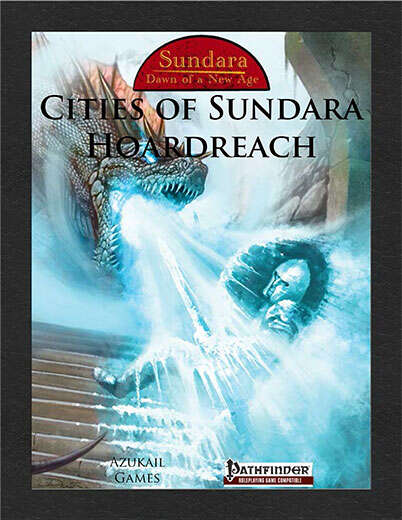

What could be worse than dragons? Sky privateers!

Hoardreach (available in Pathfinder and DND 5E) is known for many things, but aside from being ruled by a cooperation of 5 dragons, it is also where the first sky ships have been built. While these vessels take a great deal of time and resources to construct and field, they are slowly growing more common... and this mercenary company is built from those who have served among the cloud fleets. Named for the founding captain, this free company provides unique services including air dropping troops, and bombarding targets on the ground from beyond the reach of even the most powerful longbow.

Pathfinder: A gunslinger archetype, aether privateers gain the ability to negate enemy Dex bonuses to their armor class through unique aiming deeds, as well as the ability to shoot lines, belts, and connecting straps with pinpoint accuracy to disable vessels and opponents alike.

DND 5E: A rogue subclass, aether privateers gain unique bonuses on ranged attacks, the ability to make called shots, and to make trapping shots, where they can nail targets to the ground, a wall, etc., by putting bolts, arrows, axes, or daggers through armor, shields, or clothing to hold an enemy in place.

#5: Jackdaws


They're out there... somewhere...

A mercenary company that began because a young boy wanted to go bird watching, their founder Harrington "Jackdaw" Leeds was able to sit undetected for hours by wildlife and enemy scouts alike. A trainer for rangers and outriders, he eventually agreed to help found this free company in his later years. Though he's been dead a long time, his methods and skills live on.

Pathfinder: A ranger archetype, the Jackdaw Scout allows you to alter your favored terrain to suit whatever environment you find yourself in. Additionally, these scouts can grant their bonuses to allies within a certain radius, allowing them to keep everyone on their toes, and moving silently through even the most rugged terrain.

DND 5E: A ranger subclass, the Jackdaw Scouts may shift their favored terrain with some time and effort. They also gain message at-will while within these favored terrains, and they may use the Help action at up to 120 feet for Stealth checks, or for attacking enemies from ambush. Additionally, Jackdaw Scouts deal devastating damage when attacking from surprise while within a favored terrain.

#6: The Widowmakers


We're the bad men who do bad things.

Some mercenaries maintain codes of honor, or rules of conduct... the Widowmakers do not. Brutes, brigands, killers, and cutthroats, this mercenary company is made of some of the worst of the worst. Serving the Widow, a woman whose grief at the loss of her husband led her to end a war by recruiting some of the most dangerous individuals silver would buy, these mercenaries' reputation precedes them... usually for the worst.

Pathfinder: A fighter archetype, the Widowmaker Enforcer loses out on heavier armor, but gains more skills, bonuses to initiative, sneak attack, and the ability to inflict status conditions on opponents they can hit with their sneak attack.

DND 5E: A fighter subclass, Widowmaker Enforcers gain limited sneak attack, the ability to render opponents blind or deaf, and later on the power to deal sneak attack more than once in a single turn.

#7: The Fists of Kormmuz


Iron hands can endure anything.

A unique fighting force, the Fists of Kormmuz are one part monastic order, one part warrior cult, and one part mercenary legion. Responsible for some legendary feats of fighting prowess, they're most known for their signature weapons; heavy, steel gauntlets. Because while they are as deadly bare-handed as many other monks, once their fists are sheathed in iron they become truly devastating as foes.

Pathfinder: A monk archetype, the Fists of Kormmuz may deal their unarmed damage with gauntlets, cestus, brass knuckles, or a spiked gauntlet. Not only that, but these weapons allow the monk to be treated as a size category larger for their damage dealing. They gain Cut From The Air and Smash From The Air as bonus feats, and may eventually parry attacks with their gauntleted fists. Their capstone power is smashing spells out of the air with perfectly-timed blows from their fists.

DND 5E: A monk archetype, wearing a gauntlet, spiked gauntlet, brass knuckles, etc., increases the Fist of Kormmuz's unarmed damage type by one die. They gain the ability to parry and counterpunch attacks coming at them, as well as the ability to strike spells out of the air.

#8: The Brotherhood of Broken Banners


You going to get up, or stay there in the dirt?

Another favorite from 100 Random Mercenary Companies (where many of these groups were first conceived), the Brotherhood of Broken Banners is a mercenary company that takes in those who were on the losing sides of wars and conflicts. Those who have no homes, no lands, no families, will always find a place among other veterans of conflict... and even those who were once bitter rivals may find themselves closer than blood among this band.

Pathfinder: A cavalier archetype, a Broken Bannerman gains resistance to fear effects (always treating themselves as shaken rather than more potent effects), and they gain immunity to any charm or compulsion that would force them to flee the battlefield. Additionally they gain a battle cry that strengthens their allies' sword arms while putting fear into their enemies.

DND 5E: A fighter subclass, the Broken Bannerman gains immunity to the Frightened condition, and they roll with Advantage on enchantment or illusion effects. They gain a battle cry that boosts allies and frightens enemies, and they may deploy their banner to grant inspiration to themselves and their allies.

#9: The Grayblades


I've forgotten more about war than you will ever know.

Old soldiers never die... those who don't fade away, though, often join the Grayblades. While known as trainers and teachers, those who would discount this mercenary company due to their age have learned the hard way that experience mixed with viciousness is often more than enough to carry the day.

Pathfinder: A fighter archetype, Grayblades must start at a higher age category, but they gain increased skills and skill ranks as a result. They may use their Intelligence or Wisdom bonuses for initiative instead of Dexterity, and they gain initiative bonuses as they level. They gain bonuses to Aid Another, as they are used to coordinating soldiers under their tutelage, and at higher levels they can ignore their age penalties for a time. As a capstone, those age penalties instead become bonuses as, for a brief time, they fight like they were back in their prime.

DND 5E: A fighter subclass, Grayblades gain increased skills and proficiencies for their experience. Grayblades may use the Help action from further away, and they can affect more than one ally with it at a time. At higher levels they may double their physical bonuses for a brief period of time, cutting loose with all the skills they've learned over their careers.

#10: Nightwatch Dragoons


The night is dark, and full of terrors.

Dangerous beasts and awful monsters lurk in the corners of the world, but there are those who study them, track them, and slay them. Infamous monster hunters, the Nightwatch Dragoons are known far and wide for their indigo uniforms and silver hilts. Mysterious, and more than a little unnerving, they take bounties on creatures that most would have wagered no mortal man could slay.

Pathfinder: A slayer archetype, Nightwatch Dragoons can study the tracks, stories, and spoor of creatures, and declare them studied targets without ever laying eyes on them. Additionally, they can learn all kinds of insights about these targets from studying their sign. They can also reduce studied enemy's damage reduction, allowing them to deal lethal blows to creatures thought immune to mortal weapons.

DND 5E: A ranger subclass, Nightwatch Dragoons roll with Advantage against favored enemies, and deal bonus damage on all attacks against them. Additionally, they may switch their favored enemies to new kinds of creatures with an appropriate Intelligence check. This can later be done just by studying a creature's spoor, and without making an Intelligence check. Favored enemies eventually lose Resistance to the kind of weapon used by a Nightwatch Dragoon, and if they had no Resistance they gain Vulnerability instead.

Like, Share, and Follow For More!


That's all for this week's Crunch topic! For more of my work, check out my Vocal archive, and stop by the YouTube channel Dungeon Keeper Radio! Or if you'd like to read some of my books, like my alley cat noir novel Marked Territory, my sword and sorcery novel Crier's Knife or my latest short story collection The Rejects, head over to My Amazon Author Page!

To stay on top of all my latest releases, follow me on FacebookTumblrTwitter, and now on Pinterest as well! And if you'd like to help support me and my work, consider Buying Me A Ko-Fi or heading over to The Literary Mercenary's Patreon page to become a regular, monthly patron! Even a little bit of help can go a long way, trust me on that one.

Saturday, October 17, 2020

Remember, Elves Need Blacksmiths and Dwarves Need Fletchers

Archetypes are everywhere when it comes to tabletop RPGs, and the stories we tell with them. All you need to do is mention a class or race you'd see in a fantasy game, and you immediately have an image leap to your mind. When someone says elf, you probably picture a long, lithe figure holding a bow, a scimitar, or both. They probably have long, flowing hair as well. When someone says dwarf you probably picture the opposite; a bulky, bearded figure with an ax or a hammer, likely bearing armor and a shield and ready for battle (assuming you're not a Gotrek and Felix fan, that is).

If you haven't read it yet, seriously, go check it out!

This applies to other games, as well. If you say the word Ventrue to a Vampire player (Masquerade or Requiem) they'll also have a very particular image immediately spring to their minds. Likely a man in a power suit, or a woman in an elegant sheathe dress. If you say to a Werewolf: The Apocalypse player Get of Fenris that immediately calls up images that are one part Boris Vallejo and one part Harley Davidson.

To be clear, these traditional images we have of classes, clans, tribes, fantasy races, etc. in our games are not wrong. From the paladin who is a handsome, holy knight in shining armor, to the half-orc barbarian who's allergic to shirts, those archetypes became archetypes for a reason. However, at the same time, it's important to remember that they are not a requirement by any stretch of the imagination. There is more beneath the surface-level reading of what characters can be, and choosing to disregard some (or even all) of a stereotypical imagery associated with your rules chassis doesn't make you a "special snowflake" who's trying to be different.

Because if the rules don't say you must be, do, or have X,Y, and Z, then it's not a requirement for your character.

Elves Need Blacksmiths, and Dwarves Need Fletchers


Thurandill shall be your name, and you'll be as deadly as you are beautiful.

This phrase was a gold nugget that someone dropped at my feet in the White Wolf subreddit, and it's become a part of my personal philosophy (permission was granted to steal it, which is why I'm sharing it with you fine folks). Basically, any time there is a role that would be common to a society, a race, a clan, etc., there is going to be someone fulfilling that role. The dwarven smith might be the stereotypical image you think of, but there are smiths among the elves, among the orcs, the halflings, gnomes, and humans, too. There will be differences, sure, but there will also be similarities. Elves may be the ones we associate with archery, but there are half-orc and halfling longbow snipers that may be just as deadly.

And so on, and so forth.

Despite what sounds very obvious on its face, there are a lot of DMs, GMs, STs, and others who will immediately lose their cool if someone proposes a character they deem too far outside that stereotype. A character who is, "too special," "too weird," or, "too unique," so they throw on the brakes. If you find yourself in that position, I would recommend taking a step back and asking yourself why you're doing that? Because as long as a character concept follows all the rules, and is consistent with the lore and physics of a setting, what do you gain by denying your players something they want to play?

Think Deeper, Think Broader


The stereotypes in our games are meant to be a starting off point, but they're by no means the law of the land. Unless the rules expressly state something is required, then enforcing that status quo does nothing but narrow the potential of your setting, your characters, and your players. It puts additional limits on our flights of fancy, whose only limits should be the agreed-upon rules of the setting and game.

And we've got enough of those to deal with as is.

To be clear, I'm not saying you can immediately ignore anything that gets in the way of your character concept. If there's a particular form of magic only accessible to those of elven blood, then only characters who have the proper DNA can learn and harness that magic. If you can only learn a certain fighting style at a particular temple, and from a particular teacher, then you need to have that as part of your backstory. And so on, and so forth.

But if there is nothing in the setting or rules that creates a requirement for a character to possess the skills they have, or to look or act the way they do? You get a lot more out of disregarding the stereotype in favor of saying to your players, "All right, lay it out for me. How did they get like this?"

If someone wants to play a half-orc barbarian who was adopted and raised by the duke and his husband, where does it say in the setting rules that this mounted fury who's infamous on the melee field during tournaments isn't a valid concept? If someone wants to play a Ventrue in your vampire game, but instead of a business suit and a red tie he wears leathers and runs a motorcycle gang of ghouls like a pack of Old West desperadoes, what do you gain by telling the player they can't do that? If a player has a broad-shouldered armorer with rippling thews and a grip that can crush a man's skull, why would you insist they play a dwarf instead of an elf if their concept is based entirely around being an elven smith who maintains old elven relics while attempting to recreate the styles of the old masters?

Pick your battles, and work with your players so that they can be happy with the characters they're bringing to your game. It really does set the tone for everything else.

Additional Reading and Thoughts


This isn't exactly a new concept, so I thought I'd leave some links to times I've talked about this before. Not to get too repetitive, but I thought it would be of interest to some folks. Also, while I have your attention, my new supplement A Baker's Dozen of Fantasy Vigilantes just dropped today! I'm pretty excited about that, and I wanted to bring it up. Also, if you want to make sure you never miss any of my updates and fresh content, consider signing up for my newsletter! One update goes out every week, recapping all the news and releases in a single missive.

- DMs, Learn To Take Your Foot Off The Brake: One of my more recent talks on this subject, a DM looking for reasons to say no instead of reasons to say yes is one of the most common causes of table enthusiasm flagging, then going out entirely.

- Everything is Weird in Fantasy RPGs (But That's Not How You Make a Character Stand Out): A reminder that just because something is weird or unusual in your experience, that doesn't mean it's all that strange by the standards of the setting.

- DMs, Please Stop Arbitrarily Limiting Race Choice in Your Games: There are few things more frustrating than showing up to a game that is full of possibilities, and then being told you can only play characters of X, Y, and Z races, for reasons. You want your players enthused, and you don't do that by narrowing down their options for no reason.

Like, Follow, and Stay in Touch!


That's all for this week's Fluff post!

For more of my work, check out my Vocal archive, and stop by the YouTube channel Dungeon Keeper Radio. Or if you'd prefer to read some of my books, like my alley cat thriller Marked Territory, my sword and sorcery novel Crier's Knife or my recent short story collection The Rejects, then head over to My Amazon Author Page!

To stay on top of all my latest releases, follow me on FacebookTumblrTwitter, and now Pinterest as well! To support my work, consider Buying Me a Ko-Fi, or heading to The Literary Mercenary's Patreon page to become a regular, monthly patron. That one helps ensure you get more Improved Initiative, and it means you'll get my regular, monthly giveaways as a bonus!

Saturday, September 28, 2019

The Living Weapon

My Child, Be A Sword


My mother was a hammer. My father was a forge. And when I lay down in the cold, they whispered, 'Child, be a sword.'

Some want their children happy. Some want them safe and calm. Others, though, will scrape their bones, and sing them songs of war.

My mother's milk was blood. My father's love was pain. And in the dark I heard them whisper,
'Child, be a sword.'

A sword will never hurt. A sword will never cry. And if you keep it sharp, then a sword may never die.

A sword is not a comfort. A sword is not a friend. A sword has but a single task; to tear, and cut, and rend. But a sword won't be forgotten. It won't be cast aside. For a blade as sharp and cruel as you will be very hard to find.

So put away those dreams, and clear them from your head. They will do you naught but harm down the road that you must tread. For it is with great care we hurt you, and with malice grind your edge.

For good steel's hard to come by, but even harder still. To turn it to a purpose with a true, unbending will. While others dream of love, and sing of face and form, those things my dear are not for you.

My child, be a sword.

Sleep well, child. Death comes in the morn.

The Living Weapon


I originally wrote this poem as a piece of background for a Fianna ahroun I was contemplating playing in a Werewolf: The Apocalypse game, and since I spent the last month working on my 100 Fianna Kinfolk with High Level Games, it's been on my mind quite a lot. Because it represents a piece of inspiration for a certain archetype that I come back to time and time again in both my work, and in my play; the Living Weapon.

A Living Weapon is a character for whom violence is second nature. Whether they were trained by warmasters from birth, bound to deadly spirits of bloodshed, or they've been dedicated to a spirit of destruction, these characters are deadly, to be sure... but they are also ripe for engaging arcs of character growth.

As one example...
 
Living Weapons are most at-home in the thick of brutality and violence, and it's why they're so often thought of as badasses. But once the battle fades, they retreat into themselves. They're quiet, often uncomfortable, and at times they can even have a child-like fear of things outside their very specific niche. They may be surprisingly gentle, or they may lash out in a way that's completely out of proportion if they're scared by something. And gods help the person who hurts someone the Living Weapon considered a friend, because there is no measuring the lengths they will go to in order to make it clear what a mistake that was.

The difficulty with this concept is that it is very tough to get below the surface, and to bring all the feelings bubbling up so the roleplaying can be put on display for everyone else to see, and get involved in. That's why I recommend going one of two ways with it, in order to make it really stand out at your table.

The first is to make sure the character has a minder. The minder is the person who ensures the Living Weapon follows certain rules, stays involved with the group, and they can act as the can opener to help give others a peek beneath the carapace. If the Living Weapon is trying to be good, then the minder might be a gentle influence, keeping them calm and trying to introduce them to simple pleasures. They can also help bring the Living Weapon out of their killer's state, if something trips them and they go back to their old ways. On the other hand, if the Living Weapon is an evil character, the minder will be the one who holds their leash, and gives them their orders. In this case they become the mouthpiece for the Living Weapon's raging Id, though if you want to do a redemption arc then the minder could also act as the manifestation of the Living Weapon's worst impulses. If that's the case, I'd recommend making them an NPC, rather than a PC, as death is quite likely for the minder in this scenario.

The second way is to let your setup do the talking for you. I mentioned this back in Character Reputation in RPGs: The Small Legend, but if your character was part of a certain organization, tradition, tribe, or cult whose reputation is well-known, then you can get a lot of mileage out of that. A perfect example is Todd in the film Soldier. Everyone in that setting knows that Soldiers are dangerous, trained to fight and kill from birth. They know enough to know what he is, but not enough to understand who he is... which is the goal. Set up the backstory for your Living Weapon, such as making them a member of the mercenaries known as the Sons of War, who are all trained from childhood by older members of the company, or by making them a knight of the cursed legion the Howl (these are found in 100 Random Mercenary Companies and 100 Knightly Orders respectively), and you've cemented their reputation. Add some rumors about how people like them only speak with their swords, or how they're like rabid dogs once you get their blood up, and the stage is set. Once your PC starts disproving some of those rumors, and the rest of the party learns who they are as an individual, they can become a part of the Living Weapon's growth and change.

Either way, it's important to remember that it's not enough to have the pathos and character development going on beneath the surface with this concept; you need to put it out front for it to mean anything. Otherwise you just look like the sort of character who only wakes up when it's time to fight, going silent the rest of the time. Let everyone join in on the Living Weapon becoming more than just a blade... or following their descent into monstrous depravity. Whichever direction you're going, make sure everyone at the table is along for the ride.

Also, remember what I said in 10 Backgrounds For Your Scoundrels and 10 Backgrounds For Your Spellcasters; not all warriors are traditional, martial characters. A Living Weapon might be an assassin trained to deliver death with a flick of their wrist, or a sorcerer who was bred and raised to become a weapon of mass destruction. These are also options if you want to try something a little less traditional with this archetype.

Like, Follow, and Stay Tuned For More!


That's all for this installment of Unusual Character Concepts. Hopefully this one gave you something to chew over, whether you're a player, or a game master.

For more of my work, check out my Vocal archive, and stop by the YouTube channel Dungeon Keeper Radio. Or if you'd prefer to read some of my books, like my alley cat noir novel Marked Territory, my sword and sorcery novel Crier's Knife or my most recent collection of short stories The Rejects, then head over to My Amazon Author Page!

To stay on top of all my latest releases, follow me on FacebookTumblrTwitter, and now Pinterest as well! To support my work, consider Buying Me a Ko-Fi, or heading to The Literary Mercenary's Patreon page to become a regular, monthly patron. That one helps ensure you get more Improved Initiative, and it means you'll get my regular, monthly giveaways as a bonus!

Sunday, July 21, 2019

Air Support in Pathfinder: 4 Ways To Get Your Party Airborne ASAP

Flying is one of those things that happens in every Pathfinder game, sooner or later. Whether it's for epic dragon fights, or so you can avoid the deadly bastions of an enemy fortress, the ability to add a third dimension to your party's combat and movement capabilities is a game changer.

The question so many parties face, though, is how do you get into the air?

All right, Ragnar, we just have to get this rope around his neck...
Most of us are content to wait until we hit mid to high levels before we can finally start flying around. And while there are plenty of abilities like bloodline powers or racial feats that kick in around 11th or even 15th level, that's not what this week's installment is about.

Because if you really want to get the most out of being able to defy gravity, then you need to get your hands on that power as soon as possible. So the following methods are meant to get you high in the sky before you hit 6th-level or so. Also, we're looking for permanent ways for you to fly whenever you want to, rather than just for a few minutes when you happen to be in a fight.

Now then, on with the list!

Option #1: Character Race


Some of us are just born lucky, I guess.
One of the appealing traits of fantasy races is that they offer unusual capabilities or helpful bonuses. Some races even grant you a natural flight speed that you have at creation. Your maneuverability will vary, and you'll have to make a lot of Fly skill checks, but the ability to be high in the sky from level 1 onward grants you serious advantages that cannot be overstated. From ignoring difficult terrain, to staying out of the reach of melee-focused enemies, there's a lot to be said for those who can take wing using just what the gods gave them.

Some of the options you have include:

- Gargoyles: According to the playable stat block in the Advanced Race Guide, gargoyles have a natural fly speed of 50 feet. While most DMs probably won't let you have a gargoyle, it is one of the most powerful natural fliers out there.

- Strix: Also statted out in the Advanced Race Guide, the strix is probably one of the most commonly-denied races players have requested. With a natural fly speed of 60 feet, or 20 feet if they have the wing-clipped trait, most dungeon masters view strix as a flying monkey on their backs. If you get one, hold tight and have fun!

- Wyvaran: Paizo's answer to the Dragonborn, the wyvaran is another race that got a lot of attention in the Advanced Race Guide. They have a 30 foot fly speed, but their maneuverability is absolute crap. Fortunately, a high enough investment in the Fly skill can help you get around that minor inconvenience.

- Gathlain: These small-sized, woodland-looking creatures have a surprising among of speed when it comes to getting into the sky. With a 40 foot fly speed, but rather crap maneuverability, you can do quite a bit with them if you can persuade your DM to let you have one.

- Aasimar: While most people are familiar with the Angelic Wings feat aasimar can take later on in the game, there's actually an alternative racial feature that grants them a 20 foot natural flight speed at creation. It's a feature that shows up more than once in my most recent collection 100 Unusual Aasimar, and while it isn't the best speed, it can be boosted through any spells and other items that increase your character's base speed.

- Skinwalker: Skinwalkers debuted in Blood of The Moon, and the Bloodmarked variety have the ability to take Bloodmarked Flight once their BAB hits 5. This adds flight to their list of features they can use when they transform, and their transformations last basically as long as the player wants, making this a solid contender for full-BAB characters with an open feat slot.

While not being added to this list, honorable mention goes to the tengu. Their ability to glide and thus prevent falling damage is very useful in an aerial campaign, and the feat Tengu Wings allows them to grow functional wings for a short period of time per day, but it's not enough to keep up with the rest of the options in this section.

Option #2: Animal Companion


Mount up, loser, we're going adventuring!
Animal companions tend to fill more of a tank role, with bears and wolves as some of the standby favorites. However, there are a lot of animal companions out there that can fly... and some of them start as Medium-sized animals! The vulture is one of my favorites for this purpose, but there are one or two others on the list.

This is ideal if you're a small-sized druid, ranger, hunter, or other class that naturally receives an animal companion. You could even use it for clerics with the Animal domain, or those who take feats like Animal Ally out of Faiths and Philosophies. If you don't get a full druid level to advance your companion, then taking the feat Boon Companion out of Ultimate Wilderness is a smart idea. And if you want to play a Medium-sized character, but still want to fly, then you should consider the feat Undersized Mount out of the Advanced Class Guide. There are also some ranger archetypes that get flying mounts, like the hippogriff rider, if you're willing to wait a few levels to claim your sleek ride.

Generally speaking, we're looking at level 1 and level 4 respectively for animal companion flight, which isn't too bad. Provided, of course, you're not too big for your animal companion to haul you aloft.

You need to make sure your animal companion is properly trained so you can ride them, you'll likely need to get the proper saddle made for them, and you might want to take some mounted combat feats to help you run and gun through the skies. If you're going to be shooting from the saddle, that gives you penalties, so it's a good idea to take Mounted Archery. If you're going to be casting spells from a moving mount (as opposed to casting before or after your mount moves), that forces you to make concentration checks, which is also something to keep in mind.

Option #3: Familiars


Oi! Make with the magic already, Mephisto!
We tend to think of familiars as delicate little flowers to keep protected and safe... but you can turn them into a harrier, and rain death from the skies if you want to. With the right options, a familiar can make a perfect perch for an evoker who wants to provide fire support from a distance, or for a conjurer who wants full access to control the battlefield like it was a chessboard.

But how do you make such a tiny animal something you can ride on?

Well, this is another lovely present from Ultimate Wilderness. Because in addition to animal companion archetypes, the book also gave us familiar archetypes. The one you're going to want most for this plan is the Mauler. These familiars are always dumb and aggressive, but that's exactly what you want in a battle mount. At level 3, they can grow to a medium-sized version of themselves, which makes them easily able to be ridden by smaller casters, or by Medium-sized ones with the right feat.

If the idea of a half-mad gnome evoker riding a hawk the size of a condor into battle, blazing bolts flying from his hands as he and his familiar screech in triumph appeals to you, then this is definitely the direction you should be going.

This isn't just an option open for strictly arcane casters, either. If you take Eldritch Heritage in Ultimate Magic for the Arcane bloodline, then that grants you a familiar. You could also take the feat Familiar Bond out of the Familiar Folio, if you want something a little more expedient but which is much more useful for a melee class that just needs a familiar that can become a mount. And, of course, there is a magus arcana that grants you a familiar, as well as several other paths to acquiring such a bonded companion.

The thing to remember is that your familiar/mount needs to be able to carry you and your gear, and that you need the proper skills to ride it the same way you would any other mount. As it grows in level, though, it will gain more natural armor, and Maulers will also gain damage resistance when they hit higher levels. And if you are a caster, you can share spells with your familiar, allowing you to buff it up to become even harder to hurt, and giving it other capacities while it carries you through the battlefield.

And if you take a dip into a different class, Boon Companion works for your familiar just as it does for an animal companion.

Option #4: Eidolon


You didn't forget about me, did you?
The summoner is known for making terrifying tanks via their eidolons, but it's also possible to give yourself a flying mount pretty much right off the bat if you invest the points. A base avian form, and a small-sized summoner can be a deadly combination. Especially if you add in some other traits that let the bird blast from a distance, or if your summoner gets hold of the right scrolls, wands, and other spells to provide the right kind of support from their place on-high in the sky.

Unlike many of the previous options, eidolons are one of those things you can't really tap into from other classes. So for this one, being a summoner is really the way to go.

Make Sure You Bring Your Squad To The Right Campaign


Before you get too caught up in designing your ideal aerial wing, there's one last thing to keep in mind when it comes to these ideas; fliers need room to fly!

It sounds obvious, but it's one of the reasons I wanted to bring an airborne party to a game like Giantslayer, rather than one like Emerald Spire. Because while there may be times in the former adventure path when the party finds themselves underground, or constrained within a relatively small arena, there will be plenty of opportunities for high-flying shenanigans, ranged games, and all sorts of airborne adventures. Whereas in the Spire... well, you're inside all the time, often in cramped, narrow, dungeon-crawl style halls. Not the best place for a halfling wizard named Iceman and his hard-eyed arctic hawk Mauler.

That's all for this week's Crunch topic! For more of my work, check out my Vocal and Gamers archives, and stop by the YouTube channel Dungeon Keeper Radio! Or if you'd like to read some of my books, like my sword and sorcery novel Crier's Knife, head over to My Amazon Author Page!

To stay on top of all my latest releases, follow me on FacebookTumblrTwitter, and now on Pinterest as well! And if you'd like to help support me and my work, consider Buying Me A Ko-Fi or heading over to The Literary Mercenary's Patreon page to become a regular, monthly patron! Even a little bit of help can go a long way, trust me on that one.

Saturday, March 3, 2018

Delivering A Big Bang With The Underground Chemist

If you've ever sat at a table with me, you know alchemical items are one of my favorite things to use. To the point that I keep them around long past low levels, when most players sort of forget they're even a thing. While there have been more than a few occasions where a properly-utilized tanglefoot bag has put a serious monkey wrench into a DM's plan, most of the time alchemy stops being viable for anyone but alchemists by about fourth or fifth level (if we're being generous).

Which is why I love the Underground Chemist.

We're underground now, but don't worry, we'll be blowing up soon!
While the rogue gets a lot of hate (which has made my 5 Tips For Playing Better Rogues one of the best read articles in my 5 Tips series so far), the Underground Chemist is an archetype that lets you break a lot of rules. First off, at second level, it lets you draw alchemical items as if they were weapons, which opens up the possibility of using Quick Draw to get your full attack with acid, alchemist fire, and all the other goodies out there. You also get to add your Intelligence modifier to damage done with splash weapons, the same way an alchemist does. That's good times, right there. Secondly, at 4th level, you can sneak attack with a splash weapon. Provided it's your first attack of the round, that it's an attack on a creature and not a square, and that it meets all the requirements for sneak attack.

Those two things make flinging flasks pretty viable as an attack strategy. But if you combine them with a certain rogue trick, you can get a lot more bang for your buck.

Burn One Down For Me


In case you haven't dug through the lists of rogue tricks out there, there's one simply called Bomber. It allows you to make bombs as per the alchemist class feature, except that they deal damage equal to your sneak attack when they hit. And normally it doesn't allow you to add your Int modifier to the damage, but since you're an Underground Chemist, you have that as a class feature. Of course, the truly damaging part is when you catch an enemy flat-footed with your bomb. Because that is a two-for-one blowout.

So much for Vlacuul the Dread Necromancer. Next?
The sweet spot for this trick is when you can hit someone with one of your bombs under the conditions where it qualifies for sneak attack. Whether that's by having an insanely high Initiative modifier, downing a potion of invisibility, or just going for a target who can't see in the dark once you've snuffed the lights, you're essentially hitting them for double your sneak attack damage (once for the bomb itself, and once for the actual sneak attack with a splash weapon), plus your Intelligence modifier, in addition to any other feats and abilities you have. Even at 4th level, that can pack a punch. At higher levels, that could be on par with anything the evoker is going to throw out in terms of sheer dice volume.

Keep Your Options Open


While the combination of Bomber and Underground Chemist is a match made in some fiery, napalm heaven, it's important to remember that fire resistance is one of the most common varieties you're going to come across in the game. So remember to keep a variety of elements on hand, and to ensure you have an extra trick or two up your sleeve to ensure you're never out of options. Because, as any alchemist who's fought a demon will attest, you need something to fall back on.

That's all for this week's Crunch topic. While I haven't had a chance to put this particular trick into play just yet, I'm sure I'll share how well it worked. For more content, check out my Vocal archive, or head over to the YouTube channel Dungeon Keeper Radio where I work with other gamers to bring the world of Evora to life. To stay on top of all my releases, follow me on Facebook, Tumblr, and Twitter. And if you'd like to help support Improved Initiative, then either head over to The Literary Mercenary's Patreon page to become a patron, or Buy Me A Coffee! Either way, I'll send you some sweet gaming swag as a thank you for your help.

Friday, October 16, 2015

How to Weaponize Your Intimidate Check in Pathfinder

Normally I put this at the end of a post, but I figured I'd change things up this week by reminding readers that if they want to help support Improved Initiative, then leaving a little patronage at my Patreon page is a great way to do it. From now till the end of November, though, in addition to getting the warm, fuzzy feeling you get from supporting something you like, I'll give you a free book as well!

Also, if you're an existing patron and you bring someone new, then both of you get free stuff!

All right, obligatory reminder that this blog pretty much runs off your support aside, let's pop the hood and get into the gears for this week's crunch build.

The Bruiser: Weaponizing Your Intimidate Check


Intimidate is one of the most commonly used social skills in Pathfinder. If there's a guard getting in your way, or a merchant who's trying to screw you on a deal, you make a veiled (or not so veiled) threat to get them to reconsider their actions. During combat you can make an intimidate check to demoralize an enemy, leaving them shaken if you can beat a DC equal to 10 + the enemy's hit dice + the enemy's wisdom modifier. Not only that, but the duration of the shaken condition goes up by 1 round for every 5 by which you beat the enemy's DC.

Bullets are expensive. Tell me, what's your life worth?
I've talked about using intimidate in combat before with what I titled The Bullyboy build. That build was fairly rogue-centric, as it used your intimidate check to render enemies flat-footed in order to let you get your sneak attack more readily. While there are some very good suggestions and feats in there, The Bruiser does something a little different; it allows you to create fear on a level we typically reserve only for characters like Batman.

So What's The Trick?


It all starts with the humble feat Enforcer. Found on page 159 of the Advanced Player's Guide, this feat simply says that whenever you hit someone and deal non-lethal damage, you can make an intimidate check as a free action. If your check is successful, the enemy is shaken for a number of rounds equal to the damage dealt. On a critical hit they're frightened for one round, and then shaken for a number of rounds equal to the damage dealt.

That's not a bad start, eh? Say you have a Strength modifier of +3, you're swinging two handed, and you roll minimum damage. That's still a minimum of 5 rounds the enemy's shaken.

Run faster than my horse, and you may yet see another day.
Here's where the numbers get crunchy. You need to have a class that receives sneak attack as a feature. You then take the feats Sap Adept and Sap Master from page 116 of Ultimate Combat. The first feat states that when you deal non-lethal sneak attack damage with a bludgeoning weapon that you add a bonus to the dice equal to twice the number of sneak attack dice you rolled. The second states that when you deal non-lethal sneak attack damage to a flat-footed opponent that you roll the sneak attack damage twice, and total it. Add in the Bludgeoner feat, found on page 90 of Ultimate Combat, which allows you to deal non-lethal damage with a bludgeoning weapon at no penalty, and you've got a nasty trick up your sleeve.

But there's a cherry to go on top of this sundae!

The Thug archetype for the rogue automatically adds on 1 more round of shaken to anyone demoralized by your intimidate checks. Not only that, but anyone who is shaken for 5 rounds or more you can just decide to make frightened for 1 round instead.

Given the sheer number of rounds you can tack on, it's a safe bet your enemies are going to spend more time running out of the fight than they'll spend getting in your way.

EDIT: The feat Cornugon Smash (From Cheliax: Empire of Devils), allows you to make an intimidate check as a free action whenever you strike an enemy with an attack modified by the Power Attack feat. So if you really want to live up to the bruiser archetype, all you need is Power Attack, and 6 ranks of intimidate to snatch this feat.

You could also combine this with the monster feat Hurtful (Monster Codex). Hurtful says that when you intimidate a creature within your melee reach in combat that you may make a free attack on them as a swift action. If the attack misses, though, then the shaken status is removed from the creature. Useful, but only if you don't need your swift or immediate actions for other class abilities.

Tweaking The Engine


You're going to have a lot of feats leftover, especially if you decide to play a rogue/fighter combination who uses an unpleasant disposition to browbeat enemies. That's why it might be a good idea to also use the Shatter Defenses feat, found on page 133 of the Core Rulebook, to render enemies flat-footed against your incoming attacks. Also, given the sheer number of rounds you could leave enemies shaken for, Shatter Defenses is going to be sure you get your sneak attack in for pretty much the rest of the fight (it is a one-two punch, though. You hit a shaken enemy once, and it's flat-footed against you till the end of your next turn. All the more reason for those fighter levels to give you a higher bab, and more attacks).

Just remember, some enemies are too dumb to intimidate.
The Bruiser, combined with The Bullyboy, will give you a lot of options in average combat for using your intimidate skill to its best, possible effect. However, it's important to remember that there are a lot of enemies in the game that you simply cannot intimidate. Mindless undead, plants, constructs, creatures immune to mind effects, paladins, all of these and more will simply not be affected by your intimidate checks. Additionally, because of extremely high hit dice, many big bosses will simply be too high for you to effect unless you have geared your intimidate score to a ridiculous level. That's why it's important to have a backup plan in place so that when you can't brutalize your foes, you can still contribute to the fight.

That's all for this week! I hope you found this little guide to be of use, and that you hand it off to all your friends around the table. If you'd like to get more updates from Improved Initiative, just plug your email into the box on the right, or follow me on Facebook, Tumblr, and Twitter.