Showing posts with label martial. Show all posts

Saturday, April 23, 2022

Breaking Down The New Tricks Available in "Sellswords of Sundara"

Normally when I settle in for my Crunch update I talk about combinations I've already discovered in a game's system, or I offer a new way to look at strategy using a game's rules. As some folks around here may already know, though, my Sellswords of Sundara splat recently dropped for both Pathfinder Classic and Dungeons and Dragons 5th Edition. And while there's a lot of fun story and engaging world building in there for my Sundara: Dawn of a New Age setting, there's also 10 archetypes/subclasses in this book that each come with their own, unique tricks.

So I wanted to take a moment to break it down and talk about what I was trying to do with each, unique mercenary company, their fighting abilities, and the opportunities they allow you to bring to your game.

In case you needed some extra wooge up your sleeve!

Before we get into the details this week, don't forget to sign up for my weekly newsletter to get all my updates right in your inbox. Also, if you've got a bit of spare cash that you'd like to use to help keep the wheels turning, consider becoming a Patreon patron!

Lastly, to be sure you're following all of my followables, check out my LinkTree!

#1: The Band of The Godless Hand


Where is your god now?

Holy wars can be devastating, but even those with the gods on their side fear this mercenary company. Disciplined and zealous, they were formed to stop those who sought conquest and bloodshed in the name of the divine. Their unique arts make them quite effective against those who depend on outsiders as allies, or who wield divine magic.

Pathfinder: A cavalier archetype, the Godless gain large bonuses against fear, spell resistance against divine magic and channeled energy, and they deal increased damage when they charge foes.

DND 5E: A fighter subclass, the Godless roll with Advantage on saves against divine spells and abilities of outsiders, gain immunity to the Charmed and Frightened conditions, gain bonuses to fighting outsiders, and eventually can kill even powerful outsiders without needing to use magic weapons to do so.

#2: The Scarlet Company


The Scarlet Champions have never lost a duel.


The champions of Ironfire: The City of Steel (the first of the Cities of Sundara that came out for Pathfinder Classic and DND 5E), this mercenary company has a standing contract with the Dragon Forge. Some of the most terrifying duelists in the iron trade, the Scarlet Company receive deference even in a city awash in mercenaries of every stripe.

Pathfinder: A cavalier archetype that focuses on 1-on-1 duels, Scarlet Champions always act in the surprise round, gain the ability to reserve their attacks to parry and riposte in a way similar to the duelist prestige class, and their scarlet cloaks act as banners that grant them increased morale while their lightning speed allows them free opportunities to intimidate foes.

DND 5E: A fighter subclass, Scarlet Champions cannot be surprised, and even if they haven't acted may use their Reaction to make opportunity attacks. They gain a parry and riposte, eventually become immune to the Frightened condition, and they may even use their swirling, scarlet cloaks to give allies who are Frightened fresh saves to snap out of it.

#3: The Risen Legion


One cannot fight against death.

A mercenary company with connections to the fallen city of Moüd (for both Pathfinder and DND 5E), before it was re-discovered and repaired by the Silver Wraiths guild, the Risen Legion commands the powers of the undead. While there are treaties and agreements that disallow the use of risen corpses in many forms of war, even the still-living legionnaires often undergo strange transformations from their exposure to the amount of necromantic energy running through the ranks.

Pathfinder: A fighter archetype, Risen Legionnaires gain Necromantic Affinity, healing from negative energy as if they were undead, but also healing from positive energy (though they must save against both positive and negative channeled energy meant as an attack rather than to heal). They gain immunity to fear, and may ignore penalties from ability damage and drain, though still die if the penalties grow too severe. Additionally, they can be resurrected by animate dead, rather than more costly resurrection spells.

DND 5E: A barbarian archetype, Risen Legionnaires gain Necrotic Resistance when raging, and if they make a save against any effect that deals necrotic damage they instead gain the damage they would have taken as healing. They may also be resurrected by animate dead, and they gain Immunity to Charmed, Frightened, and to the negative effects of Exhaustion. They also gain Resistance to Poison and Cold damage, as well as Immunity to the Poisoned condition.

#4: Cloud Hammers
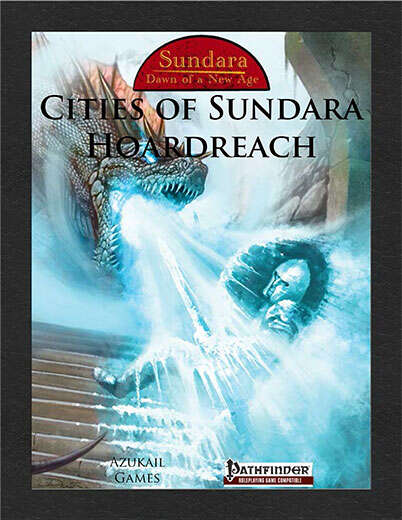

What could be worse than dragons? Sky privateers!

Hoardreach (available in Pathfinder and DND 5E) is known for many things, but aside from being ruled by a cooperation of 5 dragons, it is also where the first sky ships have been built. While these vessels take a great deal of time and resources to construct and field, they are slowly growing more common... and this mercenary company is built from those who have served among the cloud fleets. Named for the founding captain, this free company provides unique services including air dropping troops, and bombarding targets on the ground from beyond the reach of even the most powerful longbow.

Pathfinder: A gunslinger archetype, aether privateers gain the ability to negate enemy Dex bonuses to their armor class through unique aiming deeds, as well as the ability to shoot lines, belts, and connecting straps with pinpoint accuracy to disable vessels and opponents alike.

DND 5E: A rogue subclass, aether privateers gain unique bonuses on ranged attacks, the ability to make called shots, and to make trapping shots, where they can nail targets to the ground, a wall, etc., by putting bolts, arrows, axes, or daggers through armor, shields, or clothing to hold an enemy in place.

#5: Jackdaws


They're out there... somewhere...

A mercenary company that began because a young boy wanted to go bird watching, their founder Harrington "Jackdaw" Leeds was able to sit undetected for hours by wildlife and enemy scouts alike. A trainer for rangers and outriders, he eventually agreed to help found this free company in his later years. Though he's been dead a long time, his methods and skills live on.

Pathfinder: A ranger archetype, the Jackdaw Scout allows you to alter your favored terrain to suit whatever environment you find yourself in. Additionally, these scouts can grant their bonuses to allies within a certain radius, allowing them to keep everyone on their toes, and moving silently through even the most rugged terrain.

DND 5E: A ranger subclass, the Jackdaw Scouts may shift their favored terrain with some time and effort. They also gain message at-will while within these favored terrains, and they may use the Help action at up to 120 feet for Stealth checks, or for attacking enemies from ambush. Additionally, Jackdaw Scouts deal devastating damage when attacking from surprise while within a favored terrain.

#6: The Widowmakers


We're the bad men who do bad things.

Some mercenaries maintain codes of honor, or rules of conduct... the Widowmakers do not. Brutes, brigands, killers, and cutthroats, this mercenary company is made of some of the worst of the worst. Serving the Widow, a woman whose grief at the loss of her husband led her to end a war by recruiting some of the most dangerous individuals silver would buy, these mercenaries' reputation precedes them... usually for the worst.

Pathfinder: A fighter archetype, the Widowmaker Enforcer loses out on heavier armor, but gains more skills, bonuses to initiative, sneak attack, and the ability to inflict status conditions on opponents they can hit with their sneak attack.

DND 5E: A fighter subclass, Widowmaker Enforcers gain limited sneak attack, the ability to render opponents blind or deaf, and later on the power to deal sneak attack more than once in a single turn.

#7: The Fists of Kormmuz


Iron hands can endure anything.

A unique fighting force, the Fists of Kormmuz are one part monastic order, one part warrior cult, and one part mercenary legion. Responsible for some legendary feats of fighting prowess, they're most known for their signature weapons; heavy, steel gauntlets. Because while they are as deadly bare-handed as many other monks, once their fists are sheathed in iron they become truly devastating as foes.

Pathfinder: A monk archetype, the Fists of Kormmuz may deal their unarmed damage with gauntlets, cestus, brass knuckles, or a spiked gauntlet. Not only that, but these weapons allow the monk to be treated as a size category larger for their damage dealing. They gain Cut From The Air and Smash From The Air as bonus feats, and may eventually parry attacks with their gauntleted fists. Their capstone power is smashing spells out of the air with perfectly-timed blows from their fists.

DND 5E: A monk archetype, wearing a gauntlet, spiked gauntlet, brass knuckles, etc., increases the Fist of Kormmuz's unarmed damage type by one die. They gain the ability to parry and counterpunch attacks coming at them, as well as the ability to strike spells out of the air.

#8: The Brotherhood of Broken Banners


You going to get up, or stay there in the dirt?

Another favorite from 100 Random Mercenary Companies (where many of these groups were first conceived), the Brotherhood of Broken Banners is a mercenary company that takes in those who were on the losing sides of wars and conflicts. Those who have no homes, no lands, no families, will always find a place among other veterans of conflict... and even those who were once bitter rivals may find themselves closer than blood among this band.

Pathfinder: A cavalier archetype, a Broken Bannerman gains resistance to fear effects (always treating themselves as shaken rather than more potent effects), and they gain immunity to any charm or compulsion that would force them to flee the battlefield. Additionally they gain a battle cry that strengthens their allies' sword arms while putting fear into their enemies.

DND 5E: A fighter subclass, the Broken Bannerman gains immunity to the Frightened condition, and they roll with Advantage on enchantment or illusion effects. They gain a battle cry that boosts allies and frightens enemies, and they may deploy their banner to grant inspiration to themselves and their allies.

#9: The Grayblades


I've forgotten more about war than you will ever know.

Old soldiers never die... those who don't fade away, though, often join the Grayblades. While known as trainers and teachers, those who would discount this mercenary company due to their age have learned the hard way that experience mixed with viciousness is often more than enough to carry the day.

Pathfinder: A fighter archetype, Grayblades must start at a higher age category, but they gain increased skills and skill ranks as a result. They may use their Intelligence or Wisdom bonuses for initiative instead of Dexterity, and they gain initiative bonuses as they level. They gain bonuses to Aid Another, as they are used to coordinating soldiers under their tutelage, and at higher levels they can ignore their age penalties for a time. As a capstone, those age penalties instead become bonuses as, for a brief time, they fight like they were back in their prime.

DND 5E: A fighter subclass, Grayblades gain increased skills and proficiencies for their experience. Grayblades may use the Help action from further away, and they can affect more than one ally with it at a time. At higher levels they may double their physical bonuses for a brief period of time, cutting loose with all the skills they've learned over their careers.

#10: Nightwatch Dragoons


The night is dark, and full of terrors.

Dangerous beasts and awful monsters lurk in the corners of the world, but there are those who study them, track them, and slay them. Infamous monster hunters, the Nightwatch Dragoons are known far and wide for their indigo uniforms and silver hilts. Mysterious, and more than a little unnerving, they take bounties on creatures that most would have wagered no mortal man could slay.

Pathfinder: A slayer archetype, Nightwatch Dragoons can study the tracks, stories, and spoor of creatures, and declare them studied targets without ever laying eyes on them. Additionally, they can learn all kinds of insights about these targets from studying their sign. They can also reduce studied enemy's damage reduction, allowing them to deal lethal blows to creatures thought immune to mortal weapons.

DND 5E: A ranger subclass, Nightwatch Dragoons roll with Advantage against favored enemies, and deal bonus damage on all attacks against them. Additionally, they may switch their favored enemies to new kinds of creatures with an appropriate Intelligence check. This can later be done just by studying a creature's spoor, and without making an Intelligence check. Favored enemies eventually lose Resistance to the kind of weapon used by a Nightwatch Dragoon, and if they had no Resistance they gain Vulnerability instead.

Like, Share, and Follow For More!


That's all for this week's Crunch topic! For more of my work, check out my Vocal archive, and stop by the YouTube channel Dungeon Keeper Radio! Or if you'd like to read some of my books, like my alley cat noir novel Marked Territory, my sword and sorcery novel Crier's Knife or my latest short story collection The Rejects, head over to My Amazon Author Page!

To stay on top of all my latest releases, follow me on Facebook, Tumblr, Twitter, and now on Pinterest as well! And if you'd like to help support me and my work, consider Buying Me A Ko-Fi or heading over to The Literary Mercenary's Patreon page to become a regular, monthly patron! Even a little bit of help can go a long way, trust me on that one.

Saturday, February 26, 2022

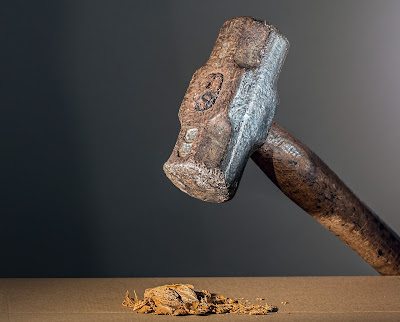
"Casters Versus Martials" is Really Just "Toolboxes Versus Hammers"

Perhaps one of the oldest debates in RPGs is the caster versus martials debate. Wizard or fighter? Sorcerer or barbarian? At the end of the day, though, I feel like entirely too many people who want to have this debate are talking past one another rather than actually discussing the same thing. So I wanted to take this week's Crunch topic to weigh in on what I would like to rename the Toolbox Versus the Hammer.

Because I think this actually gets us a lot closer to what is at the heart of a lot of these (sometimes quite heated) discussions.

And remember, both are quite useful.

Before we get into the nitty gritty this week, don't forget to sign up for my weekly newsletter to get all my updates right in your inbox. Also, if you've got a bit of spare cash that you'd like to use to help keep the wheels turning, consider becoming a Patreon patron!

Lastly, to be sure you're following all of my followables, check out my LinkTree!

Flexibility Versus Reliability


Before we get too deep into things, I have played through a variety of characters on all sides of these arguments, as well as middle ground concepts like paladins, rangers, magi, etc. who combine the martial and the magical. With that said, I do have a noted preference for brutes, bruisers, and bludgeoners. However, when people hold up full caster classes as "god tier" options for character power level, and treat martial characters without magic as sub-optimal choices hardly worth considering, I find that it's usually because of two major differences.

The first is player philosophy. The second is player goals and ideals, which may or may not be in-line with the goals and ideals of the plot and the game. But we'll get into that.

Let's begin at the beginning, shall we?

The most common reason I've seen people argue that spellcasters are inherently better choices for characters in terms of mechanical advantages is that they have more options; more tools they can bring to the game. A wizard, sorcerer, or cleric, properly equipped, can often overcome problems with a wave of their hand, and a whispered word. The guards don't want to let the party in? A simple enchantment spell can make you their best friend for a little while, or leave them staring off into space while you just walk by. The next stage of the journey is atop a sheer cliff? A spell can easily fly one up there, allowing them to keep progressing with minimal interruption. And if a creature proves hostile, well, there's always a lightning bolt to reduce them to ash.

Now, having both watched and played the utility caster who acts as the party's Swiss army knife, I am not hating on this path. It is astonishingly convenient for all concerned to have a wizard who can magic away problems so that you can progress. It is the flexible solution, allowing you to subtly alter the rules of a given situation so that you can more forward.

However, as a counterpoint, magic is not a reliable solution. This is something that I always keep foremost in my mind as a player, and it is something that I feel entirely too many folks forget when they settle down at the table.

There's a six on each of these dice... just need them both to come up!

Magic, as a solution, has inherent weaknesses that can undermine its usefulness as a tool. For example, a lot of spells give their target a saving throw, and often that means the target walks away unscathed if they make it. There are entire creature types that are immune to certain kinds of spells and effects, and there are a lot of creatures with inherent resistances to spells (in Pathfinder, at least, this doesn't apply as much to the 5E players reading this). Not only that, but a given character only has so many spell slots per day, and they need to have the proper number of the proper spells available to cast. Lastly, an aspect that's often forgotten, spellcasters need to have the proper materials and focuses in order to make their magic work; if these materials are lost, stolen, destroyed, etc., they're rendered powerless. Spells have specific durations, as well, and if you use them too soon they'll wear off before they're needed. On the other hand, if you wait till you're in the thick of danger, you may have to choose between which spells are going to be most effective, finding you're hampered by action economy. Then there's the usual issue with anti-magic fields that always seem to crop up when they're most inconvenient.

Now, none of that is to say that magic isn't useful, or that you can't solve problems with it. That was merely to show that it is not a blanket solution that always succeeds... especially since magic is a limited resource. You can only cast so many spells of each level per day before you're tapped out.

The abilities of martial characters, on the other hand, tend to be far more reliable. The fighter's feats don't run out, the barbarian's damage reduction is always there, and while they might not be a strictly martial class, a rogue's sneak attack is always going to be effective in bringing a target down. Any martial character could just as easily solve the issues mentioned above, as well. The guard doesn't want to let the party pass? Perhaps the charismatic fighter manages to bribe them, using Diplomacy to defuse the situation. It's possible the barbarian swings their reputation around, making an Intimidate check to get the guard to step aside. Or the rogue just knifes them, or uses a poison to render the guard unconscious or dead, allowing the party to walk on past.

There's a mundane solution to most issues in a game. Because yes, you can cast knock, but you can also just pick the lock, or bash down the door. You could fly up a sheer cliff, or onto the roof of an enemy stronghold, but you could also just climb up there, possibly with the aid of a rope and a grappling hook. You can make yourself invisible to avoid detection, that's true, but a decent Stealth roll can do wonders for you. And unlike with magic, these mundane solutions usually don't have built-in limitations on how often you can use them to solve a problem, nor is there a save to resist them. You can Intimidate one guard, or 5, or 10 as need be. You can huck that grappling hook as many times as you need to, and you can haul yourself up an entire mountain hand-over-hand if the need arises. You can pick every lock you come across, if you so desire, and never once worry about needing to rest to regain your daily uses.

The drawback for most martial characters is, of course, they are more limited in the resources they can swing around. As a result they tend to be very good at a select few things, but those select few things don't require them to have a spell component pouch, to worry about anti-magic fields, spell resistance, or saving throws. They just have to hit the target, or beat the DC. But the flip side of this is that you may find yourself trying to solve a delicate problem with a blunt instrument, because when you're a hammer that's the tool you brought to the game.

White Room Power Play


The second part of this debate is one I honestly find odd, but it's something I run into time and time again so I thought I'd comment on it. Now, "white rooming" is when you set up an ideal situation where you have all the time, resources, and preparation you need to achieve a specific thing. Basically it's the RPG equivalent of asking what Batman could accomplish if you gave him a challenge, and enough time to build a specific solution to overcome it.

And things can get rather out-of-hand when it comes to what you can do with spellcasters in a lot of games. From an archmage creating their own demiplane, to clerics creating an army of undead minions, to a sorcerer crafting enchanted items powerful enough to shake the foundation of the setting, these are sometimes held to the gold standard of what the possibilities are of a particular character.

Phenomenal cosmic power!

Sure, that's neat if that's the story you want to tell. However, most of the time accomplishing these things will require massive hoards of treasure in costly spell components, months-to-years of in-game time to complete, and for a character to achieve extremely high levels just to gain access to the spells in question... which are all rather extreme limitations in your average campaign.

This is my way of saying sure, you'll be able to do that eventually, but it likely isn't going to affect the campaign we're actually playing in because you don't have the time, resources, and power you'd need to accomplish those goals.

This is where we get into player goals versus game goals. Because if you're in a game you might have the stated goal of, "Stop the lich king from rising," or, "End the war between these two nations." And if a player wants to uncover the eldritch secrets to folding reality in order to make their own private plane of existence where time stands still, that's cool... but how does that solve the problem of the campaign? More to the point, if the campaign is set to end at level 13-14, but the spellcaster needs to be level 17 before they can even begin to accomplish this goal, it's all epilogue that's out of the realm of the here and now. It would be no different than saying the barbarian became king of his own border nation, or the monk achieved inner perfection and rose to the position of a demigod; it wasn't a part of the campaign, so it's just a part of your personal story and narrative.

To be clear, this is not to knock anyone's preferred storytelling flavor or fun. If that's the kind of narrative that gets your wheels turning, and you enjoy telling the story of just how your character eventually achieved that goal (along with the spreadsheet of how you did it once the campaign was over), then more power to you. However, that kind of setup may do nothing for other players, who get far more excited about the idea of burying an ax in a demon lord's skull, or eventually worming their way into the position of Master of Whispers in a shadowy spy network.

It's just important to remember that if you're comparing toolkits that you need to look at the game in question. Because if this plot is going to benefit from the use of a Hammer, then it's important to have at least one big, ugly sledge at the table.

Check Out Some Gaming Stories!


For folks who haven't been keeping up on my recent changes, I've been largely hosting my Table Talk feature on Vocal, rather than here on Improved Initiative. I talked about this a bit ago in You're Not Missing My Updates (They're Over on Vocal). The short version is that Vocal pays a lot more than my blog does, and I'm trying to capitalize on that as much as I can... but it's tough getting eyeballs and fighting the algorithm. So take a moment to check out some of the following pieces!


Any reads and shares are much appreciated. And, of course, the more traction particular articles get, the more likely it is I'll write more like them in the future. So if you see something you like, help me spread the word on it!

Like, Share, and Follow For More!


That's all for this week's Crunch topic! For more of my work, check out my Vocal archive, and stop by the YouTube channel Dungeon Keeper Radio! Or if you'd like to read some of my books, like my alley cat noir novel Marked Territory, my sword and sorcery novel Crier's Knife or my latest short story collection The Rejects, head over to My Amazon Author Page!

To stay on top of all my latest releases, follow me on Facebook, Tumblr, Twitter, and now on Pinterest as well! And if you'd like to help support me and my work, consider Buying Me A Ko-Fi or heading over to The Literary Mercenary's Patreon page to become a regular, monthly patron! Even a little bit of help can go a long way, trust me on that one.

Friday, December 22, 2017

The Fur-Clad Fighter

"Look at this savage!" Harren hooted, pointing at the man in the thick furs. "Probably his first time seeing a city, eh? What do you wager, that he's broke and begging by the new moon?"

"I'd keep my tongue between my teeth, if I were you, lad," Vakar said.

"Why? Harren asked, turning to the older man. "It's not like he can understand me."

"Take another look at him," Vakar said. "And this time try to see more than how he's dressed."

Harren frowned, watching as the outlander passed. He saw the same thing he'd seen before; a barbarian in wolf hides, with scars on his face and the heavy, sunken knuckles of a lifelong brawler. He turned back to Vakar, frowning.

"What am I supposed to be seeing?" Harren asked.

"Did you see his sword?" Vakar asked.

"I did," Harren said. "What about it?"

"Or the ring mail he wore under the wolf pelt?" Vakar pressed.

"But what about-"

"Or that tattoo on the side of his neck?" Vakar asked.

Harren turned, and looked at the figure's departing back. He turned back to Vakar, who was watching other people in the crowd now. The older man spoke without looking at his young companion.

"That's the mark of the legion, boy," he said. "And whatever skin a man wears now, just beneath it is a legionnaire."


Also, beware any old person in a profession where you tend to die young.


The Fur-Clad Fighter


What assumptions do players make based on how a character presents themselves? If a big man with a thick beard, wearing a bear-skin cloak and heavy armbands, sporting prominent tattoos, and carrying a longsword on his hip greets the party with a mug of ale in one hand and a hearty laugh, what do you assume his class is? How about that green-cloaked archer who seems more at-ease in the forest than she does in the hustle and bustle of the big city? Or that spearman who is far more comfortable on the back of his shaggy pony than he is afoot with everyone else?

When you strip them down beneath the skin, all of them are fighters. All of them. That's the idea behind the fur-clad fighter. The character looks (and may even act) like the stereotype of the barbarian, the ranger, or another class, but is in fact a fighter.

Two Approaches To Get You Started


There are innumerable ways to execute this concept, but a lot of them will boil down to two basic approaches. The first is statting out someone from a "savage" background, and the second is taking the bear out of the woods.

So, let's start with the first. Take a character we typically assign the role of barbarian. You know, the big shaggy northman, the tribal hunter, or the desert dervish. Then examine this character in the context of the society they come from, and ask what kind of fighter that culture would produce. A raider? A longbowman? A great weapon fighter? Were you trained to utilize speed, or strength? View their society and culture as the default, and then build them from the ground up by following the character's training, role in society, and the sort of tasks they typically handled.

The second is taking the bear out of the woods, or what I call the foreign legion approach. Rather than using the fighter class as a group of abilities geared toward what the character did among his people, have them taken and trained elsewhere. Perhaps he was a foreign legionnaire, trained with heavy armor, sword, shield, spear, and ax who was taught to fight in formation. Maybe she was taken as a slave and trained as a gladiator in a ludus, where weapon variety and endurance were the order of the day. This second method is for players who are looking to assuage their cognitive dissonance about why someone who comes from a region where steel is rare would be proficient in heavy armor like plate mail, even if they have no intention of ever putting that proficiency to use.

These are far from the only approaches you can take for this concept, but they're good ways to get the wheels turning.

If you're looking for further inspiration, check out 5 Tips For Playing Better Fighters!

Like, Follow, and Stay Tuned For More!


That's all for this installment of Unusual Character Concepts. Hopefully this one gave you something to chew over, whether you're a player, or a game master.

For more of my work, check out my Vocal archive, and stop by the YouTube channel Dungeon Keeper Radio. Or if you'd prefer to read some of my books, like my alley cat noir novel Marked Territory, my sword and sorcery novel Crier's Knife or my most recent collection of short stories The Rejects, then head over to My Amazon Author Page!

To stay on top of all my latest releases, follow me on Facebook, Tumblr, Twitter, and now Pinterest as well! To support my work, consider Buying Me a Ko-Fi, or heading to The Literary Mercenary's Patreon page to become a regular, monthly patron. That one helps ensure you get more Improved Initiative, and it means you'll get my regular, monthly giveaways as a bonus!

Friday, October 21, 2016

The Gearhead Fighter

Every class has something it's inherently good at. Sorcerers are born with magic at their fingertips, wizards are masters of the arcane, clerics have the gods on their side, and monks have the capabilities to unlock their true potential through the study and practice of bringing the mind and the body into perfect harmony. But fighters? Well, what do fighters have? They are warriors. They are artisans of battle, and skilled dealers in the iron trade. Blow-for-blow, when battle is joined, the fighter is going to be the class that is the most comfortable in the maelstrom of chaos.

But what is a fighter without his weapons and armor? Little enough, actually. So why not use that to create a singular personality archetype that can make your fighter more than just another sellsword, bowman, or gunslinger?

It doesn't work for everyone, but a reverse-grip tower is ideal for someone with shoulders like mine.

The Gearhead Fighter


We all know this guy, in one guise or another. He's our uncle who will talk about the differences in air intake valves, and their effects on the gas/air ratio in your engine, and how that will make a difference in speed, efficiency, and response time. He's that friend we made in computer sciences who built his own gaming PC from the ground up, and could list everything from the ideal amount of RAM to the processor he had installed, and why he'd made every, individual choice. And since we're all RPG fans here, he's also that guy you met at a con who could lay out an ideal character build, complete with traits, feats, and edition notations, before you were halfway through your first sentence.

What you need to do is take that attitude, and apply it to your character, and their personality.

Why so many different swords? Well, let me tell you...
 
The Gearhead doesn't have a bastard sword. The gearhead has a full tang, hand-and-a-half with seven-inch quillions, a beveled fuller, and an alternating wire-wrap hilt. Every aspect of a weapon, piece of armor, and their maintenance, is something the gearhead knows. Not just knows, but loves. Whether it's in a, "let me show you how much I know about fighting," kind of way, or a, "these are my tools, this is my trade, and I would never dream of doing anything else," kind of way, the interest is one the gearhead goes on about at length.

It doesn't matter what sort of weapons or armor the gearhead favors, either. Archers may talk about preferred woods for bows and shafts, or preferred fletchings for their arrows. The merits and flaws of different arrowheads, a full versus partial draw, and how often a bow should be oiled, as well as with what kind of oil, are also good topics. When it comes to armor, the age-old debate of strength versus mobility is sure to be a factor, but there's more detail to get into. What kind of pattern does a chain shirt have? Was it left to blacken? What sort of maintenance needs to be done on it? What kind of metal was used to make the links?

And, most importantly, who is the artisan behind the work?

Just as there are signature surfboards, comic books, and cookware, so there is signature adventuring gear. It isn't just that your short sword is a piece of masterwork artistry, oh no. It came from the personal anvil of Ciril Greene, the finest craftsman in elven steel outside of Kyonin itself. Every detail, from the slight curve toward the tip, to the ironwood grip, would tell a fellow gearhead what they're looking at. They wouldn't need to see the maker's mark on the ricasso, but that gently floating leaf is enough to confirm just how masterfully that weapon was made.

A true gearhead would also be able to tell the genuine article from a forgery. A simple heft and swing, along with running his thumb and eye along the steel, would be enough to tell him whether or not the weapon was real, and if it was worth the cost.

Race, Culture, and Preferences Among Gearheads


Gearheads are shaped by the cultures they come from, as well as by their race. For example, dwarven gearheads may focus more on the composition of a weapon's steel, the forging techniques, and where the ore was mined. Five Kings steel, for example, might be the preference for a dwarf from the Five Kings Mountains. Even if that gearhead acknowledges the strength of metals smelted from other parts of the world, he may not trust it, or rely on it, as much as he would if it were his own people who had made it.

It just sits better in your hand.
 
The more exotic the race, or the weapons, the more unusual these gearheads can become. Mithril and adamantine might be recognized by most gearheads, who have only heard tales of these fabled metals, but there are even more unusual elements out there. Infernal and celestial weapons might be legendary, both for their craftsmanship, and for the inherent powers imbued into them by their inhuman smiths. Mortal gearheads have likely heard tales of these weapons, though, and may know more than many sages when it comes to named weapons and armor that hold prominent places in the history of war. Gearheads raised among the celestial realms, though, may have first-hand experience of such weapons.

Gearheads Can Be Other Classes, of Course


While the fighter is the class which is perhaps most closely tied to the gear they use, it's far from the only class that can be made as a gearhead. A magus, for example, might be able to go on at length about the enchanter's weave in his mithril rapier, showing how the spells were anchored at the weapon's balance point to create a singular effect. A ranger will be able to tie unique weapons and armor to their favored enemies, creating a synergy between their knowledge and specialization that gives them an edge against any prey they've studied. Even wizards, with their intense study and ability to craft potent magic items, may be able to rattle off the advantages and disadvantages of different weapons and armors. Even if they can't use them in the field, that doesn't mean they haven't studied them.

Gearheads don't just bore their companions to death with intricate discussions about honing techniques and flange styles, though. Their knowledge and familiarity can allow them to integrate into certain spheres to gather information. Weapon smiths and armor merchants will recognize an enthusiast, and may be more willing to cut prices (a little) when it comes time to find a buyer for their goods. A gearhead might even be able to evaluate a foe before initiative is even rolled by taking in their accouterments. To the rest of the party, the sneering prince is just another spoiled noble. The gearhead sees the iron eagle on the prince's blade, though, and he recognizes that as a high honor, that particular blade given only to those who've killed more than fifty men on the battlefield.

Which might mean he can smooth some ruffled feathers, and make a powerful friend.

If you're looking for further inspiration, check out 5 Tips For Playing Better Fighters!

Like, Follow, and Stay Tuned For More!


That's all for this installment of Unusual Character Concepts. Hopefully this one gave you something to chew over, whether you're a player, or a game master.

For more of my work, check out my Vocal archive, and stop by the YouTube channel Dungeon Keeper Radio. Or if you'd prefer to read some of my books, like my alley cat noir novel Marked Territory, my sword and sorcery novel Crier's Knife or my most recent collection of short stories The Rejects, then head over to My Amazon Author Page!

To stay on top of all my latest releases, follow me on Facebook, Tumblr, Twitter, and now Pinterest as well! To support my work, consider Buying Me a Ko-Fi, or heading to The Literary Mercenary's Patreon page to become a regular, monthly patron. That one helps ensure you get more Improved Initiative, and it means you'll get my regular, monthly giveaways as a bonus!

Friday, March 4, 2016

The Unexpected Barbarian

Alvin Dragonborn is one of the most infamous of the realm's crown princes. A tall, broad-shouldered youth, his handsome face is nearly as famed as the powerful sword arm he loves to show off at tournaments. That dragon on his shield and armor isn't just for show, however. Those who've come to grips with the princeling in field melees have said that when the horn blows and battle is joined, his eyes glow bright within his helm. Scales and claws spring out over his arms, and his roars are more those of a beast than of a man.

Because, contrary to popular belief, you can find barbarians anywhere. If you look hard enough for them.

Sometimes you don't even have to look very hard.

How Can You Do That?


The example I opened with isn't some unusual archetype, or some multiclass concept. As long as you take a feat like Noble Scion at level one, or even a trait like Prince/Princess, you have the character's noble background taken care of. At that point all you need to do is take barbarian levels, the same as you would with any other warrior of passion.

Problem?
I can hear the clearing of throats, and the, "actually, you can't," warm-ups already, so allow me to quote Pathfinder's core rule book. On page 31, the barbarian class description boasts this line, "These brutal warriors might rise from all walks of life, both civilized and savage..."

What that means, ladies and gentlemen of the dice cup, is that there is no restriction on where barbarians come from. While you can take the Urban Barbarian archetype if you want to change-up your Rage, you aren't required to do so just to play a city character with barbarian levels. If you want to play a back-alley bruiser, a war hero, a noble champion, or even a fist of the church (a role typically fulfilled by a paladin, warpriest, or cleric), you can do it with the barbarian class. In fact, with the right traits, and perhaps a level dip in another class, it's possible to make up for the barbarian's lack of skills, while still enjoying Rage Powers, a banging Fortitude save, decent armor proficiencies, and the ability to swing one hell of a big ax.

It's also important to remember that the barbarian class isn't reserved specifically for humans. Sure, we've seen our share of barbarian half-orcs, but what else could you do with it? Make a dwarven shield captain, whose Rage Powers are all about goading his enemies into attacking (which is a nasty combination when put together with the Stalwart Defender prestige class)? Perhaps you'd prefer an elven dervish that's part of Kyonin's elite guards, and who turns into a whirlwind of steel when battle is joined, sundering enemies' shields and armor with hammer blows from her curved blade? Perhaps a tiefling barbarian enlisted in the Worldwound crusade, turning his passions and deadly inherited powers, against the forces of the abyss who helped birth him?

Barbarian is Not a Job Description


As I mentioned in What's in a Name? How Your Character's Class is Limiting Your Creativity, no one goes around calling himself a barbarian. This is especially true if someone says, "so, what skills do you bring to this endeavor?"

There are so many different ways you can describe yourself.
 
The thing that barbarians all share, based on the class description, is a passion, and a fury, that is only truly unleashed in combat. However, the places barbarians come from are as wide and varied as the forms their Rage takes, once it's let loose to ravage the battlefield.

If you enjoyed this post, but you're still looking for inspiration, you might want to check out 5 Tips For Playing Better Barbarians, as well as 50 Shades of Rage: Flavoring The Barbarian's Signature Power.

Also, for those who are interested, Prince Alvin Dragonsborn is now a part of Dungeon Keeper Radio! Check out his debut in the first episode of Mythconceptions monthly, "Barbaric Assumptions."


Like, Follow, and Stay Tuned For More!


That's all for this installment of Unusual Character Concepts. Hopefully this one gave you something to chew over, whether you're a player, or a game master.

For more of my work, check out my Vocal archive, and stop by the YouTube channel Dungeon Keeper Radio. Or if you'd prefer to read some of my books, like my alley cat noir novel Marked Territory, my sword and sorcery novel Crier's Knife or my most recent collection of short stories The Rejects, then head over to My Amazon Author Page!

To stay on top of all my latest releases, follow me on Facebook, Tumblr, Twitter, and now Pinterest as well! To support my work, consider Buying Me a Ko-Fi, or heading to The Literary Mercenary's Patreon page to become a regular, monthly patron. That one helps ensure you get more Improved Initiative, and it means you'll get my regular, monthly giveaways as a bonus!

Sunday, January 3, 2016

The "Paladin In Name Only"

So, I caused a bit of a stir last Monday with my post Concept Policing is Something Gamers Should Stop Doing. This wasn't, of course, meant to say that a DM has to allow every concept to come to a table, or that players should feel free to throw all sense to the winds to make the most ridiculous characters that come to their minds. What I had in mind was more along the lines of gamers, as a community, stopping their knee-jerk reactions whenever someone chooses to play against type in a way that creates a unique character who makes sense, and who obeys the rules, the canon, and the setting of the game you're in.

Characters like the Paladin In Name Only.

A little spit and polish goes a long way.

Let's set the scene. A figure approaches the party, dressed in heavy armor. The armor is bedecked with holy symbols, and figures of religious lore. The person wearing the armor, whether it's a man or a woman, has a forceful personality. A born leader, whose commands are law in battle, and whose suggestions off the field are given weighty consideration. The character has a deep knowledge of a certain faith, and is also a part of that church's military arm. This character prays every day, and follows a strict, ethical code that determines their actions.

Is this character a paladin? Well, they appear to be... but no one says they have to be.

The Mechanics


Nothing in the above description is completely unique to paladins. The description could fit a cleric or an inquisitor, but it could also fit a fighter or cavalier dedicated to a religious cause. Knights in shining armor come in a big variety of mechanical flavors, and just because they look and act in ways we typically associate with paladins, that doesn't mean they aren't just a mere mortal who aspires to follow in the footsteps of the righteous.

Every aspirant has to start somewhere.
 
There are all kinds of ways to mechanically support a hero of the faith concept, without actually taking paladin levels. For example, Bravery is one of the most commonly exchanged fighter abilities, but combined with a background trait that provides a bonus against fear, and feats like Iron Will, it's possible to appear all but fearless in the face of true evil. With the right feats, fighters can be deadly weapons against the enemies of a faith.

That's far from the only option, though. Cavaliers of all varieties gain the ability to challenge their foes, and to steel their allies' morale in the face of danger. Those sensations might, to the uninitiated, bear similarities to declaring a smite on an evil enemy, or spreading the force of one's divine light out to protect his or her allies. Samurai's Resolve allows them to move forward through sheer force of determination, shrugging off punishment and terrors in a way that might make them seem superhuman.

The point is, before you decide to play a Paladin In Name Only, you need to know what abilities you're focusing on to create someone who has dedicated his or her life to being a paragon of goodness. The further you get from being a divine spellcaster, the bigger the surprise is going to be when the party realizes, in-character, that it's faith without magic backing your sword arm.

Story


There are a thousand reasons for someone to aspire to heroism... what's yours?

Heroism comes in many forms, and for many reasons.
 
For example, you could take some inspiration from history and say that your fighter was the most powerful warrior in the land, putting him in a select order of holy knights. In case you didn't know, that was pretty much what the word paladin originally meant, since it referred to the 12 Peers of Charlemagne. Alternatively, your Paladin In Name Only might be a wandering do-gooder, traveling from town to town with nothing more than his armor, weapons, and trusty steed in order to help the defenseless and downtrodden. He may have found his faith in a fox hole while fighting against a demonic incursion, or she may have been raised by a holy order. Even if this character wasn't chosen to be the embodiment of divine rightness, and to serve holy judgment, that is no reason not to use characters who have as models for what kind of adventurer you want to become.

There's also the personal motivation a character has to dedicate their life to a cause like this. There's the born-again hero, who lived an ignoble life, but who saw real greatness and courage on a battlefield like the World Wound. That changed this character, and made them want to be better, tempering their talents for violence and helping steer them toward a more just course. Being a hero might be a family calling, the way some families all do a stint of military service, and the character isn't going to let a little thing like not being divinely chosen stop him from following in his ancestors' footsteps. Maybe the character grew up hearing stories of great paladins and their deeds, and holds that up as his or her highest ideal.

Why Do This?


The point of the Paladin In Name Only is not to pull a "gotcha" moment on the rest of the party, who suddenly realize they don't have a secondary healer. The purpose is to play with the expectations of what drives certain types of characters, how they act, and what it's like to share in their endeavors. It's also to show that just because there's no mechanical negative to breaking your vows and sworn oaths, that doesn't mean those things don't still matter to a character who took them. After all, they inform the character's view of the world, and of who he or she is... they're kind of a big deal. They might even be big enough for the Paladin In Name Only to go on a quest of redemption, even if it's only to make peace with not measuring up to an ideal that's all but impossible with divine grace, and even more difficult without it.

For those who are interested in straight paladins, you might find 5 Tips For Playing Better Paladins more up your alley. If you want to use another class though, my 5 Tips For Playing Better Base Classes list is getting a little bigger all the time!

Like, Follow, and Stay Tuned For More!


That's all for this installment of Unusual Character Concepts. Hopefully this one gave you something to chew over, whether you're a player, or a game master.

For more of my work, check out my Vocal archive, and stop by the YouTube channel Dungeon Keeper Radio. Or if you'd prefer to read some of my books, like my alley cat noir novel Marked Territory, my sword and sorcery novel Crier's Knife or my most recent collection of short stories The Rejects, then head over to My Amazon Author Page!

To stay on top of all my latest releases, follow me on Facebook, Tumblr, Twitter, and now Pinterest as well! To support my work, consider Buying Me a Ko-Fi, or heading to The Literary Mercenary's Patreon page to become a regular, monthly patron. That one helps ensure you get more Improved Initiative, and it means you'll get my regular, monthly giveaways as a bonus!