Showing posts with label character class. Show all posts

Monday, October 10, 2016

"Muticlassing" is Not a Dirty Word

As I've said several times, I spend a lot of time online talking about RPGs. I discuss rules, bounce around character concepts, and every now and again I even have people reach out to me to ask about how to make certain ideas viable in their games. However, there's been a pattern I've noticed of late. A pattern where DMs will post in one forum or another, and lament that the player characters, "have too many classes."

I'd like to take today's Monday post to explain why this is a silly statement, and to suggest where some of this angst is coming from.

You're Building A Concept, Not A Class


Now, before we get started, I feel I should tell you something. I've been a gamer for a little over a decade now, and in any class-based system I have played, I have never played a single-class character. Part of that is because I love prestige classes, but another part of it is that I never allowed my concepts to be constrained by class mechanics.

Put another way, I never said, "I'm playing a fighter, so what kind of fighter am I?" Instead I would say, "Arnault Hamden is a master swordsman. A back-alley enforcer, his combat style is one part down-and-dirty backstabbing, and one part graceful blade work. So how do I represent that mechanically?"
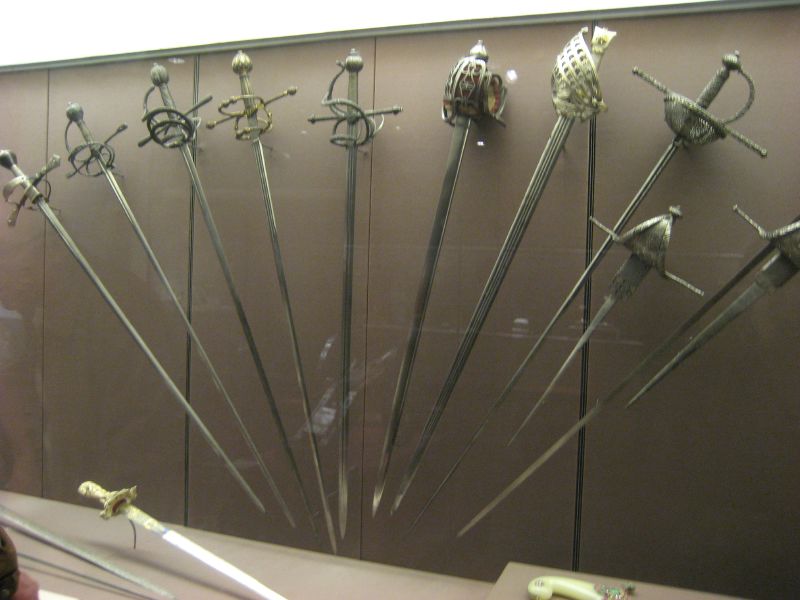
There are a lot of options, but they'll all do the job.
I could, for example, play this concept as a straight fighter. His increased weapon training, combined with feats like Improved Initiative and Piranha Strike would bring across that speed and viciousness are why he tends to walk off the field when all is said and done. On the other hand, I might want to take levels of fighter and duelist, granting him increased damage, dodge bonuses, and parrying. I might choose to dip into rogue instead, giving him sneak attack, evasion, and uncanny dodge to show he can never be caught off guard.

There are dozens of other ways, but you get the idea.

As I said when I wrote What's In A Name? How Character Class is Limiting Your Creativity, your class is a meta concept. It's something you, the player, know. In the world of the game, though, no one goes around calling themselves a rogue. No one puts out a job posting specifically looking for a barbarian. Too often, though, we think of our characters purely in terms of their classes. This character is a wizard, that character is a paladin, the one across the table is a sorcerer.

But this guy? Well, that's Styx. Styx is a half-mad ruin delver who seeks knowledge of the ancients. Learned in a dozen different languages, and twice as many magical traditions, he always seems to have another trick up his sleeve, and another secret waiting to be learned. Because when you try to remember the character is a diviner who chose to focus on necromancy and enchantment magic, who also has levels of rogue, and then took levels in arcane trickster, it becomes easier to see the person than it is to see the mechanics.

And that's how it should be.

Multiclassing Has Weaknesses, as Well as Strengths


Too often when people decry multiclass characters (especially those who just dabble in another class for 1 or 2 levels) it's because they feel those characters are somehow exploiting the rules to gain more power. A fighter only has to give up 1 point of BAB to take a 2-level rogue dip, and that gains him trapfinding, evasion, and sneak attack. Combine that with a greatsword wielder specialized in Power Attack, and you've got someone who at level 3 can lay down some serious hurt.

Everything has a weakness, though.
The important thing to remember, though, is that multiclassing has weaknesses. For example, take the fighter/rogue combination. Sure you gain sneak attack, evasion, trapfinding, and a little boost to your Reflex save. Know what you lose out on, other than a point of BAB, some hit points, and your favored class bonus? Your Will save. Because neither class has a good Will save, taking the two of them together tanks it. While that might not be a huge deal at lower levels, when you eventually find yourself going up against the villainous enchanter or illusionist, all they'll have to do is wave a hand, and the powerhouse melee combatant is going to be swinging at shadows (or worse, attacking the party) for the rest of the fight.

That's just one example, though. For instance, spellcasting classes derive a lot of their power from their caster level. If you multiclass as a spellcaster, that takes a serious hit. That will affect not only how much damage certain spells do, and how long many spells last, but it will also make it harder for you to penetrate an enemy's spell resistance. A similar case can be made for classes like the monk, and even the barbarian, where many powers are directly tied to how many levels of that class the character has.

That's how the game balances itself out. Because if you're going to multiclass your character, you gain some things, and you lose some things. That doesn't make your character inherently more or less powerful. It simply means the array of abilities and tools you have is unique to you. And, as long as your character build can get the job done, and doesn't violate any of the rules (both the standard rules of the game, and any additional rules that were laid down during Session 0), there's no reason to throw shade.

But They're Using Too Many Options!


This is the part where I play armchair psychologist. Because I feel that many times when someone running a game complains that players are multiclassing, or using too many game books to build their concepts, or bringing in obscure rules, the frustration isn't about the PCs. It's the idea that the players know more than the DM, and they're adept at using all the options they have to hand in order to build effective avatars to interact with the world.

The solution? Git gud.

Or get wrecked.
This isn't to say that you should get into a dick-measuring competition with your players to make them fall in line. However, as the DM, it's your job to understand the rules of the game, and to know the rules that govern the PCs and their abilities. Maybe you've never played a barbarian before, but you realize that Uncanny Dodge means the ambush by assassins isn't going to go so well since it means they can't catch the big bruiser flat-footed (and thus can't sneak attack him that way). Perhaps you've never read the parry ability of the duelist or swashbuckler, so you find yourself feeling a little lost when one of the PCs can roll an attack to stop your attack. If you played prepared spellcasters, then you may not realize that spell-like abilities work differently, and thus can't be foiled in many of the same ways.

It's fine not knowing things. No DM is going to be perfect. However, the proper response to not knowing something, or not being comfortable with something, is to sit down and have a discussion with the player, or the table, about it. Not to lament that players are, "too overpowered," for your game.

You have access to every rule, creature, and spell in the game. There's no such thing as overpowered. You simply need to find the challenge that best suits the group, and the party, you actually have in front of you.

That's all for this week's Moon Pope Monday. Hopefully some folks found it enlightening, as well as entertaining. If you'd like to support Improved Initiative so I can get you more content just like this, then stop by The Literary Mercenary's Patreon page. All new patrons who pledge at least $1 a month will have some sweet swag coming their way! Lastly, if you haven't followed me on Facebook, Tumblr, and Twitter yet, why not start now?

Friday, October 9, 2015

The Chaplain (A Badass Bard You Might Mistake For A Cleric)

We, as RPG lovers, have a habit of putting our characters in rigidly defined boxes when we don't actually have to. I've talked about this before in What's In A Name: How Your Character's Class is Ruining Your Creativity, and this week I'd like to point out something that might spark a big idea in some players' minds.

That idea is that, just because someone is a priest, that doesn't mean the character has to be a cleric.

Though some, obviously, still are.

What Are You Talking About?


You know how in every low-level game the party runs to the nearest church of a good-aligned deity to seek help when they've been cursed or crippled? How many times has the DM shaken his head, and informed you that despite the attendance of several members of the holy order, none of them has the power to invoke the divine (read: they all have NPC classes, and there is no one in the church with cleric levels). The implication, of course, is that while there are a lot of faithful conducting services, ministering to the community, and helping to spread the word of the divine, characters with the skills and powers of PC clerics are relatively few and far between. Not only that, but if one possesses that dedication to magic and holy obedience, they're likely to move up the ranks quite quickly, making them more likely to be found in capital cities instead of border towns beset by goblins.

Put another way, a major religion has a lot of different people who are serving a god or goddess in a unique way, using the skills they have. Fighters may be swords of the faith, as I mentioned in 10 Backgrounds For Your Martial Characters, while rangers could act as pilgrimage guides, and monks would make ideal keepers of the faith's libraries and lore. Religion is an institution, and there are a lot of different jobs that need to be done.

The Chaplain


Chaplains are priests who are attached to any private entity, but they're mostly thought of as priests who minister to soldiers. They provide spiritual guidance, perform important rites, and they fulfill a necessary role in any army who has them. A chaplain with a commanding presence, whose sermons demand attention, and whose knowledge of the divine is great enough to answer even difficult questions, would be a boon to any church reaching out to the warriors of the world. A chaplain whose booming battle cries could drive warriors on into the breach, removing fear and strengthening their sword arms, and whose magic can heal his allies while wrecking havoc on his foes, is the sort of priest no army would want to be without.

Also, a strategic application of Use Magic Device.
 
So what's the point of the concept? To defy expectations, of course!

Picture the introduction at the table. The party sees a broad-shouldered half-orc with a commanding presence, a prominently displayed holy symbol, light armor, and a military bearing. He introduces himself as Chaplain Grimm, and when pressed about his experience and allegiances refers to himself as a servant of a god of nobility, battle and war. Maybe some players assume that means he's a cleric. Maybe they don't. However, the point is that creating someone who is affiliated with a religion, but who has a different role than other players assume, is a good way to stop people from thinking they know what you can and can't do. At the very least, you have brought a badass bard to the table, and your role as encyclopedia and party-booster is not going to be any less valued than it would normally be. However, by not presenting with what most players assume to be typical bardic trappings, you're going to make them actually react to your character, rather than their perceptions of your mechanics.

Also, recommendations. Perform (Oratory) is a great way to bring your boosts to the battlefield. This is especially true if you want to literally shout down an enemy spellcaster like some kind of crazed exorcist/drill sergeant when you use countersong. You may also want to consider increasing your ability to help the party by boosting your aid another bonus. For help on that, check out Aid Another in Pathfinder is More Powerful Than You Think.

Additionally, you should check out 5 Tips For Playing Better Bards if you're looking for inspiration!

That's all for this installment of Unusual Character Concepts. Hopefully this one gave you something to chew over, whether you're a player, or a dungeon master.

For more of my work, check out my Vocal and Gamers archives, and stop by the YouTube channel Dungeon Keeper Radio. Or if you'd prefer to read some of my books, like my sword and sorcery novel Crier's Knife, then head over to My Amazon Author Page!

To stay on top of all my latest releases, follow me on Facebook, Tumblr, Twitter, and now Pinterest as well! To support my work, consider Buying Me a Ko-Fi, or heading to The Literary Mercenary's Patreon page to become a regular, monthly patron. That one helps ensure you get more Improved Initiative, and it means you'll get my regular, monthly giveaways as a bonus!

Sunday, July 19, 2015

What's In A Name? How Your Character's Class is Limiting Your Creativity

Language is a funny thing in RPGs; we get a particular image in our minds, and then we never question whether or not the image we have is the only way things can be. For example, when you look at the Rage class feature, what comes to mind? Chances are good you thought of a hulking brute, howling and foaming at the mouth while attacking everything in reach. But Rage can be a lot of different things, from a physical transformation into a partially inhuman creature (through Rage powers that give you animalistic or demonic features), a no-holds-barred performance where you give this fight everything you've got, or even something as odd as a sub-routine that only takes over when you're threatened (as I talked about in The Android Barbarian).

It's the little things that we all accept without question that trip us up. That's why if you want to have a freeing experience the next time you create a new character, make sure you never, ever mention that character's class once you've sat down at the table.

What's In A Name?


More often than not we think of our characters in terms of their classes. Hakar is a ranger, so he is good in nature and he's a tracker. Beldrake is a sorcerer, so she has a great force of personality, and she will be physically weak and unarmored. Tim is a cleric, so all he's going to do is go on about his god, he'll pray quietly in the morning, and he'll heal the party.

Sir Troll Knight is a samurai and he... wait a second...
The point here is that we tend to use class as a shorthand for a stereotypical list of traits. Bards sing and are charming, rogues are dexterous and sly, paladins are church knights who refuse to break the law, etc. But if you take a step back from this accepted setup, you realize that in a lot of cases you have significantly more freedom with who your character is and how he or she operates than you think you do. Nowhere is it written that rogues can't be big, burly leg breakers who wield bastard swords. Bards don't have to be foppish and delicate, particularly given the training it takes to accomplish many of their acrobatic feats. Did you know that just calling the samurai a knight completely eliminates most people's problems with the class?

Dungeon masters do this, too, and it can broadcast to the players what a certain NPC's mechanical makeup is. That's why when I wrote the guide 100 NPCs You Might Meet At The Tavern I tried to include a few characters whose true skills and abilities simply don't match the first impression you get of them.

Who Are Your Characters, And What Do They Do?


Let's come at the issue from another direction in order to better illustrate it. Don't pick a class for your character first; instead, pick a profession. Something they would use their collection of class features and abilities to pursue.Let's say, for example, your character is a bounty hunter. That's a solid, adventuring trade, yes?

How does this character succeed at that job? Does he make the rounds of the taverns, listening to rumors and collecting tips about where a wanted person has gone to ground? Does she dog a person's trail, tracking them as much by scent and spoor as by the marks of their passage? Does your bounty hunter use magic to track the quarry, making it impossible to hide for long?

All of these are valid methods of building a man hunter. Whether you're a diviner, an oracle, a ranger, a rogue, a ninja, a bard, or a slayer, those are just the mechanics that fill out the bones beneath the flesh of your story. And like all mechanical bones they are most effective when no one sees them, or even suspects that they're there.

People's Example #1
When was the last time you asked what your character did before you asked what the character's class and stats were? For example, are you a bodyguard? A traveling thug for hire? Are you a treasure hunter? A spy? Are you a bandit? A burglar? Were you a war-drummer or a flute player with an army? Are you a soldier? A tailor? A tinker?

To belabor the point, let's take another example. Say that you wanted to play a wandering do-gooder. You know, the have sword, will travel sort of person. You could do this with a lot of different classes, but you decide to play a paladin. As we all know, in order to be a paladin you have to be of lawful good alignment, you have to follow a righteous god, and you have to maintain a certain code. Nowhere in the class's description, however, does it say you have to join a holy order. It doesn't say that you have to be trained by other paladins, or that you have to add the words paladin of (insert god here) every time you introduce yourself to someone. Nor does it say you must follow laws that clash with your code, or that you have to try and convert other people to your worship, or that you can't join the rest of the party in the tavern or the brothel (barring specific, completely-optional oaths that would be broken by intoxication and fornication respectively).

So what does that mean for your traveling hero? Well, perhaps he joined a great crusade (like fighting demons at the World Wound), and found both faith and strength in a foxhole. Maybe he was lost in the wilderness, ready to starve, when he was rescued by the intervention of Erastil. So now he lives his life doing the same, trying to help the lost and endangered of the world. Maybe she grew up in Cheliax and chose to embrace Iomede as a way of trying to make her country a better, nobler place, and to show that not everyone would sit idly by while devils made decisions in the upper echelons of power.

You know what else that means, though? It means that if you don't want to play a paladin loaded down with a foundry worth of steel, and who isn't blazing with holy symbols, you can do that, too. In fact, if you want to be a stealthy bowman who calls on the power of the divine to guide your hand and empower your arrows when hunting wickedness, nowhere in the book does it say you can't do that. It's just that focus on how the class is often depicted (and what other players feel the class should be) often blinds us to the different ways we have available to play it.

Beneath The Skin, Outside The Box


If you feel like your games are getting stagnant, it might be because you're relying a little too much on the names of your classes and abilities, and not enough on what makes up your actual character.

There are those who call me... Jeb.
The next time you sit down at your table, and everyone is introducing their characters, think of something to call them other than their class (even if their class name is applicable). Instead of being Erin the bard, why not introduce yourself as Erin Silverstrings, harper, tale-teller, and seeker of adventure? Instead of opening up your dialogue by saying you're Mortran the wizard, why not something like Mortran the Sage? Instead of telling everyone you're Dirk, Inquisitor of Abadar, why not give yourself a job title like Dirk, Accountant of the Missing?

Your class name is handy when you're discussing things out of game... but if you want to get better roleplaying in, and free your mind to create truly different concepts, stop focusing on what so many people say these classes should be, and instead ask what they could be if you just thought about them a little differently.


As always, thanks for stopping in! To keep up on all my latest make sure to follow me on Facebook, Tumblr, and Twitter, and if you want to support Improved Initiative then go to The Literary Mercenary's Patreon page to become a patron today!