Showing posts with label assumptions. Show all posts

Monday, February 12, 2024

GMs and Players, Keep The Scale of Your Story in Mind

TTRPGs come in a variety of shapes and sizes, with vastly different levels of complexity, time investment, customization, and even means of determining the direction the story goes in. However, something that we often forget is that our games (as well as the stories we tell using those games) often have a scale as well. And while some games can tell stories at a variety of different scales, some of them can't... and it's important for us to consider this as players and Game Masters alike so that we're measuring out expectations in the proper units.

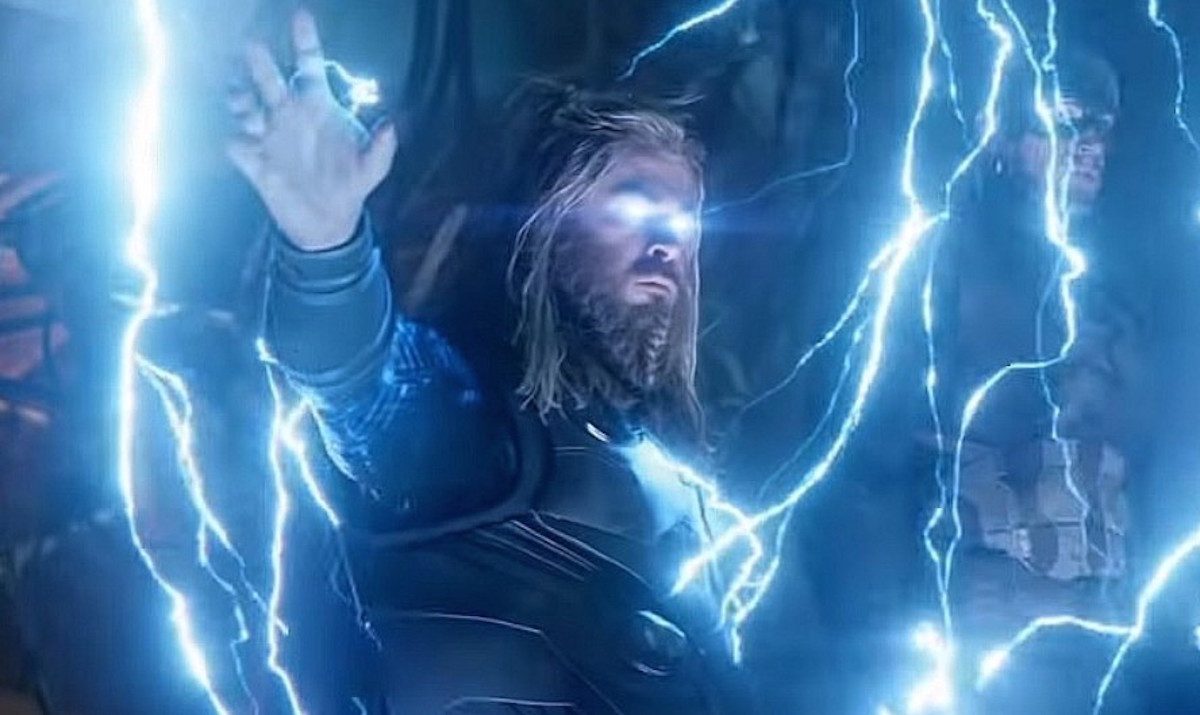
Ah, so we're looking at an end-of-the-world scenario, here.

Before we get into the nitty gritty this week, don't forget to sign up for my weekly newsletter to get all my updates right in your inbox. Also, if you've got a bit of spare cash that you'd like to use to help keep the wheels turning, consider becoming a Patreon patron! Also, be sure you're following all of my followables, check out my LinkTree.

Lastly, for hundreds of extra articles on gaming, weird history, and for more free fiction, check out my Vocal archive, too!

How Big Are You Going, Exactly?


The question of scale is an important one to remember, because not every game, story, and genre, is meant to go to the same scale. I recently mentioned in Game Masters, When Running Army Men, Avoid White Rooming At All Costs, but feel I should repeat, that designers build certain expectations into their games. This often extends to the scale of your stories, and what the engine is meant to do. For example, Dungeons and Dragons and Pathfinder are both meant for telling stories that start small, and escalate to high-stakes, high fantasy crescendoes. This is why so many of the adventure paths out there end up with the party fighting ancient wizard kings who have defied death, dragons on the verge of godhood, or entire cabals of apocalyptic monsters bent on reconquering an entire nation, if not the world!

The only thing that stands between those ancient gods, and you, is me.

Now, that is not to say that you can't run smaller-scale games using these systems, but doing so will likely mean that the games are shorter due to a lower level cap, or that players are never going to rise above a particular level so that their skills and abilities don't render these smaller-scale threats and plots something that can be dealt with out of hand. This is a perfectly legitimate way to play, but the assumption in the game structure is that players are going to start at level 1, and likely stop somewhere between 16 and 20 when they wrap up the story.

For contrast, consider a Call of Cthulhu game. The very nature of this game is that you take on the roles of normal people who cling to their sanity as they explore the dark, strange, monstrous corners of reality. You may grow more skilled, or you may learn secrets of dark doings, but you aren't going to grow into epic heroes who fight the Old Ones mano a mano, because that's not built into the genre or the system. You are small parts of a vast world, and your efforts are just turning the lock on a door that, sooner or later, is probably going to open. Your task is to survive the madness taking root in your mind, and to do what you can to stop the machinations of things that would spill the mythos into the world you know.

When a game has a built-in style and scale, it can help to shape your expectations as a Game Master, as well as the expectations of the players around the table. However, when a setting or system could handle a variety of scales in terms of both story and power level, that's when you're going to have to sit down with your players and make sure that what they want to play, and what you want to run, are going to fit together.
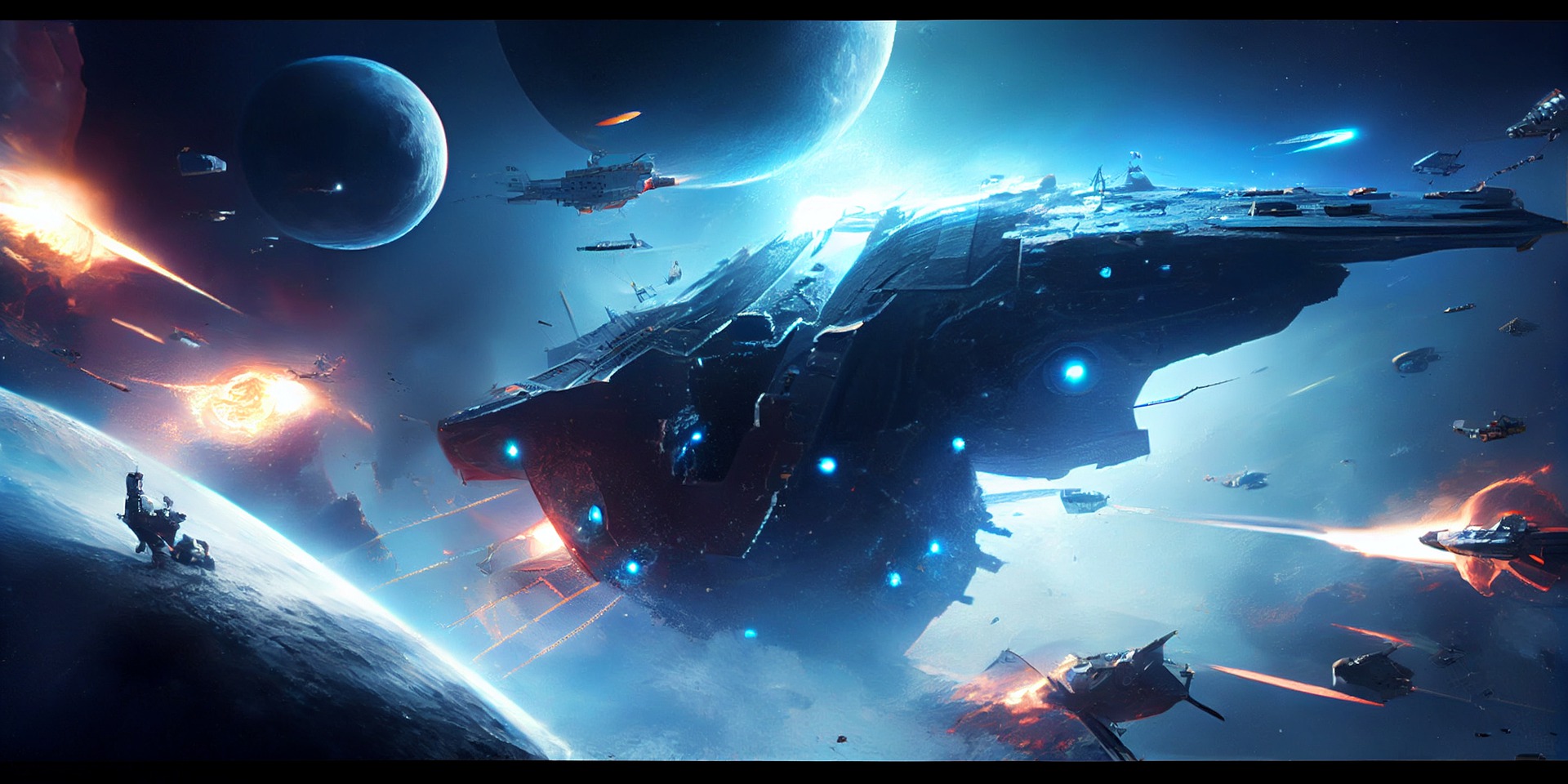
As an example...

For example, consider games like Dark Heresy or Rogue Trader set in the Warhammer 40K universe. On the one hand, these games can see players in charge of entire armies, leading crusades against planets filled with opposing forces, and going toe-to-toe with the forces of hell itself in a way that few would dare, and even fewer would survive. On the other hand, characters could also be deep cover operatives working careful sting operations to uncover cults, solve mysteries, and to track down political corruption in ways that might be ended without even firing a shot if all goes according to plan.

When you have that kind of variation in a game, where players could be anything from bottom-rung gangers scrabbling to take over their own neighborhood, to imperial agents whose authority is utterly unquestioned, it's important to make sure you are all building the same type of characters who are here for the same scale of plot. This same kind of variation can be found in the World of Darkness, Mutants and Masterminds, and several games in the Savage Worlds line as well. These are games that could have characters working on small, localized, personal issues where the stakes are only large to them, or games where the fate of thousands of people, and entire swaths of a country (or a continent) could ride on what the players choose to do... or not do.

And since we're talking about assumptions, game designers can only predict so much about what people will do with their games once they're on the market. However, if you're making assumptions as a Game Master or a player, it's a good idea to talk about them before the game starts to make sure that you're both on the same page... otherwise you might have someone who showed up to conquer the galaxy who is now tasked with running down a small-time corruption scandal that could bring down the local mayor.

Lastly, if you'd like to check out some more of my useful tips and tricks for helping your game run smoothly, consider grabbing your copy of 100 Tips and Tricks For Being a Better Game Master, and its sequel 100 Tips and Tricks For Being a Better RPG Player.

Like, Follow, and Stay in Touch!


That's all for this week's Moon Pope Monday. To stay on top of all my content and releases, make sure you subscribe to my newsletter at the bottom of the page!

Again, for more of my work, check out my Vocal archive, and stop by the Azukail Games YouTube channel, or my Rumble channel The Literary Mercenary! Or if you'd prefer to read some of my books, like my dystopian sci-fi thriller Old Soldiers, my hardboiled gangland noir series starring a bruiser of a Maine Coon with Marked Territory and Painted Cats, my sword and sorcery novel Crier's Knife or my latest short story collection The Rejects, then head over to My Amazon Author Page!

To stay on top of all my latest releases, follow me on FacebookTumblrTwitter, and now Pinterest as well! To support my work, consider Buying Me a Ko-Fi, or heading to The Literary Mercenary's Patreon page to become a regular, monthly patron. That one helps ensure you get more Improved Initiative, and it means you'll get my regular, monthly giveaways as a bonus!

Tuesday, July 5, 2022

Players, Don't Assume That Rare Items or Resources Will Be Made Available

Most folks who have read this blog, even casually, know that I generally advocate for Game Masters to err on the side of not restricting player options. If a base class, mundane item, spell, or PC species exists in the game world you're playing, and the system you're using is designed to support that option, you gain a lot more by letting your players use these options than you do declaring them off-limits.

This week, though, I wanted to touch on the other side of that coin. Because while I firmly believe players should have access to all the base stuff the game offers as options, I think that far too many players assume they'll also have access to powerful magic items, relics, rare or restricted in-game knowledge, and so on.

And that kind of assumption is something that I think should be curbed as well. Because if you want that, you're going to have to work for it... and even then, it might still be beyond the scope of the game you're currently playing.

What do you mean I can't have the Aegis of The Eagle? Someone ELSE has it?!

Before we get into it this week, don't forget to sign up for my weekly newsletter to get all my updates right in your inbox. Also, if you've got a bit of spare cash that you'd like to use to help keep the wheels turning, consider becoming a Patreon patron!

Lastly, to be sure you're following all of my followables, check out my LinkTree!

Don't Make Assumptions Beyond The Basics


While I pointed it out in the introduction above, I feel it bears repeating here. Game Masters should make all base player options available that were designed for a particular game, and a particular setting, whenever possible. Sure you might sigh if everyone in the party is playing a full caster, or you might not personally see the fun in gunslingers or barbarians, but if they're a part of the game as it exists, and your players will enjoy them, there's rarely any harm in letting them have their fun.

However, this statement applies only to the things players are assumed to have access to. Any time there's something that's special, unique, difficult-to-acquire, or which has out-and-out in-game limits placed on it, players should not assume they'll simply be able to acquire said thing. Perhaps it will be possible, but if it falls outside the base allotment of resources you have as a player then you're going to have to work it out with the Game Master.

Wait... you want to find WHAT!?

As an example, players should be allowed to have paladin characters. Just because they have a paladin as a character, though, doesn't mean they should automatically be allowed to acquire a Holy Avenger for that paladin. A player should be allowed a warpriest of a storm god, but that doesn't mean they'll be allowed to wield the Maul of Storms. Someone might become a powerful wizard over the course of the campaign, but that doesn't mean they'll be able to acquire an infernal grimoire locked deep in the arcane library of an archfiend.

Again, however, I am not advocating for Game Masters to automatically restrict access even to powerful items, potent prestige classes, or rare and unusual spells. What I'm saying is that players should not go into the game just assuming they'll be able to get the exact magic items they want, that they'll be able to find teachers who fit obscure prerequisites, etc. Perhaps they will, and perhaps they won't.

That should be a conversation with the Game Master.

This is Where "Yes, But" Comes Into Play


Most Game Masters have heard that they should avoid just out and out telling players no whenever possible. Instead they should say, "Yes, and," or, "Yes, but," as a way of trying to meet them in the middle.

And when it comes to gaining access to these powerful options, whether they be prestige classes, relic weapons, feats with difficult prerequisites, etc., this is where I would strongly give that advice... because it gives you a carrot to use to motivate your players instead of just hitting them with a stick.

What are you willing to do for this boon?

Let's go to the paladin example. You have a player who really wants a Holy Avenger. That's a big deal, and you don't just make them pinch their gold pieces until they can buy one. Instead, pay attention to how they act, and who they help. Whether the sword was left with a mountain witch who was guarding it until a worthy paladin came to claim it, or they find it in the lair of the dragon who slew the knight they'd squired for, this can represent a big goal for them to achieve... but the nature of this item is such that they have to still be worthy of it in order for it to find them, and to allow them to use it.

But what about the wizard? Well, if they want this grimoire so badly there are many ways they can acquire it. Perhaps they show mercy to a devil, and make a bargain for it in exchange for the book. Or maybe they need to get several devils to sneak copies of the pages to them, making it a process that's more of a road instead of the culmination of a single event. Perhaps they suggest going to hell to rescue the rogue when they're damned by a fiend, and while going through this jail break they just so happen to swipe a copy of the book they want, as well.

And for that player who desperately seeks to wield the Maul of Storms? Well, it's a potent relic weapon... which means it's not just laying around somewhere. They need to find it, they need to be able to lift it, and they need to deal with whoever it is that currently guards it... or whoever is currently wielding it! A series of tests to determine if they are a better bearer (or even if they'll be allowed to try to lift it at all) could be a fun culmination of that player character's arc, and it would give them a seriously powerful item to use for perhaps the last arc (or even just the final level) of the campaign.

The idea is not to flat-out ban players from getting the "good" toys out. Rather, if you work with them to create a path, and ensure it adds to the story, these things will flow naturally into the game's progression. It also puts at least part of the onus on the players, ensuring that they're willing to put in the time and effort to reach what should be big milestones for their character.

There will, of course, be some circumstances where Game Masters should still say no. A player might want to start the game already in possession of something huge and powerful. They might expect it to just be handed to them when they reach a certain level, or to get the prize regardless of the actions they've taken. However, assuming that your players are acting in good faith and genuinely meeting you in the middle, it is a good idea to use these desires as stakes to keep players interested and involved!

Additional Reading


Whether you're a player looking for additional tips, or a Game Master who'd like more advice along these lines, I'd highly recommend checking out the following:

- 100 Character Goals and Motivations: Whether it's finding a long-lost family member, being knighted by the queen, or being deemed worthy of wielding a holy relic, there's all sorts of motivations you can use to round out your characters in here!

- 100 Tips and Tricks For Being a Better Game Master: Just what it says on the tin. I've been peppering Game Master advice throughout this blog for a decade or so, and the best tips and tricks I've come across wound up in this supplement!

Like, Follow, and Stay in Touch!


That's all for this week's Moon Pope Monday. To stay on top of all my content and releases, make sure you subscribe to my newsletter at the bottom of the page!

Again, for more of my work, check out my Vocal archive, and stop by the YouTube channel Dungeon Keeper Radio. Or if you'd prefer to read some of my books, like my cat noir thriller Marked Territory, its sequel Painted Cats, my sword and sorcery novel Crier's Knife or my latest short story collection The Rejects, then head over to My Amazon Author Page!

To stay on top of all my latest releases, follow me on FacebookTumblrTwitter, and now Pinterest as well! To support my work, consider Buying Me a Ko-Fi, or heading to The Literary Mercenary's Patreon page to become a regular, monthly patron. That one helps ensure you get more Improved Initiative, and it means you'll get my regular, monthly giveaways as a bonus!

Monday, June 22, 2020

Owen KC Stephens Tells It Like It Is With #RealGameIndustry

The general populous doesn't have much of an idea about what goes on in the publishing industry in general, or the RPG publishing industry in particular. All they see are the finished products, with their flashy art, shiny minis, and polished presentations to make them look as appealing as possible. And the things people do see tend to be celebrity gamers with big budgets and huge followings, forgetting that they're putting on a show. So naturally many players assume that RPG designers, much like authors, are making some solid earnings, and that companies whose games are popular have big slush funds of cash with which to design new and exciting games for all of us to play.

Let me burst that bubble for you right now. Because none of that is remotely true.

Because trust me, the whole industry is a gamble. With VERY long odds.
I have not been in the industry as long, nor have I worked with as many companies, as some. That said, I can confirm more than a few of the #RealGameIndustry statements made by Owen KC Stephens.

No One Gets Paid, Everything is Broken, We're Trying Our Best


The first thing I can confirm is that no, no one in the RPG industry is paid well. There are lots of people who are, "paid well for RPGs," but if making games is your main job there are just certain realities you've probably had to make peace with. Things like never owning a home or property of your own, for example. Only a tiny fraction of people in the industry have benefits or insurance, and a frankly staggering number of us make RPGs as a side hustle (or have to depend on a spouse's job for main household income, vision, dental, etc.). A lot of us can't even afford to actually buy games, much less the high-end accessories you see like fancy gaming tables, elaborate dice towers, or gaming scenery.

Personally, one of the only reasons I have access to any new games is this blog, and the reviewer files I get from publishers looking for promotion. Something I'm very grateful for, and which I'd never be able to afford to buy if I still wanted to eat.

So if you have ever had that moment where you thought we game designers were some kind of big-money rock stars, scrub that idea right out of your brain pan. And if you really want to make the creators you love feel like rock stars, go support them right now! I'm on Patreon at The Literary Mercenary, and if you're a fan of Mr. Stephens' work, check out his Patreon too!

That's far from the only truth, though.
Another thing that I can testify to is that RPGs are very similar to novels in another respect. Everyone thinks they can do it, and those who have interesting ideas, those who can write compelling stories, and those who can actually sell books are rarely the same person.

Incidentally, if you haven't picked up my sword and sorcery novel Crier's Knife or my short story collection The Rejects, go check them out!

To be clear, here, this is not the criticism it sounds like. However, when it comes to RPGs, you often have to wear a bunch of different hats in order to get the job done, and if you can't wear a particular hat that job tends to go to a freelancer. If you have great ideas but can't put them into words, you hire someone like me to take the core of your idea and flesh it out into engaging prose. If you can write a story or create a setting, that doesn't necessarily mean you have any aptitude for designing functioning rules systems. And if you can design rules systems, that doesn't mean you have any marketing knack at all.

The sexism, racism, and other issues in tabletop gaming Mr. Stephens mentions? Definitely present. I've been fortunate enough that I've not witnessed it from other professionals or companies that I've worked with (quite the opposite, in that most companies I've worked with have been trying to educate themselves to make sure they don't alienate potential players by looking or acting biased) but I have seen quite a lot of it from the fans who play games. Mostly white guys (several of whom are older than me) who lament that they're now minorities because their games only have 40 percent white guys instead of the more accepted 80 percent when they got into the hobby. The sorts of fans who will violently stomp out of the room (or flounce from a forum) because games include black elves, non-European cultures, or because the game made it clear that prejudice against LGBTQ+ people is not a part of their game or setting.

And I've only witnessed a tiny portion of this behavior, as most of it doesn't get slung my way as a masculine presenting white dude. Though I do seem to recall there was one guy who called me a race traitor because I pointed out that fantasy settings have a somewhat less than stellar record on diversity and inclusion. That was a weird day.

It's Still a Business (Even If It Looks Like Fun and Games)


I wanted to add my own contribution to the #RealGameIndustry hashtag. This was present in the spirit, but I didn't see it spelled out, so I thought I'd add it in.

There are a lot of people out there trying to make games. But there are not a lot of folks out there who actually know how to run a business. And that becomes a problem when you expect to actually get some kind of return for your efforts.

Money make the world go round.
Finding people who are making games isn't hard. Go to a con and throw a rock, and there's a decent chance you'll hit somebody who's tinkering with an RPG project. But far too many people get caught up in the art of the game, and the rush of actually creating, and then don't ask how they're going to sell it. Forgetting, of course, that games are expensive to make... and more so if you had to hire freelancers to help get it done.

Your art, your text, your editing, your rules, your maps, the publishing... all of that takes money. And if you don't sell copies of your game, then you're not going to make money to invest in future projects and installments (or pay your bills). More than that, though, freelancers tend to avoid dead-end projects once they recognize them for what they are. Because a paycheck is nice, but if that game is never going to be published (or if it has, "pet project" stenciled on in big red letters), they're going to jump ship. If their name is in the credits, it's on their work history. If you don't treat your game like a product you intend to sell (and to sell as widely as you possibly can), then you're going to have trouble attracting serious talent to your table.

Just some food for thought.

Like, Follow, and Stay in Touch!


That's all for this week's Moon Pope Monday!

Again, for more of my work, check out my Vocal archive, and stop by the YouTube channel Dungeon Keeper Radio. Or if you'd prefer to read some of my books, like my sword and sorcery novel Crier's Knife or my latest short story collection The Rejects, then head over to My Amazon Author Page!

To stay on top of all my latest releases, follow me on FacebookTumblrTwitter, and now Pinterest as well! To support my work, consider Buying Me a Ko-Fi, or heading to The Literary Mercenary's Patreon page to become a regular, monthly patron. That one helps ensure you get more Improved Initiative, and it means you'll get my regular, monthly giveaways as a bonus!