Showing posts with label gnome. Show all posts

Saturday, September 21, 2019

Why Does He Do That? (Thinking About Your Character's Habits)

"Why's he doing that?" Jeren asked, nodding his head toward the corner table.

"What?" Kyros asked, glancing where his drinking companion indicated. A dark elf sat in the corner, the hood of his cloak pulled up. His eyes glimmered in the candlelight, and he ran a steel dart through his fingers, walking it from one end of his hand to the other, the sharpened tip flashing.

"That," Jeren said, adding emphasis as if it should be obvious. "Looking all mysterious and playing with that sharp. He think it's scary, or something?"

"He's from the Dark, idiot. The moon is brighter to him than the sun is to us. The fireplace is practically enough to blind him if he's not used to it." Kyros looked at his companion for a moment before sighing, shaking his head, and tossing back the rest of his drink. "And if you'd ever traveled outside this little burgh, you'd know they don't use coins down where he's from. That spider walk is something kids learn to keep their fingers agile. I had to guess, it's probably something he does when he's nervous."

Jeren glanced back at the dark elf, who dabbed at his eyes. Sure enough, they were starting to water. He favored them with a small smile, and nodded.

"Also, he can probably hear us," Kyros said, getting a fresh drink. "So you're aware."


Seriously, how do you see in here? It's so damn BRIGHT!


Some Adventurers Are More Different Than Others


You've probably seen Marvel's Avengers by now, and if you haven't, go watch it. Seriously, it's worth the time, I won't be mad.

Now, if you watch Mark Ruffalo's performance of Bruce Banner, you'll notice that he purposefully shrinks himself down. He keeps his arms close, and often holds his hands together like he's trying not to break anything. If you've ever had a friend who was on the bigger side, these are all mannerisms of someone who is very large, and very strong, who is trying to be careful around delicate things. It shows that, even when he's in his weaker form, Bruce is keenly aware of the power he contains in himself, and that one wrong move might turn this whole thing into the proverbial rampaging bull in a China shop.
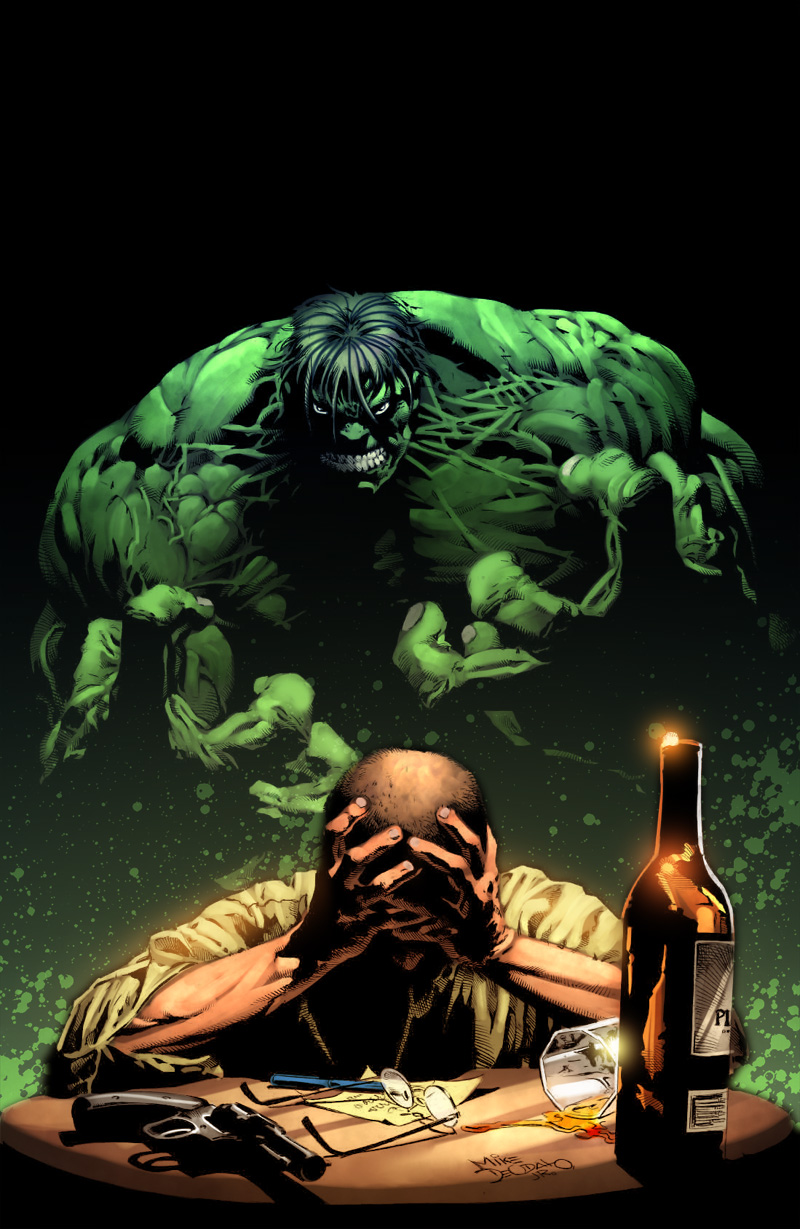
Incidentally, I have a Pathfinder conversion for Hulk, for those who are interested.
 
This mannerism makes perfect sense when you track it back to its source, and it's a fun exercise in character building. That's why, when you sit down to make a character, ask yourself why they speak, act, fidget, or believe a certain thing. The answers you find are often surprising, and can make for some fun character moments.

For example, if your character is a gnome, they've had the ability to talk to animals their entire life. It might not even occur to them that other people can't do that, especially if they were raised in communities where magic was common. Does this lead to them being unusually sensitive to the moods of animals around them? Are they confused when people treat nature like a tool, rather than a living thing? Do they have opinions about animals that are wildly different from those held by other races, making them seem like a tiny version of the crocodile hunter?

You can pick almost any racial modifier/ability and apply this kind of logic to it. Elves get a bonus on Perception, for example, but does that also make the world around them unbearably loud beyond the quiet boundaries of deep forests? Is this why an elven character might speak softly, or keep their hood up, providing their sensitive ears some protection against the violence of the louder world? Tieflings and ifrit both have natural fire resistance, so does it feel good for them to drink scalding tea, or to relax into a fire the way other people would enjoy a sauna? Goblins are capable of eating spoiled and rotten meat, but does what smells and tastes putrid to humans instead have a more nuanced palate to this sharp-toothed race? And is a food or fruit humans would find sweet something that tastes rancid to a goblin, their tongues not being built to handle that flavor?

And that's before we get into the weirdness of cultural norms.
 
Even if you're playing a bog-standard human, though, you can find unusual tics, quirks, and attitudes in the cultural norms of where they grew up. Everything from fashion, to forms of address, to food, to language, to little rituals that have clung for life can make them seem odd or strange... and every one of them can add some flavor to who your character is, and why they are they way they are.

As an example, did your character come from a culture with a strong warrior ethic, where even childhood games were meant to make you a canny fighter (such as how the wrestling martial art Glima was sort of a national pastime among the Norsemen)? Alternatively, was your character raised in a communal society where everyone was referred to with familial terms since the whole village raised the next generation? Were weapons seen as a taboo where you came from, or were they to be displayed proudly? Did you pray to the spirits, to the elements, to your ancestors, or to the gods? Do you wash, groom, and comb yourself every day, keeping a razor and comb in a kit on your belt? Or do you go for days, maybe weeks, between full baths without noticing?

Every Habit Started Somewhere


No matter who your character is, they had a life before they show up at the table. If they have a quirk, ask where it came from. Is it something they picked up during their stint with the militia? Was it something their uncle taught them? Or is it just how they deal with having sharper eyes, feeling less pain, or living in a world made of cardboard?

As a note for readers, I cover a lot of aspects like this in articles like 5 Tips For Playing Better Tieflings and Aasimar and 5 Tips For Playing Better Paladins, and I keep the full archive of these tips over on my 5 Tips page. So stop on in, check it out, and see if you find yourself some inspiration!

Like, Follow, and Stay in Touch!


That's all for this week's Fluff post! If you've used this in your games, share a story down in the comments!

For more of my work, check out my Vocal archive, and stop by the YouTube channel Dungeon Keeper Radio. Or if you'd prefer to read some of my books, like my sword and sorcery novel Crier's Knife or my recent short story collection The Rejects, then head over to My Amazon Author Page!

To stay on top of all my latest releases, follow me on FacebookTumblrTwitter, and now Pinterest as well! To support my work, consider Buying Me a Ko-Fi, or heading to The Literary Mercenary's Patreon page to become a regular, monthly patron. That one helps ensure you get more Improved Initiative, and it means you'll get my regular, monthly giveaways as a bonus!

Saturday, May 14, 2016

5 Ways to Make Up For Small-Sized Damage in Pathfinder

Playing a small-sized race, like a gnome, halfling, or even a goblin, can be a lot of fun. These races are truly unusual, and they lend themselves to concepts and roleplay that simply don't work with more standard, human-sized races. However, one of the biggest issues that has dogged small-sized characters is that it's harder to dole out the harshness when you're barely over three feet tall.

Harder, but far from impossible.

All we grow here is pain.
If you're looking to start busting some kneecaps, here are some methods you should keep in mind.

Method #1: Magic


Magic has a lot of benefits in Pathfinder, but the primary benefit for a small-sized spellcaster is that your height has nothing to do with the size of your spells. So, whether you're a halfling evoker, a gnome sorcerer, or even a ratfolk bard, your magic is the same size it would be if it were cast by a medium, or larger, character.

Dynamite comes in small packages.
Additionally, if you're looking to get more bang for your buck, it's important to read through racial archetypes and bonuses. Gnomes have access to the pyromaniac trait, which increases their caster level for spells which deal fire damage. Kobold sorcerers can take a favored class bonus that increases damage done with elemental spells. And there are always options like Spell Focus, Varisian Tattoo, and other feats that will make your magic even more potent, despite your stature. If you want to make sure you have the best possible advantage, you might want to take a look at How To Increase Spells DCs in Pathfinder before you start making your spell list.

Alternatively, if you don't want to be a damage dealer, then you can use Some of The Best Debuff Spells in Pathfinder to take your enemies down a peg.

Method #2: Sneak Attack


There are several reasons people associate halflings with the rogue class. Part of it is the influence of Tolkien on fantasy, and part of it is that in older editions of Dungeons and Dragons halflings had rogue as a favored class. But one of the most practical reasons that halflings end up as rogues is that sneak attack is one of the best methods for overcoming short stature, and wielding small-sized weapons.

Oooh... that's gonna leave a mark.
Whether you choose to use a rogue, a ninja, a vivisectionist alchemist, an investigator, or any other class that deals precision damage, it's a great way to even the odds in your favor. Particularly given that in Pathfinder, unlike in Dungeons and Dragons 3.5, creatures who are immune to precision damage tend to be fairly few and far between. Best of all, though, creatures who have damage reduction still take your precision damage; it goes off as part of the attack, as opposed to being something that only happens if you penetrate a foe's DR beforehand.

Precision damage isn't a solution that always works, though. You need a flank, or to catch your enemies flat-footed, in order to drive your damage home. Which is why you should make friends with the other melee heavies in the party, and possibly check out How To Top The Initiative Order (Almost) Every Time to make sure you get at least one good shot in on the opposition before they have a chance to react. If you can get control of a second character (animal companion, cohort, etc.) that makes it easier to get flanks, and if you can use magic items or cast a spell, and your target is flat-footed and within 30 feet, you can bring some serious pain. Even a low-level wand can have a devastating impact when there's 5d6 of precision damage backing the small ray it shoots.

Method #3: Mounted Combat


Mounted combat is devastating, under the right circumstances. A martial character with a lance and a clear route for a charge, deals double weapon damage on that charge, and a whole lot more on a critical hit. Most characters find their mounts are too big for a dungeon crawl, though... but small-sized characters ride medium creatures, so even narrow hallways and cramped caverns are ideal for pint-sized paladins and hip-high cavaliers.

Never underestimate the damage a determined halfling can do.
So what do these numbers look like? Well, as I pointed out in Calling in The Cavalry: Mounted Mayhem in Paizo's Pathfinder, you can do a lot of damage from the back of a mount. If you are wielding a small-sized lance, you're doing 1d8 points of damage, and 2d8 points of damage on a charge. That's out of the gate, right at level 1. If you take the Spirited Charge feat, then you're dealing 3d8 points of damage on a charge with your mount. Add Ride-By Attack to that, and you can stick and move all day long. Then you add in Power Attack (with your two-handed weapon), and Furious Focus (since you're making a single attack), and you have a small-sized character who's dropping some major damage on the enemy.

The key to making a mounted character work is getting your charge in, and making all the necessary Ride checks. Cavaliers, Shining Knight paladins, and the Roughrider fighter archetype never apply their armor check penalties to Ride checks, which makes them ideal candidates. You want a mount that increases in power along with you, though, and if your DM will allow you to take Leadership in order to get a special mount, then you might have creatures that can fly, teleport, or which have additional abilities you can add to your already damaging charge.

Method #4: Damage-Increasing Class Features


Certain classes are just better at doling out the harshness, especially when it comes to particular kinds of enemies. Rangers have their favored enemy, paladins can smite evil creatures (and deal stupid amounts of damage to undead, evil dragons, and evil outsiders), and certain cavalier orders (Order of the Cockatrice, for example) gain bonuses to damage against subjects of their Challenge ability. The key, when it comes to these class features, is to know what you're good against, and when to let the rest of the party take the lead.

Everybody chill out. I got this.
The more narrowly focused your damage-increasing class features are, the more of an advantage they'll give you in certain situations. A paladin's smite is the perfect example. If you're in a situation where you're facing down hordes of demons, or a red great wyrm is laying waste to the countryside, then a paladin is walking into this fight loaded for bear, even if he's barely four feet tall. If your enemies are just low-rent thugs, or if you're fighting elementals or other neutral creatures, then the paladin is going to have to rely on grit and martial skill, instead of the big bonuses provided by smite.

On the other hand, class features like a slayer's studied target, or an investigator's studied combat, may not be as large, but they can be used against any foe. That's the trade-off; greater power comes with a more specific purpose. Not unlike character building in general.

Method #5: Don't Rely on Your Strength


There's no rule that says a small-sized character can't have a colossal strength score. However, all small races take a -2 to their Strength score, and their small stature means it's more difficult for them to succeed on Intimidate checks, combat maneuvers, and other strategies that bigger, hulking warriors take for granted. Add that to the fact that small-sized weapons deal less damage than their medium equivalents, and you're facing an uphill battle.

What you do get, though, is a bonus to your Dexterity score. Use that to your advantage.

And cut your opponents down to size.
For example, a gnome gunslinger is using what most people would consider little more than pocket pistols. However, at 5th level, that gunslinger adds her Dexterity to the damage those shots deal. If you add the bonus damage from Point Blank Shot, Deadly Aim, and other feats that increase the damage you do with ranged weapons, then the 1d6 your pistol deals is just gravy. It's all the bonuses you add after the dice are rolled that let you do double-digit damage, even when you roll a 1.

Melee fighters can get in on this action, too. A kobold who favors the scimitar can wield it using Weapon Finesse, adding his Dexterity to his attacks instead of his Strength. If he takes Weapon Focus, then he can take Slashing Grace to add his Dexterity to the damage, as well. If said kobold is a swashbuckler, or a duelist, then he'll gain bonus damage to damage based on his level, and he can increase that damage even further with feats like Weapon Specialization, and even Power Attack. If you're using a rapier or a scimitar, then you could also take the Fencing Grace and Dervish Dance feats respectively in order to add your Dexterity modifier to your damage dealt. The end result is that, just like the ranged game, the damage die for your weapon is not the main focus; it's how many other bonuses you can stack onto the damage you're dealing. And, for small-sized characters, your Dexterity is often the linchpin that holds this strategy together.

Greater Than The Sum of Their Parts


Characters don't have to be just one thing, which is why it's important not to constrain your thinking when it comes to building a small-sized damage dealer. For example, you might choose to make a halfling with levels of rogue and sorcerer, both to get into the arcane trickster prestige class, and so you can use ray spells to get your ranged sneak attack off. You might decide to mix a few levels of swashbuckler with a few levels of paladin, using the Swashbuckler Finesse class feature, the Slashing Grace feat, and the paladin's smite to deliver some truly devastating hits.

How you go about it is up to you. But, if you're frustrated that the usual strategy of pumping up your strength and swinging a two-handed weapon isn't doing it for your tiny powerhouse, then the above alternatives might be what you've been looking for.

As always, thanks for stopping by this week's Crunch topic. If you'd like to see more content like this, then spread the word, leave some feedback, or stop by The Literary Mercenary's Patreon page to leave some bread in my jar. All it takes is $1 a month to help me keep the lights on, and the ideas flowing. Lastly, if you haven't done so yet, why not follow me on Facebook, Tumblr, and Twitter?