Showing posts with label feats. Show all posts

Sunday, October 13, 2024

What Mechanics-Based Supplements Would You Like To See For "Army Men"?

As regular readers know, my first RPG Army Men: A Game of Tactical Plastic was released earlier this year after a successful Kickstarter campaign. In this game players take on the role of a squad of soldiers fighting for one of the nations of the Plastos Federation as they attempt to defend their home from the incursions of the vespoids; gigantic, insectile creatures that have placed all the resinous persons under serious threat. In addition to that very hot war there are also Cold War tensions between many of the nations, there are terrorist organizations and criminal syndicates to deal with, as well as pieces of strange, alien technology that may be more than they seem at first glance, as well as plastic dinosaurs roaming the wilderness beyond the Federation's borders.

What I'd like to ask folks this week, since we're in our Crunch update, is what sort of mechanical supplements you'd like to see for this game in the coming months?

What do you need for resupply?

As always, don't forget to sign up for my weekly newsletter to get all my updates right in your inbox. Also, if you've got a bit of spare cash that you'd like to use to help keep the wheels turning, consider becoming a Patreon patron! Also, be sure you're following all of my followables, check out my LinkTree.

Lastly, for hundreds of extra articles on gaming, weird history, and for more free fiction, check out my Vocal archive, too!

Exploits, Gear, And Creatures To Fear


Since Army Men initially dropped, three separate supplements have been released. The first, Army Men: Threat Assessments, is a collection of extra threats, creatures, and things that your troopers are going to have to deal with in the field. The second, Army Men: Medals of Honor, introduced the medals system as a way for you to recognize your troopers' accomplishments while on campaign, and to give your players things to strive for. And the most recent supplement, Ungentlemanly Warfare: A Baker's Dozen of Booby Traps, is full of deadly traps for Game Masters to put into the field for their troopers (or their enemies) to deal with. And if you keep your eyes peeled, the first of the Army Men missions should be coming out soon, with a short adventure set in United Polymeria!

However, because I wanted to focus this game on strategy, equipment, and abilities, I wanted to take a moment to ask folks in the audience... what would you actually like to see more of?

There's several options on the board!

So, I've had a lot of ideas for some things I'd like to expand for the mechanical side of Army Men for folks who want to see even more resources for the game. At the moment, though, the things I'm currently looking at are:

- Additional Missions: Though A Night At Breckon's Beacon isn't out at time of writing, my plan was to get at least 4 more mission guides written and going through editorial in the near future. However, if there's more demand for missions than there is for other options, they're going to get bumped to the top of the list!

- Army Men: Weapons Locker: While not a finalized title, the basic idea behind this series would be, as the title suggests, to be to put more weapons, armor, and general equipment into the hands of your troopers. There might even be some items with the Experimental tag attached to them, in the event folks want a little more of the sci-fi nonsense I've hinted at with this game.

- Army Men: Enhanced Exploits: The exploits system is the main way players pick up and add abilities to their troopers. While there's a variety of them in the base book, this supplement would give you new trees to draw from, and provide additional paths you could use to develop your character in your coming campaign.

- Army Men: Soldiers of Fortune: While originally the title I was going to use for a larger softcover release (which this might still be, if there's enough enthusiasm), the idea behind this supplement was to add something of an A-Team vibe to the game by including the option to play as mercenaries. This would provide players with new classes to choose from, new exploits, fresh backgrounds, as well as a slew of additional items, and likely a Reputation system for acquiring new gear in the field, or before a mission (since mercenaries may not have access to the armories of a nation's standing army).

These aren't the only ideas I've had for supplements to expand the game world, but at time of writing these are the four directions I've narrowed likely expansion to. So if you're a fan of Army Men, then make sure you make your voice heard so I know what sort of content you'd like to see from me going forward!

And if you'd like to know more about the game and setting, make sure to check out the new series Tactical Plastic Report over on the Azukail Games YouTube channel. I just got it off the ground, so now is the perfect time to make your voice heard on what subjects you'd like to see covered!


Like, Follow, and Stay in Touch!


That's all for this week's Crunch post! To stay on top of all my content and releases, make sure you subscribe to my newsletter at the bottom of the page!

Again, for more of my work, check out my Vocal archive, and stop by the Azukail Games YouTube channel, or my Rumble channel The Literary Mercenary! Or if you'd prefer to read some of my books, like my dystopian sci-fi thriller Old Soldiers, my hardboiled gangland noir series starring a bruiser of a Maine Coon with Marked Territory and Painted Cats, my sword and sorcery novel Crier's Knife or my latest short story collection The Rejects, then head over to My Amazon Author Page!

To stay on top of all my latest releases, follow me on FacebookTumblrTwitter, and now Pinterest as well! To support my work, consider Buying Me a Ko-Fi, or heading to The Literary Mercenary's Patreon page to become a regular, monthly patron. That one helps ensure you get more Improved Initiative, and it means you'll get my regular, monthly giveaways as a bonus!

Saturday, August 10, 2024

Divine Fighting Technique: An Often-Overlooked Pathfinder Feat

Feats are a contentious topic among Pathfinder players, and this is particularly true when we're talking about the first edition of the game. Because for some players they represented a buffet of blocks to build their own, unique characters from, and for other players they were a confusing slog that simply added more moving parts to an already complicated game. However, with that said, there is one feat that I don't think gets enough love, simply because of how wild it is... Divine Fighting Technique, which was first found in the Pathfinder Player Companion: Weapon Master's Handbook, and which was expanded on in the Pathfinder Player Companion: Divine Anthology.

And if you haven't gotten your own copy, you should consider checking it out!

Before we get into the nitty gritty this week, don't forget to sign up for my weekly newsletter to get all my updates right in your inbox. Also, if you've got a bit of spare cash that you'd like to use to help keep the wheels turning, consider becoming a Patreon patron! Also, be sure you're following all of my followables, check out my LinkTree.

Lastly, for hundreds of extra articles on gaming, weird history, and for more free fiction, check out my Vocal archive, too!

What This Feat Is, And What It Does


Divine Fighting Technique is a feat with a lot of moving parts. However, what it does is that it creates a different benefit for every deity listed in the feat. It doesn't hit every deity in Golarion, but it touches on most of the big names. And when you take this feat, it represents you learning the unique fighting style practiced by the faithful when wielding the deity's chosen weapon, allowing you to do unusual things that other warriors won't be able to match.

The scimitar option is particularly fun!

Now, as I said, this feat is keyed to a particular deity, and each of them have their own set of prerequisites... but they also have secondary effects if you meet a secondary set of prerequisites, unlocking additional benefits of this feat.

I'll give you an example.

If you take Way of The Merciful, associated with Sarenrae, this allows you to deal non-lethal damage with a scimitar, as well as making any additional damage the strike deals (say from weapon enchantments, sneak attack, etc.) non-lethal as well. The kicker, though, is that you can deal non-lethal damage with any spell with the fire, light, or good descriptor which... is something that can drastically change the strategies you use in games where you may want to capture and interrogate enemies instead of outright killing them. Or when you want to put down a riot with a fireball that is unlikely to actually kill anyone (a huge deal in and of itself).

However, that is merely the initial benefit of this particular Divine Fighting Technique. If you also have Weapon Focus (scimitar), Great Fortitude, and 10 ranks of Heal you unlock the second ability, which allows you to heal yourself once per round. If you deal non-lethal damage to a foe with a weapon, you heal 1d6 hit points. If you deal this non-lethal damage with a scimitar, you heal 2d6 damage instead. Which has a bit of a hefty cost, but is certainly a neat benefit... especially if you're planning on playing any kind of dervish dancer who gets into melee and lays about them with their weapon!

Now, different gods have different rules for unlocking their primary and secondary features. For example, Erastil's Way of The Distracting Shot can be chosen by a lawful good ranger as one of their style feats if they choose Archery Style. Not only that, but they could forego the prerequisites for the second feature (normally Point Blank Shot, Precise Shot, Divine Fighting Technique, BAB of 10, and Dexterity of 17) if they replace the feat granted by their combat style at level 10. We also see this for bards with Desna's Way of The Shooting Star, or with Irori's Way of The Perfected Fist for monks and brawlers... but not all gods show such favoritism. Some require you to do things the hard way.

Which of These Feats Are The Best?


While it has a single write-up, Divine Fighting Technique has a lot of options and moving parts, such as some requiring worship of a particular deity, and other just requiring a certain alignment... but of the options presented, which ones are worth pursuing, and which ones are just dead ends?

Well, as with all other recommendations I make, take this list with a grain of salt. Because while some of these are worth investing in, just because I think the price of entry is too steep for others, that doesn't mean there isn't a build out there that will benefit from them. But if I don't mention them in the list below, assume that I don't think they're a great investment of your limited resources.

Okay? Okay.

Now let's get into it!

Top of the list for me is Way of The Merciful. The ability to do non-lethal damage with spells (especially some particularly damaging spells if you're used to fire-based clerics, sorcerers, wizards, etc.) is a huge boon for those who want to do non-lethal runs, or who want to be able to let-loose with spells that are normally not something you set off in urban environments unless you're looking to actively be charged with war crimes.

With that said, there are other options that still have really good uses that are worth pursuing.

Way of Hunger is a particularly nasty option, and a fun little power for all the scythe-wielders out there who need to grab all the temporary hit points they can get (especially with that x4 crit modifier on the scythe). The higher level unlock, which can make the diseases inside of a target manifest, has a significantly narrower application, though. Generally speaking, I'd argue that antipaladins with their plague bearer ability, and clerics and warpriests who can manifest diseaes in targets, will be the ones to get the most out of this secondary power.

And it's really evil, so it's not something that every group will take a shine to.

Way of The Silent Shiv at first allows you to deal damage as if you were a size category larger against opponents unaware of you, but the higher level unlock allows you to make a Stealth check as a swift action to treat a single target as unaware of you for the purposes of all your class features and abilities (if you beat their CMD by 5 or more, that is). That's a stiff challenge, but it is a godsend to rogues, assassins, ninjas, slayers, and even vigilantes who might rely on a maxed-out Stealth skill. So if you can really boost those numbers, and you want to be treated as having a target who's unaware of you every round (which can be hard at higher levels where enemies get see invisibility, scent, and other abilities that can give Stealth-based killers a run for their money, definitely invest in this one.

Again, it's an evil flavor, so make sure the group is willing to tolerate Norgorber's followers doing what they do best.

Flensing Chain is a nasty piece of work, particularly since it is difficult to get much out of the spiked chain as a weapon. If you're playing a full BAB character who worships Zon Kuthon (as Nidal has its share of fighters and barbarians), or even a warpriest who can pick up this weapon and focus on it via their class features, then the ability to leave an enemy first sickened, and then nauseated, can be a devastating debuff... especially if you, yourself, become immune to the sickened condition.

See previous notes regarding evil characters and the fighting styles of evil gods.

Lest you think all the evil gods get the good powers, the Inspiring Sword technique associated with Iomedae is great for paladins (who can swap additional mercies for both the initial feat, and its later unlock). The first ability, which lets you grant allies within 30 feet who can see and hear you a +2 sacred bonus on attacks, skill checks, and saving throws for 1 round + 1 bonus round per 5 points of BAB you have isn't bad (especially if you can't reach the enemy, so you may as well boost your allies using a bonus type that won't interfere with the bard). The later unlock, which allows you to use a standard action to hit a foe with a longsword (or to use the ability as part of a charge) grants the same bonus to all allies who see you.

While you can go through the rigamarole of giving this to other martial classes, I'd say that fighters are the only ones who will really have the feats to spare (and even then, they pay more than a paladin does for a useful, but not crucial, boost).

Greatsword Battler is good for all followers of Gorum who are going to invest in the Vital Strike tree. While barbarians can exchange a Rage Power for the feat, fighters, slayers, rangers, and any other melee bruiser who will be charging into battle with a greatsword while using Vital Strike are going to get the most out of this fighting style. The later unlock isn't great, but the lower-level ability basically allows you to do what so many of us who use Vital Strike with oversized weapons have always wanted to do, and use it as part of a charge.

Lastly, Divine Crossbow is fun and stylish, but there are so many other options for ranged disarm and steal that it isn't really the best strategy for achieving this method of shooting items off of your opponent... however, the ability to carry items a range increment away from them is both stylish and effective if you want to strip your enemy of their magic items, wands, spellbook, etc., and put them too far out of reach to easily reacquire. Which is something that makes it at least worth mentioning, even if the later ability it grants of pinning enemies in place with crossbow bolts is replicated in other feats and class features.

Like, Follow, and Stay in Touch!


That's all for this week's Crunch post. To stay on top of all my content and releases, make sure you subscribe to my newsletter at the bottom of the page!

Again, for more of my work, check out my Vocal archive, and stop by the Azukail Games YouTube channel, or my Rumble channel The Literary Mercenary! Or if you'd prefer to read some of my books, like my dystopian sci-fi thriller Old Soldiers, my hardboiled gangland noir series starring a bruiser of a Maine Coon with Marked Territory and Painted Cats, my sword and sorcery novel Crier's Knife or my latest short story collection The Rejects, then head over to My Amazon Author Page!

To stay on top of all my latest releases, follow me on FacebookTumblrTwitter, and now Pinterest as well! To support my work, consider Buying Me a Ko-Fi, or heading to The Literary Mercenary's Patreon page to become a regular, monthly patron. That one helps ensure you get more Improved Initiative, and it means you'll get my regular, monthly giveaways as a bonus!

Thursday, March 7, 2024

The Exploits System: How "Army Men" Gives Players More Meaningful Character Customization

One of my major gripes with the 5th Edition of Dungeons and Dragons when I first got my hands on it was that it had been streamlined and simplified to the point that players had relatively few choices when it came to actually customizing their characters. You got to pick your class and race, and then when you hit level 3 you got to pick your subclass... and that was about it. Feats existed, along with multiclassing, but both of them came with a rather large "optional" tag attached to them. You could pick spells, if your class got them, but even then it was a pretty truncated list compared to what previous editions had given us.

For context, I started playing back under DND's 3rd edition, did most of my early gaming in 3.5, and I stepped over to Pathfinder's first edition when it came out. For folks who weren't there, or who aren't familiar with these games, they gave you a lot of choices and options when it came to making your character. Feats were mandatory, and generous, skills got fresh points to allocate every level, and you got slews of new abilities every other level.

While my primary desire for Army Men: A Game of Tactical Plastic was to increase the sheer number of tactical rules available, I also wanted to give players more options for customizing their characters in order to make them more unique. Thus I created the Exploits System!

It's a bucket of nonsense, and you can do whatever you want!

Before we get into the nitty gritty this week, don't forget to sign up for my weekly newsletter to get all my updates right in your inbox. Also, if you've got a bit of spare cash that you'd like to use to help keep the wheels turning, consider becoming a Patreon patron! Also, be sure you're following all of my followables, check out my LinkTree.

Lastly, for hundreds of extra articles on gaming, weird history, and for more free fiction, check out my Vocal archive, too!

Exploits: What They Are, And How They Work


For folks who are familiar with how feats worked back in DND 3.5 and Pathfinder's first edition, then saying the Exploits work the same way as feats did in those games is probably all you need. However, if you've only played DND's 5th Edition, then I want to explain how Exploits replaced the normal feats section of the game, and how they became a core part of your character rather than an optional switch your GM may opt not to let you flip, or something you have to sacrifice other benefits in order to have on your sheet.

In short, an Exploit represents a small, unique ability that your character has, and many of these Exploits can be built up in trees that give you progressively more and more powerful abilities as they unlock. You receive 1 Exploit as part of your background at level 1, and you choose a second as part of character creation. As you advance in rank, you choose a new Exploit that you qualify for at every odd level. While some class features may also grant you Exploits, most are gained purely as part of your leveling up process.

Also, to reiterate, you do not choose between gaining increased stats and a new Exploit; you get both.

This is my trooper! There are many like him, but this one is mine!

For example, take the background Irregular. As someone who was part of an unconventional unit, you are used to a variety of strange situations and unique approaches to achieve the goals of your mission. When you take this background, in addition to its other features, you get to choose either Unarmed Combatant or Nerves of Steel as one of your starting Exploits. The former allows you to deal 1d4 + either your Strength or Dexterity modifier when making unarmed attacks, and your unarmed attacks count as light weapons for the purposes of any cast abilities. The latter grants you Proficiency in Wisdom saving throws for the purposes of making Morale checks, and if you already have Proficiency in Wisdom saving throws then you instead gain a +2 bonus on all your Morale checks.

Now, let's say you took that background, and you picked Nerves of Steel... you would have an additional Exploit you could take at level one. If your character is particularly protective of their squadmates, or they just aren't good at turning the other cheek, then you could take Vengeful as your second Exploit. Vengeful requires Nerves of Steel before one can take it, and this Exploit says that whenever you or an ally receives a critical hit, or whenever an ally is reduced to 0 hit points, then you have Advantage on your next attack against the enemy who dealt that blow.

Alternatively, if you chose to take Close Quarters Combatant because your trooper has done a lot of up-close-and-personal work (and especially if they find themselves needing to remove targets without firing a shot), then you could choose to take Strangler as your second 1st-level Exploit. Strangler grants you Proficiency in Athletics for the purposes of grappling, and if you're already proficient in that skill then you gain a +2 bonus to grapple checks. Additionally, you can select between Strength and Dexterity when initiating a grapple, and whenever you successfully grapple a creature, or successfully maintain a grapple, you may choose to automatically deal your unarmed strike damage to that target once per round.

Combinations, Or Shiny Blue Balls, Both Are Equally Viable!


I wanted to take a quick breather here to reassure potential players of Army Men of something. Because while a lot of the existing Exploits fit together like Lego pieces, it is not required for you to dig through every possibly arrangement of abilities to put together the one best combination to achieve the ultimate expression of X strategy. This game is designed so that while Exploits are helpful and useful, they are difficult to exploit too hard, pun very much intended.

For example, you could just focus on Exploits that let you use different pieces of equipment than your cast normally gives you, like High-Caliber Specialist (high-caliber rifles), Shield Bearer (shields and ballistic shields), Front-Line Medic (first aid kit), or Heavy Armor Specialist (heavy armor). Alternatively, you could take Exploits like Spotter, which lets you grant allies Advantage to hit enemies you can both see, or Suppression Fire to give enemies negatives to attack you and your allies. You can take Exploits to gain new languages, to get Proficiency in new skills, and the list goes on.

All of these strategies are viable ways to build your character that will be useful in the game. The question you have to answer is how do these abilities not just help you, but how do they help your squad?

At your 2 o'clock, Peterson!

Too often we get so concerned with what our characters can do, and whose build is "best," that we forget we're all on the same team. Army Men makes it very clear that you aren't just a ragtag group of adventurers held together by hopes of profit... you are a squad! You were trained and selected to work together, and you are expected to work as a team to achieve the goals of your mission... your Exploits are just one more tool in your box to help you accomplish what you were sent out to do.

So if you haven't gotten your copy of Army Men: A Game of Tactical Plastic yet, grab it while it's still on sale for GM's Day! And check out the unboxing I did for it a while back to get a look at just what's on offer.


Like, Follow, and Stay in Touch!


That's all for this week's Crunch post. To stay on top of all my content and releases, make sure you subscribe to my newsletter at the bottom of the page!

Again, for more of my work, check out my Vocal archive, and stop by the Azukail Games YouTube channel, or my Rumble channel The Literary Mercenary! Or if you'd prefer to read some of my books, like my dystopian sci-fi thriller Old Soldiers, my hardboiled gangland noir series starring a bruiser of a Maine Coon with Marked Territory and Painted Cats, my sword and sorcery novel Crier's Knife or my latest short story collection The Rejects, then head over to My Amazon Author Page!

To stay on top of all my latest releases, follow me on FacebookTumblrTwitter, and now Pinterest as well! To support my work, consider Buying Me a Ko-Fi, or heading to The Literary Mercenary's Patreon page to become a regular, monthly patron. That one helps ensure you get more Improved Initiative, and it means you'll get my regular, monthly giveaways as a bonus!

Friday, June 17, 2022

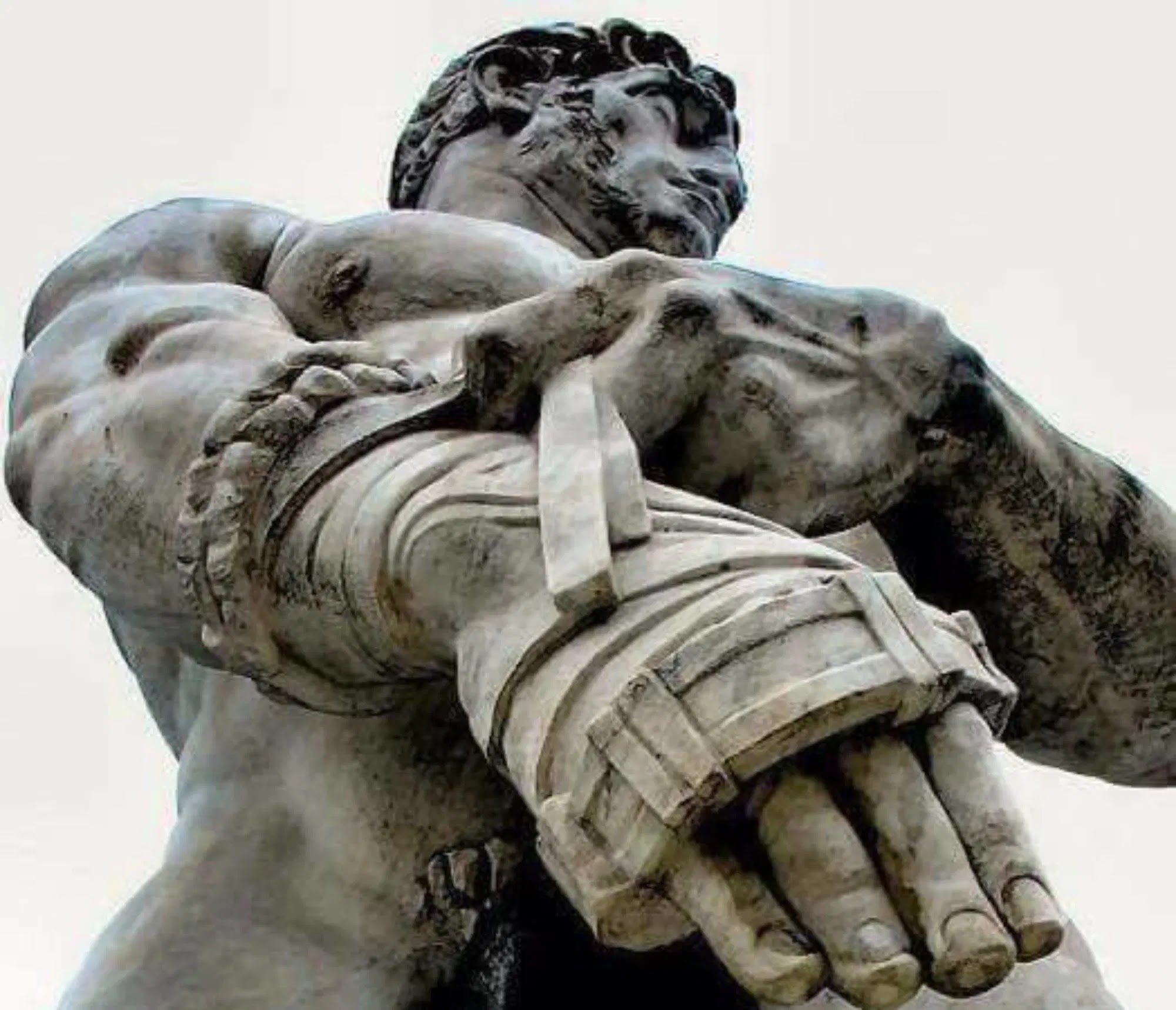
Tips For Unarmed Fighters in Pathfinder (Who Aren't Monks or Brawlers)

Those who fight with their fists, feet, and foreheads are a staple of fantastical tales. Most of us who want to embody someone who treats their body like a weapon will go to either the monk, or the brawler. However, there are times you don't really feel either concept truly embodies what you're going for... but building an effective unarmed fighter outside of those two classes can seem overwhelming.

The following tips don't encompass everything in the rules. They are, however, some useful places to start if you're looking for good ways to start stacking the numbers in your favor.

And they come in a lot of shapes and forms.

Before we get into the details this week, don't forget to sign up for my weekly newsletter to get all my updates right in your inbox. Also, if you've got a bit of spare cash that you'd like to use to help keep the wheels turning, consider becoming a Patreon patron!

Lastly, to be sure you're following all of my followables, check out my LinkTree!

First, What Are Unarmed Strikes?


First things first, it's important to note that all characters are capable of making unarmed strikes. They deal 1d3 damage, if you're a medium creature, and the damage is nonlethal unless you either take a penalty to that attack, or you have a feature that allows you to make your unarmed strikes lethal (such as the Improved Unarmed Strike feat). Unarmed strikes provoke attacks of opportunity from armed opponents without a feature that negates this. Unarmed strikes are light weapons, and the damage they deal is considered weapon damage for any features or abilities that increase weapon damage. That may be important for later, so tuck that away.

Also, consider these.

It is important to remember, as well, that attacks with gauntlets are still considered unarmed attacks. The only advantage they offer is that they allow you to deal lethal damage with your strikes, and later on they provide a convenient place to put a weapon enchantment (or to get metals like mithril or adamantine) to increase the damage your unarmed strikes are dealing.

Consider that a bonus tip! Now, let's get started.

Class Features


The bread and butter of any unarmed fighting build is going to be in the class features you choose to utilize. However, there are a lot of different options on the table that should be considered, depending on the approach you want to take.

Boot to the head, you say?

One of the first options that presents itself is the fighter. Because while the fighter may not gain bigger and bigger damage dice like a monk or a brawler, they do gain bonuses to hit and damage with their favored weapons (which can be unarmed strikes, gauntlets, and other weapons from the close group). So while the 1d3 damage die wouldn't change, that might not matter so much if you're stacking favored weapon damage onto it, along with your Strength modifier, and other bonuses from feats, magic items, spells, etc. If this were an option one wanted to pursue, I'd recommend the brawler fighter archetype (as opposed to the brawler hybrid class), as it gives you bonus attack and damage with your unarmed strikes, but it also allows you to penalize opponents in your threatened area, without making you trade in the defensibility of heavier armor.

Those who want to embrace dirty fighting in its truest form can use the sneak attack or sudden strike class features. The most common classes who get this are the rogue and the ninja (for those who are willing to deal with less-than-full BAB progression), and the slayer (for those who want a full-BAB precision fighter). While sneak attack won't apply to every strike, good positioning, proper use of abilities (like feinting against your foes), and other strategies can let you rock an enemy with a single kick. After all, your unarmed strike damage die is still 1d3, but when you're throwing 4-8d6 along with it, that doesn't matter quite as much.

The vigilante offers several devastating abilities one can use to increase the damage done when fighting unarmed (some of which we see in The Silver Raven Chronicles). Fist of The Avenger adds half an avenger vigilante's class level in damage to unarmed strikes (up to a +5 at level 10), or those made with a gauntlet. Lethal Grace is particularly useful for those who wish to fight with Weapon Finesse, but which still need extra damage dealt by their blows. Stalker vigilantes, of course, receive their own version of precision damage, which can make every blow devastating to their targets.

Keep in mind that spellcasters can incorporate unarmed strikes into their spells. As I mentioned way back in Playing By The Book: Some Rules Pathfinder Players Keep Forgetting, any spell that allows a touch attack may be delivered via an unarmed strike instead. However, it's no longer a touch attack at that point. That's a dangerous place for a wizard or a sorcerer to be, but it might be a solid place for a magus. It may be even better for a warpriest (whose damage die goes up as long as they have Weapon Focus for their unarmed strike), or even a paladin (with their smite damage and full BAB), as they can also add additional enchantments and bonuses to their blows (or to a gauntlet, should that be required).

Lastly, consider the swashbuckler. Their abilities are focused on using light or one-handed piercing weapons, and an unarmed strike normally deals bludgeoning damage. You could add a cestus or spiked gauntlet to overcome this issue, but both of these are weapons in their own right. However, there are feats like Snake Style (level 3) or Boar Ferocity (level 6) that you can take in order to deal piercing damage with your unarmed strikes. While not an ideal build option, this would allow you to get the benefit of your Swashbuckler's Finesse, Precise Strike, and other class features.

Feats


Feats are another important component of most combat builds, and an unarmed fighter is no different. While only dealing 1d3 as your base damage die might seem pathetic, keep in mind that it's really about how many other bonuses you can stack on top of it.

Trust me, you'll hit like a ton of bricks!

- Power Attack or Piranha Strike: Each of these feats lets you take a penalty to attacks for bonus damage on hits. Use the first for Strength, the second if you're going full Dexterity in combat.

- Weapon Specialization, Improved, and Greater: For those who have the ability to take these feats, they can stack a lot of damage onto your strikes. Especially if you're also adding precision damage from Precise Strike, or from Weapon Training as a fighter.

- Accomplished Sneak Attacker: If one multiclasses, or simply doesn't have the full benefits of sneak attack, this feat can add an extra 1d6 of damage to every time you deal this precision damage.

- Heavy Hitter: Technically a trait and not a feat, it still adds +1 damage on unarmed strikes.

- Boar Style: This style allows you to add 2d6 bonus damage whenever you hit an enemy with two unarmed strikes in one round.

- Two Weapon Rend: Deal a bonus 1d10 + 1.5 times your Strength modifier when you hit an enemy with your primary and off-hand weapon once per round. Best used with a two weapon fighting build, as this feat has several prerequisites, including a BAB of 11.

These are just a handful of options for dealing additional damage with unarmed strikes, but they can stack a lot of damage onto your blows... especially when combined with your class features!

Final Thoughts


There's enough variety in abilities and strategies that not everything is going to overlap. Some spells, like magic fang might be useful for you, and you might choose to seek out an amulet of mighty fists to ensure you have a way to enhance all your strikes. You might choose to grab an enchanted gauntlet with the glamered enchantment so it looks like you just have simple gloves on before you slam an iron fisted uppercut into someone's jaw. Belts that improve your physical stats, hand wraps that boost your damage output... there's all sorts of spells and enchanted items that may come into play. Sometimes they work on unarmed strikes, sometimes they expressly don't, and getting a full list of those will probably be its own, separate post.

However, the ability to hit harder, and to deal elemental damage, holy damage, etc., is where even a hard strike is going to turn into a serious weapon. Choose your magic items wisely, but remember that even without them you should still be able to pack a pretty solid punch. Or kick. Or headbutt.

And just in case you need even more...

Lastly, if you're looking for some extra wooge to add your unarmed fighters, consider some of the options I presented in Sellswords of Sundara recently! While there is a monk option for batting aside everything from swords to spells, there's 9 other martial archetypes ranging from the Widowmakers and their ungentlemanly forms of warfare, to the Gray Blades who've seen everything war has to offer, and done most of it at least twice. Check it out, and delve in for yourself!

Like, Share, and Follow For More!


That's all for this week's Crunch topic! For more of my work, check out my Vocal archive, and stop by the YouTube channel Dungeon Keeper Radio! Or if you'd like to read some of my books, like my alley cat noir novel Marked Territory, my sword and sorcery novel Crier's Knife or my latest short story collection The Rejects, head over to My Amazon Author Page!

To stay on top of all my latest releases, follow me on FacebookTumblrTwitter, and now on Pinterest as well! And if you'd like to help support me and my work, consider Buying Me A Ko-Fi or heading over to The Literary Mercenary's Patreon page to become a regular, monthly patron! Even a little bit of help can go a long way, trust me on that one.

Saturday, March 27, 2021

Armor Class is a Sucker's Game in Pathfinder (Here's A Way To Beat It)

Combat in RPGs, when boiled down to its bare essentials, comprises trying to hit the enemy as hard and as often as you can while attempting not to get hit yourself. While there are a lot of different mechanics for this throughout the gaming spectrum, Pathfinder opts for the passive defense mechanism of armor class. You take your Dexterity modifier, the value of your armor, the value of your shield (if you have one), unique feats and class features, magic items, protective spells, circumstance bonuses, and you add all of those up to determine how good an attack needs to be to actually hit you.

Pretty standard stuff, really.

Crap.

If you've played a long-running campaign, though, then you know armor class is a sucker's game the longer the story goes on. And as someone whose characters draw critical hits like a magnet draws iron, I'd like to share some of what I've learned on the subject of making sure you don't get smashed to a pulp whenever initiative is rolled.

As always, if you haven't done so yet, sign up for my weekly newsletter to make sure you don't miss any of my latest updates! And if you'd like to do your part to help keep Improved Initiative going strong, consider becoming a Patreon patron... even small donations make a big difference at the end of the month.

Diminishing Returns on Your AC


Let's lay some foundational points, here. I'm not saying that armor class is a bad mechanic. I'm not saying that it's broken, or that you shouldn't use it at your table. What I am saying, though, is that if you want your armor class to actually provide a lot of protection as you level up then it's basically the only thing you're going to be investing your resources in to allow you to keep pace with your enemies.

You spent HOW much on that?!

I'll give you a perfect example from my recent Rise of The Runelords playthrough. For that campaign I was running a paladin with a Dexterity focus. At lower levels all it took was decent armor and a shield to avoid getting hit a majority of the time. Sometimes the GM got in a lucky shot, but the character sometimes went through entire encounters with barely a scratch. By the time the party's level hit double digits, though, it didn't matter how high my armor class was. I had enchanted armor, a boosted Dexterity bonus, natural armor, a shield bonus, deflection modifiers, boost spells from the party enchanter, and the huge bonus from active smite on a target, and I was still practically guaranteed to tank at least 2 hits per big bad per round.

Why the change?

Well, part of it is that once you hit high single digits to double digits for character level, you start dealing with one big threat a lot more often than you do squads of smaller threats. While one big threat stands less of a chance of winning (because the party gets more actions, and is therefore more likely to cream that single enemy), these enemies tend to have huge attack bonuses that are practically guaranteed to hit at least once when they unload on a PC. And it's usually more, which can be a problem if those hits are all targeted at one PC instead of spread out among the party. Or, even worse, enemies tend to pack potent magic that targets your touch AC or your saving throws (thus ignoring a lot of buffs), or they opt to try to grapple characters, which targets your combat maneuver defense instead of your armor class.

So, to sum up, the higher your character level gets the less often enemies rely on purely physical attacks to harm you... and when they do rely on physical attacks, they tend to come from massive enemies with huge bonuses to hit so that even the tankiest of tanks is going to lose a hefty chunk of hit points by the time the GM is done rolling dice.

Thinking Beyond Armor Class


Now, for the record, I'm not saying you shouldn't invest in your armor class. Getting a good AC is going to save you from a lot of damage over the long-term, and you'll often be able to shrug off attacks from smaller minions, traps, and other sources of damage that can still pose a serious danger if you go running into battle with nothing but a bedsheet and a buckler.

All right, I'm ready. Let's do this!

There are three categories of defense that I find a lot of players don't invest in, but they can often provide you far more protection than spending all of your gold to get the best magical amulets, shields, cloaks, and armor you can find to boost your armor class. Those areas are:

- Attack Negation
- Miss Chance
- Damage Reduction

The first category is, admittedly, one of the rarest out there. Not only that, but it tends to be pretty narrow in its application. However, this covers class abilities like the swashbuckler or duelist parry, as well as feats like Deflect Arrows, Missile Shield, and Ray Shield. It also covers feats like Snake Style, Cut From The Air and Smash From The Air as well. The idea is that these abilities directly counter an attack that might otherwise hit you, allowing you to use your own prowess instead of relying on your armor class. These abilities tend to have a small pool of uses (they require you to spend attacks of opportunity, or they only function once per round), but they are ideal for characters with high attack bonuses (or just Improved Unarmed Strike) who want to use that offense as a defense.

These don't help much with magical attacks, of course. For that you need a counterspell, or for the caster to miss you entirely... which is where the second category comes in.

Miss chance is what happens when an attack should hit, but due to poor lighting, a magical effect, etc., there's a percentage chance that it doesn't land. You've got either a 20 percent miss chance for concealment, or a 50 percent miss chance for total concealment... and these are going to be far more effective than pumping all your money into your AC just to eke out another 1-4 points that won't stop you from getting your teeth knocked out.

This can be done at all levels, depending on the situation you're involved in. A first level tiefling when fighting humans can use their darkness spell-like ability to lower the lighting conditions in an area, granting themselves a 20 percent miss chance due to concealment. Orcs fighting in total darkness in a cavern can get a 50 percent miss chance if they snuff all the lights in an area. Tossing down a smoke stick creates a cloud of vapor that makes attacks pretty likely to miss you, and is a good strategy if you're all sitting ducks in a hallway with an archer or a blaster at the other end. An invisible character gets that 50 percent miss chance, while a blurred one gets the 20. Magic items like a cloak of displacement are going to be worth more than their cost in terms of blood and suffering when it comes to how much pain they save you. And what's even better is that a miss chance can often save you from precision damage like sneak attack, meaning that even if the rogue or assassin manages to strike a blow, that mountain of d6s isn't going to accompany it.

While some would argue that mirror image isn't technically a miss chance spell, I'll remind folks about it here, because it is a life saver.

What if they don't miss, and you can't block?

If that blow does land, and you're going to take damage, there's still one more trick you can keep up your sleeve... damage reduction.

Damage reduction is usually something monsters get, but players can get their hands on it as well. The most common examples are when it's a class feature, which you see with barbarians, bloodragers, and some fighter and monk archetypes (such as the one I used for my Luke Cage character conversion). Anyone who've ever played a high level barbarian can tell you that ticking off a dozen points of damage that you just don't have to take adds up over the course of a fight. Adamantine armor also grants damage reduction, and spells like defending bone (one of my personal favorites) will also take some of the hits for you. If you have a divine caster who really likes you then you might be able to get them to use shield other on you. Or if you get a familiar, then one with the Protector archetype can do much the same thing around level 5 as long as the two of you are touching.

Layered Defense Works Best


There is no way to completely avoid taking damage in Pathfinder. Sooner or later a lucky shot, an area of effect spell, a trap, or an invisible assassin is going to make you bleed. However, you're going to have far more flexibility (and get screwed far less often) if you can create a layered defense against the threats you're facing.

The first layer of that defense is your armor class, and while it will stop some attacks, there's no way it will stop all of them. An active defense might cut some arrows out of the air, or parry some strikes, but it won't stop every shot coming your way. A miss chance might mean that even a few of the ones that do get through fly harmlessly past. And, lastly, even if the blow manages to land, damage reduction can chop that number down so that it's barely a flesh wound.

This isn't perfect either. Area of effect spells that require Reflex saves are still going to be something you need to contend with, Will saves are going to be a serious threat, and while a miss chance might stop you from getting grappled or tripped, none of the others will affect those attacks. Choking gas clouds, fear effects, an inability to reach flying enemies, illusions... there are still dozens of different challenges and threats you'll need to be ready for.

So keep that in mind before you start feeling too invincible.

Like, Share, and Follow For More!


That's all for this week's Crunch topic! For more of my work, check out my Vocal archive, and stop by the YouTube channel Dungeon Keeper Radio! Or if you'd like to read some of my books, like my alley cat noir novel Marked Territory, my sword and sorcery novel Crier's Knife or my latest short story collection The Rejects, head over to My Amazon Author Page!

To stay on top of all my latest releases, follow me on FacebookTumblrTwitter, and now on Pinterest as well! And if you'd like to help support me and my work, consider Buying Me A Ko-Fi or heading over to The Literary Mercenary's Patreon page to become a regular, monthly patron! Even a little bit of help can go a long way, trust me on that one.

Saturday, October 10, 2020

Guns Really Aren't As Powerful As You Think in Pathfinder

It has been nearly 10 years since Ultimate Combat dropped from Paizo, and with it the gunslinger class. And despite having had the following conversation in dozens of different forums, Facebook groups, and threads, I figured that I'd collect this all in one place in order to create a simple, easy-to-reference piece for any game runners out there who are worried that guns are just "too powerful" for your game.

They're really not. And I can break down why pretty easily.

There's about to be a lot of shots fired.

Also, for those who want to make sure they don't miss any of my updates, consider subscribing to my newsletter! And if at the end of this you've got a hankering for putting a shooter on your table, then consider checking out my Pathfinder character conversions for The Punisher, Doc Holliday, and John Wick.
 
Lastly, if you're looking for high-caliber action with the sort of guns that are as powerful as a lot of players seem to think, then you should really take a look at the Savage Company Campaign Setting as well as the recently released Savage Company Infantryman's Handbook. That's where you'll find the big guns.

Lastly, if you're looking for some additional fun and flavor, then you might want to check out my 5 Tips For Playing Better Gunslingers. Honestly, I think it's one of the more instructive articles in that particular series.

Let's Talk About The Touch Attack


The thing that gets a lot of people wound up is the fact that firearms are touch attacks. But a lot of players and game masters alike seem to skip past all of the fine print and qualifications that actually puts this into perspective.

Just some provisos... some quid pro quo...

First of all, an early firearm (the sort you're going to have access to in an average game run by the core setting's rules, or which you acquire as a class feature as a gunslinger) is only a touch attack within the first range increment. After that it takes the normal -2 to attack for distance, and resolves against standard armor class. That usually means you have to be within 20 feet to 50 feet at the very longest, which is more than close enough for the angry enemy they shot to charge them on their turn.

Secondly, a touch attack is not some huge upset that's going to reduce difficulty to nearly nothing. Size modifiers, Dexterity modifiers, cover, concealment, and a slew of other things still apply. Ducking behind a rock, or planting a tower shield, is often enough to keep one safe from even the deadliest gunfighter. Because it's true that someone firing a pistol is more likely to hit their target than they would if they were firing a hand crossbow... but it's no more likely than if they were shooting a wand with a ray spell. And chances are good the ray is going to have a lot better range.

Guns Aren't All That Powerful On Their Own


The other misconception people seem to have is that firearms are this encounter-killing mechanic that completely wrecks challenge level if they're present. Smaller firearms deal 1d6 of damage, and the largest reasonable two-handed firearm deals 1d12 damage. The double hackbutt deals 2d12 but it is not something you can easily acquire, and the damn thing is wheelbarrow-mounted, so it's not something players should be walking around with unless you're allowing ogrekin at your table.

And if you're doing that nonsense, guns are really a drop in the bucket.

Sure, it's a touch attack. If you're playing a character with a full BAB and a decent Dexterity score, chances are pretty good you're going to hit your target barring other obstacles (there's no concealment, they're within the first range increment, etc.). But if you hit, you've done either the equivalent of a short sword, or a great ax blow. Can that kill an enemy at low levels? Sure, if you're lucky it will blast a goblin's head off, or reduce a skeleton to a pile of bone dust. But even rolling max damage on that attack after a couple of levels is just going to annoy the monster, and mark the shooter out as a target. And if there's more than one threat present on the field, you likely won't have enough bullets to go around.

And the numbers only get worse as you level up.

Guns by themselves aren't a huge threat to one's enemies; they need something to dovetail with them in order to actually be effective. For instance, combining a gun with sneak attack is a great way to deal a lot of damage really quickly, without the need to rely on a spell to get a touch attack. If a gun is combined with class features that let you use them in unique ways (such as the gunsliner's deeds), or with a class that adds bonus damage (precision damage, adding Dexterity modifier to firearm damage, etc.) then that is quickly going to beef them up. Even something like the ranged magus archetype, or the spellslinger wizard archetype that lets you combine your gun with spells is going to give you more bang for your buck. Gunslinging paladins will dole out some serious harshness on devils, demons, and undead if they combine a shotgun with smite. And so on, and so forth.

But just the gun all by itself? Not that much of a threat. Especially when you consider some of the following...

They're Expensive (Both To Acquire, And To Use)


Guns are probably the most expensive non-magical weapons in the game. It's one reason that gunslingers are just handed a busted gat at level one, and why only they can use it without penalty. Basic guns can cost hundreds to thousands of gold just to acquire, and that's without any special abilities, masterwork detailing, etc.
 
We're discounting the fire lance here, because again it's the exceptions that prove the rule.

What did it cost? GDP of a mid-sized nation, since you ask.

And if you do want to buff up your firearms to be sure you can overcome damage reduction, and get some extra elemental effects or special abilities added to your shooting irons? Then you're pouring most of your gold into those upgrades. When you add in the cost of black powder, alchemical cartridges, and other aspects of firearm use, they suck up your adventuring earnings pretty damn fast. There are specific magic items that let you get around those costs, but again, you need to either find or make them.

Financial costs aren't the only thing to consider when it comes to firearm use, though; they're also fairly rare in a lot of locations. So if a player can't fix or modify the weapon themselves, and you're not in an area of the map where there are going to be gunsmiths about, that's going to create a problem. Guns are also pretty feat intensive if you want to really make them effective, and that goes double if you aren't marrying them to a potent class feature like the ones mentioned above.

First, you need proficiency in the weapon to avoid the -4 penalty (this is usually gained from a class feature, but not always). Then you need to acquire several ranged combat feats, such as Point Black Shot and Precise Shot to avoid penalties for shooting into melee while getting a small attack and damage boost. Rapid Reload is often a necessity, because much like crossbows guns can be an absolute ass-ache to keep loaded as combat goes on. Deadly Aim is often necessary for boosting your damage with these weapons, but it's a feat that you get the biggest benefit from when you have a full BAB. For those who want to make every shot count, feats like Vital Strike may be worthwhile. The Gunsmithing feat is often required for keeping guns repaired and loaded, and if a player isn't playing a gunslinger they may not get it for free.

In summary, if you're going to use guns effectively, that's where a great deal of your monetary resources, and your character resources, are going to go. Especially if they aren't just a convenient delivery system for a spell or a sneak attack.

They Come With Built-In Drawbacks


Guns have a lot of drawbacks that you need to overcome in order to use them effectively. Their relatively short range is one, and their expense is another. As mentioned, they can also be murder on your action economy, requiring you to really cut corners, or rely on spells and special abilities to make sure that you've always got a round in the pipe.

They can also blow up in your face.

Guys... I think Flint rolled another 1!

If you roll particularly low on an attack with an early firearm, then you have to deal with misfires. And misfires can cost you... especially if you're a player who rolls a lot of natural 1s, the way I tend to. While there are ways to downplay or negate misfires, their probability also increases when you do things like utilize alchemical cartridges... so they're going to happen at least a few times.

The other major built-in drawback of a firearm is powder. Black powder and ammunition is subject to water, subject to fire, and to all sorts of other situational issues. So if an enemy uses spells to ruin ammunition, or if a gunslinger gets caught in a dragon's breath weapon or a fireball, that incident could become far more costly than it otherwise might have been. Even something like being bullrushed into a river could destroy the ammunition in their weapon, as well as the bullets in their cartridge belt. And even when it does go off, it's loud as hell, which can alert other encounters there's something going on next door.

These are things you can overcome. There are items and magic cases that safeguard your equipment, as well as spells that can silence your area, but those also play into the cost of using a firearm in a hostile world. And while a game master may opt not to use these particular weaknesses to avoid ruining a player's fun and frustrating them, they are still there, and still viable.

Any Weapon Can Be Overpowered In The Right Hands


Hey there... heard someone was talking shit about archers?

I've been at a lot of tables over the years, and I've seen players crack out every, single weapon you could use. From frenzied berserkers whose greatswords can cleave dragons in half, to dagger-wielding assassins that tore encounters apart, to a wizard that turned a first-level spell into a nuclear hellstorm by applying just the right combination of feats, boosts, and metamagic rods... the weapon by itself was just one aspect of the character.

More to the point, though, I've seen a lot of game masters who end up getting steam-rolled by the party not because the party's too powerful, but because they aren't utilizing any sort of strategy for their villains.

I talked about this more in Party Balance is Mostly a Myth. Instead, Ask How You're Challenging The Party, but it bears repeating. Every character is going to be strong in some situations, and not as strong in others. If a target is within relatively close range and has a low touch AC, that is the gunfighter's time to shine. If a target has a high damage reduction, the ability to deflect bullets, is under a lot of cover, or is shrouded by illusion, then they're far more likely to end up shooting at shadows and not doing a whole hell of a lot while someone else steps up to get the job done.

If a gun could completely destroy your game's challenge, step back and ask why? Especially when you consider all of the weaknesses, limitations, and required support from class features, feats, etc. it takes to make these weapons really dangerous.

Lastly, a Note on Genre


This is Crunch week, and as such I've been largely focusing on the mechanical aspects of firearms (and particularly early firearms) as they're written for Pathfinder's first edition. As such, I have not gotten into setting, conventions, etc.

But I feel that should be addressed.

If you are running a Pathfinder campaign set in Golarion, then firearms are a part of that setting canon. If you are running a different setting (possibly one of your own design) where firearms do not exist, then they are not a part of that setting canon. Some players love guns in their fantasy settings, some players hate them, and some players are indifferent regarding their presence. But that is a discussion you can have on its own merits.

By the numbers, though, guns are not that big of a deal by themselves in a mechanical sense. As long as you run them as they're written, and track all of the things associated with their use, they're barely be a blip on the radar regarding challenge. You aren't required to use them at your table, but if the mechanics are really your concern, you can put that concern to bed.

Like, Share, and Follow For More!


That's all for this week's Crunch topic! For more of my work, check out my Vocal archive, and stop by the YouTube channel Dungeon Keeper Radio! Or if you'd like to read some of my books, like my alley cat noir novel Marked Territory, my sword and sorcery novel Crier's Knife or my latest short story collection The Rejects, head over to My Amazon Author Page!

To stay on top of all my latest releases, follow me on FacebookTumblrTwitter, and now on Pinterest as well! And if you'd like to help support me and my work, consider Buying Me A Ko-Fi or heading over to The Literary Mercenary's Patreon page to become a regular, monthly patron! Even a little bit of help can go a long way, trust me on that one.

Saturday, September 12, 2020

Everything Has a Weakness (So Be Sure You Know Your Options)

There is an old saying one of my martial arts instructors taught me when I was young; soft on hard, hard on soft. The idea was that you need to match the type of strike to where you're hitting your enemy, otherwise you're going to do more damage to yourself than you will to them. The stomach is a soft target, so you strike it with a fist for a hard blow for best effect. The head is a hard, rigid target so you should use a softer blow like a palm strike instead of a punch so you don't shatter your knuckles on your opponent's skull.

What does that have to do with gaming?

We've all had those moments in our games where we've run face-first into a wall. Where the enemy's armor class was too high, their strength too great, their damage resistance too big, or their movement speed too fast. When you come up against one of these challenges, you've basically got two options; throw up your hands and admit defeat, or switch tactics to strike at their soft spots.

Dammit, parried AGAIN?!

I'll be talking about Pathfinder here, but the basic theory can be applied to almost any game. All you have to do is ask, "What is this enemy bad at defending?" and that should be the first step of your strategy.

A High Armor Class Isn't As Unstoppable As You Think


Take your shot, there's a 20 on that die.

One of the most common situations you'll run into is an enemy with a really high armor class. Maybe it's a rampaging tank, or a magically-augmented machine, or your party just wasn't built to for the battlefield, but for whatever reason you need to roll really high just to land a hit on this thing.

The issue is that you're probably attacking the enemy's biggest strength, when you should instead be either attacking something different, or reducing that strength in some way. When you find yourself facing this situation, consider alternative options like:

- Attacking a Saving Throw: It doesn't matter what kind of armor you have on when a fireball goes off, or the illusionist hits you with color spray. This typically requires use of a spell, but items like grenades and thunderstones as well as wands and scrolls make this option available to any PC.

- Attacking Touch Armor Class: Whether you're hucking a tanglefoot bag or shooting a scorching ray, it is generally much easier to hit a target creature's touch armor class than their standard one. While not all items/abilities that hit touch armor class will deal damage, many of them can cause useful status effects that will make the combat easier.

- Attacking Combat Maneuver Defense: A big, bad suit of armor and a heavy shield can make someone tough to hit, but it doesn't add anything to their combat maneuver defense. So whether you want to trip them, disarm them, or grapple them if you're really sassy, this can be an extremely useful alternative attack strategy. It will provoke attacks of opportunity, of course, and the higher an enemy's size, Strength, and Dexterity are the tougher it's going to be to succeed... but it should be considered all the same.

- Reducing The Enemy's Armor Class: There are dozens of ways you can reduce the enemy's armor class in order to make it less potent. Items like a tanglefoot bag (or tanglefoot arrow, if you want to keep the target at a distance) can provide a serious advantage, as can spells like adhesive spittle. Tripping the enemy puts them prone, which gives you a +4 advantage to hit them. Sundering their shield or armor would mean they no longer gain a benefit from that particular item (though it also means you'd have to repair it before you could use it yourself when the battle is over).

High Saving Throws Aren't Unassailable


Parry this, ye blasted casual!

Another issue (particularly for spellcasters) is that enemies often have saving throws that are just too high to give your spells any real impact. Assassins that can cartwheel through area of effect magic without taking any damage, frenzied giants whose constitutions are nearly unstoppable, or learned wizards whose minds and wills are like juggernauts.

Again, this won't make you completely useless (especially if you choose spells that still do something even if the target succeeds on their save). It just means you need to aim for the target's vulnerable areas instead. Try strategies like:

- Switching Saves: Most enemies will have one save that's worse than the others. If they're acing your Reflex and Will saves, consider testing their Fortitude. A variety of tricks in your bag helps a lot here.

- Reducing Saves: As with armor class, an enemy's saves can be reduced. If you can render an enemy shaken (whether it's through a spell, an Intimidate check, or some other feature), that imposes a -2 penalty on their saving throws. If the enemy can be entangled, that reduces their Reflex saves. Doing damage to (or imposing a negative on) an enemy's attributes will reduce an associated saving throw.

- Focusing on Other Areas: If an enemy has really good saving throws, it's likely their touch armor class (or even their regular armor class) isn't very good. Targeting that area instead will allow you to get more bang for your buck.

Other Issues You May Need To Counter


Armor class and saving throws are the most common challenges for players to overcome, but they're far from the only ones. Which is why it's a good idea to consider having a plan for some of the following effects.

- Flight: Flying enemies are the bane of any melee character. Whether it's ensuring you have a way to fly yourself, tanglefoot arrows to cut their speed and bring them back down to earth (if you're lucky), or even something as simple as a lasso to rope and hold your foe in place, this will show up in game sooner or later. And, of course, always have a back-up weapon, wand, or spell for the occasion.

- Damage Reduction: Some creatures take a particular type of weapon to hurt. What a lot of players don't know is the higher the magical enchantment is on a weapon, the more forms of damage reduction it ignores. For the magi, paladins, and warpriests out there, if you can get the flat bonus to +4 or higher, it allows you to ignore silver, cold iron, and even adamantine requirements for DR. Something to keep in mind, along with knowing that tossing acid and alchemist fire at werewolves is also a solid choice.

- Elemental Resistances/Immunities: This is a big one, especially for characters who are committed to their fire, ice, or lightning schtick. Always have a way to switch up which element you're using, and make sure that you're not stuck with only one option. Otherwise you're going to find yourself in a situation where your biggest sledgehammer might as well be a feather duster.

- Darkness/Senses: One of the big advantages a lot of enemies have over the PCs is that they can see in places the party can't. Whether it's normal darkness (which is typically rendered null by magic weapons that shine like a torch, as well as regular darkvision), deeper darkness (something you need a daylight spell at the very least to get rid of), or the ability to turn invisible (glitterdust and smog pellets are your best friend in these situations), there's always a chance the foe tries to use their ability to see, or to go unseen, when it's the biggest disadvantage to the party.

The Game is Always Multi-Dimensional


There are so many different tools and strategies that it's impossible to be prepared for everything that might come your way. With that said, it's good to have at least 2-3 backups in your belt pouch should your main gun happen to be ineffective against a particular encounter. And the more options you can keep on-hand (especially if it provides the option to the rest of the party), the easier a time you're going to have throughout your campaign.

With that said, I would like to take a moment to remind everyone of an old project of mine I worked on for TPK Games. Because the Feats of Legend series was a lot of fun, but it also put a lot of unique tools into players' hands. So if you haven't had a chance, take a moment to glance over them!

I try not to play favorites... but if you were going to pick one, I'd recommend this one.

- 20 Infernal Feats: From devil-spawned tieflings, to worshipers of dark powers, if the fires of hell run in your veins then these feats will be perfect for you.

- 20 Undead Feats: Whether you want to put one foot in the grave to gain some of the resistances of the living dead, or you've simply run too much dark power through your soul, these feats are what you've been looking for.

- 20 Celestial Feats: From the faithful, to those whose ancestry mixes with the celestial realms, these feats put the power of the holy light into your hands. The bane of wicked foes!

- 30 Fey Feats: A bigger collection than normal, these feats are for those with a tie to the first world... a place where the rules don't apply, and logic has never managed to take root.

- 20 Orc Feats: One of the best-reviewed collections of the Feats of Legend series (by Endzeitgeist himself) this one lets you put some real fire in your orcs and half-orcs!

Like, Share, and Follow For More!


That's all for this week's Crunch topic! For more of my work, check out my Vocal archive, and stop by the YouTube channel Dungeon Keeper Radio! Or if you'd like to read some of my books, like my sword and sorcery novel Crier's Knife or my latest short story collection The Rejects, head over to My Amazon Author Page!

To stay on top of all my latest releases, follow me on FacebookTumblrTwitter, and now on Pinterest as well! And if you'd like to help support me and my work, consider Buying Me A Ko-Fi or heading over to The Literary Mercenary's Patreon page to become a regular, monthly patron! Even a little bit of help can go a long way, trust me on that one.