Showing posts with label AC. Show all posts

Saturday, March 27, 2021

Armor Class is a Sucker's Game in Pathfinder (Here's A Way To Beat It)

Combat in RPGs, when boiled down to its bare essentials, comprises trying to hit the enemy as hard and as often as you can while attempting not to get hit yourself. While there are a lot of different mechanics for this throughout the gaming spectrum, Pathfinder opts for the passive defense mechanism of armor class. You take your Dexterity modifier, the value of your armor, the value of your shield (if you have one), unique feats and class features, magic items, protective spells, circumstance bonuses, and you add all of those up to determine how good an attack needs to be to actually hit you.

Pretty standard stuff, really.

Crap.

If you've played a long-running campaign, though, then you know armor class is a sucker's game the longer the story goes on. And as someone whose characters draw critical hits like a magnet draws iron, I'd like to share some of what I've learned on the subject of making sure you don't get smashed to a pulp whenever initiative is rolled.

As always, if you haven't done so yet, sign up for my weekly newsletter to make sure you don't miss any of my latest updates! And if you'd like to do your part to help keep Improved Initiative going strong, consider becoming a Patreon patron... even small donations make a big difference at the end of the month.

Diminishing Returns on Your AC


Let's lay some foundational points, here. I'm not saying that armor class is a bad mechanic. I'm not saying that it's broken, or that you shouldn't use it at your table. What I am saying, though, is that if you want your armor class to actually provide a lot of protection as you level up then it's basically the only thing you're going to be investing your resources in to allow you to keep pace with your enemies.

You spent HOW much on that?!

I'll give you a perfect example from my recent Rise of The Runelords playthrough. For that campaign I was running a paladin with a Dexterity focus. At lower levels all it took was decent armor and a shield to avoid getting hit a majority of the time. Sometimes the GM got in a lucky shot, but the character sometimes went through entire encounters with barely a scratch. By the time the party's level hit double digits, though, it didn't matter how high my armor class was. I had enchanted armor, a boosted Dexterity bonus, natural armor, a shield bonus, deflection modifiers, boost spells from the party enchanter, and the huge bonus from active smite on a target, and I was still practically guaranteed to tank at least 2 hits per big bad per round.

Why the change?

Well, part of it is that once you hit high single digits to double digits for character level, you start dealing with one big threat a lot more often than you do squads of smaller threats. While one big threat stands less of a chance of winning (because the party gets more actions, and is therefore more likely to cream that single enemy), these enemies tend to have huge attack bonuses that are practically guaranteed to hit at least once when they unload on a PC. And it's usually more, which can be a problem if those hits are all targeted at one PC instead of spread out among the party. Or, even worse, enemies tend to pack potent magic that targets your touch AC or your saving throws (thus ignoring a lot of buffs), or they opt to try to grapple characters, which targets your combat maneuver defense instead of your armor class.

So, to sum up, the higher your character level gets the less often enemies rely on purely physical attacks to harm you... and when they do rely on physical attacks, they tend to come from massive enemies with huge bonuses to hit so that even the tankiest of tanks is going to lose a hefty chunk of hit points by the time the GM is done rolling dice.

Thinking Beyond Armor Class


Now, for the record, I'm not saying you shouldn't invest in your armor class. Getting a good AC is going to save you from a lot of damage over the long-term, and you'll often be able to shrug off attacks from smaller minions, traps, and other sources of damage that can still pose a serious danger if you go running into battle with nothing but a bedsheet and a buckler.
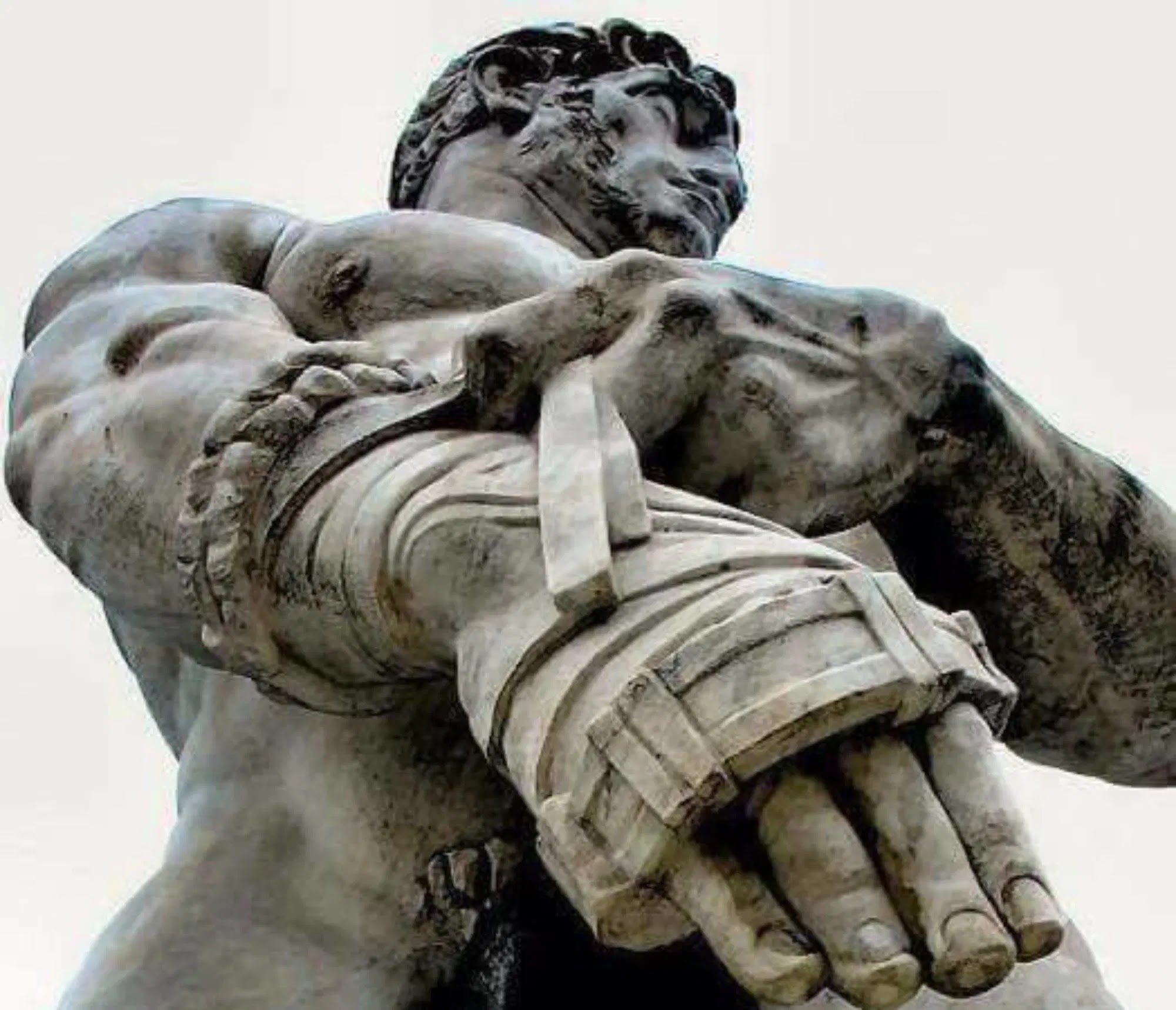
All right, I'm ready. Let's do this!

There are three categories of defense that I find a lot of players don't invest in, but they can often provide you far more protection than spending all of your gold to get the best magical amulets, shields, cloaks, and armor you can find to boost your armor class. Those areas are:

- Attack Negation
- Miss Chance
- Damage Reduction

The first category is, admittedly, one of the rarest out there. Not only that, but it tends to be pretty narrow in its application. However, this covers class abilities like the swashbuckler or duelist parry, as well as feats like Deflect Arrows, Missile Shield, and Ray Shield. It also covers feats like Snake Style, Cut From The Air and Smash From The Air as well. The idea is that these abilities directly counter an attack that might otherwise hit you, allowing you to use your own prowess instead of relying on your armor class. These abilities tend to have a small pool of uses (they require you to spend attacks of opportunity, or they only function once per round), but they are ideal for characters with high attack bonuses (or just Improved Unarmed Strike) who want to use that offense as a defense.

These don't help much with magical attacks, of course. For that you need a counterspell, or for the caster to miss you entirely... which is where the second category comes in.

Miss chance is what happens when an attack should hit, but due to poor lighting, a magical effect, etc., there's a percentage chance that it doesn't land. You've got either a 20 percent miss chance for concealment, or a 50 percent miss chance for total concealment... and these are going to be far more effective than pumping all your money into your AC just to eke out another 1-4 points that won't stop you from getting your teeth knocked out.

This can be done at all levels, depending on the situation you're involved in. A first level tiefling when fighting humans can use their darkness spell-like ability to lower the lighting conditions in an area, granting themselves a 20 percent miss chance due to concealment. Orcs fighting in total darkness in a cavern can get a 50 percent miss chance if they snuff all the lights in an area. Tossing down a smoke stick creates a cloud of vapor that makes attacks pretty likely to miss you, and is a good strategy if you're all sitting ducks in a hallway with an archer or a blaster at the other end. An invisible character gets that 50 percent miss chance, while a blurred one gets the 20. Magic items like a cloak of displacement are going to be worth more than their cost in terms of blood and suffering when it comes to how much pain they save you. And what's even better is that a miss chance can often save you from precision damage like sneak attack, meaning that even if the rogue or assassin manages to strike a blow, that mountain of d6s isn't going to accompany it.

While some would argue that mirror image isn't technically a miss chance spell, I'll remind folks about it here, because it is a life saver.

What if they don't miss, and you can't block?

If that blow does land, and you're going to take damage, there's still one more trick you can keep up your sleeve... damage reduction.

Damage reduction is usually something monsters get, but players can get their hands on it as well. The most common examples are when it's a class feature, which you see with barbarians, bloodragers, and some fighter and monk archetypes (such as the one I used for my Luke Cage character conversion). Anyone who've ever played a high level barbarian can tell you that ticking off a dozen points of damage that you just don't have to take adds up over the course of a fight. Adamantine armor also grants damage reduction, and spells like defending bone (one of my personal favorites) will also take some of the hits for you. If you have a divine caster who really likes you then you might be able to get them to use shield other on you. Or if you get a familiar, then one with the Protector archetype can do much the same thing around level 5 as long as the two of you are touching.

Layered Defense Works Best


There is no way to completely avoid taking damage in Pathfinder. Sooner or later a lucky shot, an area of effect spell, a trap, or an invisible assassin is going to make you bleed. However, you're going to have far more flexibility (and get screwed far less often) if you can create a layered defense against the threats you're facing.

The first layer of that defense is your armor class, and while it will stop some attacks, there's no way it will stop all of them. An active defense might cut some arrows out of the air, or parry some strikes, but it won't stop every shot coming your way. A miss chance might mean that even a few of the ones that do get through fly harmlessly past. And, lastly, even if the blow manages to land, damage reduction can chop that number down so that it's barely a flesh wound.

This isn't perfect either. Area of effect spells that require Reflex saves are still going to be something you need to contend with, Will saves are going to be a serious threat, and while a miss chance might stop you from getting grappled or tripped, none of the others will affect those attacks. Choking gas clouds, fear effects, an inability to reach flying enemies, illusions... there are still dozens of different challenges and threats you'll need to be ready for.

So keep that in mind before you start feeling too invincible.

Like, Share, and Follow For More!


That's all for this week's Crunch topic! For more of my work, check out my Vocal archive, and stop by the YouTube channel Dungeon Keeper Radio! Or if you'd like to read some of my books, like my alley cat noir novel Marked Territory, my sword and sorcery novel Crier's Knife or my latest short story collection The Rejects, head over to My Amazon Author Page!

To stay on top of all my latest releases, follow me on Facebook, Tumblr, Twitter, and now on Pinterest as well! And if you'd like to help support me and my work, consider Buying Me A Ko-Fi or heading over to The Literary Mercenary's Patreon page to become a regular, monthly patron! Even a little bit of help can go a long way, trust me on that one.

Saturday, December 7, 2019

Bucklers Are A Lot More Useful Than Most Folks Give Them Credit For (in Pathfinder)

Bucklers are one of those items that tend to get overlooked in Pathfinder. After all, if you're a character who's going to use a shield at all, chances are you're going to go for something a bit heftier, like a heavy steel shield, or even a tower shield. However, those who read the fine print on a buckler may be surprised at just how useful these items can be... especially if you put a little bit of magic or class features into them.

Don't let its size fool you... this can be a life saver.
Also, if you're looking for more fun uses for an often-ignored piece of equipment, check out my other post In Defense of The Humble Sling (in Pathfinder).

What A Buckler Is (And What It Does)


While there are a lot of arguments about what a buckler is or isn't among historical combat enthusiasts, in terms of Pathfinder a buckler is just a small, metal shield that straps to the user's forearm. It leaves the hand free to hold items, and it provides a +1 shield bonus to the user's armor class. That's half of what you get from a larger wooden or steel shield, but as many players will tell you, a +1 is a +1, and it can make a difference. There is an armor check penalty of -1 for using it, though, and a 5% arcane spell failure chance, if you're an arcane caster. A buckler cannot be used to shield bash with, unless one has the proper feats or class features that specifically give you this ability.

The numbers check out.
There are other advantages to bucklers if you read the fine print, though. For example, though you incur a -1 penalty for using your shield arm to wield a two-handed weapon, or to make an attack with your off-hand using two-weapon fighting (in addition to losing the shield's AC bonus for that round) this is not the case if you're using a bow or a crossbow. So if you're an archer who wants a little added insurance, you can strap on a buckler and just add a little boost to your AC.

The other useful thing about a buckler is that you can use your free hand to cast spells with somatic components. Doing so means you lose the shield's benefit to your AC for the round, but you take no other penalty for this action.

What's The Big Deal About a +1 Bonus?


As with so many other things in Pathfinder, that buckler's bonus to your AC is only a +1 if you do absolutely nothing else to boost it up. And that's not nothing, but it's hardly a big, impressive number. But with all of the options you have to include this handy device in your character's makeup, there are a variety of options you could pursue.

All right, let's see just how potent we can get this brew...
The most obvious benefits are going to be for specific classes that can spontaneously boost their shields with class features, like the Skirnir magus archetype in Ultimate Combat, or the Holy Vindicator prestige class in the Advanced Player's Guide. Both of these classes can spontaneously boost their shields (with the Skirnir actually getting to add bonus magic abilities), and given that they tend to have access to both spellcasting and melee capabilities, a buckler could go a long way in their hands.

However, you don't need the power to spontaneously boost a buckler's abilities to get some solid use out of it. Any enchanted buckler is going to provide an enhancement bonus to its total value, and you can often stack on useful abilities you might have trouble getting in other ways. Arrow Deflection, for example, is an ideal way to make sure that enemy archers have to work a little harder to really hurt you. Mirrored bucklers might be a combination signal mirror and medusa repellent, and a channeling buckler improves the amount of a channel for any wearer, while protecting them from their opposite energy type.

List goes on... point is, a lot of shield special abilities are very useful, and putting them onto a smaller, more versatile shield doesn't diminish that capability. And when you add in the special materials a buckler can be made from (mithril, darkwood, adamantine, etc.), as well as the feats and archetypes surrounding the buckler's use (like the buckler duelist in Inner Sea Primer, the thunderstriker in Ultimate Combat, or the falcata swashbuckler in Weapon Master's Handbook) it grows more and more useful.

With all of that said, the most realistic bonus you could get from your buckler is still fairly low. An enhancement bonus of +2 or +3 is expensive in and of itself, and even augmented with a +1 from a feat like Shield Specialization, you're only going to have a slightly better bonus than if you were using a tower shield. You could pour on the bonuses from specialized classes and feats to add utility, but a buckler isn't going to make or break your build.

But it can provide a surprising amount of protection, often with no additional armor check penalty. That could be just the thing for those who've taken a level dip, and find themselves with a shield proficiency that really isn't something they feel they can get the most out of. Or for those whose main weapon fires arrows or bolts.

Just something worth thinking about!

Like, Share, and Follow For More!


That's all for this week's Crunch topic! For more of my work, check out my Vocal archive, and stop by the YouTube channel Dungeon Keeper Radio! Or if you'd like to read some of my books, like my sword and sorcery novel Crier's Knife, head over to My Amazon Author Page!

To stay on top of all my latest releases, follow me on Facebook, Tumblr, Twitter, and now on Pinterest as well! And if you'd like to help support me and my work, consider Buying Me A Ko-Fi or heading over to The Literary Mercenary's Patreon page to become a regular, monthly patron! Even a little bit of help can go a long way, trust me on that one.

Saturday, June 11, 2016

In Praise of Mage Armor

When it comes to Pathfinder, and even older editions of Dungeons and Dragons, we tend to get distracted by the shiny red balls. You know, those 9th-level spells, and 20th level class abilities that you rarely get to have for more than a session or two at the end of a campaign. However, as I pointed out in posts like The Best Alchemical Items For Your Pathfinder Party, sometimes we forget how truly powerful lower-level abilities and items can be, when properly utilized.

That's why, today, I'd like to talk about Mage Armor, and ask why it is we aren't abusing the holy crap out of it.

Come at me, bro!

What Makes Mage Armor So Great?


All right, let's begin at the beginning, here. So, we all know that Mage Armor is one of those bread-and-butter spells for spellcasters at lower levels. Wizards and sorcerers everywhere will take this spell because it grants them a +4 armor bonus to their AC, it lasts for hours per level, and it's a force effect, so incorporeal creatures can't ignore it. However, as you start getting access to more powerful magic items, better spells, etc., mage armor tends to fall by the wayside. You probably still pre-cast it on yourself, but it's far from your most impressive spell.

Of course, there's a lot of mileage you can get out of this first-level spell. Even if you're not a wizard.

This is where shit starts to get weird, isn't it?
On the one hand, it's important to remember that if you have two sources of the same bonus, like DR 5/- from being a barbarian, and DR 10/silver for being a werewolf, that you use the bigger bonus. However, it's equally important to remember that if the bigger bonus is ignored, the secondary one comes into play.

So, let's say you're a full-plate tank, but your party is going up against incorporeal enemies. You might not have the money for ghost touch armor, but having the wizard tap you on the head with Mage Armor (or getting a wand of it, since the spell lasts for hours per the caster's level) means that you still have a +4 bonus to your AC those ghosts can't ignore. If you couple it with Shield (cast from a spell-like ability, wand, or scroll, since its target is You), then you have a +8 bonus to your AC against those pesky ghosts. Sure, that won't come into play if you're just going toe-to-toe with a troll, but it can be a lifesaver if you're trying to avoid that bad touch.

And, let us not forget, there are a lot of characters who don't wear armor, but who still aren't spellcasters.

The monk is probably the most obvious candidate. After all, adding your Dexterity modifier, your Wisdom modifier, and your monk AC bonus together isn't bad, but why not add a floating +4 armor bonus that lasts for hours, doesn't count as armor, and has no negatives associated with it? The same is true for the swashbuckler, the gunslinger, and the duelist; the classes grant you additional bonuses based on wearing light or no armor, and if you're going to be leaping about making Acrobatics checks, the last thing you want is an armor check penalty screwing you up. And if you're a member of a class that doesn't get Use Magic Device as a class skill, just remember the Dangerously Curious trait is all you need to fix that problem.

Animal companions, mounts, and familiars can also make great use of this spell. After all, no one wants their pet wolf, or mouthy pseudodragon, to wind up getting skewered by the enemy. Which is why a simple tap on the head can make them that much harder to hurt, over and above the abilities they gain for being unique class features. Rogues also benefit from mage armor. They get all the bonuses they'd have from wearing a chain shirt, but they are free to be as sneaky and stealthy as they can be. What's even better, though, is that mage armor can be worn anywhere without giving it away. When you're in the pub gathering information, or at dinner with the duke, you can keep some protection going without worrying about committing the social faux pas of wearing a brigandine to the ball. Even barbarians who favor a shield, like the Savage Barbarian archetype, can combine their natural armor with Mage Armor to make them much harder to hit before they go a-raging across the battlefield.

How Do You Get Mage Armor?


Well, the easiest way to get access to Mage Armor (and Magic Vestment, if you want to stack the bonuses together), is by becoming good friends with the spellcasters in your party. At mid-level, the wizard or sorcerer would probably be more than happy to reserve a level 1 spell for you, assuming you've proven that keeping you alive is key to their survival and success. The cleric may do the same. However, not all spellcasters are willing to armor their allies instead of themselves. That's when you have to get creative.

Just how creative are we talking, here?
Well, one way you can make sure you have Mage Armor on hand is to buy a wand of it, shell out the extra gold to get it from a higher-level caster so you don't have to refresh it every hour, and be sure your Use Magic Device skill is up to snuff. That way you can pop yourself on the head, but you don't have to eat up your first action in combat. You could also use a ring of spell storing, or, if you have rogue levels, get the Major Magic rogue talent, and select Mage Armor as your spell-like ability. The advantage of this is that you get the spell at a higher caster level, even if you're doing a multiclass character.

Just One Tool in The Toolbox


It's important to remember that you have a plethora of options when it comes to your adventuring toolbox. Mage Armor, and similar low-level spells, might not be as shiny as the pneumatic head-crushers you get at higher levels, but sometimes you just need a claw hammer to get the job done.

Thanks for dropping in! I hope everyone found this week's Crunch topic useful. If you'd like to help keep Improved Initiative going, then why not stop by The Literary Mercenary's Patreon page to toss a little bread in my jar? As little as $1 a month gets you some sweet swag, and makes it that much easier for me to keep doing what I'm doing. Lastly, if you haven't followed me on Facebook, Tumblr, and Twitter yet, why not start now?