Showing posts with label crunch. Show all posts

Wednesday, February 4, 2026

Dark Social Maneuvering in The Chronicles of Darkness (Forcing Confessions and Cooperation)

When last we met to discuss rules, I was talking about Social Maneuvering in The Chronicles of Darkness (A Simple, Elegant System). This rules system is meant for those social checks that are more than a simple yes/no, pass/fail, and they give you a varied, useful mechanic for actually winning hearts and minds (or wearing down resistance) over time.

However, sometimes you don't have weeks of time to spend on flattery, false friendship, and persuasion. Sometimes you need an NPC to give you what you want right fucking now. And when you find yourself in those high-stress, high-risk scenarios, you end up using the second half of the social maneuvering rules... or, as the game calls it, forcing doors.

For more of my articles on interesting rule systems in the Chronicles of Darkness, check out:


As always, don't forget to sign up for my newsletter to get all my updates right in your inbox. Also, if you've got a bit of spare cash that you'd like to use to help keep the wheels turning, consider becoming a Patreon patron! Also, be sure you're following all of my followables, check out my LinkTree.

Lastly, for hundreds of extra articles on gaming, weird history, and for more free fiction, check out my Vocal archive, too!

Dark Social Maneuvering


To recap for folks who didn't go back to review the last post, when you want to socially maneuver a target to get what you want, this creates a number of Doors that you have to go through that are based on that NPC's resistance, using the lower of their Resolve of Composure. More Doors are added based on whether the thing you want the character to do goes against deeply held principles, if it would put them in danger, etc.

Now normally when you use the social maneuvering rolls you're trying to persuade someone, or to get on their good side so they want to help you. You might even be bribing them. However, there may be times where those kinds of actions would simply take too long, or you simply don't have the social skills it would take to go that route. If that's the case you have the option to force doors open... but while this might get you what you want, there will likely be repercussions.

It's just you and me here... sooner you talk, the sooner I can get you out of this chair.

Forcing Doors happens when you take actions to terrify or obligate someone into doing what you want, and it's an all-or-nothing situation. When forcing Doors open you make a single roll, but the number of unopened Doors acts as a penalty to your roll. So, say you wanted to threaten someone into giving up blackmail material they've been hiding, or to hand over the name of a contact. The player character might leverage their force of personality with a Presence + Intimidation roll, using their specialty in Explicit Threats. However, the person they're threatening has 3 Doors that need to come down, giving the PC a -3 penalty on the roll.

Now, if a player really wants to swing for the fences, they can also include Hard Leverage. This is basically the dark version of a bribe, in that it's physical violence, kidnapping, blackmail, or something else that will add weight to their side of things, and make forcing those Doors open that much easier. And if that Hard Leverage would cause the player character to suffer a breaking point, then it can remove Doors entirely, making the penalty that much smaller. If the action is egregious enough to give the player character a -2 on their breaking point roll, it removes 1 door. If it's -3 or higher, that removes 2 Doors.

So what does all of this look like?

Dane needs the name of a criminal contact. He knows a street pusher who could give it to him, and he doesn't have time to mess around. So he kicks in the pusher's door, pulls a gun, and cocks back the hammer. Dane might be a crook, but he's not generally a violent guy. Perhaps he and Slick are actually friends, in a way, and this is really breaking Dane's idea of who he is, and what he's capable of. That threat with a deadly weapon would likely be enough to automatically remove 1 Door. And if he went further? If he put a bullet in Slick's leg, or pistol-whipped him to make it clear he was serious? That level of line-crossing might be enough to remove 2 Doors.

Given that average Resolve and Composure are 2 dots, it's entirely possible that by not leaving this up to chance and going full-tilt, Dane could force Slick to comply and give him the information with ease. However, while he'll get what he came for, there are costs to this approach. There's the breaking point roll, which might end up costing Dane some Integrity. There's also the matter of burning the bridge he had with Slick (assuming Dane doesn't disguise himself in some way), as well as painting a target on his back if Slick chooses to send violent reprisals his way in the future.

Like it says on the tin; high risk, high reward.

With that said, though, the fact that the social maneuvering rules are robust and flexible enough to account for various different approaches, molding them to the intention of the players, makes this one of the greatest advantages for the Chronicles of Darkness... and this is especially true for adding tension and challenge to the influence game which is so often part of any chronicle!

Like, Follow, and Stay in Touch!


That's all for this week's Crunch post! To stay on top of all my content and releases, make sure you subscribe to my newsletter at the bottom of the page!

Again, for more of my work, check out my Vocal archive, and stop by the Azukail Games YouTube channel, or the dark sci fi channel I contribute stories to, The A.L.I.C.E. Files! Or if you'd prefer to read some of my books, like my dystopian sci-fi thriller Old Soldiers, my hardboiled gangland noir series starring a bruiser of a Maine Coon with Marked Territory and Painted Cats, my sword and sorcery novel Crier's Knife or my latest short story collection The Rejects, then head over to My Amazon Author Page!

To stay on top of all my latest releases, follow me on Blue SkyFacebookTumblrTwitter, and now Pinterest as well! To support my work, consider Buying Me a Ko-Fi, or heading to The Literary Mercenary's Patreon page to become a regular, monthly patron. That one helps ensure you get more Improved Initiative, and it means you'll get my regular, monthly giveaways as a bonus!

Friday, January 9, 2026

Social Maneuvering in The Chronicles of Darkness (A Simple, Elegant System)

There are almost as many social skill systems as there are RPGs out there. Some games make these skills nearly vestigial, with a simple pass/fail that has a particular difficulty associated with the roll. Other games have intricate flowcharts that are almost as difficult to follow as a high-speed tennis match, making fellow players really feel like they're watching social combat in real-time.

For a solid, middle-of-the-road example, I wanted to touch on the Social Maneuvering rules found in the Chronicles of Darkness. Because this system is simple enough to be easily implemented, but there is enough nuance to make it feel robust!

And for folks who have enjoyed my recent delves into this particular game, check out my previous Crunch topics:

- Vehicular Combat is Always An Option (A Chronicles of Darkness Strategy)

So, how do you approach her?

As always, don't forget to sign up for my weekly newsletter to get all my updates right in your inbox. Also, if you've got a bit of spare cash that you'd like to use to help keep the wheels turning, consider becoming a Patreon patron! Also, be sure you're following all of my followables, check out my LinkTree.

Lastly, for hundreds of extra articles on gaming, weird history, and for more free fiction, check out my Vocal archive, too!

These Things Take Time


In an RPG there are often social situations that are meant to happen rapidly. You need to persuade the bouncer at the club to let you in, even though you aren't on the guest list, or maybe you are trying to intimidate someone who looks like they're going to start a fight so they decide not to try you and your companions. In these situations a single roll is usually enough to settle things one way or the other.

However, sometimes you have a social situation that's longer-term. Maybe you're trying to persuade an academic to loan you a historical text that you need access to. Perhaps you're trying to persuade the mayor the accept a bid from a particular company, or you're trying to get this season's monarch to agree to a plan your changeling motley wants to enact this season. For those longer-term strategies that you really need more than a single pass/fail check for, we turn to the Social Maneuvering System detailed on page 81.

Trust me, this is going to come up. Potentially a lot.

First things first, the player announces what they're trying to get this person to do. Maybe they want to get an invitation to this person's special hunting club, or they want to get them to dedicate start-up capital to the player's business idea (that may or may not be a cover for a hunter cell). Whatever it is, the goal is the X on the map they're trying to reach. If the Storyteller determines this is a feasible goal (to paraphrase the old fantasy RPG argument, no matter how good your Persuasion roll is, you can't convince the king to randomly vacate the throne and hand you the crown), then you can move on to the next stage.

Once the goal is agreed on, the Storyteller sets a number of Doors that must be crossed in order for the social maneuver to reach its goal. The base number of Doors is equal to the lower of the target's Resolve or Composure, and then more Doors are added dependent on different factors. If it runs counter to the target's goals and aspirations that can add a Door. If it would be a breaking point for that person, it adds two doors. And as the Social Maneuvering goes on, if the nature of the situation changes (such as if this maneuver started off just trying to get money for a business, but it's revealed the business is actually murder-for-hire) that might add more Doors.

Once all the Doors are established, that's how many successful rolls need to be made to reach the goal. Note, this is not how many successes need to be rolled. A regular success opens 1 door, and an exceptional success opens 2 doors.

At this point, the Storyteller determines the First Impression between the character, and the target of their maneuver. If they have no history, then the player can attempt to set up a positive interaction that appeals to the target (with things such as an activity that appeals to their Vice, offering them a bribe or some sort of gift, etc.). An Average First Impression (the baseline) allows one attempt to influence the maneuver per week. Upgrading that to a Good impression (such as through a bribe) allows one roll to be made per day. An Excellent impression gives you one roll per hour, while a Perfect impression allows one roll per turn.

The last step of things is to determine the rolls made to open the Doors, which should be determined by the circumstances of the interaction.

So, what does that all look like when you put it together?

An Example


A hunter cell really needs to get access to a book in a restricted section of a university library. This place requires someone to have a special writ of permission from the curator in order to examine the piece, and that's not something you can just walk in and demand. So a member of the cell decides to target the curator in order to influence him.

The curator is a strong-willed man, so his initial Doors are set at 4. He's also career-minded, and asking for a favor of this level is a risk to him, adding a 5th Door. However, the hunters are determined to make this work, so one of their number gets dolled-up, and meets with the curator at an art gallery showing; events he is notorious for attending, and enjoying, making it a good place to meet him. No gifts are presented, and the hunters don't know the curator's Vice, so the Storyteller decides this is an Average impression to start with.

The first influence attempt goes well. Erica is knowledgeable about the local art scene (Intelligence + Academics with a specialty in Gallery Art), and manages to impress the curator with her culture and understanding as a critic, and though they verbally spar, he's invigorated by the evening. This opens the first door, allowing Erica to proceed to the next attempt.

They research the curator, and find out his favorite restaurant, as well as his favorite dish. So when Erica asks him to meet for dinner, he's quite pleased to do so. As the setting has changed, though, she has to pivot to a different skill set. To impress him with her manners and understanding of etiquette, Erica makes a Presence + Socialize roll. She gets an exceptional success, opening 2 Doors, as the curator is utterly blown away by her poise and social aura.

In the third week, Erica decides it's time to stop beating around the bush. She's established her credentials as a woman of the arts, and of culture, so she decides to try to persuade the curator to agree to let her see this particular tome. She spins a story about how she's working on an academic paper regarding Mesopotamian mythologies, and this particular book would really allow her to have first-hand knowledge of a relic that would add a lot to her research. A Manipulation + Subterfuge roll is made, and she gets bonus dice for the lie being particularly appealing to his vanity and career aspirations, as having an ally with a publishing history is always good. Erica crushes the roll, and with another exceptional success, the curator agrees to get the necessary permissions, and to arrange for her to examine the book... with him and another historian present, of course!

Some doors are scarier than others...

These long-term social maneuvers add a basic skeleton to this part of the game, while at the same time providing you with a flexible way of trying to get characters to do what you want them to. It takes a little practice, and it should always feel varied and unique no matter how often you've put this particular system into play.

And while there IS another side to social maneuvering (we'll call it dark maneuvering for the moment), I'll likely talk about that in my next Crunch update... so stay tuned!

Like, Follow, and Stay in Touch!


That's all for this week's Crunch post! To stay on top of all my content and releases, make sure you subscribe to my newsletter at the bottom of the page!

Again, for more of my work, check out my Vocal archive, and stop by the Azukail Games YouTube channel, or my Rumble channel The Literary Mercenary! Or if you'd prefer to read some of my books, like my dystopian sci-fi thriller Old Soldiers, my hardboiled gangland noir series starring a bruiser of a Maine Coon with Marked Territory and Painted Cats, my sword and sorcery novel Crier's Knife or my latest short story collection The Rejects, then head over to My Amazon Author Page!

To stay on top of all my latest releases, follow me on Blue SkyFacebookTumblrTwitter, and now Pinterest as well! To support my work, consider Buying Me a Ko-Fi, or heading to The Literary Mercenary's Patreon page to become a regular, monthly patron. That one helps ensure you get more Improved Initiative, and it means you'll get my regular, monthly giveaways as a bonus!

Monday, September 9, 2024

Which Classes Mesh Well With "Way of The Shooting Star"? (Pathfinder Advice)

A little while back I put out the blog post Divine Fighting Technique: An Often-Overlooked Pathfinder Feat, and I was honestly surprised at the reaction. Because while this is a feat that hasn't seen a lot of love at my tables, it's apparently seen a lot of love from the community in general. That's on me... I got that one wrong. However, what really surprised me was that the favorite among everyone seemed to be Way of The Shooting Star, the feat associated with Desna and the starknife. That confused the hell out of me... but the more I thought about it, the more potential I saw in it.

So, I've seen the light on this one, and I thought I'd share some of the thoughts that came to me while it was rolling around in my head. I'm sure these will be old hat for a lot of folks, but for all the folks who were in the same boat as I was, I figured this might help mark out a few interesting paths for them to check out and explore!

This particular version of the feat should be in Divine Anthology, for those who want a copy.

Before we get into the nitty gritty this week, don't forget to sign up for my weekly newsletter to get all my updates right in your inbox. Also, if you've got a bit of spare cash that you'd like to use to help keep the wheels turning, consider becoming a Patreon patron! Also, be sure you're following all of my followables, check out my LinkTree.

Lastly, for hundreds of extra articles on gaming, weird history, and for more free fiction, check out my Vocal archive, too!

What Is "Way of The Shooting Star"?


For those who aren't familiar, the Divine Fighting Technique feat comes in two varieties. The one taken from Divine Anthology requires you to have the deity associated with the feat as a patron deity. The first ability this feat gives you when you take it (which can also be taken in place of a versatile performance if one is a chaotic good bard) is that when you make an attack with a starknife that you use your Charisma modifier for both attack and damage. The advanced benefit (which requires a Dexterity of 17, Point Blank Shot, Diving Fighting Technique, Rapid Shot, and Base Attack Bonus +11 or 11 ranks of Sleight of Hand or being a chaotic good bard at level 10 and replacing one of your versatile performances) allows you to throw a starknife as a full-round action, and if you hit roll 1d4 to see how many of the weapon's spikes strike the target. 

And, as a caveat, precision damage and critical hits only count once, even if you strike 4 times. So that does put something of a damper on the broken power of this feat's secondary ability.

Now, for my two cents, I'm not going to be focusing on the second ability of this feat. Sure, it's a fun trick, but the limitations on it can make it tough to really turn into a spinning death cloud (though if you have a combination that works really well for you, please leave it in the comments below!). I'm going to largely focus on the lower-level ability, as it's something you can build quite a solid character around if you choose to.

Which Classes & Abilities Pair Well With This Feat?


The ability to fight with your Charisma right out of the gate is a serious boon to high-Charisma builds. After all, if you can only have 1 attribute at a 20 (and you're going to focus on bulking it up as large as you can), then getting that +5 (or more) on attack and damage is a great way to compensate for the starknife's paltry damage die.

However, that solid start lends itself to some interesting class abilities. For instance...

Things are going to get a little... unusual.

One of the options at the top of my recommendation list is the Arcane Duelist bard archetype from the Advanced Player's Guide. Something of a proto-magus, this archetype lets you use the chaotic good bard option for both parts of the feat if you desire, and it gives you the ability Bladethirst. This class feature lets you add magical ability to your (and later to your companions') weapon, letting you make your starknife more deadly as situations unfold. And if you choose to get the larger ability of this feat, one of the abilities you can put on your starknife is returning, which can be very useful if you intend to be slinging it around the field.

When combined with spell storing put onto a starknife for a little extra oomph, this is one of my top-tier recommendations.

Speaking of the magus, another solid combination is the Eldritch Scion archetype from the Advanced Class Guide. This limits the spells you can cast per day, but it allows you to cast from your Charisma score, and it gives you a bloodline similar to a sorcerer. For those who want to make the use of the magus's spell combat feature, their ability to wear armor, and who like to be able to add magical abilities to their starknife in the midst of combat, this is another solid option to pursue.

My next recommendation is the swashbuckler, and for folks who want to get particular, the Flying Blade archetype from the Advanced Class Guide. While a standard swashbuckler will get a great deal of mileage out of focusing on sheer Charisma and using a starknife, combining that with their Precise Strike deed to get some extra damage out of such a relatively small weapon. The ability to use their biggest stat as the basis for their parry also makes the swashbuckler a fine choice defensively, as well as offensively. However, the Flying Blade archetype limits you to daggers and starknives, but it provides you with a list of interesting deed options, and lets you get more benefit out of throwing your blades (which will be particularly useful if you do want to use your starknife as a thrown weapon in combat).

While the swashbuckler lacks the magical options of the first two class choices, it makes up for it in martial versatility in a lot of ways that shouldn't be dismissed out of hand... especially since these abilities start out strong at first level, and grow with the character as the game progresses.

These were, personally, my top 3 choices for class combination based on the abilities. However, there are several that I'd give honorable mention to, while stating that these are not bad choices if you want to go that route (especially since more than a few of these came up in folks' favored picks).

- Oracle: Oracles are pretty solid in melee, and they're Charisma casters. When combined with an appropriate mystery like Battle, this helps give them a leg up over other divine casters who mix it up in melee. (EDIT: Choosing the mysteries Lunar, Nature, or Lore provides you some of the best benefits for this class. Prophetic Armor lets you use Charisma instead of Dexterity for your AC and Reflex saves, Nature's Whispers allows you to use Charisma instead of Dexterity for your AC and CMB, and Sidestep Secret allows you to use your Charisma instead of Dexterity for your AC and Reflex saves).

- Skald: With a lot of the same advantages as bards, skalds are a solid fall back choice. Their raging song, however, is a lot less useful if you're relying on your Charisma for your attacks and damage.. but if you have a lot of characters with Rage class features in your party, this could still be a smart choice. (EDIT: The Court Poet archetype from Heroes of The High Court alters Raging Song so it boosts Intelligence and Charisma, which can boost the skald up in effectiveness for this strategy.)

Before I finish out this section, I wanted to add the caveat that I am certain I missed certain class archetypes or features for clerics, cavaliers, rangers, slayers, and even fighters and bloodragers that make them ideal for this feat. There may even be a way to get a warpriest to cast off Charisma that I don't know... if you do know it, though, please leave it in the comments below with what book it's from (Paizo books only, please) so I can expand this list!

Feats and Boosts


Your character class isn't the only consideration when it comes to how effectively you can put this feat into play. You should ask what other feats support it, and how you can put them all together.

- Weapon Focus and Improved Weapon Focus: If you're going to be using a starknife nearly exclusively, might as well get the most bang for your buck with it.

- Weapon Specialization and Improved Weapon Specialization: If you qualify for it (and that's a big if) these can help you boost your individual attacks' damage.

- Pirahna Strike: While this one does have Weapon Finesse as a prerequisite (which you won't be using), the bonus damage is extremely helpful. This is basically a gimme option for swashbucklers, since Swashbuckler's Finesse qualifies you for this feat.

- Combat Reflexes: Though technically good for anyone with the feat slots to spare, this one is particularly important for swashbucklers (as well as any archetype with the parry deed).

There is also one, last trick I'd suggest for anyone planning to use this feat, and it comes in the form of one of my few, genuine contributions to Pathfinder as a game, and Golarion as a setting. In Bastards of Golarion I created a potent drug called Silvertongue. It provides a 1d2 alchemical bonus to your Charisma, in addition to granting a +2 alchemical bonus against mind affecting effects. The former bonus lasts for 1 hour, while the latter bonus lasts for 4. It does have some noticeable effects (1d4 Constitution damage and a DC 16 Fortitude save to avoid addiction), but it's not a bad thing to keep in your back pocket, especially if your Charisma is on one of those odd numbers and you're guaranteed that a dose will give you that extra +1 you need in a pinch.

Like, Follow, and Stay in Touch!


That's all for this week's Crunch post. To stay on top of all my content and releases, make sure you subscribe to my newsletter at the bottom of the page!

Again, for more of my work, check out my Vocal archive, and stop by the Azukail Games YouTube channel, or my Rumble channel The Literary Mercenary! Or if you'd prefer to read some of my books, like my dystopian sci-fi thriller Old Soldiers, my hardboiled gangland noir series starring a bruiser of a Maine Coon with Marked Territory and Painted Cats, my sword and sorcery novel Crier's Knife or my latest short story collection The Rejects, then head over to My Amazon Author Page!

To stay on top of all my latest releases, follow me on FacebookTumblrTwitter, and now Pinterest as well! To support my work, consider Buying Me a Ko-Fi, or heading to The Literary Mercenary's Patreon page to become a regular, monthly patron. That one helps ensure you get more Improved Initiative, and it means you'll get my regular, monthly giveaways as a bonus!

Saturday, August 10, 2024

Divine Fighting Technique: An Often-Overlooked Pathfinder Feat

Feats are a contentious topic among Pathfinder players, and this is particularly true when we're talking about the first edition of the game. Because for some players they represented a buffet of blocks to build their own, unique characters from, and for other players they were a confusing slog that simply added more moving parts to an already complicated game. However, with that said, there is one feat that I don't think gets enough love, simply because of how wild it is... Divine Fighting Technique, which was first found in the Pathfinder Player Companion: Weapon Master's Handbook, and which was expanded on in the Pathfinder Player Companion: Divine Anthology.

And if you haven't gotten your own copy, you should consider checking it out!

Before we get into the nitty gritty this week, don't forget to sign up for my weekly newsletter to get all my updates right in your inbox. Also, if you've got a bit of spare cash that you'd like to use to help keep the wheels turning, consider becoming a Patreon patron! Also, be sure you're following all of my followables, check out my LinkTree.

Lastly, for hundreds of extra articles on gaming, weird history, and for more free fiction, check out my Vocal archive, too!

What This Feat Is, And What It Does


Divine Fighting Technique is a feat with a lot of moving parts. However, what it does is that it creates a different benefit for every deity listed in the feat. It doesn't hit every deity in Golarion, but it touches on most of the big names. And when you take this feat, it represents you learning the unique fighting style practiced by the faithful when wielding the deity's chosen weapon, allowing you to do unusual things that other warriors won't be able to match.

The scimitar option is particularly fun!

Now, as I said, this feat is keyed to a particular deity, and each of them have their own set of prerequisites... but they also have secondary effects if you meet a secondary set of prerequisites, unlocking additional benefits of this feat.

I'll give you an example.

If you take Way of The Merciful, associated with Sarenrae, this allows you to deal non-lethal damage with a scimitar, as well as making any additional damage the strike deals (say from weapon enchantments, sneak attack, etc.) non-lethal as well. The kicker, though, is that you can deal non-lethal damage with any spell with the fire, light, or good descriptor which... is something that can drastically change the strategies you use in games where you may want to capture and interrogate enemies instead of outright killing them. Or when you want to put down a riot with a fireball that is unlikely to actually kill anyone (a huge deal in and of itself).

However, that is merely the initial benefit of this particular Divine Fighting Technique. If you also have Weapon Focus (scimitar), Great Fortitude, and 10 ranks of Heal you unlock the second ability, which allows you to heal yourself once per round. If you deal non-lethal damage to a foe with a weapon, you heal 1d6 hit points. If you deal this non-lethal damage with a scimitar, you heal 2d6 damage instead. Which has a bit of a hefty cost, but is certainly a neat benefit... especially if you're planning on playing any kind of dervish dancer who gets into melee and lays about them with their weapon!

Now, different gods have different rules for unlocking their primary and secondary features. For example, Erastil's Way of The Distracting Shot can be chosen by a lawful good ranger as one of their style feats if they choose Archery Style. Not only that, but they could forego the prerequisites for the second feature (normally Point Blank Shot, Precise Shot, Divine Fighting Technique, BAB of 10, and Dexterity of 17) if they replace the feat granted by their combat style at level 10. We also see this for bards with Desna's Way of The Shooting Star, or with Irori's Way of The Perfected Fist for monks and brawlers... but not all gods show such favoritism. Some require you to do things the hard way.

Which of These Feats Are The Best?


While it has a single write-up, Divine Fighting Technique has a lot of options and moving parts, such as some requiring worship of a particular deity, and other just requiring a certain alignment... but of the options presented, which ones are worth pursuing, and which ones are just dead ends?

Well, as with all other recommendations I make, take this list with a grain of salt. Because while some of these are worth investing in, just because I think the price of entry is too steep for others, that doesn't mean there isn't a build out there that will benefit from them. But if I don't mention them in the list below, assume that I don't think they're a great investment of your limited resources.

Okay? Okay.

Now let's get into it!

Top of the list for me is Way of The Merciful. The ability to do non-lethal damage with spells (especially some particularly damaging spells if you're used to fire-based clerics, sorcerers, wizards, etc.) is a huge boon for those who want to do non-lethal runs, or who want to be able to let-loose with spells that are normally not something you set off in urban environments unless you're looking to actively be charged with war crimes.

With that said, there are other options that still have really good uses that are worth pursuing.

Way of Hunger is a particularly nasty option, and a fun little power for all the scythe-wielders out there who need to grab all the temporary hit points they can get (especially with that x4 crit modifier on the scythe). The higher level unlock, which can make the diseases inside of a target manifest, has a significantly narrower application, though. Generally speaking, I'd argue that antipaladins with their plague bearer ability, and clerics and warpriests who can manifest diseaes in targets, will be the ones to get the most out of this secondary power.

And it's really evil, so it's not something that every group will take a shine to.

Way of The Silent Shiv at first allows you to deal damage as if you were a size category larger against opponents unaware of you, but the higher level unlock allows you to make a Stealth check as a swift action to treat a single target as unaware of you for the purposes of all your class features and abilities (if you beat their CMD by 5 or more, that is). That's a stiff challenge, but it is a godsend to rogues, assassins, ninjas, slayers, and even vigilantes who might rely on a maxed-out Stealth skill. So if you can really boost those numbers, and you want to be treated as having a target who's unaware of you every round (which can be hard at higher levels where enemies get see invisibility, scent, and other abilities that can give Stealth-based killers a run for their money, definitely invest in this one.

Again, it's an evil flavor, so make sure the group is willing to tolerate Norgorber's followers doing what they do best.

Flensing Chain is a nasty piece of work, particularly since it is difficult to get much out of the spiked chain as a weapon. If you're playing a full BAB character who worships Zon Kuthon (as Nidal has its share of fighters and barbarians), or even a warpriest who can pick up this weapon and focus on it via their class features, then the ability to leave an enemy first sickened, and then nauseated, can be a devastating debuff... especially if you, yourself, become immune to the sickened condition.

See previous notes regarding evil characters and the fighting styles of evil gods.

Lest you think all the evil gods get the good powers, the Inspiring Sword technique associated with Iomedae is great for paladins (who can swap additional mercies for both the initial feat, and its later unlock). The first ability, which lets you grant allies within 30 feet who can see and hear you a +2 sacred bonus on attacks, skill checks, and saving throws for 1 round + 1 bonus round per 5 points of BAB you have isn't bad (especially if you can't reach the enemy, so you may as well boost your allies using a bonus type that won't interfere with the bard). The later unlock, which allows you to use a standard action to hit a foe with a longsword (or to use the ability as part of a charge) grants the same bonus to all allies who see you.

While you can go through the rigamarole of giving this to other martial classes, I'd say that fighters are the only ones who will really have the feats to spare (and even then, they pay more than a paladin does for a useful, but not crucial, boost).

Greatsword Battler is good for all followers of Gorum who are going to invest in the Vital Strike tree. While barbarians can exchange a Rage Power for the feat, fighters, slayers, rangers, and any other melee bruiser who will be charging into battle with a greatsword while using Vital Strike are going to get the most out of this fighting style. The later unlock isn't great, but the lower-level ability basically allows you to do what so many of us who use Vital Strike with oversized weapons have always wanted to do, and use it as part of a charge.

Lastly, Divine Crossbow is fun and stylish, but there are so many other options for ranged disarm and steal that it isn't really the best strategy for achieving this method of shooting items off of your opponent... however, the ability to carry items a range increment away from them is both stylish and effective if you want to strip your enemy of their magic items, wands, spellbook, etc., and put them too far out of reach to easily reacquire. Which is something that makes it at least worth mentioning, even if the later ability it grants of pinning enemies in place with crossbow bolts is replicated in other feats and class features.

Like, Follow, and Stay in Touch!


That's all for this week's Crunch post. To stay on top of all my content and releases, make sure you subscribe to my newsletter at the bottom of the page!

Again, for more of my work, check out my Vocal archive, and stop by the Azukail Games YouTube channel, or my Rumble channel The Literary Mercenary! Or if you'd prefer to read some of my books, like my dystopian sci-fi thriller Old Soldiers, my hardboiled gangland noir series starring a bruiser of a Maine Coon with Marked Territory and Painted Cats, my sword and sorcery novel Crier's Knife or my latest short story collection The Rejects, then head over to My Amazon Author Page!

To stay on top of all my latest releases, follow me on FacebookTumblrTwitter, and now Pinterest as well! To support my work, consider Buying Me a Ko-Fi, or heading to The Literary Mercenary's Patreon page to become a regular, monthly patron. That one helps ensure you get more Improved Initiative, and it means you'll get my regular, monthly giveaways as a bonus!

Thursday, March 7, 2024

The Exploits System: How "Army Men" Gives Players More Meaningful Character Customization

One of my major gripes with the 5th Edition of Dungeons and Dragons when I first got my hands on it was that it had been streamlined and simplified to the point that players had relatively few choices when it came to actually customizing their characters. You got to pick your class and race, and then when you hit level 3 you got to pick your subclass... and that was about it. Feats existed, along with multiclassing, but both of them came with a rather large "optional" tag attached to them. You could pick spells, if your class got them, but even then it was a pretty truncated list compared to what previous editions had given us.

For context, I started playing back under DND's 3rd edition, did most of my early gaming in 3.5, and I stepped over to Pathfinder's first edition when it came out. For folks who weren't there, or who aren't familiar with these games, they gave you a lot of choices and options when it came to making your character. Feats were mandatory, and generous, skills got fresh points to allocate every level, and you got slews of new abilities every other level.

While my primary desire for Army Men: A Game of Tactical Plastic was to increase the sheer number of tactical rules available, I also wanted to give players more options for customizing their characters in order to make them more unique. Thus I created the Exploits System!

It's a bucket of nonsense, and you can do whatever you want!

Before we get into the nitty gritty this week, don't forget to sign up for my weekly newsletter to get all my updates right in your inbox. Also, if you've got a bit of spare cash that you'd like to use to help keep the wheels turning, consider becoming a Patreon patron! Also, be sure you're following all of my followables, check out my LinkTree.

Lastly, for hundreds of extra articles on gaming, weird history, and for more free fiction, check out my Vocal archive, too!

Exploits: What They Are, And How They Work


For folks who are familiar with how feats worked back in DND 3.5 and Pathfinder's first edition, then saying the Exploits work the same way as feats did in those games is probably all you need. However, if you've only played DND's 5th Edition, then I want to explain how Exploits replaced the normal feats section of the game, and how they became a core part of your character rather than an optional switch your GM may opt not to let you flip, or something you have to sacrifice other benefits in order to have on your sheet.

In short, an Exploit represents a small, unique ability that your character has, and many of these Exploits can be built up in trees that give you progressively more and more powerful abilities as they unlock. You receive 1 Exploit as part of your background at level 1, and you choose a second as part of character creation. As you advance in rank, you choose a new Exploit that you qualify for at every odd level. While some class features may also grant you Exploits, most are gained purely as part of your leveling up process.

Also, to reiterate, you do not choose between gaining increased stats and a new Exploit; you get both.

This is my trooper! There are many like him, but this one is mine!

For example, take the background Irregular. As someone who was part of an unconventional unit, you are used to a variety of strange situations and unique approaches to achieve the goals of your mission. When you take this background, in addition to its other features, you get to choose either Unarmed Combatant or Nerves of Steel as one of your starting Exploits. The former allows you to deal 1d4 + either your Strength or Dexterity modifier when making unarmed attacks, and your unarmed attacks count as light weapons for the purposes of any cast abilities. The latter grants you Proficiency in Wisdom saving throws for the purposes of making Morale checks, and if you already have Proficiency in Wisdom saving throws then you instead gain a +2 bonus on all your Morale checks.

Now, let's say you took that background, and you picked Nerves of Steel... you would have an additional Exploit you could take at level one. If your character is particularly protective of their squadmates, or they just aren't good at turning the other cheek, then you could take Vengeful as your second Exploit. Vengeful requires Nerves of Steel before one can take it, and this Exploit says that whenever you or an ally receives a critical hit, or whenever an ally is reduced to 0 hit points, then you have Advantage on your next attack against the enemy who dealt that blow.

Alternatively, if you chose to take Close Quarters Combatant because your trooper has done a lot of up-close-and-personal work (and especially if they find themselves needing to remove targets without firing a shot), then you could choose to take Strangler as your second 1st-level Exploit. Strangler grants you Proficiency in Athletics for the purposes of grappling, and if you're already proficient in that skill then you gain a +2 bonus to grapple checks. Additionally, you can select between Strength and Dexterity when initiating a grapple, and whenever you successfully grapple a creature, or successfully maintain a grapple, you may choose to automatically deal your unarmed strike damage to that target once per round.

Combinations, Or Shiny Blue Balls, Both Are Equally Viable!


I wanted to take a quick breather here to reassure potential players of Army Men of something. Because while a lot of the existing Exploits fit together like Lego pieces, it is not required for you to dig through every possibly arrangement of abilities to put together the one best combination to achieve the ultimate expression of X strategy. This game is designed so that while Exploits are helpful and useful, they are difficult to exploit too hard, pun very much intended.

For example, you could just focus on Exploits that let you use different pieces of equipment than your cast normally gives you, like High-Caliber Specialist (high-caliber rifles), Shield Bearer (shields and ballistic shields), Front-Line Medic (first aid kit), or Heavy Armor Specialist (heavy armor). Alternatively, you could take Exploits like Spotter, which lets you grant allies Advantage to hit enemies you can both see, or Suppression Fire to give enemies negatives to attack you and your allies. You can take Exploits to gain new languages, to get Proficiency in new skills, and the list goes on.

All of these strategies are viable ways to build your character that will be useful in the game. The question you have to answer is how do these abilities not just help you, but how do they help your squad?

At your 2 o'clock, Peterson!

Too often we get so concerned with what our characters can do, and whose build is "best," that we forget we're all on the same team. Army Men makes it very clear that you aren't just a ragtag group of adventurers held together by hopes of profit... you are a squad! You were trained and selected to work together, and you are expected to work as a team to achieve the goals of your mission... your Exploits are just one more tool in your box to help you accomplish what you were sent out to do.

So if you haven't gotten your copy of Army Men: A Game of Tactical Plastic yet, grab it while it's still on sale for GM's Day! And check out the unboxing I did for it a while back to get a look at just what's on offer.


Like, Follow, and Stay in Touch!


That's all for this week's Crunch post. To stay on top of all my content and releases, make sure you subscribe to my newsletter at the bottom of the page!

Again, for more of my work, check out my Vocal archive, and stop by the Azukail Games YouTube channel, or my Rumble channel The Literary Mercenary! Or if you'd prefer to read some of my books, like my dystopian sci-fi thriller Old Soldiers, my hardboiled gangland noir series starring a bruiser of a Maine Coon with Marked Territory and Painted Cats, my sword and sorcery novel Crier's Knife or my latest short story collection The Rejects, then head over to My Amazon Author Page!

To stay on top of all my latest releases, follow me on FacebookTumblrTwitter, and now Pinterest as well! To support my work, consider Buying Me a Ko-Fi, or heading to The Literary Mercenary's Patreon page to become a regular, monthly patron. That one helps ensure you get more Improved Initiative, and it means you'll get my regular, monthly giveaways as a bonus!

Thursday, May 19, 2022

Let's Talk About Non-Lethal Damage in Pathfinder

Pathfinder is a game with a huge amount of options and diversity, and every time you think you've mastered everything it has to offer you turn over a rock and find yet another element you haven't really put to the test yet. This week I wanted to talk about one of the most basic elements of the game that seldom gets the love and attention it really deserves... nonlethal damage.

Often forgotten until the party is faced with a human shield, nonlethal damage is more than just an annoyance to be overcome. It is, in my opinion, something we should all be using a great deal more of in our games.

The champ's never lost a fight. Not only that, he's never killed anybody.

Before we get into the details this week, don't forget to sign up for my weekly newsletter to get all my updates right in your inbox. Also, if you've got a bit of spare cash that you'd like to use to help keep the wheels turning, consider becoming a Patreon patron!

Lastly, to be sure you're following all of my followables, check out my LinkTree!

How Does Nonlethal Damage Work, Again?


Most of us don't actually bother reading up on nonlethal damage, so a refresher is probably a good thing to have at this point. The short version is that nonlethal damage is its own category of damage, tracked separately from your lethal damage. When your nonlethal damage meets your current hit points, you are staggered, and when it exceeds your current hit points you fall unconscious.

So far so normal, right?

What you'll notice, though, is that non-lethal damage doesn't cause someone to bleed out. Additionally, nonlethal damage that exceeds a creature's current hit point total just rolls over and becomes lethal damage (barring regeneration, which is a special case). Additionally, nonlethal damage heals at a different rate than lethal damage does. Nonlethal damage heals at a rate of character level per hour, as opposed to per long rest. Not only that, but spells and abilities which heal damage heal lethal damage, and then an equal amount of nonlethal damage.

No worries, I'll be right as rain in no time.

Okay... So What Do You Do With It?


At first blush, nonlethal damage seems like one of those extraneous things you'd never bother with. Sure, it's a good way to represent damage done by harsh environments and forced marching, but for a lot of players it feels like just one more thing to track. After all, if you're going to roll initiative, why would you bother with beating and bruising an enemy?

And the answer to that question is one that opens a lot of doors... for players and Game Masters alike.

I told you... stay down.

How many times have you, as a Game Master, wanted to capture the party rather than killing them? And if you've found yourself in that scenario, how easy was it to mess up and to do too much lethal damage, outright killing them before your bad guys could tie them up and haul them off (especially if your group rolls in full view)? Well, if you focus on nonlethal damage (or a generous mix of lethal and nonlethal damage) you can knock the PCs out without worrying about them bleeding out on you. Not only that, but if you use this as a prequel to a jail break or escape arc, then you won't have to wait for literal weeks of in-game time as their bodies knit together; even a brutal beating is going to heal up in no more than a day or so, allowing you to get back into the action while the bruises fade.

Nonlethal damage is also particularly good for changing up your challenges without worrying about going too far. For example, say you've got party members who want to train with one another. Or they just want to throw down to settle a grudge. Using nonlethal damage is a good way to have that fight without needing to get the cleric involved afterward. You could even use this for prize fights, public duels, or other challenges that are meant as an aside or a distraction. Bar fights are also a good place to bring out nonlethal damage, allowing your party to get in on the action without worrying about cleaving through half a dozen townsfolk with every blow.

Lastly, there are a number of valid character builds one can use involving nonlethal damage. Perhaps the most infamous is the Sap Master feat tree, which gives bonuses on sneak attack damage to those using bludgeoning weapons to deal nonlethal damage (which can be paired with the feat Bludgeoner to expand your range of weapons). Another handy use is the Enforcer feat, which allows you to make an Intimidate check against a foe as a free action whenever you deal nonlethal damage with a melee weapon, leaving them shaken for a number of rounds equal to damage dealt. Not an insignificant thing, if you want to give enemies long-term debuffs that will haunt them for an entire combat.

The difficult part is, of course, that you need to plan for using nonlethal damage. Whether it's carrying a nonlethal weapon like a sap, having a weapon enchantment that allows you to deal nonlethal damage at-will, or getting a feat like Bludgeoner or Improved Unarmed Strike (or just the class feature from monk or brawler) are a few examples. Everyone else has to take a -4 penalty on attacks, because it's harder than you'd think to use a lethal weapon to incapacitate someone than to just kill them.

It's All The Rage in Kintargo Right Now, Though!


While a lot of Pathfinder games utterly eschew nonlethal damage, it's proven extremely useful in my current Hell's Rebels campaign. Aside from undead, outsiders, and NPC antagonists who were utterly evil and debased beyond the point of redemption, one could count the number of NPC deaths in this campaign on one hand. Which is saying something given that we've led jail breaks, smashed the base of support for the Chelish Citizen's Group, destroyed a cult, and have done enough damage to the city's police force that they utterly refuse to go into an entire district without hellknight supervision/backup.

Incidentally, for those who are curious, the Silver Raven Chronicles has 4 installments at time of writing. I'd like to keep it going, but that requires readers and demand... so check it out if you're of a mind!

Part One: Devil's Night: A mysterious vigilante prowls the streets of Kintargo.
Part Two: From The Ashes: A protest becomes a riot as the new "mayor" attempts to establish control.
Part Three: The Raven's Nest: The burgeoning rebellion establishes a secret base.
Part Four: Circles in Salt: The Ghost joins the Silver Ravens, striking a blow against Thrune.

Like, Share, and Follow For More!


That's all for this week's Crunch topic! For more of my work, check out my Vocal archive, and stop by the YouTube channel Dungeon Keeper Radio! Or if you'd like to read some of my books, like my alley cat noir novel Marked Territory, my sword and sorcery novel Crier's Knife or my latest short story collection The Rejects, head over to My Amazon Author Page!

To stay on top of all my latest releases, follow me on FacebookTumblrTwitter, and now on Pinterest as well! And if you'd like to help support me and my work, consider Buying Me A Ko-Fi or heading over to The Literary Mercenary's Patreon page to become a regular, monthly patron! Even a little bit of help can go a long way, trust me on that one.

Saturday, April 23, 2022

Breaking Down The New Tricks Available in "Sellswords of Sundara"

Normally when I settle in for my Crunch update I talk about combinations I've already discovered in a game's system, or I offer a new way to look at strategy using a game's rules. As some folks around here may already know, though, my Sellswords of Sundara splat recently dropped for both Pathfinder Classic and Dungeons and Dragons 5th Edition. And while there's a lot of fun story and engaging world building in there for my Sundara: Dawn of a New Age setting, there's also 10 archetypes/subclasses in this book that each come with their own, unique tricks.

So I wanted to take a moment to break it down and talk about what I was trying to do with each, unique mercenary company, their fighting abilities, and the opportunities they allow you to bring to your game.

In case you needed some extra wooge up your sleeve!

Before we get into the details this week, don't forget to sign up for my weekly newsletter to get all my updates right in your inbox. Also, if you've got a bit of spare cash that you'd like to use to help keep the wheels turning, consider becoming a Patreon patron!

Lastly, to be sure you're following all of my followables, check out my LinkTree!

#1: The Band of The Godless Hand


Where is your god now?

Holy wars can be devastating, but even those with the gods on their side fear this mercenary company. Disciplined and zealous, they were formed to stop those who sought conquest and bloodshed in the name of the divine. Their unique arts make them quite effective against those who depend on outsiders as allies, or who wield divine magic.

Pathfinder: A cavalier archetype, the Godless gain large bonuses against fear, spell resistance against divine magic and channeled energy, and they deal increased damage when they charge foes.

DND 5E: A fighter subclass, the Godless roll with Advantage on saves against divine spells and abilities of outsiders, gain immunity to the Charmed and Frightened conditions, gain bonuses to fighting outsiders, and eventually can kill even powerful outsiders without needing to use magic weapons to do so.

#2: The Scarlet Company


The Scarlet Champions have never lost a duel.


The champions of Ironfire: The City of Steel (the first of the Cities of Sundara that came out for Pathfinder Classic and DND 5E), this mercenary company has a standing contract with the Dragon Forge. Some of the most terrifying duelists in the iron trade, the Scarlet Company receive deference even in a city awash in mercenaries of every stripe.

Pathfinder: A cavalier archetype that focuses on 1-on-1 duels, Scarlet Champions always act in the surprise round, gain the ability to reserve their attacks to parry and riposte in a way similar to the duelist prestige class, and their scarlet cloaks act as banners that grant them increased morale while their lightning speed allows them free opportunities to intimidate foes.

DND 5E: A fighter subclass, Scarlet Champions cannot be surprised, and even if they haven't acted may use their Reaction to make opportunity attacks. They gain a parry and riposte, eventually become immune to the Frightened condition, and they may even use their swirling, scarlet cloaks to give allies who are Frightened fresh saves to snap out of it.

#3: The Risen Legion


One cannot fight against death.

A mercenary company with connections to the fallen city of Moüd (for both Pathfinder and DND 5E), before it was re-discovered and repaired by the Silver Wraiths guild, the Risen Legion commands the powers of the undead. While there are treaties and agreements that disallow the use of risen corpses in many forms of war, even the still-living legionnaires often undergo strange transformations from their exposure to the amount of necromantic energy running through the ranks.

Pathfinder: A fighter archetype, Risen Legionnaires gain Necromantic Affinity, healing from negative energy as if they were undead, but also healing from positive energy (though they must save against both positive and negative channeled energy meant as an attack rather than to heal). They gain immunity to fear, and may ignore penalties from ability damage and drain, though still die if the penalties grow too severe. Additionally, they can be resurrected by animate dead, rather than more costly resurrection spells.

DND 5E: A barbarian archetype, Risen Legionnaires gain Necrotic Resistance when raging, and if they make a save against any effect that deals necrotic damage they instead gain the damage they would have taken as healing. They may also be resurrected by animate dead, and they gain Immunity to Charmed, Frightened, and to the negative effects of Exhaustion. They also gain Resistance to Poison and Cold damage, as well as Immunity to the Poisoned condition.

#4: Cloud Hammers


What could be worse than dragons? Sky privateers!

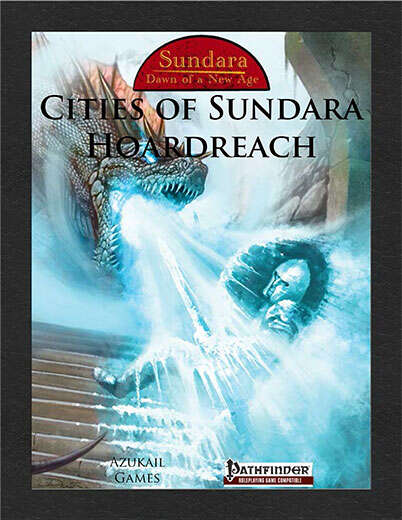
Hoardreach (available in Pathfinder and DND 5E) is known for many things, but aside from being ruled by a cooperation of 5 dragons, it is also where the first sky ships have been built. While these vessels take a great deal of time and resources to construct and field, they are slowly growing more common... and this mercenary company is built from those who have served among the cloud fleets. Named for the founding captain, this free company provides unique services including air dropping troops, and bombarding targets on the ground from beyond the reach of even the most powerful longbow.

Pathfinder: A gunslinger archetype, aether privateers gain the ability to negate enemy Dex bonuses to their armor class through unique aiming deeds, as well as the ability to shoot lines, belts, and connecting straps with pinpoint accuracy to disable vessels and opponents alike.

DND 5E: A rogue subclass, aether privateers gain unique bonuses on ranged attacks, the ability to make called shots, and to make trapping shots, where they can nail targets to the ground, a wall, etc., by putting bolts, arrows, axes, or daggers through armor, shields, or clothing to hold an enemy in place.

#5: Jackdaws


They're out there... somewhere...

A mercenary company that began because a young boy wanted to go bird watching, their founder Harrington "Jackdaw" Leeds was able to sit undetected for hours by wildlife and enemy scouts alike. A trainer for rangers and outriders, he eventually agreed to help found this free company in his later years. Though he's been dead a long time, his methods and skills live on.

Pathfinder: A ranger archetype, the Jackdaw Scout allows you to alter your favored terrain to suit whatever environment you find yourself in. Additionally, these scouts can grant their bonuses to allies within a certain radius, allowing them to keep everyone on their toes, and moving silently through even the most rugged terrain.

DND 5E: A ranger subclass, the Jackdaw Scouts may shift their favored terrain with some time and effort. They also gain message at-will while within these favored terrains, and they may use the Help action at up to 120 feet for Stealth checks, or for attacking enemies from ambush. Additionally, Jackdaw Scouts deal devastating damage when attacking from surprise while within a favored terrain.

#6: The Widowmakers


We're the bad men who do bad things.

Some mercenaries maintain codes of honor, or rules of conduct... the Widowmakers do not. Brutes, brigands, killers, and cutthroats, this mercenary company is made of some of the worst of the worst. Serving the Widow, a woman whose grief at the loss of her husband led her to end a war by recruiting some of the most dangerous individuals silver would buy, these mercenaries' reputation precedes them... usually for the worst.

Pathfinder: A fighter archetype, the Widowmaker Enforcer loses out on heavier armor, but gains more skills, bonuses to initiative, sneak attack, and the ability to inflict status conditions on opponents they can hit with their sneak attack.

DND 5E: A fighter subclass, Widowmaker Enforcers gain limited sneak attack, the ability to render opponents blind or deaf, and later on the power to deal sneak attack more than once in a single turn.

#7: The Fists of Kormmuz


Iron hands can endure anything.

A unique fighting force, the Fists of Kormmuz are one part monastic order, one part warrior cult, and one part mercenary legion. Responsible for some legendary feats of fighting prowess, they're most known for their signature weapons; heavy, steel gauntlets. Because while they are as deadly bare-handed as many other monks, once their fists are sheathed in iron they become truly devastating as foes.

Pathfinder: A monk archetype, the Fists of Kormmuz may deal their unarmed damage with gauntlets, cestus, brass knuckles, or a spiked gauntlet. Not only that, but these weapons allow the monk to be treated as a size category larger for their damage dealing. They gain Cut From The Air and Smash From The Air as bonus feats, and may eventually parry attacks with their gauntleted fists. Their capstone power is smashing spells out of the air with perfectly-timed blows from their fists.

DND 5E: A monk archetype, wearing a gauntlet, spiked gauntlet, brass knuckles, etc., increases the Fist of Kormmuz's unarmed damage type by one die. They gain the ability to parry and counterpunch attacks coming at them, as well as the ability to strike spells out of the air.

#8: The Brotherhood of Broken Banners


You going to get up, or stay there in the dirt?

Another favorite from 100 Random Mercenary Companies (where many of these groups were first conceived), the Brotherhood of Broken Banners is a mercenary company that takes in those who were on the losing sides of wars and conflicts. Those who have no homes, no lands, no families, will always find a place among other veterans of conflict... and even those who were once bitter rivals may find themselves closer than blood among this band.

Pathfinder: A cavalier archetype, a Broken Bannerman gains resistance to fear effects (always treating themselves as shaken rather than more potent effects), and they gain immunity to any charm or compulsion that would force them to flee the battlefield. Additionally they gain a battle cry that strengthens their allies' sword arms while putting fear into their enemies.

DND 5E: A fighter subclass, the Broken Bannerman gains immunity to the Frightened condition, and they roll with Advantage on enchantment or illusion effects. They gain a battle cry that boosts allies and frightens enemies, and they may deploy their banner to grant inspiration to themselves and their allies.

#9: The Grayblades


I've forgotten more about war than you will ever know.

Old soldiers never die... those who don't fade away, though, often join the Grayblades. While known as trainers and teachers, those who would discount this mercenary company due to their age have learned the hard way that experience mixed with viciousness is often more than enough to carry the day.

Pathfinder: A fighter archetype, Grayblades must start at a higher age category, but they gain increased skills and skill ranks as a result. They may use their Intelligence or Wisdom bonuses for initiative instead of Dexterity, and they gain initiative bonuses as they level. They gain bonuses to Aid Another, as they are used to coordinating soldiers under their tutelage, and at higher levels they can ignore their age penalties for a time. As a capstone, those age penalties instead become bonuses as, for a brief time, they fight like they were back in their prime.

DND 5E: A fighter subclass, Grayblades gain increased skills and proficiencies for their experience. Grayblades may use the Help action from further away, and they can affect more than one ally with it at a time. At higher levels they may double their physical bonuses for a brief period of time, cutting loose with all the skills they've learned over their careers.

#10: Nightwatch Dragoons


The night is dark, and full of terrors.

Dangerous beasts and awful monsters lurk in the corners of the world, but there are those who study them, track them, and slay them. Infamous monster hunters, the Nightwatch Dragoons are known far and wide for their indigo uniforms and silver hilts. Mysterious, and more than a little unnerving, they take bounties on creatures that most would have wagered no mortal man could slay.

Pathfinder: A slayer archetype, Nightwatch Dragoons can study the tracks, stories, and spoor of creatures, and declare them studied targets without ever laying eyes on them. Additionally, they can learn all kinds of insights about these targets from studying their sign. They can also reduce studied enemy's damage reduction, allowing them to deal lethal blows to creatures thought immune to mortal weapons.

DND 5E: A ranger subclass, Nightwatch Dragoons roll with Advantage against favored enemies, and deal bonus damage on all attacks against them. Additionally, they may switch their favored enemies to new kinds of creatures with an appropriate Intelligence check. This can later be done just by studying a creature's spoor, and without making an Intelligence check. Favored enemies eventually lose Resistance to the kind of weapon used by a Nightwatch Dragoon, and if they had no Resistance they gain Vulnerability instead.

Like, Share, and Follow For More!


That's all for this week's Crunch topic! For more of my work, check out my Vocal archive, and stop by the YouTube channel Dungeon Keeper Radio! Or if you'd like to read some of my books, like my alley cat noir novel Marked Territory, my sword and sorcery novel Crier's Knife or my latest short story collection The Rejects, head over to My Amazon Author Page!

To stay on top of all my latest releases, follow me on FacebookTumblrTwitter, and now on Pinterest as well! And if you'd like to help support me and my work, consider Buying Me A Ko-Fi or heading over to The Literary Mercenary's Patreon page to become a regular, monthly patron! Even a little bit of help can go a long way, trust me on that one.