Showing posts with label sellswords. Show all posts

Monday, December 23, 2024

Sundara's Phase 4 Is Here! (Whispers & Rumors)

I released the first supplement for my Sundara: Dawn of a New Age fantasy setting nearly 4 years ago. Ironfire: The City of Steel, which is available for both Pathfinder's First Edition as well as DND 5E, was meant to be a location that GMs could either use as part of the Sundara setting, or which they could plop down into their own world to save them the heavy lifting on world building. That was the first stone I threw out into the water, but it was far from the last! Since then I've covered 4 other city states in the setting, along with gods, guilds, cults, mercenary companies, and even Primquakes (magical natural disasters).

I made it through 3 phases, and I slowed down for a while... however, several months ago I got to work on reinvigorating the setting, and trying to go a little deeper, while adding more details. Phase 4 is going to be Whispers and Rumors, and the first release is, of course, 100 Whispers and Rumors For Ironfire, The City of Steel!

If you haven't grabbed your copy yet, you should consider it!

But before I get into the meat of today's post, remember, don't forget to sign up for my weekly newsletter to get all my updates right in your inbox. Also, if you've got a bit of spare cash that you'd like to use to help keep the wheels turning, consider becoming a Patreon patron! Also, be sure you're following all of my followables, check out my LinkTree.

Lastly, for hundreds of extra articles on gaming, weird history, and for more free fiction, check out my Vocal archive, too!

Expanding Phase 1, And Getting Back To Basics


For those who missed what Phase 4 was going to be about (because it's been a while since I talked about it), the general gist is that I wanted to give Game Masters and players alike a set of rumors for the Cities of Sundara releases. While the initial cities had a collection of rumors in them already (roughly 15 of them per book), I wanted to expand that with an extra 20 rumors to be heard per district of the city!


These supplements serve an important feature for the setting, which is why I wanted to put them together. First and foremost, they expand the lore of the original cities so that Game Masters and players alike can get a better sense of the personality of the different districts, and the sorts of things that might be happening in them. Secondly, though, I wanted to give Game Masters a way to both fill in the cracks in the cities to make them feel more lived-in, while also providing some inspiration for those who want to run their own games in the City of Steel.

For example, if you want to run a plot in Ghostborough where players are taking on the syndicates that have held power for so long, do they run afoul of the terrifying vigilante known only as the Wraith? Are they hired to explore lost or forgotten tunnels that run beneath Middleshade, possibly causing them to stumble into parts of Ironfire that have been lost since the city's founding? Are they recruited to track down what happened to a mysterious body found floating in the Harbour, where the only clue about them is the bizarre book they had chained to their wrist in a watertight container?

Any of these things might be the spark that starts off your new campaign, or which fills in those early-to-middle levels that can sometimes have Game Masters scratching their heads.

Additionally, the Whispers and Rumors series of supplements will tie the cities to many other supplements. For instance, the entries in Merchants of Sundara have already made an appearance in several of the manuscripts as various artisans and collectives expand their reach to new markets. Many of the mercenary companies featured in Sellswords of Sundara (still available for both Pathfinder First Edition and DND 5E as well) are also featuring in these books. This should make the setting feel more organic, and show that even though all of these elements may be in disparate books, they're still interacting with one another on the page.

My hope is that these supplements will be a helpful aid for Game Masters who've been looking for a few more resources to bring these cities to life, and that it will help run more varied and interesting games, while giving everyone a chance to explore this world I've been slowly building.

And, of course, my hope is that folks who haven't heard of Sundara before might use these as their entry point into a world that is still expanding!

A Final Note: Why Phase 4 Isn't Modules


I've had some folks ask this question off and on over the years as I released new content for Sundara, and I wanted to answer it here so there's no confusion. The short version is that adventure modules are, statstically, the things that sell worst in my entire catalog. Not only that, but they are some of the most difficult things to create, as they combine the need to write a short story, provide a mechanical framework for the plot, and then to include enough additional material that players have at least some freedom to achieve the end goal their own way. And then on top of that you have to make sure you have appropriate art to really make the thing pop, along with maps to make sure things can be properly plotted.

Adventure modules are exhausting, and generally speaking I try to avoid projects that will both take a lot of work on my part, but which are also unlikely to pay me enough to make rent this month.


However, if you're someone out there who feels very strongly that Sundara would really benefit from a series of adventure modules, there is one, simple thing you can do to make that happen.

Do what you can to support the setting.

If you have spare money, or holiday vouchers, then buy copies of the supplements for Sundara. When you've had a chance to read them over, leave reviews for them on Drive Thru RPG. Check out the 47-video long playlist for the Speaking of Sundara series I've made on the Azukail Games YouTube channel, and while you're there, subscribe to the channel to boost our metrics! Hell, check out the fiction that's been made for it, both text-based and the audio dramas on the Azukail Games channel!

Numbers talk, and when my publisher sees that Sundara is pulling in numbers (whether it be sales, reviews, watch hours, or whatever) that is when I start getting the green light to do more complicated, more involved things that are seen as a bit of a risk... which adventure modules definitely are.

I love the setting, and I'm doing everything I can to expand it. I can't eat fun, though, so if it comes down to passion projects or paid bills, bills win every time. The best way to get more Sundara is for everyone who wants to see more of it to turn Sundara into the project that pays the bills!

Like, Follow, and Stay in Touch!


That's all for this week's Moon Pope Monday. To stay on top of all my content and releases, make sure you subscribe to my newsletter at the bottom of the page!

Again, for more of my work, check out my Vocal archive, and stop by the Azukail Games YouTube channel, or my Rumble channel The Literary Mercenary! Or if you'd prefer to read some of my books, like my dystopian sci-fi thriller Old Soldiers, my hardboiled gangland noir series starring a bruiser of a Maine Coon with Marked Territory and Painted Cats, my sword and sorcery novel Crier's Knife or my latest short story collection The Rejects, then head over to My Amazon Author Page!

To stay on top of all my latest releases, follow me on Blue SkyFacebookTumblrTwitter, and now Pinterest as well! To support my work, consider Buying Me a Ko-Fi, or heading to The Literary Mercenary's Patreon page to become a regular, monthly patron. That one helps ensure you get more Improved Initiative, and it means you'll get my regular, monthly giveaways as a bonus!

Saturday, April 23, 2022

Breaking Down The New Tricks Available in "Sellswords of Sundara"

Normally when I settle in for my Crunch update I talk about combinations I've already discovered in a game's system, or I offer a new way to look at strategy using a game's rules. As some folks around here may already know, though, my Sellswords of Sundara splat recently dropped for both Pathfinder Classic and Dungeons and Dragons 5th Edition. And while there's a lot of fun story and engaging world building in there for my Sundara: Dawn of a New Age setting, there's also 10 archetypes/subclasses in this book that each come with their own, unique tricks.

So I wanted to take a moment to break it down and talk about what I was trying to do with each, unique mercenary company, their fighting abilities, and the opportunities they allow you to bring to your game.

In case you needed some extra wooge up your sleeve!

Before we get into the details this week, don't forget to sign up for my weekly newsletter to get all my updates right in your inbox. Also, if you've got a bit of spare cash that you'd like to use to help keep the wheels turning, consider becoming a Patreon patron!

Lastly, to be sure you're following all of my followables, check out my LinkTree!

#1: The Band of The Godless Hand


Where is your god now?

Holy wars can be devastating, but even those with the gods on their side fear this mercenary company. Disciplined and zealous, they were formed to stop those who sought conquest and bloodshed in the name of the divine. Their unique arts make them quite effective against those who depend on outsiders as allies, or who wield divine magic.

Pathfinder: A cavalier archetype, the Godless gain large bonuses against fear, spell resistance against divine magic and channeled energy, and they deal increased damage when they charge foes.

DND 5E: A fighter subclass, the Godless roll with Advantage on saves against divine spells and abilities of outsiders, gain immunity to the Charmed and Frightened conditions, gain bonuses to fighting outsiders, and eventually can kill even powerful outsiders without needing to use magic weapons to do so.

#2: The Scarlet Company


The Scarlet Champions have never lost a duel.


The champions of Ironfire: The City of Steel (the first of the Cities of Sundara that came out for Pathfinder Classic and DND 5E), this mercenary company has a standing contract with the Dragon Forge. Some of the most terrifying duelists in the iron trade, the Scarlet Company receive deference even in a city awash in mercenaries of every stripe.

Pathfinder: A cavalier archetype that focuses on 1-on-1 duels, Scarlet Champions always act in the surprise round, gain the ability to reserve their attacks to parry and riposte in a way similar to the duelist prestige class, and their scarlet cloaks act as banners that grant them increased morale while their lightning speed allows them free opportunities to intimidate foes.

DND 5E: A fighter subclass, Scarlet Champions cannot be surprised, and even if they haven't acted may use their Reaction to make opportunity attacks. They gain a parry and riposte, eventually become immune to the Frightened condition, and they may even use their swirling, scarlet cloaks to give allies who are Frightened fresh saves to snap out of it.

#3: The Risen Legion


One cannot fight against death.

A mercenary company with connections to the fallen city of Moüd (for both Pathfinder and DND 5E), before it was re-discovered and repaired by the Silver Wraiths guild, the Risen Legion commands the powers of the undead. While there are treaties and agreements that disallow the use of risen corpses in many forms of war, even the still-living legionnaires often undergo strange transformations from their exposure to the amount of necromantic energy running through the ranks.

Pathfinder: A fighter archetype, Risen Legionnaires gain Necromantic Affinity, healing from negative energy as if they were undead, but also healing from positive energy (though they must save against both positive and negative channeled energy meant as an attack rather than to heal). They gain immunity to fear, and may ignore penalties from ability damage and drain, though still die if the penalties grow too severe. Additionally, they can be resurrected by animate dead, rather than more costly resurrection spells.

DND 5E: A barbarian archetype, Risen Legionnaires gain Necrotic Resistance when raging, and if they make a save against any effect that deals necrotic damage they instead gain the damage they would have taken as healing. They may also be resurrected by animate dead, and they gain Immunity to Charmed, Frightened, and to the negative effects of Exhaustion. They also gain Resistance to Poison and Cold damage, as well as Immunity to the Poisoned condition.

#4: Cloud Hammers


What could be worse than dragons? Sky privateers!

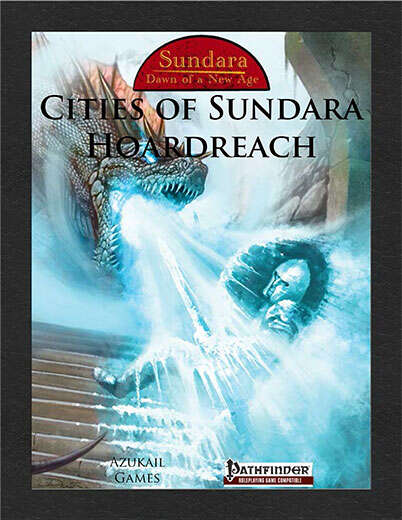
Hoardreach (available in Pathfinder and DND 5E) is known for many things, but aside from being ruled by a cooperation of 5 dragons, it is also where the first sky ships have been built. While these vessels take a great deal of time and resources to construct and field, they are slowly growing more common... and this mercenary company is built from those who have served among the cloud fleets. Named for the founding captain, this free company provides unique services including air dropping troops, and bombarding targets on the ground from beyond the reach of even the most powerful longbow.

Pathfinder: A gunslinger archetype, aether privateers gain the ability to negate enemy Dex bonuses to their armor class through unique aiming deeds, as well as the ability to shoot lines, belts, and connecting straps with pinpoint accuracy to disable vessels and opponents alike.

DND 5E: A rogue subclass, aether privateers gain unique bonuses on ranged attacks, the ability to make called shots, and to make trapping shots, where they can nail targets to the ground, a wall, etc., by putting bolts, arrows, axes, or daggers through armor, shields, or clothing to hold an enemy in place.

#5: Jackdaws


They're out there... somewhere...

A mercenary company that began because a young boy wanted to go bird watching, their founder Harrington "Jackdaw" Leeds was able to sit undetected for hours by wildlife and enemy scouts alike. A trainer for rangers and outriders, he eventually agreed to help found this free company in his later years. Though he's been dead a long time, his methods and skills live on.

Pathfinder: A ranger archetype, the Jackdaw Scout allows you to alter your favored terrain to suit whatever environment you find yourself in. Additionally, these scouts can grant their bonuses to allies within a certain radius, allowing them to keep everyone on their toes, and moving silently through even the most rugged terrain.

DND 5E: A ranger subclass, the Jackdaw Scouts may shift their favored terrain with some time and effort. They also gain message at-will while within these favored terrains, and they may use the Help action at up to 120 feet for Stealth checks, or for attacking enemies from ambush. Additionally, Jackdaw Scouts deal devastating damage when attacking from surprise while within a favored terrain.

#6: The Widowmakers


We're the bad men who do bad things.

Some mercenaries maintain codes of honor, or rules of conduct... the Widowmakers do not. Brutes, brigands, killers, and cutthroats, this mercenary company is made of some of the worst of the worst. Serving the Widow, a woman whose grief at the loss of her husband led her to end a war by recruiting some of the most dangerous individuals silver would buy, these mercenaries' reputation precedes them... usually for the worst.

Pathfinder: A fighter archetype, the Widowmaker Enforcer loses out on heavier armor, but gains more skills, bonuses to initiative, sneak attack, and the ability to inflict status conditions on opponents they can hit with their sneak attack.

DND 5E: A fighter subclass, Widowmaker Enforcers gain limited sneak attack, the ability to render opponents blind or deaf, and later on the power to deal sneak attack more than once in a single turn.

#7: The Fists of Kormmuz


Iron hands can endure anything.

A unique fighting force, the Fists of Kormmuz are one part monastic order, one part warrior cult, and one part mercenary legion. Responsible for some legendary feats of fighting prowess, they're most known for their signature weapons; heavy, steel gauntlets. Because while they are as deadly bare-handed as many other monks, once their fists are sheathed in iron they become truly devastating as foes.

Pathfinder: A monk archetype, the Fists of Kormmuz may deal their unarmed damage with gauntlets, cestus, brass knuckles, or a spiked gauntlet. Not only that, but these weapons allow the monk to be treated as a size category larger for their damage dealing. They gain Cut From The Air and Smash From The Air as bonus feats, and may eventually parry attacks with their gauntleted fists. Their capstone power is smashing spells out of the air with perfectly-timed blows from their fists.

DND 5E: A monk archetype, wearing a gauntlet, spiked gauntlet, brass knuckles, etc., increases the Fist of Kormmuz's unarmed damage type by one die. They gain the ability to parry and counterpunch attacks coming at them, as well as the ability to strike spells out of the air.

#8: The Brotherhood of Broken Banners


You going to get up, or stay there in the dirt?

Another favorite from 100 Random Mercenary Companies (where many of these groups were first conceived), the Brotherhood of Broken Banners is a mercenary company that takes in those who were on the losing sides of wars and conflicts. Those who have no homes, no lands, no families, will always find a place among other veterans of conflict... and even those who were once bitter rivals may find themselves closer than blood among this band.

Pathfinder: A cavalier archetype, a Broken Bannerman gains resistance to fear effects (always treating themselves as shaken rather than more potent effects), and they gain immunity to any charm or compulsion that would force them to flee the battlefield. Additionally they gain a battle cry that strengthens their allies' sword arms while putting fear into their enemies.

DND 5E: A fighter subclass, the Broken Bannerman gains immunity to the Frightened condition, and they roll with Advantage on enchantment or illusion effects. They gain a battle cry that boosts allies and frightens enemies, and they may deploy their banner to grant inspiration to themselves and their allies.

#9: The Grayblades


I've forgotten more about war than you will ever know.

Old soldiers never die... those who don't fade away, though, often join the Grayblades. While known as trainers and teachers, those who would discount this mercenary company due to their age have learned the hard way that experience mixed with viciousness is often more than enough to carry the day.

Pathfinder: A fighter archetype, Grayblades must start at a higher age category, but they gain increased skills and skill ranks as a result. They may use their Intelligence or Wisdom bonuses for initiative instead of Dexterity, and they gain initiative bonuses as they level. They gain bonuses to Aid Another, as they are used to coordinating soldiers under their tutelage, and at higher levels they can ignore their age penalties for a time. As a capstone, those age penalties instead become bonuses as, for a brief time, they fight like they were back in their prime.

DND 5E: A fighter subclass, Grayblades gain increased skills and proficiencies for their experience. Grayblades may use the Help action from further away, and they can affect more than one ally with it at a time. At higher levels they may double their physical bonuses for a brief period of time, cutting loose with all the skills they've learned over their careers.

#10: Nightwatch Dragoons


The night is dark, and full of terrors.

Dangerous beasts and awful monsters lurk in the corners of the world, but there are those who study them, track them, and slay them. Infamous monster hunters, the Nightwatch Dragoons are known far and wide for their indigo uniforms and silver hilts. Mysterious, and more than a little unnerving, they take bounties on creatures that most would have wagered no mortal man could slay.

Pathfinder: A slayer archetype, Nightwatch Dragoons can study the tracks, stories, and spoor of creatures, and declare them studied targets without ever laying eyes on them. Additionally, they can learn all kinds of insights about these targets from studying their sign. They can also reduce studied enemy's damage reduction, allowing them to deal lethal blows to creatures thought immune to mortal weapons.

DND 5E: A ranger subclass, Nightwatch Dragoons roll with Advantage against favored enemies, and deal bonus damage on all attacks against them. Additionally, they may switch their favored enemies to new kinds of creatures with an appropriate Intelligence check. This can later be done just by studying a creature's spoor, and without making an Intelligence check. Favored enemies eventually lose Resistance to the kind of weapon used by a Nightwatch Dragoon, and if they had no Resistance they gain Vulnerability instead.

Like, Share, and Follow For More!


That's all for this week's Crunch topic! For more of my work, check out my Vocal archive, and stop by the YouTube channel Dungeon Keeper Radio! Or if you'd like to read some of my books, like my alley cat noir novel Marked Territory, my sword and sorcery novel Crier's Knife or my latest short story collection The Rejects, head over to My Amazon Author Page!

To stay on top of all my latest releases, follow me on FacebookTumblrTwitter, and now on Pinterest as well! And if you'd like to help support me and my work, consider Buying Me A Ko-Fi or heading over to The Literary Mercenary's Patreon page to become a regular, monthly patron! Even a little bit of help can go a long way, trust me on that one.