Showing posts with label forgotten realms. Show all posts

Tuesday, August 16, 2022

Membership in In-Game Organizations Shouldn't Require Specific Class Levels

I remember the first time I came across the opportunity to join in-game organizations was back when I was playing in the Forgotten Realms during the DND 3.5 era. From the Harpers to the Red Wizards of Thay there were particular prestige classes that granted you unique and unusual abilities that were outside the purview of any other classes, and you could join as soon as you met the necessary prerequisites. Even though I never got far enough in a game at that time to reach those prestige classes, it felt like a great, organic addition to my character that would tie me more firmly to the setting, and that desire always sat there in the back of my mind whenever a new game was announced.

Basically what I talked about in What Organizations Does Your Character Belong To?, a little while back.

While I've put my own spin on this idea (more on that later), I wanted to address the other side of the coin this week. Because membership in an in-game organization shouldn't require character levels... if something is a story element, let it be a story element without forcing your players to cut their nose off to spite their faces, mechanically speaking.

And if you haven't grabbed a copy of this book, I would highly recommend it.

Before we get into the nitty gritty this week, don't forget to sign up for my weekly newsletter to get all my updates right in your inbox. Also, if you've got a bit of spare cash that you'd like to use to help keep the wheels turning, consider becoming a Patreon patron!

Lastly, to be sure you're following all of my followables, check out my LinkTree!

Walking That Fine Line Between Roles and Rolls


I mentioned that I first noticed this unique opportunity back in the 3.5 era, but I feel like Pathfinder really brought it home. From prestige classes that covered most major organizations within the Golarion setting, and a slew of class archetypes that you could start taking straight from level one, it felt like the designers really wanted to provide players with opportunities to tie their story to the pillars within the setting to help players make their characters feel more organic... and maybe for some extra wooge.

You can never have too much wooge.

However, it's important to remember that while story and mechanics can converge in perfect harmony, sometimes that isn't the case. And when that happens, it's important to take a step back and find a solution that works well for your particular game.

As an example, consider the hellknight prestige class for Pathfinder. Now, the hellknights are a large organization made up of dozens of orders and chapters, each with its own unique set of special skills and creed that it follows. Whether it's the Order of the Nail and their focus on maintaining law and order, the Order of the Rack and their focus on breaking dissent and putting down rebellions, and so on, and so forth, there's a lot of personality to these orders.

Now, a player could angle themselves toward taking levels in this prestige class once they meet the prerequisites (which involve slaying a devil with hit dice greater than the character while being witnessed by existing hellknights, so not a walk in the park). At that point they can choose which order they join, and gain particular abilities that bolster their character build as they go up in the hellknight prestige class.

However, let's assume you have a character at the table who isn't going to benefit from that class's abilities. The player may not want to expend the extra resources to meet the prerequisites (like heavy armor proficiency, Intimidate ranks, etc.), but they still want their character to become a member of a particular hellknight order for story reasons. The GM is able to do that with a snap of their fingers.
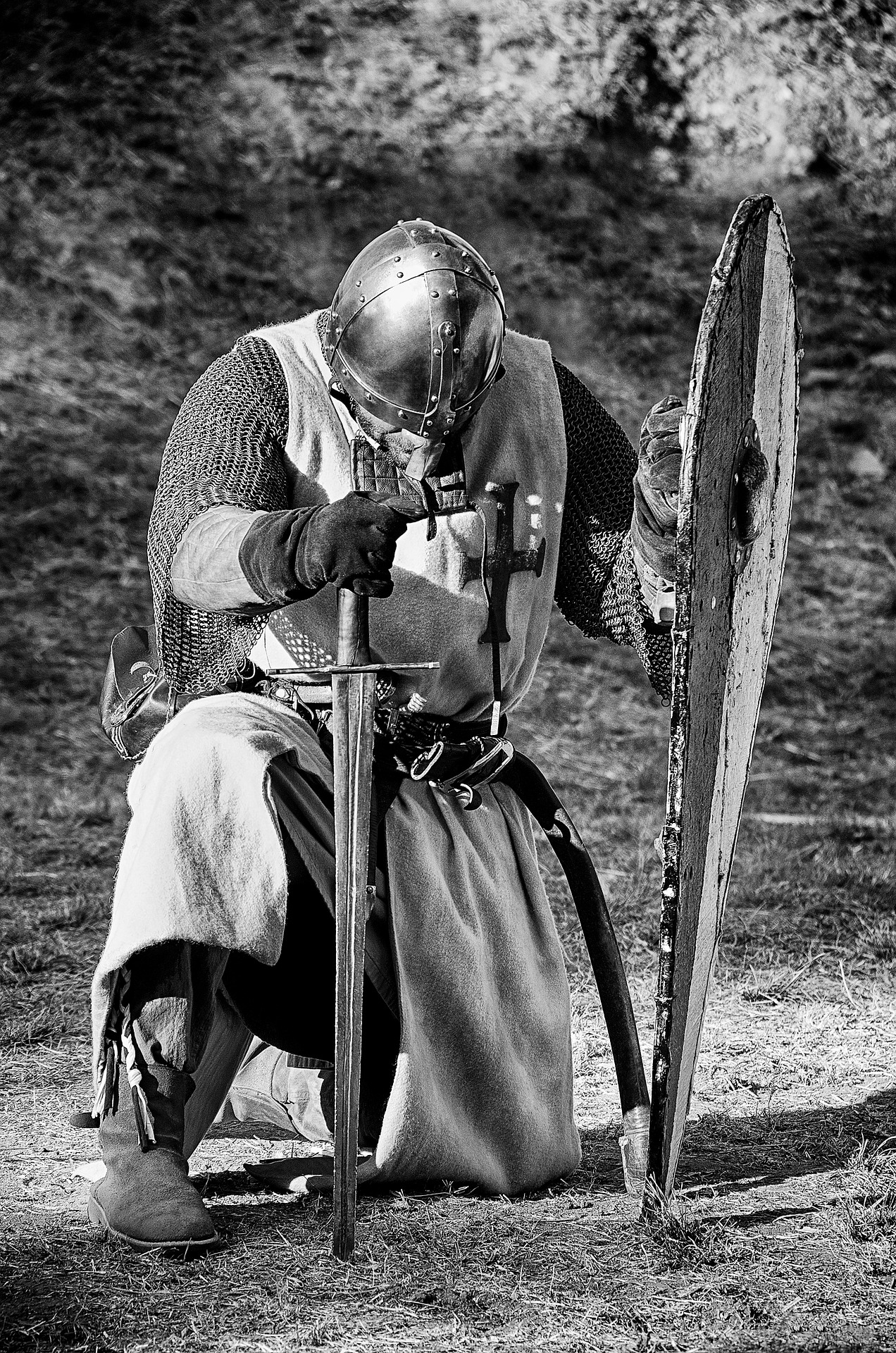
I dub thee Sir Bastard. Now arise, and spread the Law!

Say, as an example, a player was going all-in on a ranger build that focused on tracking and bringing down specific enemies. This might be an ideal candidate for the Order of The Scar, a hellknight order that hunts down killers and assassins. But this character wouldn't benefit from joining the prestige class in a mechanical sense... however, as far as their story goes, they could very easily start the game as a hellknight armiger (essentially a squire), and then at an appropriate time in the story be officially raised to the social position of hellknight (probably after slaying the devil, just for appearances).

This provides the benefits of tying the character more firmly to the setting, providing them with a structure that dictates why they're involved in a given adventure, and the goals they're trying to achieve. It also helps the GM because it tells them what kind of NPCs are likely to figure into this character's interactions, along with the places they've been, and the things they've seen. It also helps lay out a good way to reward the PC for service, allowing them to climb the ranks of the organization and to gain access to other forms of aid, prestige, and social currency.

In the end, it's a win for everyone.

I Talked About This in an Earlier Splat Book of Mine


I told you we'd circle back around to Sellswords of Sundara (available for both Pathfinder and DND 5E), didn't I? For those who are curious, this splat recently got its own audio drama, "The Price of Steel" on the Azukail Games YouTube channel... so toss the channel a sub, and give the track a listen!


Now, Sellswords of Sundara is pretty much what it says on the tin. The splat contains 10 mercenary companies complete with their specialties, uniform style, brief history, combat doctrine, some notable NPCs and rumors, as well as either a subclass (for 5E) or an archetype (for Pathfinder) should one wish to really embody the style of character described.

However, as I explicitly stated in the introduction to the book, players should not be forced to use these mechanical options merely to have their characters be a part of one of these free companies. If someone wants to play a wizard who's part of the Widowmakers free company (a rowdy gang of bruisers and bastards that are little more than cutthroats), they should be allowed to do that. A cleric who specializes in raising and controlling the dead would rise to a command position in the Risen Legion, and shouldn't have to take the fighter-based archetype of the Risen Legionnaire.

And so on, and so forth.

Because the thing about organizations that makes them so useful to you as a GM is that they're never made up of just one kind of character. Even going back to the Forgotten Realms, the Red Wizards of Thay were, of course, all wizards... but those weren't the only people in the organization. There were Thayan Bodyguards (another fun prestige class that came out later) who acted as the muscle to keep the tattooed spellcasters safe. There are the soldiers, the informants, the assassins, and the myriad of people who owe their allegiance to the Red Wizards and their power structures, even if they themselves are not one of those wizards.

Ideally, you want to make these organizations as available as possible because it grounds your player characters in the setting, and provides you with an easier time as the Game Master for telling their stories. While not every character will be drawn to an organization, whether it's a bandit gang, a mercenary company, or a knightly order, they can help provide a lot of useful structure that will save you time and energy going forward.

Recommended Reading


If you're looking for some additional organizations beyond what's available in Sellswords of Sundara, consider the following supplements!

- 100 Secret Societies: Shadowy organizations who seem to have tendrils everywhere, it's possible everyone in the party might be a member of this order and not even know it... or that they each serve a different master when everyone else's back is turned!

- 100 Cults to Encounter: From those who seek the favor of the old gods, to those who delve into outré philosophies, cults come in many forms. Not only that, but they can make quite a useful organization for those seeking a place to... belong.

- 100 Fantasy Guilds: From inventors and explorers, to monster hunters and assassins, guilds dip their fingers into damn near everything... which is why they can be so useful, and flexible, as an organization in your game.

- A Baker's Dozen of Noble Families: From the swamp-dwelling clan fam of the Dredgers, to the deep pockets of High Hall, these 13 noble families are fleshed out enough that you can easily make your character a member.

- 100 Random Mercenary Companies: From the warrior wizards in the Acolytes of Arannis, to the black-clad battalions of the Harbingers of Sorrow, each of these companies offers unique ties for those who signed up for a tour of service.

Like, Follow, and Stay in Touch!


That's all for this week's Moon Pope Monday. To stay on top of all my content and releases, make sure you subscribe to my newsletter at the bottom of the page!

Again, for more of my work, check out my Vocal archive, and stop by the YouTube channel Dungeon Keeper Radio. Or if you'd prefer to read some of my books, like my cat noir thriller Marked Territory, its sequel Painted Cats, my sword and sorcery novel Crier's Knife or my latest short story collection The Rejects, then head over to My Amazon Author Page!

To stay on top of all my latest releases, follow me on Facebook, Tumblr, Twitter, and now Pinterest as well! To support my work, consider Buying Me a Ko-Fi, or heading to The Literary Mercenary's Patreon page to become a regular, monthly patron. That one helps ensure you get more Improved Initiative, and it means you'll get my regular, monthly giveaways as a bonus!

Friday, July 15, 2016

Ethnic Homogeneity in RPGs (Or, Why So Many Burly White Adventurers?)

I've been a tabletop gamer for a little over a decade now. That's a lot longer than some players, and a lot shorter than others. However, I've also gamed with all sorts of groups, and in all kinds of settings. In all that time, there's this weird tendency I've noticed, and that other players I've spoken to have also noticed. It is, in short, a knee-jerk reaction to keeping our game worlds, and the characters within them, in strictly segregated boxes. Like kids who enjoy all the foods on their plate as individual things, but if they touch even a little bit then we freak out and refuse to eat any of it.

Get your rice away from my grits, or I swear to all that is holy I will flip this table.
While we see this in lots of aspects of RPGs, nowhere is it clearer than when someone wants to play an ethnicity that "doesn't belong" in a certain part of the world.

They're People, Not Dishes


I'd like you to try an experiment, the next time you come to your gaming table. Build your character exactly as you normally would, but make that character ethnically different from what's considered standard for the region. Make it clear that you aren't looking to bring aspects of another culture into this region, and that you don't want special access to treasures or skills from the other side of the world. Your character is simply the child (or grandchild) of immigrants, and this is the way he or she happens to look.


Now, if you're part of a relatively open-minded group, you probably won't get any negativity for this decision. Some of your fellow players might even file this idea away for when they play characters of their own in the future. If you are not part of an open-minded group, though, you're likely to catch more flak than a British bomber flying over Berlin. Why do you have to be a special snowflake? Why can't you just be like everyone else, and play someone who looks like they're from here?

It often causes less ruckus at a table if you choose to play a tusked boar-man covered in ritual scars than if you want to be someone who has a different skin tone than the rest of the party.

Every World Has Multiple Cultures


Fantasy worlds have more than one culture, ethnicity, and religion. That's what makes them worlds, and not just nations. Even Middle Earth, which I continuously harp on for being bland, has diverse races of men. From the wild men in the north, to the desert dwellers of the south, there are variations in ethnicity. While no one in the main cast happens to be part of those cultures, or descended from them, that doesn't mean they don't exist.

You see the same kinds of diversity in good RPG settings. Whether you prefer Midgard or Golarion, The Forgotten Realms or The Known World that is the setting for A Song of Ice and Fire, there are all kinds of people, in all shapes, shades, and sizes. Despite their existence in the canon lore, though, it's like we forget that adventurers from all cultures travel all over the world. That they have children, and choose to settle down in places they weren't born. Merchants, caravan guards, diplomats, historians, and even seekers of magical knowledge may find themselves on the other side of the world from where they were whelped, and just decide there isn't anything at home worth going back for.

Especially since most adventurers have had their entire families killed off, anyway.
Unless there is something in your game's lore that specifically says a given nation is sectioned off, and that its people are not found anywhere else in the world, then why would you limit the stories players can tell?

But What If They're Not From Here?


The human mind likes things to be in nice, neat categories it can easily process. It's one reason why, when we have a game set in a given nation or country, and a PC that isn't from that region shows up, our brains glitch. Sort of like how you get used to seeing your teachers in the classroom, and when you see them out in public having ice cream with their kids, you tweak. Because it is a situation that feels wrong, even though you can't explain why.

It's 7:00 in the evening... why isn't she back at my school?
This is why I would suggest that, if the idea of PCs not all being from the same five square miles of ground is a problem, you ask yourself why. Why does it matter how the party got there, as long as the party is there when the adventure begins?

Explaining how a PC got to this place is the responsibility of every player. Some players might go with the ever-popular, "my character lives here," which is the simplest method regardless of your cultural heritage or ethnic appearance. Others, who want to have miles between them and where they began, might have more of a journey involved. Perhaps the fighter did a stint as a caravan guard, and decided he wanted to take a rest from traveling. Now there's this new opportunity on his hands, and he can make a far more lucrative career in this new land. Perhaps the wizard came across a continent to attend the city's arcane university, and now that she has completed her initial study, wants to put that knowledge to the test. The bard is... well... a bard, and this happens to be where he showed up after he left that last town. For undisclosed reasons.

A Closing Note


This post is not to suggest that anyone who has ever disagreed with a character's country of origin or ethnicity is somehow a cross-burning racist. I am not saying players, or DMs, who have problems with these kinds of characters are bigoted. What I am saying is that when we are presented with what, to us, are new ideas, or ideas that change things from our normal comfort zone, we often react by demanding the status quo remain the same. It happens every time a new supplement comes out for a game we like; there is always a group of players who won't allow it at their table, and who claim the rules and flavor as they were shouldn't be changed.

Often, though, once they've had some time to reflect, and actually look at what this new approach could add to their games, they find something they like. Even if they don't feel it's for them, personally, they can see the appeal.

That is the point of this week's Fluff post. Not to accuse anyone of having wrong-bad fun, or to demand that we all change our characters and games right now! I am simply remarking on a trend I've seen, and suggesting that if this is an issue you have encountered, that holding it at arm's length and really looking at it could lead to some new and interesting concepts, and stories.

Lastly, if this is a topic that interests you from a historical perspective as well (or if you're just tired of hearing that people want games to be "reflective of the time period they're emulating"), you should check out Medieval People of Color on Tumblr. It will raise some eyebrows if you thought the Middle Ages was just a bunch of white folks walking around in Europe.

As always, thanks for stopping in to see what I have to say this week. If you'd like to help keep Improved Initiative going, then drop by The Literary Mercenary's Patreon page to toss a little bread in my jar. As little as $1 a month can make a big difference, and it ensures you some sweet swag as well. Lastly, if you haven't done so yet, why not follow me on Facebook, Tumblr, and Twitter, too?

Friday, December 6, 2013

How to Build Your Campaign: A Step-By-Step List

A roleplaying game is about story. A session is a chapter, an arc is a novel, and a campaign is a series of collected adventures showing the full breadth and depth of how a party grew and changed, struggled and strove, eventually going from humble beginnings to perhaps challenge the gods themselves.

For those willing to step behind the DM screen, I salute you.
You poor, foolish bastards.
You have accepted the challenge of taking four or more disparate characters over whom you have only the most infinitesimal amount of control, and decided to weave them into your epic narrative. That is a colossal task, and one that is very, very easy to lose your grip on. Don't worry, Improved Initiative is here to help by providing you with a handy checklist to get you from start to finish without losing what's left of your mind.

Step #1: Choose Your World
Any time, any where. But seriously, you have to pick one.
Where is your game taking place? Are you in Paizo's Golarion? The Forgotten Realms? Perhaps you're taking a spirited romp through the Grimm Lands, or you've decided to see how well your players can handle the Deadlands of the weird West. You can choose whichever world you want, but this is the fundamental building block you need to start with.

Pre-made worlds are the easiest ones to use. These worlds already have rules for how games function, they have histories, countries, deities, and a list of creatures that do and don't exist. These worlds can be thought of as training wheels for the creative process; if the world is already fleshed out, then that takes a huge burden off of the storyteller. It's sort of like fan fiction in a way; the world is already set up, and all you have to do is tell an exciting story within that world. And learn the rules. Always familiarize yourself with a setting before taking any further steps.

Also, because we're talking about realms of fantasy and the power of the imagination, there's nothing that says a storyteller can't just make up his or her own world. Commonly referred to as homebrew worlds, this is what happens when a storyteller wants to stitch a setting from whole cloth. While there's nothing wrong with doing this, it isn't for everyone. If world-building and rules balance aren't your strong suits, then it's a better idea to stick with pre-existing worlds rather than trying to make a certain game's rule set adhere to your private creation.

Step #2: Choose Your Conflict
Choose wisely.
Before your campaign can get started there has to be some driving force; a conflict that kicks off the adventure. The black knight's undead army is marching on the capital city. The Maltese Falcon has been sighted and everyone's trying to get their hands on it. An evil cult is stealing children and sacrificing them to awaken ancient, eldritch gods. In short, a thing is happening and adventure awaits!

What often gets overlooked is that a storyteller has to plan out not one, but many conflicts. For instance, the big, overarching, end-game conflict might be the heroes attempting to stop the unleashing of a bound god bent on the destruction of the entire world. That's a pretty heavy load to lay onto a 1st level party. In fact chances are good you will completely snap their suspension of disbelief right then and there. So what you need to do is to create a chapter plot, and then a novel plot, that feeds somehow into the over-arching series plot that is your campaign.

So what does that even mean? Well, examples work best, so that's what I'll give you.

Your first-session chapter plot is an easy one; your heroes are in a town when it gets raided by goblins. The heroes fight off the goblin threat, and find out that this has been going on for some time, and a plot hook is dropped to persuade the party to trail the goblins back to their lair. Over the next several sessions the heroes cross through the woods and into the mountains, then go on a dungeon crawl through the caves. The party slogs through fetid tunnels, dodging traps and battling ambushes, and in the end they square off with a bug bear and his hobgoblin lieutenants. The party finds some stolen treasures and supplies... but not many. Not enough. Where did they go?

That's the end of an arc. A fairly big threat has been dealt with, and the party has probably gained a few levels. They've come closer together as comrades-in-arms, and there's a hook for the next arc. Who took the treasures? Where did they take them, and why? Were the goblins really acting on their own, or was a greater force using them as a cat's paw?

The next arc deals with your heroes getting more involved. Perhaps they managed to recover some treasure of modest value. Black-robed agents ambush the party days later to reclaim a statue which, on the surface, seems like worthless junk. The assassins are unknown to anyone, but the leader carries a letter commanding they bring the statue to Lord Aaron Vaile once recovered. More information could be had from captives, and from knowledge gained about local happenings. Does the party disguise themselves as the assassins and infiltrate the Lord's manor? Do they report the happenings to the constabulary, who asks the party to come with on a raid? Does the Lord flee into a hidden escape tunnel, or offer bland excuses? Is he a member of a secret cult, or is he just a middle man who might provide more information if leaned on? When the party discovers his masters, how deep will the plot go?

This second arc draws the party in more deeply, providing them with enough challenges to level them up, but at no point in time putting the fate of the world on the shoulders of some fairly average people who lack any special powers. You as the storyteller can choose to have your entire plot linked together as if it were one story, or you can have arcs which are separate, individually-wrapped books that just happen to feature the same party growing in power. Maybe the goblin raid leads to corrupt lords, which leads to an evil cult, which leads to a plot to awaken a god. Maybe the goblins were completely separate, but the fame and notoriety the party gains from defeating them leads a knight to offer a place in his service, which will lead to even more adventures. That choice is up to you.

Step #3: Fill Your World

There is nothing, and I mean nothing, more unforgivable than empty world syndrome.
I go and talk to... someone.
This is where you put meat on your story's bones. You need to name the head bad guy, and all of his cronies. You need to decide what their motives are, what spells they know, what items they have, and who knows about them. You need to work your way down the line, expanding outward until you know the towns, the bars, the shopkeepers, the old hermits, the sheriff, the butcher, the baker, and the candlestick makers as well as you know any character you've ever made. Take a look at a few campaign modules to get a feel for how much information you need to have.

Do you need to know why Broke Tooth, the goblin berserker decided to leave his brood and become a bandit? Probably not. Generally speaking you don't need to name every NPC and face in the crowd players will come across. You should have a list of names and attributes for NPCs which you know for certain the players will talk to, and you should probably work out what these characters sound like, along with a general gist of what abilities they do or don't have. Is Solomon the dwarven barkeep a veteran of the Green Tooth Orc Wars? Or is he just a guy who serves drinks and enjoys a good smoke at the end of a long day? Is he both? These are the sort of things you need to know, and you need to know them for a disproportionate amount of your cast. Don't be afraid to draw up characters, take notes, draw out maps, and write timelines. We call that being a good storyteller.

Step #4: Choose Your Heroes

Some storytellers leave this completely up to the players. They say "just make whatever you want, first level, anything in the core rules." That sounds like enough guidance, but trust me on this one, it isn't.
Unless you're okay with an entire party of this guy?
If there's a certain story you want to tell, you have to look at the kinds of party members you want to have. If you want to have a low magic game then you have to tell your players up front there are no spellcasters allowed. If you want to have more of a sword and sorcery feel rather than high fantasy you may need to inform your players that it's humans only, other races by special review only. You might need to say there are no evil-aligned party members allowed, no worshipers of certain gods, and no one is allowed to take the Leadership feat.

Players don't traditionally respond well to a list of thou-shalt-nots, though. So what you should do instead is get everyone together and pitch your idea to them as a group. Let the players ask questions, make suggestions, and get a feel for what you're doing. If your players agree, then have a character creation night where you work with each player on build and character motivation, ensuring that they will fit right into your game and that you as the storyteller know what will pull a given character in a given direction. You aren't the author, and you can't generally make them do anything, but you can nudge the story one way or another if you're tactful. More on motivation at Kobold Quarterly here.

Step #5: Roll Out
I had to.
Once you've detailed your world, the plot, and you know who the heroes are, you are ready to get going. All the prep-work is done, which means one thing.

Your players are going to make everything you planned irrelevant.

Don't get upset about this, and don't try to force your players to follow heavy, iron rails in the direction you want them to go. Running a roleplaying game is not a choose-your-own-way adventure; it's more like a chess game. There is a board, and the players can move all over it. They each have different abilities, and different methods of getting to the other side. Maybe the party decides to storm the gates and fight the ogre king like you pictured. Maybe they opt to climb over the mountain and scale down from above Mission Impossible style. Maybe they poison the king's food, and walk away without a single initiative check. Maybe they negotiate a peace, allying the nation of ogres with the elf kingdom.

Give your players a goal, but don't dictate how they get there.


As always, thanks for dropping by Improved Initiative. I hope that all my fellow players and storytellers find this checklist useful, and that it enhances every game you play from here on out. If you want to show your gratitude then share the links with your friends, or toss a couple of nickels into our "Bribe the DM" cup on the upper right side of your screen. For advice on how to be a better writer, check out the Literary Mercenary, and to keep up to date with what's going on follow us on Facebook or Tumblr.