Showing posts with label mercenaries. Show all posts

Monday, December 23, 2024

Sundara's Phase 4 Is Here! (Whispers & Rumors)

I released the first supplement for my Sundara: Dawn of a New Age fantasy setting nearly 4 years ago. Ironfire: The City of Steel, which is available for both Pathfinder's First Edition as well as DND 5E, was meant to be a location that GMs could either use as part of the Sundara setting, or which they could plop down into their own world to save them the heavy lifting on world building. That was the first stone I threw out into the water, but it was far from the last! Since then I've covered 4 other city states in the setting, along with gods, guilds, cults, mercenary companies, and even Primquakes (magical natural disasters).

I made it through 3 phases, and I slowed down for a while... however, several months ago I got to work on reinvigorating the setting, and trying to go a little deeper, while adding more details. Phase 4 is going to be Whispers and Rumors, and the first release is, of course, 100 Whispers and Rumors For Ironfire, The City of Steel!

If you haven't grabbed your copy yet, you should consider it!

But before I get into the meat of today's post, remember, don't forget to sign up for my weekly newsletter to get all my updates right in your inbox. Also, if you've got a bit of spare cash that you'd like to use to help keep the wheels turning, consider becoming a Patreon patron! Also, be sure you're following all of my followables, check out my LinkTree.

Lastly, for hundreds of extra articles on gaming, weird history, and for more free fiction, check out my Vocal archive, too!

Expanding Phase 1, And Getting Back To Basics


For those who missed what Phase 4 was going to be about (because it's been a while since I talked about it), the general gist is that I wanted to give Game Masters and players alike a set of rumors for the Cities of Sundara releases. While the initial cities had a collection of rumors in them already (roughly 15 of them per book), I wanted to expand that with an extra 20 rumors to be heard per district of the city!


These supplements serve an important feature for the setting, which is why I wanted to put them together. First and foremost, they expand the lore of the original cities so that Game Masters and players alike can get a better sense of the personality of the different districts, and the sorts of things that might be happening in them. Secondly, though, I wanted to give Game Masters a way to both fill in the cracks in the cities to make them feel more lived-in, while also providing some inspiration for those who want to run their own games in the City of Steel.

For example, if you want to run a plot in Ghostborough where players are taking on the syndicates that have held power for so long, do they run afoul of the terrifying vigilante known only as the Wraith? Are they hired to explore lost or forgotten tunnels that run beneath Middleshade, possibly causing them to stumble into parts of Ironfire that have been lost since the city's founding? Are they recruited to track down what happened to a mysterious body found floating in the Harbour, where the only clue about them is the bizarre book they had chained to their wrist in a watertight container?

Any of these things might be the spark that starts off your new campaign, or which fills in those early-to-middle levels that can sometimes have Game Masters scratching their heads.

Additionally, the Whispers and Rumors series of supplements will tie the cities to many other supplements. For instance, the entries in Merchants of Sundara have already made an appearance in several of the manuscripts as various artisans and collectives expand their reach to new markets. Many of the mercenary companies featured in Sellswords of Sundara (still available for both Pathfinder First Edition and DND 5E as well) are also featuring in these books. This should make the setting feel more organic, and show that even though all of these elements may be in disparate books, they're still interacting with one another on the page.

My hope is that these supplements will be a helpful aid for Game Masters who've been looking for a few more resources to bring these cities to life, and that it will help run more varied and interesting games, while giving everyone a chance to explore this world I've been slowly building.

And, of course, my hope is that folks who haven't heard of Sundara before might use these as their entry point into a world that is still expanding!

A Final Note: Why Phase 4 Isn't Modules


I've had some folks ask this question off and on over the years as I released new content for Sundara, and I wanted to answer it here so there's no confusion. The short version is that adventure modules are, statstically, the things that sell worst in my entire catalog. Not only that, but they are some of the most difficult things to create, as they combine the need to write a short story, provide a mechanical framework for the plot, and then to include enough additional material that players have at least some freedom to achieve the end goal their own way. And then on top of that you have to make sure you have appropriate art to really make the thing pop, along with maps to make sure things can be properly plotted.

Adventure modules are exhausting, and generally speaking I try to avoid projects that will both take a lot of work on my part, but which are also unlikely to pay me enough to make rent this month.


However, if you're someone out there who feels very strongly that Sundara would really benefit from a series of adventure modules, there is one, simple thing you can do to make that happen.

Do what you can to support the setting.

If you have spare money, or holiday vouchers, then buy copies of the supplements for Sundara. When you've had a chance to read them over, leave reviews for them on Drive Thru RPG. Check out the 47-video long playlist for the Speaking of Sundara series I've made on the Azukail Games YouTube channel, and while you're there, subscribe to the channel to boost our metrics! Hell, check out the fiction that's been made for it, both text-based and the audio dramas on the Azukail Games channel!

Numbers talk, and when my publisher sees that Sundara is pulling in numbers (whether it be sales, reviews, watch hours, or whatever) that is when I start getting the green light to do more complicated, more involved things that are seen as a bit of a risk... which adventure modules definitely are.

I love the setting, and I'm doing everything I can to expand it. I can't eat fun, though, so if it comes down to passion projects or paid bills, bills win every time. The best way to get more Sundara is for everyone who wants to see more of it to turn Sundara into the project that pays the bills!

Like, Follow, and Stay in Touch!


That's all for this week's Moon Pope Monday. To stay on top of all my content and releases, make sure you subscribe to my newsletter at the bottom of the page!

Again, for more of my work, check out my Vocal archive, and stop by the Azukail Games YouTube channel, or my Rumble channel The Literary Mercenary! Or if you'd prefer to read some of my books, like my dystopian sci-fi thriller Old Soldiers, my hardboiled gangland noir series starring a bruiser of a Maine Coon with Marked Territory and Painted Cats, my sword and sorcery novel Crier's Knife or my latest short story collection The Rejects, then head over to My Amazon Author Page!

To stay on top of all my latest releases, follow me on Blue SkyFacebookTumblrTwitter, and now Pinterest as well! To support my work, consider Buying Me a Ko-Fi, or heading to The Literary Mercenary's Patreon page to become a regular, monthly patron. That one helps ensure you get more Improved Initiative, and it means you'll get my regular, monthly giveaways as a bonus!

Monday, December 5, 2022

Towns, Cults, and Mercenaries... What's Next For Sundara?

Folks who've been keeping an eye out for my work may have noticed that early this month one of my supplements was the Deal of The Day over on Drive Thru RPG. As a result, Towns of Sundara (which has 10 towns complete with maps, histories, NPCs, notable locations, and plot hooks) is the first book from my Sundara: Dawn of a New Age RPG setting to hit Silver metal status! And since some folks seem to be using that supplement as a jumping off point to explore the rest of the setting (judging from my royalty report, anyway), I wanted to take a moment to talk about my setting, what's been going on with it recently, and what are some things I'd like to do with it going forward.

Of course, the final course is set by you, the readers!

Before we get into the nitty gritty this week, don't forget to sign up for my weekly newsletter to get all my updates right in your inbox. Also, if you've got a bit of spare cash that you'd like to use to help keep the wheels turning, consider becoming a Patreon patron!

Lastly, to be sure you're following all of my followables, check out my LinkTree!

Recent Additions, And Future Possibilities


While it was the deal of the day, Towns of Sundara actually came out back in June. It was sandwiched between two other supplements, Sellswords of Sundara (available for DND 5E and Pathfinder) which came out in April, and the much more recent Cults of Sundara (available for DND 5E and Pathfinder) which just dropped last month in November! The former title has 10 unique class archetypes/subclasses to go along with each of the mercenary companies described, and the latter contains 10 unique magic items to go along with the cults laid out in the collection.

Each of these three supplements was meant to add more details to the setting, give glimpses of its history, and allow players and Game Masters alike to take a few more steps into Sundara, while still providing resources that could be easily set down in a homebrew game, or in a comparable setting if one so wishes. And while I wouldn't call them placeholders, they were definitely not part of a definitive series that followed a given theme and structure the way earlier releases were.

In short, I wanted to do something new, and sort of feel out what players and GMs wanted to see more of.


Like I said back in the Speaking of Sundara: AMA! that came out at the end of the summer, the setting is still pretty fluid, and open to the desires of those who are interested in it. Unlike some writers, who have a full and complete schedule that's set in stone for their worlds and releases, I want to try to keep this setting responsive to what the audience asks for.

With that said, there have been some suggestions put forth as to what might turn up going forward. These include:

- Merchants of Sundara: similar to Cults and Sellswords, it fills in the commerce of the setting and provides GMs with one more unique resource they could use in various games if they so choose.

- Stories of Sundara: While lots of small audio dramas from the setting are currently available on the Azukail Games YouTube channel, the idea of telling longer, more involved tales that come with NPC, magic item, or class archetype write-ups at the end has been proposed as well.

- Adventures in Sundara: Adventure modules are thought of as the bread-and-butter of RPG settings, but the irony is that they also tend to be one of the worst selling products on the whole. Still, this is on the table if there's demand for it.

- Sundara... in... SPACE!: While I view this as a far-off option, there is a definite movement in the market for sci-fi based RPGs. Suggestions have been made to release far-future products from the setting, asking what things would look like in the sci-fantasy future.

- Setting and City Expansion: With 5 locations in the Cities of Sundara series, and 10 towns in Towns of Sundara, that's enough to provide some starting places, but it's far from a complete look into the world. It's been suggested by some folks that I should go back to the well with this bucket, and release even MORE location books, complete with lore, maps, history, and unique items, creatures, spells, etc.


These are, of course, just a few of the stronger options that have been suggested by market trends, my publisher, and the few folks who have followed Sundara as a setting so far. None of these are set in stone, and which order they go in (or if we jump back and forth to keep things fresh on the release schedule) is currently up in the air!

If you have thoughts about what you'd like to see, and when you'd like to see it, this is your chance to make your voice heard! Leave your comments below, direct them to me on my social media channels (found at the end of this article), or toss them in the comments on Facebook or YouTube! My publisher and I read what folks have to say, and we do our best to tailor the setting toward what people tell us they want!

Need To Catch Up On Sundara?


Whether this is the first you're hearing about Sundara, or you're one of the folks who picked up the Deal of The Day and are curious about what else you can find in this setting, the older supplements are all listed below! Additionally, I've been putting together episodes of Speaking of Sundara on the Azukail Games YouTube channel (which you should definitely subscribe to) talking about some of the design strategies I've used, breaking down what's in particular supplements, and explaining some of the changes I've made to what folks might expect from a traditional fantasy RPG setting, from how I chopped out alignment, to the uncertain nature of gods, to how technology and magic both lead to unique inventions among the people of Sundara!

Check out the full 26-video Speaking of Sundara playlist, in addition to the following supplements!


Cities of Sundara


The setting first began with the Cities of Sundara splats. Self-contained guides to some of the larger and more powerful centers of trade, industry, arms, and magic, these unique locations provide plenty of fodder for character generation and plots. Not only that, but each one comes with unique, mechanical goodies for players and GMs alike to take out for a spin!

- Ironfire: The City of Steel (Pathfinder and DND 5E): Built around the Dragon Forge, Ironfire is where the secret to dragon steel was first cracked. The center of the mercenary trade in the region, as well as boasting some of the finest schools for teaching practical sciences, Ironfire is a place where discovery and danger walk hand in hand!

- Moüd: The City of Bones (Pathfinder and DND 5E): An ancient center of trade and magic, Moüd was lost to a cataclysm, and then buried in myth. Reclaimed by the necromantic arts of the Silver Wraiths guild, this city has once again become a place teeming with life. Despite the burgeoning population, though, it is the continued presence of the undead that helps keep the city running, ensuring that Moüd is not swallowed up once more.

- Silkgift: The City of Sails (Pathfinder and DND 5E): Built on the cottage industry of Archer cloth (an extremely durable material used for sails, windmills, etc.), Silkgift is a place that prizes invention and discovery. From gravity batteries that store the potential of the wind, to unique irrigation systems, to aether weapons, the city positively churns out discoveries... and then there's the canal they cut through the mountains that makes them a major center of trade across the region.

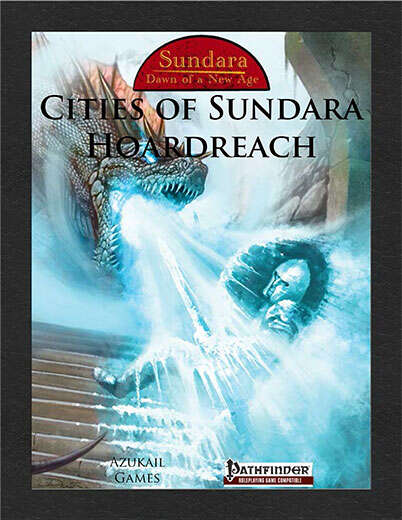
- Hoardreach: The City of Wyrms (Pathfinder and DND 5E): A center of power across an entire region, Hoardreach is ruled over by a Cooperation of five different dragons. A place for refugees and outcasts of all sorts, Hoardreach boasts some of the most unusual citizens and creations from across Sundara. Infamous for their sky ships, which require the cast-off scales and unique arcane sciences of the Dragon Works to take to the air, one never knows just what they'll find in this city built atop a mountain.

- Archbliss: The City of The Sorcerers (Pathfinder and DND 5E): A floating city in the sky, Archbliss has been a refuge for sorcerers for thousands of years. It's only in relatively recent years that the city has allowed those from the ground below who lack the power of a bloodline to join them in the clouds. However, while there are certainly amazing wonders to behold, there is a darkness in Archbliss. Something rotting away at its heart that could, if not healed, bring the city crashing to the ground once more.

Gods of Sundara


Gods of Sundara (available for Pathfinder and DND 5E): In a world with no alignment, and where the gods are often genuinely mysterious forces that are far too large for mortals to truly comprehend, the divine feels genuinely strange and unknown... something that really does have to be taken on faith. This supplement provides a sample pantheon for Sundara, but also provides instructions on how to easily make your own gods in a world where you can't cast a spell and tell whether someone is good or evil.

Species of Sundara


Sundara is filled with creatures that many of us recognize, but I wanted to give greater depth to their cultures, and a wider variety of options. After all, humans always get 15+ ethnicities, languages, and unique histories, while elves, dwarves, orcs, halflings, etc. are almost always left with footnotes, or maybe with a handful of offshoots. So, in short, I wanted to give all the fantastical creatures the treatment that humans usually get in our games.

And there is no human book yet. If readers demand to know more, then I may sit down to pen one... but I figured that humans didn't need to be front-and-center in this setting just yet.

- Elves of Sundara (Pathfinder and DND 5E): Elves are one of the most quintessential fantasy creatures... but if you want to see more than just high elves, wood elves, and elves of the sun and moon, then this supplement has you covered!

- Dwarves of Sundara (Pathfinder and DND 5E): The children of the primordial giants who were meant to fill in the details of the world they'd made (or so the myths say) there are as many kinds of dwarves as their are kinds of giants... and possibly more, depending on who is keeping count.

- Orcs of Sundara (Pathfinder and DND 5E): Supposedly a creation of the elves, none can say for certain exactly how or why orcs have been made. What most agree on is that these creatures are far more than most may think at first glance.

- Halflings of Sundara (Pathfinder and DND 5E): Little cousins to the dwarves, halflings are tough, clever, and not to be underestimated. From living beneath the hills, to taking up residence in the deep forests, halflings in Sundara come in quite a variety!

- The Blooded (Half-Elves and Half-Orcs) [Pathfinder and DND 5E]: When orcs and elves mix their bloodlines with other creatures, the result is one of the Blooded. This inheritance takes many forms, and it can even wait generations before manifesting when the right combination of individuals come together to have a child.

- Gnomes of Sundara (Pathfinder and DND 5E): Gnomes are strange creatures, found in places where the spirit of the land has coalesced and made children of its own. The sons and daughters of the ancient nymphs, they are the stewards of these places, and they change as often as the weather and the land.

Like, Follow, and Stay in Touch!


That's all for this week's Moon Pope Monday. To stay on top of all my content and releases, make sure you subscribe to my newsletter at the bottom of the page!

Again, for more of my work, check out my Vocal archive, and stop by the Azukail Games YouTube channel, or my Daily Motion channel!. Or if you'd prefer to read some of my books, like my sword and sorcery novel Crier's Knife or my latest short story collection The Rejects, then head over to My Amazon Author Page!

To stay on top of all my latest releases, follow me on FacebookTumblrTwitter, and now Pinterest as well! To support my work, consider Buying Me a Ko-Fi, or heading to The Literary Mercenary's Patreon page to become a regular, monthly patron. That one helps ensure you get more Improved Initiative, and it means you'll get my regular, monthly giveaways as a bonus!

Tuesday, August 16, 2022

Membership in In-Game Organizations Shouldn't Require Specific Class Levels

I remember the first time I came across the opportunity to join in-game organizations was back when I was playing in the Forgotten Realms during the DND 3.5 era. From the Harpers to the Red Wizards of Thay there were particular prestige classes that granted you unique and unusual abilities that were outside the purview of any other classes, and you could join as soon as you met the necessary prerequisites. Even though I never got far enough in a game at that time to reach those prestige classes, it felt like a great, organic addition to my character that would tie me more firmly to the setting, and that desire always sat there in the back of my mind whenever a new game was announced.

Basically what I talked about in What Organizations Does Your Character Belong To?, a little while back.

While I've put my own spin on this idea (more on that later), I wanted to address the other side of the coin this week. Because membership in an in-game organization shouldn't require character levels... if something is a story element, let it be a story element without forcing your players to cut their nose off to spite their faces, mechanically speaking.

And if you haven't grabbed a copy of this book, I would highly recommend it.

Before we get into the nitty gritty this week, don't forget to sign up for my weekly newsletter to get all my updates right in your inbox. Also, if you've got a bit of spare cash that you'd like to use to help keep the wheels turning, consider becoming a Patreon patron!

Lastly, to be sure you're following all of my followables, check out my LinkTree!

Walking That Fine Line Between Roles and Rolls


I mentioned that I first noticed this unique opportunity back in the 3.5 era, but I feel like Pathfinder really brought it home. From prestige classes that covered most major organizations within the Golarion setting, and a slew of class archetypes that you could start taking straight from level one, it felt like the designers really wanted to provide players with opportunities to tie their story to the pillars within the setting to help players make their characters feel more organic... and maybe for some extra wooge.

You can never have too much wooge.

However, it's important to remember that while story and mechanics can converge in perfect harmony, sometimes that isn't the case. And when that happens, it's important to take a step back and find a solution that works well for your particular game.

As an example, consider the hellknight prestige class for Pathfinder. Now, the hellknights are a large organization made up of dozens of orders and chapters, each with its own unique set of special skills and creed that it follows. Whether it's the Order of the Nail and their focus on maintaining law and order, the Order of the Rack and their focus on breaking dissent and putting down rebellions, and so on, and so forth, there's a lot of personality to these orders.

Now, a player could angle themselves toward taking levels in this prestige class once they meet the prerequisites (which involve slaying a devil with hit dice greater than the character while being witnessed by existing hellknights, so not a walk in the park). At that point they can choose which order they join, and gain particular abilities that bolster their character build as they go up in the hellknight prestige class.

However, let's assume you have a character at the table who isn't going to benefit from that class's abilities. The player may not want to expend the extra resources to meet the prerequisites (like heavy armor proficiency, Intimidate ranks, etc.), but they still want their character to become a member of a particular hellknight order for story reasons. The GM is able to do that with a snap of their fingers.

I dub thee Sir Bastard. Now arise, and spread the Law!

Say, as an example, a player was going all-in on a ranger build that focused on tracking and bringing down specific enemies. This might be an ideal candidate for the Order of The Scar, a hellknight order that hunts down killers and assassins. But this character wouldn't benefit from joining the prestige class in a mechanical sense... however, as far as their story goes, they could very easily start the game as a hellknight armiger (essentially a squire), and then at an appropriate time in the story be officially raised to the social position of hellknight (probably after slaying the devil, just for appearances).

This provides the benefits of tying the character more firmly to the setting, providing them with a structure that dictates why they're involved in a given adventure, and the goals they're trying to achieve. It also helps the GM because it tells them what kind of NPCs are likely to figure into this character's interactions, along with the places they've been, and the things they've seen. It also helps lay out a good way to reward the PC for service, allowing them to climb the ranks of the organization and to gain access to other forms of aid, prestige, and social currency.

In the end, it's a win for everyone.

I Talked About This in an Earlier Splat Book of Mine


I told you we'd circle back around to Sellswords of Sundara (available for both Pathfinder and DND 5E), didn't I? For those who are curious, this splat recently got its own audio drama, "The Price of Steel" on the Azukail Games YouTube channel... so toss the channel a sub, and give the track a listen!


Now, Sellswords of Sundara is pretty much what it says on the tin. The splat contains 10 mercenary companies complete with their specialties, uniform style, brief history, combat doctrine, some notable NPCs and rumors, as well as either a subclass (for 5E) or an archetype (for Pathfinder) should one wish to really embody the style of character described.

However, as I explicitly stated in the introduction to the book, players should not be forced to use these mechanical options merely to have their characters be a part of one of these free companies. If someone wants to play a wizard who's part of the Widowmakers free company (a rowdy gang of bruisers and bastards that are little more than cutthroats), they should be allowed to do that. A cleric who specializes in raising and controlling the dead would rise to a command position in the Risen Legion, and shouldn't have to take the fighter-based archetype of the Risen Legionnaire.

And so on, and so forth.

Because the thing about organizations that makes them so useful to you as a GM is that they're never made up of just one kind of character. Even going back to the Forgotten Realms, the Red Wizards of Thay were, of course, all wizards... but those weren't the only people in the organization. There were Thayan Bodyguards (another fun prestige class that came out later) who acted as the muscle to keep the tattooed spellcasters safe. There are the soldiers, the informants, the assassins, and the myriad of people who owe their allegiance to the Red Wizards and their power structures, even if they themselves are not one of those wizards.

Ideally, you want to make these organizations as available as possible because it grounds your player characters in the setting, and provides you with an easier time as the Game Master for telling their stories. While not every character will be drawn to an organization, whether it's a bandit gang, a mercenary company, or a knightly order, they can help provide a lot of useful structure that will save you time and energy going forward.

Recommended Reading


If you're looking for some additional organizations beyond what's available in Sellswords of Sundara, consider the following supplements!

- 100 Secret Societies: Shadowy organizations who seem to have tendrils everywhere, it's possible everyone in the party might be a member of this order and not even know it... or that they each serve a different master when everyone else's back is turned!

- 100 Cults to Encounter: From those who seek the favor of the old gods, to those who delve into outré philosophies, cults come in many forms. Not only that, but they can make quite a useful organization for those seeking a place to... belong.

- 100 Fantasy Guilds: From inventors and explorers, to monster hunters and assassins, guilds dip their fingers into damn near everything... which is why they can be so useful, and flexible, as an organization in your game.

A Baker's Dozen of Noble Families: From the swamp-dwelling clan fam of the Dredgers, to the deep pockets of High Hall, these 13 noble families are fleshed out enough that you can easily make your character a member.

100 Random Mercenary Companies: From the warrior wizards in the Acolytes of Arannis, to the black-clad battalions of the Harbingers of Sorrow, each of these companies offers unique ties for those who signed up for a tour of service.

Like, Follow, and Stay in Touch!


That's all for this week's Moon Pope Monday. To stay on top of all my content and releases, make sure you subscribe to my newsletter at the bottom of the page!

Again, for more of my work, check out my Vocal archive, and stop by the YouTube channel Dungeon Keeper Radio. Or if you'd prefer to read some of my books, like my cat noir thriller Marked Territory, its sequel Painted Cats, my sword and sorcery novel Crier's Knife or my latest short story collection The Rejects, then head over to My Amazon Author Page!

To stay on top of all my latest releases, follow me on FacebookTumblrTwitter, and now Pinterest as well! To support my work, consider Buying Me a Ko-Fi, or heading to The Literary Mercenary's Patreon page to become a regular, monthly patron. That one helps ensure you get more Improved Initiative, and it means you'll get my regular, monthly giveaways as a bonus!

Saturday, April 23, 2022

Breaking Down The New Tricks Available in "Sellswords of Sundara"

Normally when I settle in for my Crunch update I talk about combinations I've already discovered in a game's system, or I offer a new way to look at strategy using a game's rules. As some folks around here may already know, though, my Sellswords of Sundara splat recently dropped for both Pathfinder Classic and Dungeons and Dragons 5th Edition. And while there's a lot of fun story and engaging world building in there for my Sundara: Dawn of a New Age setting, there's also 10 archetypes/subclasses in this book that each come with their own, unique tricks.

So I wanted to take a moment to break it down and talk about what I was trying to do with each, unique mercenary company, their fighting abilities, and the opportunities they allow you to bring to your game.

In case you needed some extra wooge up your sleeve!

Before we get into the details this week, don't forget to sign up for my weekly newsletter to get all my updates right in your inbox. Also, if you've got a bit of spare cash that you'd like to use to help keep the wheels turning, consider becoming a Patreon patron!

Lastly, to be sure you're following all of my followables, check out my LinkTree!

#1: The Band of The Godless Hand


Where is your god now?

Holy wars can be devastating, but even those with the gods on their side fear this mercenary company. Disciplined and zealous, they were formed to stop those who sought conquest and bloodshed in the name of the divine. Their unique arts make them quite effective against those who depend on outsiders as allies, or who wield divine magic.

Pathfinder: A cavalier archetype, the Godless gain large bonuses against fear, spell resistance against divine magic and channeled energy, and they deal increased damage when they charge foes.

DND 5E: A fighter subclass, the Godless roll with Advantage on saves against divine spells and abilities of outsiders, gain immunity to the Charmed and Frightened conditions, gain bonuses to fighting outsiders, and eventually can kill even powerful outsiders without needing to use magic weapons to do so.

#2: The Scarlet Company


The Scarlet Champions have never lost a duel.


The champions of Ironfire: The City of Steel (the first of the Cities of Sundara that came out for Pathfinder Classic and DND 5E), this mercenary company has a standing contract with the Dragon Forge. Some of the most terrifying duelists in the iron trade, the Scarlet Company receive deference even in a city awash in mercenaries of every stripe.

Pathfinder: A cavalier archetype that focuses on 1-on-1 duels, Scarlet Champions always act in the surprise round, gain the ability to reserve their attacks to parry and riposte in a way similar to the duelist prestige class, and their scarlet cloaks act as banners that grant them increased morale while their lightning speed allows them free opportunities to intimidate foes.

DND 5E: A fighter subclass, Scarlet Champions cannot be surprised, and even if they haven't acted may use their Reaction to make opportunity attacks. They gain a parry and riposte, eventually become immune to the Frightened condition, and they may even use their swirling, scarlet cloaks to give allies who are Frightened fresh saves to snap out of it.

#3: The Risen Legion


One cannot fight against death.

A mercenary company with connections to the fallen city of Moüd (for both Pathfinder and DND 5E), before it was re-discovered and repaired by the Silver Wraiths guild, the Risen Legion commands the powers of the undead. While there are treaties and agreements that disallow the use of risen corpses in many forms of war, even the still-living legionnaires often undergo strange transformations from their exposure to the amount of necromantic energy running through the ranks.

Pathfinder: A fighter archetype, Risen Legionnaires gain Necromantic Affinity, healing from negative energy as if they were undead, but also healing from positive energy (though they must save against both positive and negative channeled energy meant as an attack rather than to heal). They gain immunity to fear, and may ignore penalties from ability damage and drain, though still die if the penalties grow too severe. Additionally, they can be resurrected by animate dead, rather than more costly resurrection spells.

DND 5E: A barbarian archetype, Risen Legionnaires gain Necrotic Resistance when raging, and if they make a save against any effect that deals necrotic damage they instead gain the damage they would have taken as healing. They may also be resurrected by animate dead, and they gain Immunity to Charmed, Frightened, and to the negative effects of Exhaustion. They also gain Resistance to Poison and Cold damage, as well as Immunity to the Poisoned condition.

#4: Cloud Hammers


What could be worse than dragons? Sky privateers!

Hoardreach (available in Pathfinder and DND 5E) is known for many things, but aside from being ruled by a cooperation of 5 dragons, it is also where the first sky ships have been built. While these vessels take a great deal of time and resources to construct and field, they are slowly growing more common... and this mercenary company is built from those who have served among the cloud fleets. Named for the founding captain, this free company provides unique services including air dropping troops, and bombarding targets on the ground from beyond the reach of even the most powerful longbow.

Pathfinder: A gunslinger archetype, aether privateers gain the ability to negate enemy Dex bonuses to their armor class through unique aiming deeds, as well as the ability to shoot lines, belts, and connecting straps with pinpoint accuracy to disable vessels and opponents alike.

DND 5E: A rogue subclass, aether privateers gain unique bonuses on ranged attacks, the ability to make called shots, and to make trapping shots, where they can nail targets to the ground, a wall, etc., by putting bolts, arrows, axes, or daggers through armor, shields, or clothing to hold an enemy in place.

#5: Jackdaws


They're out there... somewhere...

A mercenary company that began because a young boy wanted to go bird watching, their founder Harrington "Jackdaw" Leeds was able to sit undetected for hours by wildlife and enemy scouts alike. A trainer for rangers and outriders, he eventually agreed to help found this free company in his later years. Though he's been dead a long time, his methods and skills live on.

Pathfinder: A ranger archetype, the Jackdaw Scout allows you to alter your favored terrain to suit whatever environment you find yourself in. Additionally, these scouts can grant their bonuses to allies within a certain radius, allowing them to keep everyone on their toes, and moving silently through even the most rugged terrain.

DND 5E: A ranger subclass, the Jackdaw Scouts may shift their favored terrain with some time and effort. They also gain message at-will while within these favored terrains, and they may use the Help action at up to 120 feet for Stealth checks, or for attacking enemies from ambush. Additionally, Jackdaw Scouts deal devastating damage when attacking from surprise while within a favored terrain.

#6: The Widowmakers


We're the bad men who do bad things.

Some mercenaries maintain codes of honor, or rules of conduct... the Widowmakers do not. Brutes, brigands, killers, and cutthroats, this mercenary company is made of some of the worst of the worst. Serving the Widow, a woman whose grief at the loss of her husband led her to end a war by recruiting some of the most dangerous individuals silver would buy, these mercenaries' reputation precedes them... usually for the worst.

Pathfinder: A fighter archetype, the Widowmaker Enforcer loses out on heavier armor, but gains more skills, bonuses to initiative, sneak attack, and the ability to inflict status conditions on opponents they can hit with their sneak attack.

DND 5E: A fighter subclass, Widowmaker Enforcers gain limited sneak attack, the ability to render opponents blind or deaf, and later on the power to deal sneak attack more than once in a single turn.

#7: The Fists of Kormmuz


Iron hands can endure anything.

A unique fighting force, the Fists of Kormmuz are one part monastic order, one part warrior cult, and one part mercenary legion. Responsible for some legendary feats of fighting prowess, they're most known for their signature weapons; heavy, steel gauntlets. Because while they are as deadly bare-handed as many other monks, once their fists are sheathed in iron they become truly devastating as foes.

Pathfinder: A monk archetype, the Fists of Kormmuz may deal their unarmed damage with gauntlets, cestus, brass knuckles, or a spiked gauntlet. Not only that, but these weapons allow the monk to be treated as a size category larger for their damage dealing. They gain Cut From The Air and Smash From The Air as bonus feats, and may eventually parry attacks with their gauntleted fists. Their capstone power is smashing spells out of the air with perfectly-timed blows from their fists.

DND 5E: A monk archetype, wearing a gauntlet, spiked gauntlet, brass knuckles, etc., increases the Fist of Kormmuz's unarmed damage type by one die. They gain the ability to parry and counterpunch attacks coming at them, as well as the ability to strike spells out of the air.

#8: The Brotherhood of Broken Banners


You going to get up, or stay there in the dirt?

Another favorite from 100 Random Mercenary Companies (where many of these groups were first conceived), the Brotherhood of Broken Banners is a mercenary company that takes in those who were on the losing sides of wars and conflicts. Those who have no homes, no lands, no families, will always find a place among other veterans of conflict... and even those who were once bitter rivals may find themselves closer than blood among this band.

Pathfinder: A cavalier archetype, a Broken Bannerman gains resistance to fear effects (always treating themselves as shaken rather than more potent effects), and they gain immunity to any charm or compulsion that would force them to flee the battlefield. Additionally they gain a battle cry that strengthens their allies' sword arms while putting fear into their enemies.

DND 5E: A fighter subclass, the Broken Bannerman gains immunity to the Frightened condition, and they roll with Advantage on enchantment or illusion effects. They gain a battle cry that boosts allies and frightens enemies, and they may deploy their banner to grant inspiration to themselves and their allies.

#9: The Grayblades


I've forgotten more about war than you will ever know.

Old soldiers never die... those who don't fade away, though, often join the Grayblades. While known as trainers and teachers, those who would discount this mercenary company due to their age have learned the hard way that experience mixed with viciousness is often more than enough to carry the day.

Pathfinder: A fighter archetype, Grayblades must start at a higher age category, but they gain increased skills and skill ranks as a result. They may use their Intelligence or Wisdom bonuses for initiative instead of Dexterity, and they gain initiative bonuses as they level. They gain bonuses to Aid Another, as they are used to coordinating soldiers under their tutelage, and at higher levels they can ignore their age penalties for a time. As a capstone, those age penalties instead become bonuses as, for a brief time, they fight like they were back in their prime.

DND 5E: A fighter subclass, Grayblades gain increased skills and proficiencies for their experience. Grayblades may use the Help action from further away, and they can affect more than one ally with it at a time. At higher levels they may double their physical bonuses for a brief period of time, cutting loose with all the skills they've learned over their careers.

#10: Nightwatch Dragoons


The night is dark, and full of terrors.

Dangerous beasts and awful monsters lurk in the corners of the world, but there are those who study them, track them, and slay them. Infamous monster hunters, the Nightwatch Dragoons are known far and wide for their indigo uniforms and silver hilts. Mysterious, and more than a little unnerving, they take bounties on creatures that most would have wagered no mortal man could slay.

Pathfinder: A slayer archetype, Nightwatch Dragoons can study the tracks, stories, and spoor of creatures, and declare them studied targets without ever laying eyes on them. Additionally, they can learn all kinds of insights about these targets from studying their sign. They can also reduce studied enemy's damage reduction, allowing them to deal lethal blows to creatures thought immune to mortal weapons.

DND 5E: A ranger subclass, Nightwatch Dragoons roll with Advantage against favored enemies, and deal bonus damage on all attacks against them. Additionally, they may switch their favored enemies to new kinds of creatures with an appropriate Intelligence check. This can later be done just by studying a creature's spoor, and without making an Intelligence check. Favored enemies eventually lose Resistance to the kind of weapon used by a Nightwatch Dragoon, and if they had no Resistance they gain Vulnerability instead.

Like, Share, and Follow For More!


That's all for this week's Crunch topic! For more of my work, check out my Vocal archive, and stop by the YouTube channel Dungeon Keeper Radio! Or if you'd like to read some of my books, like my alley cat noir novel Marked Territory, my sword and sorcery novel Crier's Knife or my latest short story collection The Rejects, head over to My Amazon Author Page!

To stay on top of all my latest releases, follow me on FacebookTumblrTwitter, and now on Pinterest as well! And if you'd like to help support me and my work, consider Buying Me A Ko-Fi or heading over to The Literary Mercenary's Patreon page to become a regular, monthly patron! Even a little bit of help can go a long way, trust me on that one.

Monday, January 11, 2021

Want To Get Your Character Involved in Plot? Remember Rule 303

One of the biggest issues I've seen around a gaming table is actually getting characters involved in the unfolding plot. Typically once everyone finds a reason to get involved, or a plot hook they're comfortable biting on, the game will be off to the races... but sometimes getting over that early hurdle can be a frustration.

For GMs and players alike.

Ogre raids? Sounds like a whole lot of not my problem.

That's why this week I'd like to introduce a concept that can really help make a game go more smoothly. Some folks might be familiar with it, but for those who aren't the term is Rule 303.

For those looking for another useful term, check out "Force Multiplication" is a Useful Idea For RPGs. And to make sure you don't miss out on any of my releases, consider signing up for my weekly newsletter!

Means, Opportunity, and Responsibility


The short version, according to Beau of The Fifth Column, is that Rule 303 means that if you have the means to hand, and the ability to help, then that implies you have a duty to get yourself involved in a situation. The term sees a lot of use among military contractors, as well as active duty folks, but you can apply it much more broadly than just in the profession of arms. If you see someone choking in a restaurant, and you know the Heimlich maneuver, you go over and help them expel the blockage. If you're a tall person and you see someone shorter struggling to reach a top shelf, you offer to get the thing down for them.

If you're a musclebound barbarian with a greatsword, and you're on-hand when bugbears are raiding the countryside, you unsheathe that beast and go to work.


Something else to remember is that this trait can manifest itself in a variety of different ways. For example, a character might be genuinely altruistic, and their desire to help people means they can't just walk on by if there's a serious problem that they have the means to fix. A character might be getting involved because it's a good excuse to show off, or because they think there could be a reward in it for them. It might coincide with a vow they took, or a core tenet of their faith.

At the end of the day, though, the player should ask themselves the first two questions of the formula. Because if you have the means to help, and you have the ability to help, then that suggests you also have the responsibility to get yourself involved in whatever nonsense is going down. Justification beyond that can't hurt, but if you jump in with both feet it makes the game go a lot smoother for everyone concerned.

And for those who are looking for some inspiration for characters who may have sworn oaths, accepted contracts, or who are simply part of an organization that would make them getting involved in solving problems easier for you to spin as a player, you might find some inspiration in some of my following supplements:

- 100 Random Mercenary Companies: From disciplined ranks of sellswords, to free-wheeling soldiers of fortune, those who want to embody the origins of Rule 303 can find plenty of inspiration in these free companies.

- 100 Knightly Orders: Whether you're a protector of the realm, or you're a wandering knight errant seeking to help the needy and protect the weak, this collection is full of orders you can swear your service to.

- 100 Secret Societies: The world at large doesn't need to know why you're helping out in this matter. And if you want to have a little cloak-and-dagger fun, these secret societies are always a ball to add into your history, and your game.

Like, Follow, and Stay in Touch!


That's all for this week's Moon Pope Monday. To stay on top of all my content and releases, make sure you subscribe to my newsletter at the bottom of the page!

Again, for more of my work, check out my Vocal archive, and stop by the YouTube channel Dungeon Keeper Radio. Or if you'd prefer to read some of my books, like my cat noir thriller Marked Territory, my sword and sorcery novel Crier's Knife or my latest short story collection The Rejects, then head over to My Amazon Author Page!

To stay on top of all my latest releases, follow me on FacebookTumblrTwitter, and now Pinterest as well! To support my work, consider Buying Me a Ko-Fi, or heading to The Literary Mercenary's Patreon page to become a regular, monthly patron. That one helps ensure you get more Improved Initiative, and it means you'll get my regular, monthly giveaways as a bonus!

Monday, November 2, 2020

Savage Company's "Infantryman's Handbook" Is a Lovely Little Addition To High-Caliber Pathfinder Games

I've had guns on the brain of-late, and since my entry Guns Really Aren't as Powerful as You Think in Pathfinder seems to have attracted a pretty large amount of attention I figured I'd embrace the black powder spirit this week. Because as I mentioned pretty explicitly in that post, I was talking about the common sorts of early firearms you find in most traditional Pathfinder games. If you wanted to overcome some of the major handicaps these weapons had, then you needed to advance the timeline a little and field firearms with a much bigger punch.

And that's where the Infantryman's Handbook comes into the picture.

For those who wondered if Doom Guy was secretly an orc...

Before I get into the meat of this, wanted to remind folks to subscribe to my weekly newsletter if you haven't done that yet. Also, since I've been staying away from the outside world, I've become something of a kitchen goblin. If you're wondering how that side project is coming, consider checking out 5 Things You Should Be Putting Mio In (Other Than Water).

What is This Book All About?


If you're not familiar with the Savage Company Campaign Setting, and you missed my review "Savage Company" is Out (And You Should Totally Get Your Copy Immediately!), I'll give you a very brief run-down. The game is compatible with Pathfinder's first edition, and it embraces the high-caliber kind of adventure you can have when you really cut loose with the weaponry stocked in the armory. Following the adventures of the titular Savage Company, a mercenary band made up largely of monstrous races, outcasts, and other unwanteds, the campaign guide provided a big slew of content. From new classes and races, to shiny new weapons, vehicles, and rules, it was all there and ready to rock. One part Mad Max, one part Warhammer 40k, and all parts Pathfinder, it was a refreshing breath of air for those who wanted to really double down on the first edition.

The Infantryman's Handbook builds on that by giving us a new and improved version of the signature class; the infantryman.

You've got to mold them into what you want.

In the original release, the infantryman was the child of the gunslinger in much the same way the samurai was the child of the cavalier. It was more than just an archetype, but there was enough common DNA that there was still a very noticeable relationship.

What this book does is offer a bunch of different archetypes for the infantryman. From the battering ram of the breacher, to the special forces style snake eater, all of these options allow you to customize your soldier's skills and roles so that you could realistically make an entire party of infantrymen to act as your adventure's main squad if you so desired. There's some fun bits of fiction woven into the document as well, but the other big additions all come in the gear section. From chain bayonets, to rocket launchers, to three dozen different types of grenades, there's plenty of extra firepower in the back if you're looking to really bring the thunder when it comes time to open up with the big guns in your game. And even if you're not really interested in more class options, the dakka is more than worth the price of admission, in my opinion.

By itself, Infantryman's Handbook is a lovely little piece of work. Though if you don't already have your own copy of the Savage Company Campaign Setting, I'd highly recommend picking that up as well. They two of them really work best if they're both in play!

Like, Follow, and Stay in Touch!


That's all for this week's Moon Pope Monday. To stay on top of all my content and releases, make sure you subscribe to my newsletter at the bottom of the page!

Again, for more of my work, check out my Vocal archive, and stop by the YouTube channel Dungeon Keeper Radio. Or if you'd prefer to read some of my books, like my cat noir thriller Marked Territory, my sword and sorcery novel Crier's Knife or my latest short story collection The Rejects, then head over to My Amazon Author Page!

To stay on top of all my latest releases, follow me on FacebookTumblrTwitter, and now Pinterest as well! To support my work, consider Buying Me a Ko-Fi, or heading to The Literary Mercenary's Patreon page to become a regular, monthly patron. That one helps ensure you get more Improved Initiative, and it means you'll get my regular, monthly giveaways as a bonus!

Monday, March 16, 2020

"Savage Company" is Out (And You Should Get Your Copy Immediately!)

It's been a while since I've reviewed something new in my Monday slot, and if you are a Pathfinder Classic player then have I got a treat for you! Because I managed to snag a review copy of Savage Company, and if you haven't seen it yet then you should go get yours right now.

If all you wanted was my opinion, it is rip-roaring nonsense that is exactly the kind of insane, high-octane fun that I feel Pathfinder was made for. Keep reading if you want more information, but if that's all you needed to go download the free Recruit Orientation Guide, then go do that.

Seriously, I haven't been this pleased with a campaign setting in a while.
If you'd like to know more, however, keep on reading.

What Is "Savage Company" Exactly?


The short version is that Savage Company is a campaign setting meant to be used in conjunction with Pathfinder Classic (or Pathfinder 1st Edition, if you choose to use that label). It can be used with the game as it stands (since Pathfinder already has rules for both primitive and advanced firearms in it), or it can be used in a more modern or modern-esque technological level (anywhere from just after the Renaissance to the tech level of today).

Oh yeah... the safety's coming off!
The backstory for this setting is that it takes place in the town of Tombstone. This place was an abandoned fort in the middle of an area blasted by magical war, and devoid of non-hostile forms of life. The place was claimed by the orcs and half-orcs of the mercenary band known as Savage Company, and they held onto it. As their reputation grew, and their numbers swelled, they started to recruit more and more adventurers to their cause... particularly individuals from "monstrous" races who had a hard time finding reliable work, and trusting companions anywhere else.

As time went by, Savage Company managed to bribe, strongarm, and make diplomatic entreaties to its neighbors, eventually declaring its holding as legitimate. Now the town of Tombstone, as well as the underground network of tunnels that holds everything from the gangs of Trox laborers, to goblin tinkerers, to billets of orcs, hobgoblins, and other well-trained mercenaries who can respond at a moment's notice, is a company town where anyone who needs the best in the business can come to hire mercenaries of any stripe.

The tone of the setting is kept purposefully vague so that you can fit it into Pathfinder's usual blend of fantasy/sci-fi (where armored paladins and gunslinging vigilantes may fight side-by-side), or you can expand the more modern military feeling to the rest of the setting as well. It's entirely up to you!

Flavor, Crunch, and a Whole Lot of Cheese


The first thing that I adore about this setting is that it purposefully takes aim at the ingrained attitude of, "monstrous races are inherently evil." Players and DMs alike have clung to this attitude even as Pathfinder made more and more traditionally "bad" races playable (orcs, goblins, hobgoblins, drow, duergar, etc.) without any form of alignment restriction.

What Savage Company does is acknowledge the history of adversity that these races have had, but turned it around by showing those in the company as people looking to make a better life for themselves through teamwork, cooperation, and using the advantages they were born with to find a calling in life. In fact, the outfit reminds me very strongly of The Devil's Own out of my collection 100 Random Mercenary Companies. This group recruited primarily monstrous humanoids, and most of them created personas for themselves because showing the world that face was often an advantage that left their enemy unsure of their true capabilities and weaknesses.

I'm sorry, I was told there would be cheese?
There is, of course, more to Savage Company than just a fancy setting, some solid fiction, and a bunch of pre-generated characters to get you started. It also gives you new classes (from the medic to the infantryman), as well as archetypes of existing classes from Pathfinder. It's got a slew of new feats (nothing game breaking, but there's more than a little spicy cheddar on the list), and perhaps my favorite section, new gear.

And as someone who's spent the past year tooling around in Warhammer 40k's orbit, I am very pleased to see chain blades, mini mechs, Mad Max-style war bikes, and the iconic orc chin piece, along with sensible bayonets, downright brutal custom machine guns, and dozens of other delicious upgrades for your armory.

Bringing Out The Big Guns


If you are one of those DMs who firmly believe that guns don't belong in fantasy games, or that traditionally evil races are always bad and they should never rise to the status of genuine heroes, this is not the setting for you. If you're one of those players who always reaches for the scarred tiefling soldier who would die for their comrades, the hulking half-orc tank who's the heart of the squad, or the goblin bombardier who is the deadliest mascot the party could ask for, then this book is going to find a place of honor on your shelf faster than you can say, "Roll initiative."

So if you like your characters weird, your guns blazing, and your adventures absolutely crazy, go get your copy of Savage Company today!

Like, Follow, and Stay in Touch!


That's all for this week's Moon Pope Monday. Hopefully you found this term useful!

For more of my work, check out my Vocal archive, and stop by the YouTube channel Dungeon Keeper Radio. Or if you'd prefer to read some of my books, like my sword and sorcery novel Crier's Knife or my latest short story collection The Rejects, then head over to My Amazon Author Page!

To stay on top of all my latest releases, follow me on FacebookTumblrTwitter, and now Pinterest as well! To support my work, consider Buying Me a Ko-Fi, or heading to The Literary Mercenary's Patreon page to become a regular, monthly patron. That one helps ensure you get more Improved Initiative, and it means you'll get my regular, monthly giveaways as a bonus!