Showing posts with label hit points. Show all posts

Saturday, May 23, 2020

Vulgar Displays of Power: Tips For Getting The Most Out of Your Magic in Pathfinder

When most of us think of magic in fantasy RPGs, we tend to think of the big, sexy spells. How an evoker can reduce waves of enemies to ash with a well-placed fireball, or how a witch can cast lightning forth from her hand to blast an entire hallway full of enemies with her wroth. And while there is no denying that a hammer is certainly a part of your toolkit as a spellcaster, it's also important to remember that using the right tool for the right job tends to get your better results.

Even if that tool may not be as fun to use, or doesn't come with the same satisfaction as the arcane equivalent of ramming a chainsaw into your enemy's face.
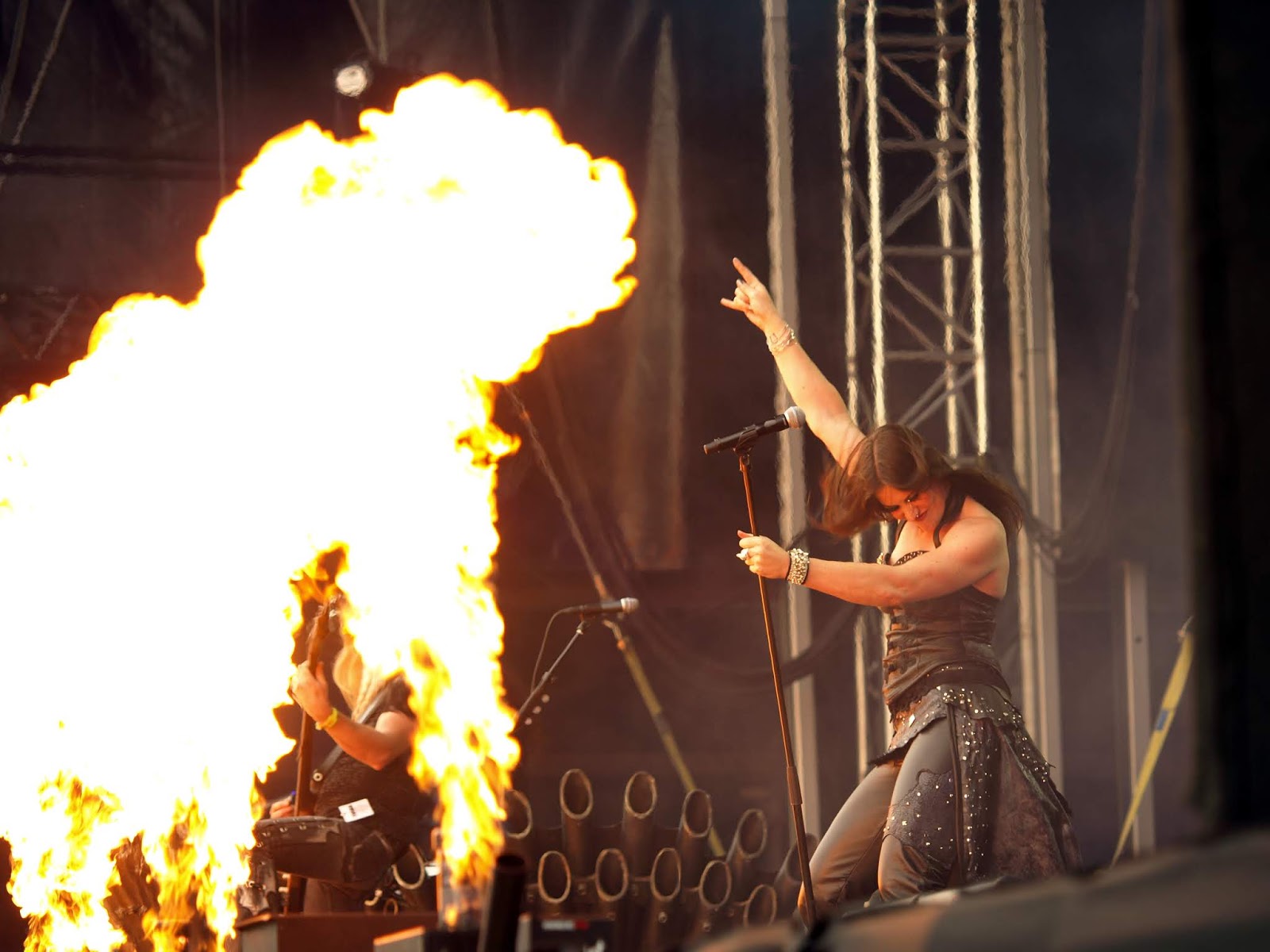
Just remember, every part of the band needs to be there for the song to work.
This week I'm going to discuss magic, spells, and strategy. As with all other aspects of the game, keep in mind that these are just tips for getting the most return for your efforts. You should always play the game your way, but remember to do so with your eyes open, and with full knowledge of your available options, and the overall impact of your choices.

Shall we begin?

Hit Points Are The Least Important Part of Combat


For folks who've been through their share of combats, this statement may sound strange. After all, hit points are the most important thing in combat for most of us, because when the enemy runs out, the combat is over. So ensuring that you hurt the enemy as much as you can, as fast as you can, should be the best use of your resources, right?

Sometimes that's true. But if you're a spellcaster, ask yourself this; what spell do you have that can compete with the barbarian in a full blood frenzy when it comes to raw hit point damage? What spell can you sling that is deadlier than the well-placed stab of the rogue's sneak attack? Can your conjured storm of ice end a life more quickly than the swashbuckler's darting blade?

Most importantly, can you keep pace with those characters when you have a very limited number of spell slots, and their sword arms can go for round after round, battle after battle, without tiring?

Don't even get me started on these holier-than-most tactical nukes.
What you can do as a spellcaster, and what martial characters cannot do (barring some very unusual builds and special combinations) is alter the rules of the fight entirely. Through magic you can twist the very nature of a conflict, stacking the odds in favor of your party's side and putting the enemy at a disadvantage they may not be able to recover from.

That is a deeper use of magic, but it is one that often requires a shift in one's thinking. Moving from the mind of a warrior, whose goal is to advance and slay, to that of a general whose tactical acumen allows their allies to achieve victory through the opportunities they created.

Return on Investment For Your Actions


When it comes to tactics in RPGs, there's been a lot of discourse over the years. From what I've seen the most common general categories for offensive spells are; battlefield control, buffing, debuffing, and dealing damage. While it's true that the first three groups may not have the same visceral satisfaction as the fourth, they often achieve far greater results with significantly fewer resources expended.

Additionally, damage-dealing spells are (unfortunately) among the easiest for an enemy to minimize, or counter entirely.

Foolish adventurers, your powers cannot harm me!
For example, take the following scenario. An enemy is flying above the party, putting her out of melee range. She has spell resistance, making her difficult to hurt directly. If a spellcaster has the option to sling a lightning bolt at the enemy, or to give her close combat ally the ability to fly to charge after her, which is the better option?

Let's look at the lightning bolt. There's no attack roll necessary, but the caster does have to try to get through the enemy's spell resistance. Assuming the caster penetrates it, the target then gets a Reflex save to take half the damage. Even if the enemy doesn't have abilities like Evasion (which would reduce the damage taken to nothing on a successful save), or energy resistance (either naturally or from a prepared spell), that's two obstacles to jump over just to hurt them. At the maximum damage of the spell (10d6), you have a potential of 60 damage, but you are much more likely to get something like 30-40 damage on a halfway decent roll.

Now, let's see what would happen if the spellcaster instead opted to give the fighter or the barbarian wings.

This spell doesn't require any sort of save, and usually there's no need to overcome SR, so the chances of the spell not taking effect are practically zero, barring allies with unusual races or particular magical equipment. So, we've removed the chance of the spell just not working, and the action feeling wasted. Then, on their turn, the ally launches into the air, charging the enemy. Assuming they hit, and they are built to deal damage in melee combat, it's likely they are going to deal at least as much damage as the low end of that lightning bolt when they strike. If they're built for charging, they might deal as much or more as the high end of the spell. However, they are now in the air, and able to harry the enemy. This means the enemy is no longer free to shoot arrows or throw spells from on-high at will, which significantly hampers their ability to harm the party. And if the flying party member is able to take a full attack action on the enemy, their average damage output is likely to be far more than what any individual spell could deal... and they can do this every round until they're either knocked out, or the fly spell fades and they fall back to the ground.

One Small Pebble Can Lead To BIG Ripples


The right spell, used at the right time, can completely change the course of a fight; the key is to alter the rules of engagement in a way that takes away the enemy's capacity to harm the party either partially, or completely.

Never underestimate the effect of a little pencil in the wrong place.
For instance, take the frustrating tactic of an enemy with invisibility. Under normal circumstances the enemy vanishes, and this allows them free rein to move all over the battlefield, while also giving them advantages to strike unsuspecting foes. Something that can be devastating if that enemy also deals sneak attack damage, and members of the party don't have an ability that lets them avoid being caught unawares.

If you cast glitterdust in response, you have stripped away that enemy's cloak of invisibility, and nullified this tactic, along with its advantages. Even better, you have a chance to blind them, which gives your allies a field day when it comes to avoiding that enemy's attacks of opportunity, and getting their own precision damage in on the incapacitated foe. This one spell can take a fight that may have been lethal, and throw a monkey wrench into the enemy's gears, taking away their sucker punch and spitting in their eye to boot.

Even better, it ignores spell resistance.

The examples are as varied as there are enemies you could fight, or situations you could find yourself in. If an enemy depends on a diseased bite, or a poisoned dagger, then delay disease or delay poison is more than worth the spell slot it takes to prep, since these spells offer hours of protection against any and all threats from these avenues. This could be as small as avoiding a temporary penalty from a snake bite, or as game-changing as a drow ambush parties' knockout darts being rendered null and void, causing them to waste actions attempting to use a tactic that simply won't work. If a party is squaring off with a red dragon, then a communal protection from energy spell will prevent dozens to over a hundred of points of damage to party members by the time the beast goes down. If an enemy depends on summoned devils to rush in and maul the party, then all it takes is a simple protection from evil spell to render the summoned creatures' claws and maws completely harmless.

Whether it's sapping an enemy's strength with ray of enfeeblement, or hampering their ability to cast, run, and fight with adhesive spittle, or just making a member of your party immune to an enemy's sneak attack by casting darkness or displacement (depending on if the ambushing gang of ninja can see in the dark or not), these are spells that can affect the entire course of a fight, and which can bring big returns.

Sometimes, Though, You Do Need a Gun


A lot of players might read this and think I'm saying you should never play characters who have damaging spells because that's just a waste of time. Quite the contrary, I recommend spellcasters always have at least a few spells that can actually hurt the enemy. Because, to continue the metaphor, sometimes a hammer is the right tool for the situation.

I said, "I cast fireball."
The thing to remember is that even when deploying a blasting spell, it's important to match them up against targets they're going to have the biggest effect against.

For an example, we all know swarms take extra damage from area of effect spells. So if there's a room full of swarms, that's the time to drop your burning hands and fireball spells. If you're fighting something like a fire giant, who has a weakness against cold spells, that's when frigid touch becomes a risk worth taking, or cone of cold becomes a combat ender.

It goes deeper than just matching the template or element that hurts the most, though those are important considerations. You also need to ask which saves the enemy sucks at, and to match your spells accordingly. As an example, trying to use fire breath on an ambushing party of rogues, monks, or even a mid-level familiar likely isn't going to go well, as they tend to have high Reflex saves, and Evasion, which means the spell is likely to do nothing meaningful. But hitting those same targets with something that calls for a Will save, or a Fortitude save (such as phantasmal killer or stinking cloud respectively) could end up with a completely different result!

These things are important to remember for all spellcasters, but they become doubly important if you are opting to focus on blasting magic as your main schtick. Because if you need to crack off one spell every turn, you're going to burn through your daily allotment at a double-quick pace, which might leave you gasping by the time you get to the end of a dungeon and are down to ray of frost and some odds and ends from your feats and bloodline powers.

You Can't Un-Pull Your Trigger


The key thing to remember with spells, all spells, is that they are basically bullets in a gun. You've only got a limited amount of them per day, and once they're gone they're not coming back until you can have a lie down and a Gatorade. So any time you're going to cast a spell, ask yourself if it's necessary. Does this threat level require you to draw power from the aether and smite the foe before you? Or are you just going to take a quick breather while Slanagor the Slayer and Madrong the Bloodthirsty mop up?

Don't worry. We've got this.
Understanding your threat level, and conserving your energy, is key to strategic application of magic. For example, if you are all fighting a mindless undead with a plague aura, then destroying it before anyone can fail their saves against its disease is an imperative. However, if said undead is flanked and hemmed in by the paladin and the monk, both of whom have high armor classes and who are immune to its disease, then it doesn't actually pose that much of a threat to the party. So in this circumstance, there's no need to call down the wrath of the heavens to destroy it.

You still can, of course, but as the title suggests, doing so turns into a vulgar display of power. Because it might look cool, and feel satisfying, but if you're going to pull the trigger on a shotgun blast when you've only got a few rounds in the chamber, it's important to make sure the enemy is worth that firepower. Because if they're not, there might be a corrupt champion minotaur around the corner that would make a far meatier target.

Like, Share, and Follow For More!


That's all for this week's Crunch topic! For more of my work, check out my Vocal archive, and stop by the YouTube channel Dungeon Keeper Radio! Or if you'd like to read some of my books, like my sword and sorcery novel Crier's Knife or my latest short story collection The Rejects, head over to My Amazon Author Page!

To stay on top of all my latest releases, follow me on FacebookTumblrTwitter, and now on Pinterest as well! And if you'd like to help support me and my work, consider Buying Me A Ko-Fi or heading over to The Literary Mercenary's Patreon page to become a regular, monthly patron! Even a little bit of help can go a long way, trust me on that one.

Monday, October 14, 2019

Stop Marking On Your Character Sheet (Seriously, There Are Better Ways)

When you first fill out your character sheet, it looks pristine. The sheet, like your PC, is newly-minted, as yet unscarred by the ravages of goblin blades, or the crippling touch of a shadow. But once you've gone up a few levels, you start to notice the dark marks, and ragged edges. The places where your damage isn't quite erasing the way you want, or how your stats are progressively tougher to read thanks to the ravages of ghouls, succubi, vampires, and other awful creatures you've had the misfortune to encounter.

Look at it. So neat. So clean. If only it could last...
Of course, you can just get a fresh character sheet and re-write the whole thing every couple of levels, if that's your bag. Or you can keep a digital character sheet, if you're willing to fully embrace the age of digital gaming. But for those of us who like to have the same sheet for an entire campaign, there is something to be said for keeping your shifting tallies somewhere other than on your permanent record. And in today's day and age, there's a unique way to do that.

Scratch Paper in The Digital Age


This is going to sound obvious to most players, but it didn't occur to me until recently that just because there's a space for damage, spell slots, etc. on your sheet, that doesn't mean you need to use it. Especially if it means you're going to constantly be marking and erasing, possibly several times a session. That's just how most groups I've played with rolled, and it didn't occur to me to change it up until one of my DMs got a thank you present from his job. At first I thought it was just a clipboard, but when he took out the stylus and started jotting the initiative order, NPC notes, and other things on it, I realized it was actually an electronic notepad.

Basically, this thing.
This LCD writing tablet is simple, durable, and it's got some serious staying power since it runs off of a basic watch battery. It's great for tracking damage, stat boosts/hindrances, pools of points that constantly shift (looking at you, swashbucklers and gunslingers), and most importantly keeping track of what spells or spell-like abilities you've used that day. Best of all, there's no worries about keeping it charged, and needing to get it prepped before game night; it uses so little power that a single watch battery can keep it running for years of gaming without incident.

On the one hand, it can be argued that this tablet doesn't do anything that a simple piece of paper doesn't do. And if you have a pad of scratch paper on-hand (as any good gamer should, really), then you can basically keep track of everything in a small notebook. I'm not denying that, as I basically have small pads of paper I keep in my character folders for exactly this reason... however, the tablet has one major advantage; it saves serious travel space.

And if you're a player who is going to someone else's house, or a DM who's running in an organized play style setting, that can be a serious advantage. Especially if you just want to leave said tablet in your bug-out bag so that you've always got it ready to record the results of the latest carnage.

Also, if keeping yourself organized at the table is your thing, you might also want to check out my previous post Organize Your Spell Cards With A Portable Spellbook!

Like, Follow, and Stay in Touch!


That's all for this week's Moon Pope Monday. Hopefully you enjoyed, and if you've used run these kinds of games before, leave us a comment to let us know what worked for you!

For more of my work, check out my Vocal archive, and stop by the YouTube channel Dungeon Keeper Radio. Or if you'd prefer to read some of my books, like my sword and sorcery novel Crier's Knife, then head over to My Amazon Author Page!

To stay on top of all my latest releases, follow me on FacebookTumblrTwitter, and now Pinterest as well! To support my work, consider Buying Me a Ko-Fi, or heading to The Literary Mercenary's Patreon page to become a regular, monthly patron. That one helps ensure you get more Improved Initiative, and it means you'll get my regular, monthly giveaways as a bonus!

Saturday, June 22, 2019

Getting The Most Out of The Heal Skill (in Pathfinder)

The Heal skill is one of those aspects of Pathfinder that most people just ignore. Aside from using it to tell how injured someone is, or how a particular corpse in a dungeon died, it seems like something that just isn't going to come up. However, like many skills in the book, you can do a lot with the Heal skill if you're willing to invest in it.

And sometimes it can be what saves your party.

Stop squirming, I need to get this thing out before you get a negative level...

The Heal Skill: What Can It Do?


Skills aren't magic, and while the Heal skill can restore hit points to a PC, you can't do it quickly. This makes it a poor choice for combat healing (most of the time, more on that later), but there is a lot of stuff you can use this skill for.

Stuff like:

- Provide First Aid: As a standard action you can make a DC 15 Heal check to stabilize a dying character, or to stop them from bleeding due to a bleed effect.

- Treat Poison: While tending a character who has been poisoned, every time they roll a save against the poison, you roll a Heal check. If your check exceeds the poison's save DC, then the subject gets a +4 competence bonus. Particularly useful for those who don't have other means prepared to neutralize a poison.

- Treat Disease: This works similarly to treating poison, and it can be a life-saver at lower levels when you can't cure disease with a wave of a hand just yet. It also takes 10 minutes as an action, so it's not great for in-combat use.

- Treat Deadly Wounds: This one takes a full hour, and expends 2 uses of a healer's kit. If you succeed, you restore a number of hit points equal to the creature's level, and if you beat the DC 20 by 5 or more then you add a bonus number of hit points equal to your Wisdom modifier. You have to do this within 24 hours of the wounds being delivered, and you can only do this once per day per target.

There are a few other uses of this skill (treating wounds from caltrops, long-term care, etc.) but these are the four most common uses. And chances are that most tables have only ever used the first-aid option. It's easy to think of this skill as one that falls by the wayside as you gain more expedient means of curing hit point damage, neutralizing poisons, and dealing with deadly wounds... but if you really want to invest in it, you can rev this skill up to the next level.

It's All About The Right Feats...


The feat you need to really juice this up is Healer's Hands, and it's found in the book Planar Adventures (the same book that gave us Magic Trick from How To Turn Floating Disk Into a Battlefield Spell). All you need is 1 rank of Heal and 1 rank of Knowledge (Planes), and you can take this feat. In short, it allows you to:

- Treat deadly wounds as a full-round action (instead of taking an hour).

- You don't take a negative for not using a healer's kit.

- You can use this action on a creature more than once per day, and if you beat the DC by 10 or more (it's a check of 30, for those keeping track), then you also get to add your ranks in Knowledge (Planes) to the hit points you heal.

You feeling better there, Jim?
Now, as a caveat, you can only use this feat's benefits a number of times per day equal to your ranks in Knowledge (Planes), and it only works on creatures that could be healed by positive energy. But say you're a level 10 character, you invested all the skill ranks, and you've got a high wisdom. Every time you treat deadly wounds on a fellow party member (without even needing a healer's kit, mind you), that's probably between 23 and 25 hit points you're giving them back (10 for their level, 10 for your ranks in Knowledge (Planes), and 3-5 depending on your Wisdom modifier).

At 10 times per day, that essentially gives you between 230 and 250 hit points you can restore without magic every day. Not a bad ability, eh? Especially if you add things like Healer's Gloves for that +5 competence bonus on your checks to make sure you hit that DC 30 reliably.

Then There's Skill Unlocks...


I'm the first to admit that there are not a lot of DMs who are willing to give players skill unlocks. First debuted in Pathfinder Unchained, they are an optional rule, but if they're in-play at your table then you can crack the Heal skill wide open.

And why is that, you might ask?
What you need to do is, when you get 5 ranks in the Heal skill, you take the feat Signature Skill. This gives you access to the skill unlocks for Heal, which start at 5 ranks. And every 5 ranks beyond that, you unlock another signature ability. Those are:

- Target recovers additional hit points and ability damage as if they'd rested a whole day.

- Target recovers additional hit points as if they'd rested a whole day with long-term care.

- Target recovers hit points and ability damage as if they'd rested for 3 days.

- Target recovers hit points and ability damage as if they'd rested for 3 days with long-term care.

We're going to have to do some math here to work this one out to its full conclusion. Because when you rest for a full day, you recover double your level in hit points, and 2 points of temporary ability damage. When you rest for a full day with long-term care, you recover at twice that rate.

So let's look at that level 5 unlock.

Assuming you make the DC 20 check on your fellow party member, you're automatically going to heal them for 5 hit points (their level). But with this skill unlock, you now heal them double their character level instead (10 points), and 2 points of temporary ability damage, as well. If you made the DC 25 check and you have a Wisdom modifier of +5, then you'll have healed them another 5 points, for a total of 15 hit points as a full-round action. 20 hit points if you manage to hit that DC 30 (unlikely, but possible with the right build).

And you'd be able to do that 5 times per day... putting your healing capacity at between 50 and 100 hit points, as well as 10 temporary ability damage, you could heal per day with no magic and not even a healer's kit!

The numbers just get more gross from there, my friends.
So what about at level 10? Well, the skill by itself heals them for 10 hit points. With the skill unlock, though, they recover 40 instead of 10, because it's treated as if they had a day of rest with long-term care (quadruple the normal healing). They also gain back 4 points of temporary ability point damage. Then if you hit the DC 25 check, you get to add your +5 modifier to bring that up to 45 hit points, and if you hit the DC 30 modifier you could bring that up to 55.

So the total here is between 400 and 550 hit points worth of healing in a day, as well as 40 points of temporary ability score damage.

The math only gets more nuts from there. At level 15 we're looking at more than 900 hit points per day of straight healing, and more than 70 points of temporary ability damage. At level 20, assuming your game goes that far, you could in theory heal over 2k hit points per day, as well as fix more than 200 points of temporary ability score damage.

Who says every party needs a cleric?

Useful, or Broken?


On the one hand, it could be argued that the skill unlocks provide you a meaningful way to make skills a bigger part of the game, and in this case to meaningfully heal fellow party members without the presence of a divine caster or potion spammer. However, when combining the skill unlock rules with this extraplanar knowledge of healing, you may find yourself dealing with a party that is all but immortal if they survive a given fight.

Tis but a flesh wound... have at thee!
Independently, the feat and unlocks are okay, if not great. My two cents, if you intend to use a system like this to replace the need for clerics and divine casters except in instances of permanent ability drain or negative level drain, then limit the number of times the character can use the feat Healer's Hands to their Wisdom modifier times per day (or perhaps double their Wisdom modifier per day, if you're feeling generous). That gives them the ability to meaningfully heal fellow party members with a skill, instead of magic, but doesn't give them the ability to wade through battle after battle for a full day without once casting a healing spell.

Just my two cents on finding a middle ground with this trick!

That's all for this week's Crunch topic! For more of my work, check out my Vocal and Gamers archives, and stop by the YouTube channel Dungeon Keeper Radio! Or if you'd like to read some of my books, like my sword and sorcery novel Crier's Knife, head over to My Amazon Author Page!

To stay on top of all my latest releases, follow me on FacebookTumblrTwitter, and now on Pinterest as well! And if you'd like to help support me and my work, consider Buying Me A Ko-Fi or heading over to The Literary Mercenary's Patreon page to become a regular, monthly patron! Even a little bit of help can go a long way, trust me on that one.

Friday, April 17, 2015

Some of The Best House Rules in Pathfinder

We all know that every dungeon master has his or her unique style. Some DMs like to play epic music during fight scenes, and some like to keep player chatter to a minimum during combat. Some like to create spur-of-the-moment performances, and some like to read descriptions straight out of the book. And while all of us are playing with the same rule books, every dungeon master will have his or her unique tweaks to the game.

These are some of the best, general house rules that I've encountered in my time as a player.

Rule #1: Everyone Gets Max Hit Points. Everyone.


There is nothing more frustrating than playing a barbarian or a fighter and through the power of ill-luck winding up with fewer hit points than the evoker with consumption. While being turned into a glass cannon can lead to creative uses of resources and unique methods of compensation, that doesn't make it feel any better when your hard-hitting melee combatant concept has become a one-hit wonder in the wrong sort of way.

That's why one of the best house rules I've ever come across is that everyone gets max hit points according to their level. Everyone, at all times. Don't even bother rolling.

There is a catch, though...
This rule is a bit of a double-edged sword, though, because it means the monsters get the same deal. On the one hand, this means your party is going to be in for a challenge when they come into the dragon's cave, but on the other hand it also means that you won't end up with a weak final boss because the bugbear chieftan rolled minimum pips on all of his hit dice when the DM was putting the sheet together. You simply calculate your max, dust your hands off, and get back to adventuring!

Rule #2: Re-Roll 1's (And Sometimes 2's) During Character Gen


This might seem like a pity rule to some players, but those players have obviously never seen someone like me roll stats for a new character. Adventurers are supposed to be different from the common populace, and every now and again these characters should have a lower-than-average stat or two that makes their strengths seem all the more heroic.

But what do you do when you have a sheet that's a single 10, and all the rest are single digits?

Hell, even my charisma is an 11.
If you roll 4 dice and drop the lowest number you've got a half-way decent shot at creating a workable adventurer. If you allow players to re-roll 1's then you've made the minimum stat you can have a 6 (something I think we're all comfortable saying is a big enough hurdle to overcome). Again though, this is a rule that cuts both ways, since your DM should use the same creation rules for NPCs and villains.

Rule #3: Deathblow Narration


This one doesn't have any mechanical benefits, but it can get players more involved during combat. It's particularly useful for groups where combat is already a big slew of numbers, and you want to try to slowly inject RP into things. Dealing a deathblow to a monster is always reason for a little excitement, and getting players to ride that wave by describing how the rogue's dagger slid between the orc's ribs, or how the ranger sank her final shaft into the wizard's throat before he could cast another spell, is pretty easy to do.

Not only that but it makes player narration something special. If you're not part of a RP-heavy group that narrates every attack and defense in combat then handing the mic to the player when he or she drops a bad guy is a great way to put emphasis on what just happened.

If you have Cleaving Finish you only get a single narration.

Rule #4: Death Monologue


This is another way to keep RP going, and it often lets characters go out like the badasses they should be when, inevitably, someone dies.

The idea of the death monologue is that the party are the heroes on the big screen, and if they're going to go out they should get to say something as they cross over. Perhaps the paladin, upon finally being brought low, says something like, "No, that's all right, there's no need to carry me," implying that her soul is already being escorted to the after-world. The barbarian, upon being impaled on the blade of a black knight might spit blood in his helmeted face and growl, "Be seeing you real soon," before finally dying.

It also makes zombies creepy as hell when they mutter the same thing over and over.
Death monologues are ways for players to inject one last moment of awesome into a character before decisions have to be made by the party. For instance, the rogue might have been a brash, cocky, know-it-all, but when he died clutching the cleric's sleeve and begging for forgiveness with blood flecking his lips, that kind of visceral going-out might motivate the party to at least try to bring him back. There are questions, whose answers they might not know any other way, and the player will get the chance to see how being dead for a little while affects the character.

Do they fight harder to prove they're still worthy of heaven, or do they try to balance out their mis-deeds because even a few hours in hell is enough to light a fire under them?

Rule #5: Cure Spells Have A Minimum... If You Want It


We've all been in that situation; the chips are down, the party is bleeding, and it's likely that at least one party member is going to go down before the fight gets finished. The cleric chants, holds her holy symbol aloft, and presses her hand to the fighter's wound healing him... of less damage than the monster's strength modifier.

Saw that one coming.
There are certain things in Pathfinder you just shouldn't leave up to chance, and one of those is using a 4th level spell and hoping against hope that you don't roll a whole bunch of 1's. In order to take the chance out of this roll it may be a good idea to let healing spells (or harm spells used to give HP back to undead) automatically heal 5 points per d8 that would be rolled. You can still roll, if you think you can get more, but that guaranteed minimum is often a lot more helpful than the fickle finger of fate.

And as with all of the previous rules, this one applies to the villains as well as to the heroes.

What Makes A Good House Rule?


Most of the time house rules are meant to solve specific problems in specific groups. One DM may feel that halberds are reach weapons, so he gives them that property. Another may feel that reach weapons should be able to be used against adjacent enemies as a swift action. Some DMs will change initiative rules so there's only one roll per side, and others will make it so disabling traps is a multi-step process instead of a simple roll of the die.

House rules are often judged on a case-by-case basis, but the important thing to remember is that house rules need to be applied unilaterally, and regularly in order to work. And generally speaking house rules should take chance out of something, rather than put more chance into the game. There's already enough chance for a natural 1 to be the death of your character without making players roll more often.

Also if everyone at your table really disagrees with your house rule, it's a good idea to listen. You and your players both have to work together to tell a story, and for that it's important for players to feel like they're being challenged without feeling like they're being punished. Especially if you can't use the excuse of "look, that's what it says in the book."


Thanks for stopping in at Improved Initiative! If you want to get all of my updates make sure you follow me on Facebook and Tumblr, and if you want to help support Improved Initiative then stop by The Literary Mercenary's Patreon page and become a patron today!