Showing posts with label spellcaster. Show all posts

Saturday, July 26, 2025

Not All Tactics Are Endgame Viable (Pathfinder)

There are few things more frustrating that when your character is in a situation where your character's main skill set isn't applicable or effective. Whether it's the greatsword-wielding barbarian who can't fight the flying dragon, or the wizard's spells slide right off the golems, or the rogue who just can't use their sneak attack on creatures who don't have a discernible anatomy, it can be incredibly frustrating.

But it's even worse when this becomes your character's permanent state of being. There are a lot of situations where this can happen, which is why it's important to take a step back, and really evaluate your strategy's viability.

Because it can be frustrating to get sidelined right as the campaign is coming to the climax... or even when you hit the midpoint.

Because no one wants to be Bruce Banner when they built the Hulk.

As always, don't forget to sign up for my weekly newsletter to get all my updates right in your inbox. Also, if you've got a bit of spare cash that you'd like to use to help keep the wheels turning, consider becoming a Patreon patron! Also, be sure you're following all of my followables, check out my LinkTree.

Lastly, for hundreds of extra articles on gaming, weird history, and for more free fiction, check out my Vocal archive, too!

What Are The Weaknesses in Your Strategy?


No matter what kind of character you're building, they're going to have some kind of weakness... something that is necessary for them to operate at full-strength, or which they are not going to be truly effective against. After all, if you're a fighter in heavy armor with a tower shield, then you probably aren't going to be great at a lot of saving throws. If you're a melee specialist then you have to be able to close with the enemy in order to hit them. If you're a ranged combatant you need to have line of effect to your target... and so on, and so forth.

And generally speaking, when you realize these flaws, you should take measures to deal with them. For example, if you know you need to be able to reach your foes in melee, you need to ensure you have some method of increasing your speed, or flying, etc. in those instances where an enemy would be otherwise out of reach. Alternatively, you need to be sure you have some kind of ranged weapon option that, while it might not be ideal, will still allow you to participate in a battle instead of just slogging forward and hoping for the best. If you know there will be situations where your spells can't hurt the enemy, then you keep a few party-buffers, defensive spells, or area manipulation spells up your sleeve so you can still do something.

But in Pathfinder the issue arises that some strategies simply are not long-term viable simply because of the nature of how so many adventures function.

We are legion, and we are many.

As an example, consider poison use. It takes a specific class feature in order to use poison safely as a PC, and the saves for most poisons are fairly minor. Poison itself is expensive to acquire, and time consuming to make... but all of these challenges can be overcome if a player really wants to make poison use a central feature of their character build. However, the issue is that many enemies that tend to make up the end-game threats of a campaign (powerful outsiders, deadly constructs, undead creatures, etc.) are outright immune to poison. So what might have once been a trump card becomes an absolute dead-end, and all the time, energy, and resources dedicated to honing poison into a genuine strategy becomes useless.

You see the same with a variety of other tactics. Mind control spells and certain types of illusions are all well and good when dealing with creatures that have minds to control, or who are subject to illusions. But if your enemies have immunity to mind-affecting effects, or if they tend to have true seeing or similar abilities, then these spells are going to fall flat. Even combat maneuvers like disarm, while they're useful at lower levels, tend to fall flat when your enemies are all monsters with natural weapons, or spellcasters who have no weapons that can be disarmed. Hell, even characters who focus on fire as their main damage element often run into issues because so many creatures have large resistances (or outright immunity) to fire when you hit higher challenge ratings.

None of this is meant to discourage players who want to pursue these options, and in many cases you can still use them effectively for a great deal of the campaign. However, it's important that you have secondary strategies you can rely on in the event your main strength doesn't work against a particular foe, and in a particular way.

Lastly, talk to your Game Master about what you're planning, and ask if this strategy is going to work when you reach the endgame. Don't ask specifically what's coming, but make sure that if you have a strategy in mind that you are going to lean into that your Game Master is aware of it so they can tell you yay or nay.

Because just like telling the ranger who just leveled up not to take Favored Enemy: Goblin, because you're never going to fight another goblin in the entire campaign, they should also tell you if your strategy of using the knockout venom from your pseudodragon companion is going to simply stop working after level 7 because every enemy after that point will simply be immune to it, and you'll need to do something else for the next 10 levels until you reach the conclusion.

Like, Follow, and Stay in Touch!


That's all for this week's Crunch post! To stay on top of all my content and releases, make sure you subscribe to my newsletter at the bottom of the page!

Again, for more of my work, check out my Vocal archive, and stop by the Azukail Games YouTube channel, or my Rumble channel The Literary Mercenary! Or if you'd prefer to read some of my books, like my dystopian sci-fi thriller Old Soldiers, my hardboiled gangland noir series starring a bruiser of a Maine Coon with Marked Territory and Painted Cats, my sword and sorcery novel Crier's Knife or my latest short story collection The Rejects, then head over to My Amazon Author Page!

To stay on top of all my latest releases, follow me on Blue Sky, Facebook, Tumblr, Twitter, and now Pinterest as well! To support my work, consider Buying Me a Ko-Fi, or heading to The Literary Mercenary's Patreon page to become a regular, monthly patron. That one helps ensure you get more Improved Initiative, and it means you'll get my regular, monthly giveaways as a bonus!

Sunday, July 17, 2022

Taking a Closer Look at Illusion Spells (in Pathfinder)

A while back I wrote a post titled Illusion Spells Are Far More Tactical Than We Give Them Credit For. While a lot of folks came away from that article with a new-found interest in this school of magic, a lot of people insisted that I was wrong on a fundamental level about just how useless this school of magic is in Pathfinder. As such, I wanted to take this week's update to talk about some of the incorrect assumptions a lot of us go into the game with when it comes to these spells.

Am I real? Reach out your hand, and find out!

Before we get into the details this week, don't forget to sign up for my weekly newsletter to get all my updates right in your inbox. Also, if you've got a bit of spare cash that you'd like to use to help keep the wheels turning, consider becoming a Patreon patron!

Lastly, to be sure you're following all of my followables, check out my LinkTree!

Understanding Illusion


Illusion is one of the more complicated schools of magic, because it isn't just one thing. Illusion spells are broken down into the following categories:

- Figment: Figments create illusory sensations. Everyone who sees a figment, hears a figment, etc., experiences the same thing. Figment food all seems to be the same food to observers, figment fire feels the same to those around it, and so on.

- Glamer: Glamers change and alter something's sensory quality. It makes something look, feel, smell, etc., different. This includes making things disappear.

- Pattern: Patterns create things people can see, but patterns affect the mind directly so that the image doesn't appear in reality.

- Phantasm: Phantasms create images that, typically, only the caster and the subject can see. This also reaches directly into the subject's mind.

- Shadow: Shadow illusions are quasi-real. So even if someone makes the save against a shadow illusion, a shadow creature can still hurt them, a shadow fire still burn them, etc., just not as badly.

Your world is what I want it to be.

As you can see, only two types of illusions (phantasms and patterns) directly affect the minds of enemies. So the most common complaint against illusions, them being they're useless against foes like constructs and mindless undead who are immune to mind effects, applies to only two of the five types of illusion spells. So you could still use shadow, glamer, and figment effects against those enemies.

The other thing to keep in mind is that saving against an illusion isn't done by just causally glancing at it, or hearing an illusory noise. An observer has to study the effect with some kind of focus, or otherwise interact with it in some way. That might mean running their hands over an illusory wall, standing and listening to the approaching snarls of a hellhound to realize it's on a loop, or putting their foot into an illusory fire. And even if a creature does interact with an illusion, that doesn't mean it immediately breaks... an illusionist with a good casting stat, feats to boost the DC of their spells, etc., can create illusions that fool all but the strongest of minds.

While there are lots of things that can give away an illusion, such as it not having a smell if a target has scent, or it not making any impact on the floor if a target has tremorsense, those tend to be specific scenarios that can be dealt with on an individual basis. And while true seeing allows one to see through illusions, that's either a 6th or 7th level spell, or a very rare creature ability. It's entirely possible to go a full campaign, and never once deal with a foe who has that ability... and when it does happen, that's when the illusionist reaches deeper into their bag of tricks for some non-illusory spells, or counts on the rest of the party to pick up the slack.

It's All About Creativity


Of all the spells in Pathfinder, illusions are the ones that are most left up to the spellcaster's creativity in terms of what they look like, smell like, etc. And a large part of their success is going to be based on how well your imagination can fit the scene, and what sorts of things you can spin out of thin air.

Illusions can create amazing disguises for the party, allowing them to look like a squad of prison guards while they're in the middle of an escape. It can create billowing clouds of smoke to hide the party from archers trying to draw a bead on them. It can create false darkness, blocking enemies' ability to see. Illusionists can even make things like ropes, bridges, bars, and more that are woven through with shadow, allowing them to support the party's weight long enough to get them to the other side of a chasm, or to help them get down from a high wall.

The question you face, as an illusionist, is how creative you can be. Because if you've got that, then the rest is just figuring out the best way to match the image in your mind to the spells you can drop on the board.

Before You Go, I Have a New Release!


There's not really a good segue for this, but I wanted to let my readers know that a supplement I've been waiting on has finally dropped! The third installment in what I've been calling my meta series, it began with 100 Tips and Tricks For Being a Better Game Master, and then followed up with 100 Character Goals and Motivations. But now I've got the third part of it out... 100 Tips and Tricks For Being a Better RPG Player!

I wouldn't have written it if I didn't think there were folks who needed it.

Much like the supplement that started this side series off, this player's guide is full of some of the best tips and tricks I've come across over the past decade of writing this blog, along with all my own experiences as a player. So whether you've found these supplements useful and want to check out the new installment, or this is your first time hearing about them, consider giving these books a look!

And if you've already got your copies, don't forget to rate, review, and share it around to spread the word! I've only managed to get two of them to Silver so far, and I'd like to push past Electrum and up into Gold if possible.

Like, Share, and Follow For More!


That's all for this week's Crunch topic! For more of my work, check out my Vocal archive, and stop by the YouTube channel Dungeon Keeper Radio! Or if you'd like to read some of my books, like my alley cat noir novel Marked Territory, my sword and sorcery novel Crier's Knife or my latest short story collection The Rejects, head over to My Amazon Author Page!

To stay on top of all my latest releases, follow me on Facebook, Tumblr, Twitter, and now on Pinterest as well! And if you'd like to help support me and my work, consider Buying Me A Ko-Fi or heading over to The Literary Mercenary's Patreon page to become a regular, monthly patron! Even a little bit of help can go a long way, trust me on that one.

Saturday, February 26, 2022

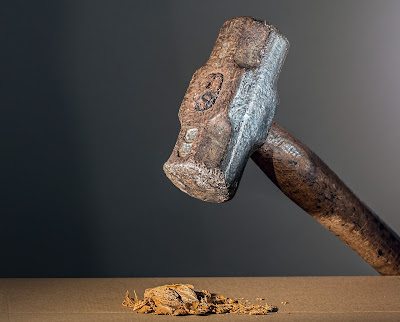
"Casters Versus Martials" is Really Just "Toolboxes Versus Hammers"

Perhaps one of the oldest debates in RPGs is the caster versus martials debate. Wizard or fighter? Sorcerer or barbarian? At the end of the day, though, I feel like entirely too many people who want to have this debate are talking past one another rather than actually discussing the same thing. So I wanted to take this week's Crunch topic to weigh in on what I would like to rename the Toolbox Versus the Hammer.

Because I think this actually gets us a lot closer to what is at the heart of a lot of these (sometimes quite heated) discussions.

And remember, both are quite useful.

Before we get into the nitty gritty this week, don't forget to sign up for my weekly newsletter to get all my updates right in your inbox. Also, if you've got a bit of spare cash that you'd like to use to help keep the wheels turning, consider becoming a Patreon patron!

Lastly, to be sure you're following all of my followables, check out my LinkTree!

Flexibility Versus Reliability


Before we get too deep into things, I have played through a variety of characters on all sides of these arguments, as well as middle ground concepts like paladins, rangers, magi, etc. who combine the martial and the magical. With that said, I do have a noted preference for brutes, bruisers, and bludgeoners. However, when people hold up full caster classes as "god tier" options for character power level, and treat martial characters without magic as sub-optimal choices hardly worth considering, I find that it's usually because of two major differences.

The first is player philosophy. The second is player goals and ideals, which may or may not be in-line with the goals and ideals of the plot and the game. But we'll get into that.

Let's begin at the beginning, shall we?

The most common reason I've seen people argue that spellcasters are inherently better choices for characters in terms of mechanical advantages is that they have more options; more tools they can bring to the game. A wizard, sorcerer, or cleric, properly equipped, can often overcome problems with a wave of their hand, and a whispered word. The guards don't want to let the party in? A simple enchantment spell can make you their best friend for a little while, or leave them staring off into space while you just walk by. The next stage of the journey is atop a sheer cliff? A spell can easily fly one up there, allowing them to keep progressing with minimal interruption. And if a creature proves hostile, well, there's always a lightning bolt to reduce them to ash.

Now, having both watched and played the utility caster who acts as the party's Swiss army knife, I am not hating on this path. It is astonishingly convenient for all concerned to have a wizard who can magic away problems so that you can progress. It is the flexible solution, allowing you to subtly alter the rules of a given situation so that you can more forward.

However, as a counterpoint, magic is not a reliable solution. This is something that I always keep foremost in my mind as a player, and it is something that I feel entirely too many folks forget when they settle down at the table.

There's a six on each of these dice... just need them both to come up!

Magic, as a solution, has inherent weaknesses that can undermine its usefulness as a tool. For example, a lot of spells give their target a saving throw, and often that means the target walks away unscathed if they make it. There are entire creature types that are immune to certain kinds of spells and effects, and there are a lot of creatures with inherent resistances to spells (in Pathfinder, at least, this doesn't apply as much to the 5E players reading this). Not only that, but a given character only has so many spell slots per day, and they need to have the proper number of the proper spells available to cast. Lastly, an aspect that's often forgotten, spellcasters need to have the proper materials and focuses in order to make their magic work; if these materials are lost, stolen, destroyed, etc., they're rendered powerless. Spells have specific durations, as well, and if you use them too soon they'll wear off before they're needed. On the other hand, if you wait till you're in the thick of danger, you may have to choose between which spells are going to be most effective, finding you're hampered by action economy. Then there's the usual issue with anti-magic fields that always seem to crop up when they're most inconvenient.

Now, none of that is to say that magic isn't useful, or that you can't solve problems with it. That was merely to show that it is not a blanket solution that always succeeds... especially since magic is a limited resource. You can only cast so many spells of each level per day before you're tapped out.

The abilities of martial characters, on the other hand, tend to be far more reliable. The fighter's feats don't run out, the barbarian's damage reduction is always there, and while they might not be a strictly martial class, a rogue's sneak attack is always going to be effective in bringing a target down. Any martial character could just as easily solve the issues mentioned above, as well. The guard doesn't want to let the party pass? Perhaps the charismatic fighter manages to bribe them, using Diplomacy to defuse the situation. It's possible the barbarian swings their reputation around, making an Intimidate check to get the guard to step aside. Or the rogue just knifes them, or uses a poison to render the guard unconscious or dead, allowing the party to walk on past.

There's a mundane solution to most issues in a game. Because yes, you can cast knock, but you can also just pick the lock, or bash down the door. You could fly up a sheer cliff, or onto the roof of an enemy stronghold, but you could also just climb up there, possibly with the aid of a rope and a grappling hook. You can make yourself invisible to avoid detection, that's true, but a decent Stealth roll can do wonders for you. And unlike with magic, these mundane solutions usually don't have built-in limitations on how often you can use them to solve a problem, nor is there a save to resist them. You can Intimidate one guard, or 5, or 10 as need be. You can huck that grappling hook as many times as you need to, and you can haul yourself up an entire mountain hand-over-hand if the need arises. You can pick every lock you come across, if you so desire, and never once worry about needing to rest to regain your daily uses.

The drawback for most martial characters is, of course, they are more limited in the resources they can swing around. As a result they tend to be very good at a select few things, but those select few things don't require them to have a spell component pouch, to worry about anti-magic fields, spell resistance, or saving throws. They just have to hit the target, or beat the DC. But the flip side of this is that you may find yourself trying to solve a delicate problem with a blunt instrument, because when you're a hammer that's the tool you brought to the game.

White Room Power Play


The second part of this debate is one I honestly find odd, but it's something I run into time and time again so I thought I'd comment on it. Now, "white rooming" is when you set up an ideal situation where you have all the time, resources, and preparation you need to achieve a specific thing. Basically it's the RPG equivalent of asking what Batman could accomplish if you gave him a challenge, and enough time to build a specific solution to overcome it.

And things can get rather out-of-hand when it comes to what you can do with spellcasters in a lot of games. From an archmage creating their own demiplane, to clerics creating an army of undead minions, to a sorcerer crafting enchanted items powerful enough to shake the foundation of the setting, these are sometimes held to the gold standard of what the possibilities are of a particular character.

Phenomenal cosmic power!

Sure, that's neat if that's the story you want to tell. However, most of the time accomplishing these things will require massive hoards of treasure in costly spell components, months-to-years of in-game time to complete, and for a character to achieve extremely high levels just to gain access to the spells in question... which are all rather extreme limitations in your average campaign.

This is my way of saying sure, you'll be able to do that eventually, but it likely isn't going to affect the campaign we're actually playing in because you don't have the time, resources, and power you'd need to accomplish those goals.

This is where we get into player goals versus game goals. Because if you're in a game you might have the stated goal of, "Stop the lich king from rising," or, "End the war between these two nations." And if a player wants to uncover the eldritch secrets to folding reality in order to make their own private plane of existence where time stands still, that's cool... but how does that solve the problem of the campaign? More to the point, if the campaign is set to end at level 13-14, but the spellcaster needs to be level 17 before they can even begin to accomplish this goal, it's all epilogue that's out of the realm of the here and now. It would be no different than saying the barbarian became king of his own border nation, or the monk achieved inner perfection and rose to the position of a demigod; it wasn't a part of the campaign, so it's just a part of your personal story and narrative.

To be clear, this is not to knock anyone's preferred storytelling flavor or fun. If that's the kind of narrative that gets your wheels turning, and you enjoy telling the story of just how your character eventually achieved that goal (along with the spreadsheet of how you did it once the campaign was over), then more power to you. However, that kind of setup may do nothing for other players, who get far more excited about the idea of burying an ax in a demon lord's skull, or eventually worming their way into the position of Master of Whispers in a shadowy spy network.

It's just important to remember that if you're comparing toolkits that you need to look at the game in question. Because if this plot is going to benefit from the use of a Hammer, then it's important to have at least one big, ugly sledge at the table.

Check Out Some Gaming Stories!


For folks who haven't been keeping up on my recent changes, I've been largely hosting my Table Talk feature on Vocal, rather than here on Improved Initiative. I talked about this a bit ago in You're Not Missing My Updates (They're Over on Vocal). The short version is that Vocal pays a lot more than my blog does, and I'm trying to capitalize on that as much as I can... but it's tough getting eyeballs and fighting the algorithm. So take a moment to check out some of the following pieces!


Any reads and shares are much appreciated. And, of course, the more traction particular articles get, the more likely it is I'll write more like them in the future. So if you see something you like, help me spread the word on it!

Like, Share, and Follow For More!


That's all for this week's Crunch topic! For more of my work, check out my Vocal archive, and stop by the YouTube channel Dungeon Keeper Radio! Or if you'd like to read some of my books, like my alley cat noir novel Marked Territory, my sword and sorcery novel Crier's Knife or my latest short story collection The Rejects, head over to My Amazon Author Page!

To stay on top of all my latest releases, follow me on Facebook, Tumblr, Twitter, and now on Pinterest as well! And if you'd like to help support me and my work, consider Buying Me A Ko-Fi or heading over to The Literary Mercenary's Patreon page to become a regular, monthly patron! Even a little bit of help can go a long way, trust me on that one.

Saturday, October 2, 2021

5 of My Favorite (Lower Level) Battlefield Control Spells in Pathfinder

There are few strategies as satisfying as casting a single spell and watching the GM's eyes go wide, realizing that you have single-handedly altered the conditions of an encounter. If you've never played a spellcaster who focuses on battlefield control spells (magic which alters the conditions of the battlefield so as to restrict or eliminate the enemy's options), then I would highly recommend giving this style a try for all the reasons I mentioned in Don't Underestimate The Power of Battlefield Control Spells (in Pathfinder).

And whether you're a fresh face or an old hand, these are some of my personal favorite spells to whip out time and time again.

You fools you... wait, are those tentacles?!

As always, if you don't want to miss any of my updates then make sure you subscribe to my weekly newsletter! Also, if you want to help me keep the wheels turning, please consider becoming a Patreon patron. It's how I can afford to keep doing what I do, and even a small donation is a big help!

Spell #1: Obscuring Mist


While this one is an old classic, it doesn't get nearly as much love as I think it deserves... at least partially because it really needs particular party abilities/equipment to make the best use of, as I mention in my Batman character conversion guide.

What makes obscuring mist so great? Well, it creates a 20-foot radius cloud of fog centered on you, which makes it impossible to see beyond 5 feet in any direction. While this fog can be dispersed by strong wind, or blasted away by fire, there's no spell resistance and no save, which means it makes a fantastic defense against archers, gaze attacks, and basically anything that requires line of sight. The drawbacks are, of course, that it blocks allies as surely as it does enemies, and that it's centered on you rather than a point you designate. And while it lacks the debilitating effects of more advanced fog and cloud spells like stinking cloud, cloudkill, etc., it's a great defensive spell to keep on hand in a lower-level slot.

To really get the most out of this (and other fog spells), you really need some way to see the enemy while they can't see you. Whether it's with inherent abilities like smog sight (available to half orcs), class features like a blinded oracle's increased senses, or magic items like fogcutter lenses or a goz mask, the ability to shroud the party in a mist so they can fight from cover while the enemy is blinded is a one-two punch that can create absolute mayhem. It won't work on all enemies, obviously, as many of them have tremor sense, blindsight, etc., but it can be an encounter killer against things that rely on their eyes, and don't have gust of wind or fireball prepared.

Spell #2: Entangle


There are few spells that have ruined as many days in my campaigns as entangle. Whether it was a mass of melee brutes getting ready to charge in, a squad of archers who thought they were safe, or a spellcaster hanging back to stay out of harm's way, this spell always ruins their day. Anything that restricts enemy movement while leaving your allies free to position themselves can be a dramatic shift in balance. And while this spell may lose efficacy as you go up in levels (especially against larger, more physical monsters who are tougher to hold), it always remains useful for larger battles against smaller enemies, or handling minions so they can't get in and gum up the works.

In addition to the base spell, which is first level, there's also sickening entanglement, which adds a status effect to those caught in the area, and thorny entanglement which gives the area the ability to fling rather damaging thorns at those who are outside the affected area, in addition to harming those within it. These spells are 2nd and 3rd level respectively, and they can add extra punch as the party fights bigger threats.

Spell #3: Grease


I heard no end of complaining when Pathfinder specifically stated that the grease from this spell is not flammable. However, I think far too many people were caught up in how they couldn't deal damage with this spell, and forgot about the utility of it in other circumstances.

Because for a first level spell, grease is a nasty thing to throw down. It lasts minutes per level, covers a 10-foot square, and anything in it when it shows up has to immediately pass the Reflex save or fall down. Being prone means you're at a negative to attack, and everyone around you gets a bonus to stomp you in melee. Additionally, grease means that anyone trying to move quickly through an area risks taking a tumble, so even fast-moving enemies won't be able to just jet around the battlefield without consequences. Also, it ignores SR, which can make it particularly handy for those pesky golem fights.

The secondary benefit of grease, of course, you can attempt to cast it on items. This means you could use it to try to make the enemy drop their weapon or a wand, but you can also slap it onto allies dealing with grapple-happy foes, since greased armor provides a +10 circumstance bonus on escape artist and CMB attempts to escape a grapple, and boosts one's CMD by 10 to avoid being grappled again. A solid, low-level utility spell that is best cast by you, but which can be put into a wand if your main use is going to be boosting your allies' defenses instead of hampering your foes. There's also a greater grease option, which allows you to coat more objects, or to cover more squares, which can add make a good spell even better!

Spell #4: Web


A spell that has vexed several GMs who've had me at their tables, web is a nasty piece of work if you have the right terrain. Whether you're holding a bridge against an advancing force of undead, or there's creatures coming down a hallway in a dungeon, or even a decent-sized chasm you need to cross, web can be a particularly useful spell... both for detaining enemies, but also for setting them on fire if you want to let them out.

While other useful iterations include web bolt for individual targets, or web cloud for a much larger area of effect, web also has the benefit that it creates difficult terrain, and lasts for a very long time. While it won't be useful against giant spiders, incorporeal creatures, fire-based creatures, and a host of other challenges, there's still plenty of reason to keep this spell up your sleeve if you want to catch your share of flies as the game goes on.

Spell #5: Create Pit


There are few things as satisfying as just dropping your enemies down a hole and leaving them there, and doubly satisfying if the barbarian has bull rush, or you have a spell like hydraulic push to shove even more foes in. That's why if you need to create a hazard in a hurry there are few funnier ways to do it than create pit. While it likely won't kill most things that fall into it (since it only goes down to 30 feet), it can quickly handle all sorts of things you don't want to deal with in the heat of the moment. It can also block off escape routes, or at the very least make them significantly more dangerous to take. Even better there are other varieties of this spell like roaming pit, which moves around sucking down enemies, acid pit, and hungry pit.

As with all the other spells, this one has its weaknesses as well. Creatures who can fly, who are too large, or who have high enough Reflex saves not to worry about falling in, tend to have no issue with pit spells. However, creatures that need to stand on their own two feet, who aren't too big to fit, and who aren't the most dexterous are going to find this a significant challenge to overcome. And while these spells don't last as long as most others on this list, they can be quite useful to keep on-deck for when you need to mess with a ground-based foe.

One Last Thing Before You Go...


For folks who may not have come across it yet, I've been doing something a little different with my Table Talk feature. The last 2 installments have been featured over on Vocal instead of here on Improved Initiative. And while That One Time My Bard Made The Dungeon Master's Girlfriend Jealous did pretty well in terms of views and shares, I wanted to draw folks' attention to the latest installment... The Silver Raven Chronicles Part One: Devil's Night.

What makes the Silver Raven Chronicles different from my previous Table Talk features is that instead of giving a session-by-session breakdown of how the campaign went, I'm writing a series of short stories that encapsulate the high notes of the game as it unfolds. My hope is to convey the narrative, while minimizing the time we spent on combat grind, dead-end chases, and digressions that happen in every campaign in order to present a tight, tasty, and engaging view of how the Thrice-Damned House of Thrune is going to get itself a black eye at the hands of our party.

So if you're a fan of my fiction, you just want to support my work, or you're a fan of punching fantasy fascists, then you're definitely going to want to give this a look!

Like, Share, and Follow For More!


That's all for this week's Crunch topic! For more of my work, check out my Vocal archive, and stop by the YouTube channel Dungeon Keeper Radio! Or if you'd like to read some of my books, like my alley cat noir novel Marked Territory, my sword and sorcery novel Crier's Knife or my latest short story collection The Rejects, head over to My Amazon Author Page!

To stay on top of all my latest releases, follow me on Facebook, Tumblr, Twitter, and now on Pinterest as well! And if you'd like to help support me and my work, consider Buying Me A Ko-Fi or heading over to The Literary Mercenary's Patreon page to become a regular, monthly patron! Even a little bit of help can go a long way, trust me on that one.

Saturday, August 28, 2021

Examining The Fantasy Atheist

For a moment, the light dimmed. It was as if a cloud had passed over the sun, leaving the companions in shadow. Then there was an impact in the air, as if the world itself had gasped, and a being stood before them. It glowed with a preternatural light, and it gazed upon them with eyes of fire. It possessed a dozen arms, each bearing items of a strange, alien origin. It turned to the one who had summoned it, nodding its head in acknowledgement. Before it could speak, though, Korrun rolled his eyes.

"Really?" he said. "Don't you think this is taking your make believe a little far?"

The Herald reached out its empty hand, and touched the cleric on the shoulder. "You bear a great burden traveling with this one."

"I do," Invaris replied. "This I know well."

Could I trade him to you? Please? Any bid, I'm listening.

Before we get into the week of this month's character concept, sign up for my weekly newsletter to ensure you don't miss anything! And if you want to give me the fuel I need to keep content like this coming your way consider becoming a Patreon patron! It really helps.

There Are No Gods!


Chances are good that if you've been playing fantasy RPGs for a while that you've come across the atheist character at some point. Though, for added clarity, The Fantasy Atheist is the name of a trope, and is not meant to be a deeper examination of this form of philosophy... especially since that's not how these characters tend to be played when someone decides to use this archetype. These characters are, in most cases, merely a more specialized version of the Fantasy Flat Earther, which I talked about in Examining The "Doubting Thomas" Character Archetype in Fantasy RPGs a while back. Because just like the sorcerer who claims magic isn't real, the Fantasy Atheist will watch a cleric perform a miracle, or even summon a celestial being from the outer planes, and stubbornly fold their arms, refusing to acknowledge the divine exists at all.

This is not a clever or unique character concept. It's a joke character, and it's a joke that was never funny to begin with.

You Can Make It Work (With The Right Circumstances)


With all of that said, there are certain ways you can play this style of character, and certain circumstances that can make them workable. I would still recommend against it due to the baggage the concept has, but you can do it if you're determined enough.

I provided some circumstances in my Sundara setting.

The first way to make this concept work is to play in a setting where the divine is largely mysterious, unknown, and unknowable. Mortals still have their myths and their legends, and you'll still find clerics, oracles, druids, and others wielding the power of the divine, but the gods aren't fully known or understood. Settings where there's an unknown quantity of gods, or where it's impossible to know if the gods of a certain faith are who their followers believe they are, work as well. In short, you need some kind of doubt that what people believe (even people who have been empowered by the gods) is the truth of what's happening beyond the material world.

This is very much the sort of setup you find in my recent release Gods of Sundara, available both in a Pathfinder version and a DND 5E version. Because in Sundara the gods are truly cosmic, which means that mortals can only ever see and comprehend a small portion of these beings. They are alien in many respects, taking different forms and appearing in different ways to different people. So Grimwald with his black sword worshiped by the hill clans of the far north, and the colossal dragon De'nagi paid homage by the lizard folk tribes of the southern swamps are, in fact, both manifestations of the same god; Charne, god of war. The fluid nature of the divine, where people really do have to take it on faith that the things they believe are even remotely true (and not some shell game played by the beings of the spirit realm) means there actually is plenty of room for doubt and argument as to whether a particular god or a particular faith is what someone thinks it is. And that leaves room for discussions on faith, the trustworthiness of religion, and how much knowledge is lost or misunderstood in translation from the realm of the gods to the mortals.

On that note, wanted to mention my 5 Tips For Playing Better Clerics for those who haven't checked it out yet!

Alternatively, You Need To Change Your Character


Not every fantasy setting has that element of mystery to it regarding the divine. In a lot of settings the gods are set in stone, and the faith taught to people on the mortal plane is true. The myths and legends are real, and these divinities will walk the world and perform great deeds... and when they aren't personally appearing, their servants often will in the form of angels, devils, and other divine/infernal beings.

If you're playing in a setting where there's no need to take things on faith because they've been confirmed multiple times, and there are records that this is how the cosmos is structured, then you don't have the wiggle room of a setting where things are more vague. It's hard to argue that the gods don't exist when their servants can wield divine fire to slay demons, and when avatars manifest to aid in your fight against the army of undeath around level 12.

All right, all right, I get it. They're real, okay!

In a setting that doesn't really require belief (since these creatures and powers are just facts of life), you have a few options to really make the atheist character work. The first is using it as a character arc as they learn more about the universe itself. We saw a version of this in Marvel comics when for years Tony Stark refused to believe that Thor was who he said he was. Until finally, out of patience, Thor grabbed Tony and transported them both to Asgard. So Tony saw with his own two eyes that the rainbow bridge, the city of the gods, and more were real. And he learned that the Thor from the old Norse myths and the being he fought alongside were truly one and the same.

As a character arc, this works pretty well. It's usually meant as a way to take an arrogant aspect of a character, and to humble them by showing there are things they don't know, and entities beyond them in the universe. It's similar, in a way, to how we see Han Solo go from, "The force is just a fairy tale," to simply acknowledging it as a fact of the universe.

However, there's the seed of a second way to play this in the Thor and Iron Man example. Because as folks who read Marvel know, Asgardians are not gods as we typically think of them. They are an alien species whose technology is so advanced that it is in many ways indistinguishable from magic. So while it is not inaccurate to call them gods, it is also accurate to say they are highly advanced beings whose understanding of the universe is inexplicable to humanity. It doesn't change the nature of what they are, but the altered definition can make someone seem far more reasonable. Because they aren't denying that these beings exist, nor are they denying the power they wield. Instead, they are simply saying that calling them "gods" is inaccurate, and that more nuanced language is required to understand them more precisely.

The third option was one popularized by Rahadoum in the Golarion setting for Pathfinder. The so-called Kingdom of Man does not allow divine worship or magic within its borders. Not because the gods aren't real, but because the nation acknowledges that they are real, and they want no part of the gods or their followers within their borders. So in this case the "atheist" character isn't denying that gods exist, and that there's some other explanation for extraplanar manifestations and the power of divine characters; they're just saying they want no part of the divine and the mess it represents.

Of the three of these options, the third is probably the easiest to make work in a high fantasy game. From refusing boosts from the cleric, to using health potions and alchemical tablets for restoring your own hit points, to refusing to participate in any form of religious ceremony (or merely making sure others understand you're just being polite), it can cause some friction and challenge, but it isn't usually enough to make the rest of the table want to grab you by the shoulders and shake you for obstinately proclaiming the sky to be chartreuse when we can all plainly see that it's blue.

Like, Follow, and Stay Tuned For More!


That's all for this installment of Unusual Character Concepts. Hopefully this one gave you something to chew over, whether you're a player, or a game master.

For more of my work, check out my Vocal archive, and stop by the YouTube channel Dungeon Keeper Radio. Or if you'd prefer to read some of my books, like my alley cat noir novel Marked Territory, its sequel Painted Cats, my sword and sorcery novel Crier's Knife or my most recent collection of short stories The Rejects, then head over to My Amazon Author Page!

To stay on top of all my latest releases, follow me on Facebook, Tumblr, Twitter, and now Pinterest as well! To support my work, consider Buying Me a Ko-Fi, or heading to The Literary Mercenary's Patreon page to become a regular, monthly patron. That one helps ensure you get more Improved Initiative, and it means you'll get my regular, monthly giveaways as a bonus!

Saturday, August 14, 2021

Don't Underestimate The Power of Battlefield Control Spells (in Pathfinder)

As I said back in Vulgar Displays of Power: Tips For Getting The Most Out of Your Magic in Pathfinder, sometimes the best spells to defeat an encounter won't do a single hit point of damage. Whether it's spells like haste, which allow the fighter and barbarian to crank out additional attacks and obscene amounts of damage, ray of enfeeblement which can leave a powerful foe sluggish and weak when they would otherwise have been a dire threat, or summon monster when you need temporary allies to help stem the tide of foes rushing toward the party, strategic use of magic is often what carries the day.

There is a particular kind of spell that doesn't get enough love in my view, though. Spells which can seem cumbersome and difficult to manage, but in the hands of a tactical player they can make all the difference. These spells are commonly referred to as battlefield control magics.

You should have surrendered. It would have been easier on all of us.

As always, before we really get into it, don't forget to sign up for my weekly newsletter, and if you've got a little extra dosh you'd like to donate to help me keep the wheels turning, please consider becoming a Patreon patron! It really makes a big difference.

What is Battlefield Control?


Since terminology can get confusing, a battlefield control spell is, generally speaking, any spell you cast that alters the battlefield. These spells typically alter terrain, create new hazards, or throw up boundaries that can be used to protect allies, reduce an enemy's mobility, and to generally shift the balance of how an encounter is going.

Examples generally work best, though, so here's a simple scenario to keep in mind.

The party is engaged in a battle in an opera house. Cultists with swords are fighting the party down on the stage, but they have allies up in one of the box seats who are firing crossbows down at the party. The swordsmen are a threat, but it's really the bolts that are causing the most harm. So the wizard, thinking quickly, casts wind wall. The wind wall blocks the crossbowmen's line of fire completely, rendering them a non-issue until they move to a new position, which could take several rounds. In that time the rest of the party can focus on the swordsmen, eliminate them as a threat, and then focus on a new enemy.

Just let me adjust this challenge a bit...

Whether you cast darkness so that your party has at least partial concealment from enemies that can't see in the dark, or create pit in a narrow hallway so that enemies don't have the ability to retreat without leaping over a chasm, battlefield control spells allow you to adjust the encounter so as to give your allies advantages and protection by altering the environment around them.

And it's not easy to do... but once you have the proper mindset, you can often tilt a battle with a snap of your fingers and a single, spoken word.

Tips For Getting The Most Out of Your Battlefield Control


The core concept of battlefield control spells (creating obstacles for your foes and benefits for your allies) is pretty simple. However, the same could be said when it comes to describing the basic mechanics of chess, and that doesn't mean it's an easy game to win. Which is why I'd recommend keeping the following in mind when it comes to choosing the best battlefield control spells for your party and your particular campaign.

- First, know your party members. Certain battlefield control spells are going to impact your party just as negatively as your enemies, so you need to be aware of what everyone's capabilities are. If the whole party has darkvision, for example, then darkness can be a great card to have up your sleeve for making sure the enemies are taking miss chances when they attack you. If only one or two party members can see in the dark, though, then everyone else is going to have problems. Obscuring mist is another good example, because unless the rest of the party can see what's happening (an oracle with blindsight, a rogue with fogcutter lenses, a cleric in a goz mask, etc.) then the cloud hampers you and your allies as surely as it does the enemies. This doesn't make it useless, but it does narrow its use significantly.

- Secondly, know the enemies you face. As with the darkness example, if your enemies all have darkvision then the spell doesn't actually help anyone. If you're fighting a dragon and you use obscuring mist to hide from it, its dragon senses will still allow it to pinpoint any nearby party members. Wind wall won't block spells or hurled boulders. Just as you need to know what won't hamper your party, you need to have some idea of your enemies' capabilities so that you can create effects that are actually obstacles to them. Otherwise you'll just be blowing through spells that aren't having an effect.

- Thirdly, consider the actions being taken, and the flow of combat. Throwing up a wall spell to block off a doorway is a great trick to have if a foe tries to escape, but you don't want to brick up the route prematurely in case your party members want to use it, or allies are trapped back there and can't join the fray. Additionally, throwing down pits might hamper ground-based foes who depend on melee, but if they can fly, or fire from further away, those same pits can be a problem for your allies. Don't just look at something in terms of whether it's a good move in this exact moment; ask how it will affect an encounter going forward.

- Fourth, and final for this list, remember that battlefield control spells are often there to waste an enemy's time, energy, and effort. If you throw up a wall, and half a dozen enemies have to spend their turns going over or around it in order to reach the party/to get new lines of effect so they can resume the attack, it can feel like you wasted your action. However, what you actually did was use your one turn to force multiple enemies to reposition themselves, buying your allies time. Because even if some enemies don't slip in your grease spell, or fall into your pit, the fact that the hazard is there means it's complicating the enemy's actions... and that's your job. Being the spanner in the enemy's battle plans.

Further Reading For Spellcasters


If you're a player who's looking to branch out with your spellcasters in Pathfinder, then consider some of the following reading to hit on the RP side of things, as well as the mechanics side!

- 10 Backgrounds For Your Spellcasters: Part of a short series I worked on, this list in particular is there to remind folks that just because you're a wizard, a sorcerer, a cleric, etc., that doesn't need to be all of what your character is. Flesh them out, and provide some context in order to make your character more memorable!

- 5 Tips For Playing Better Wizards: My 5 Tips series has been going on for a while, and I've tried to offer unique tips for as many classes as I can. If wizards aren't your thing, though, I've also covered sorcerers, clerics, bards, druids, alchemists, inquisitors, oracles, witches, summoners, and more!

Like, Share, and Follow For More!


That's all for this week's Crunch topic! For more of my work, check out my Vocal archive, and stop by the YouTube channel Dungeon Keeper Radio! Or if you'd like to read some of my books, like my alley cat noir novel Marked Territory, my sword and sorcery novel Crier's Knife or my latest short story collection The Rejects, head over to My Amazon Author Page!

To stay on top of all my latest releases, follow me on Facebook, Tumblr, Twitter, and now on Pinterest as well! And if you'd like to help support me and my work, consider Buying Me A Ko-Fi or heading over to The Literary Mercenary's Patreon page to become a regular, monthly patron! Even a little bit of help can go a long way, trust me on that one.

Saturday, June 19, 2021

The Damaging Interrupt: An Anti-Spellcaster Strategy For Pathfinder

There are few enemies as dangerous as those with magic at their command. From powerful necromancers capable of sapping away one's strength with a gesture, to evokers who act as conduits to energies more damaging than a legion of siege engines, often one good spell can send the party scrambling... or result in a TPK.

So nobody made the save? Oh... that's not good...

In a majority of games the party is going to face enemy spellcasters of one stripe or another. As such, it's important to know how you're going to come out the other side of an encounter without having been turned into a squirrel, or reduced to a smear of grease on the flagstones. And if you're playing Pathfinder, there is a little trick that can save your bacon, and cost your enemies dearly if you use it correctly.

We shall refer to it as the Damaging Interrupt.

Also, this is your weekly reminder to sign up for my weekly newsletter if you don't want to miss any of my latest releases, like Children of The Night: 100 Animal Ghouls that just came out for Vampire (Masquerade or Requiem, whichever is your personal preference), or Hoardreach: The City of Wyrms which marks the 4th in the Cities of Sundara series for my Pathfinder-compatible fantasy RPG setting!

Concentration Checks, Readied Actions, And Lost Spells


As anyone who's played a spellcaster in Pathfinder knows, weaving magic isn't easy to do. If there's adverse conditions like inclement weather, you're riding on a galloping mount, you're currently entangled, or gods forbid you take damage while trying to cast, then that is going to force you to make a Concentration check in order not to lose the spell.

The last entry on that list is the most interesting for our purposes.

Because for most of the other situations listed (casting in a storm, casting while entangled, casting while riding a mount, etc.) the Concentration check isn't terribly high. Any second-rate sorcerer is going to be able to make those checks by mid-levels even without feats or class features boosting their Concentration checks. However, spellcasters who take damage while trying to sling magic operate on a sliding scale, and the more damage they take, the higher that check is going to be.

What's the matter? Can't focus?

The way it works is pretty simple. If someone starts casting a spell, and they get hit before they complete it (either because of a readied action going off, provoking an attack of opportunity, etc.), then they have to make a Concentration check with a DC equal to 10 + the spell level + the damage they took. Otherwise the spell fizzles without effect.

Since damage tends to scale with most character builds, take a moment and ask how many spells you could ruin with that. If a paladin hits an evil necromancer with an arrow from their longbow while they're the target of Smite, that could easily do a dozen points of damage or more. A ranger or a slayer with their crossbow could do the same, or more, to a favored/studied enemy, especially if they have a Vital Strike shot prepared. And then you get rogues throwing around wands for an easy touch attack, and adding in their sneak attack damage if they attack from the shadows, or are otherwise unseen by the spellcaster in question.

Perhaps one of the most insidious versions of this trick that I saw was an evoker who readies magic missile to use against an enemy spellcaster. So you get an automatic hit that can deal a middling amount of damage, but that "middling" amount of damage can easily lead to a Concentration check with a DC in the mid-30s to low 40s depending on how well you roll, and how nastily the spell is augmented.

Trade-Offs and Pitfalls


While this strategy is likely to catch a lot of GMs and players off-guard, it's not a guaranteed success. For example, spellcasters may be layered in protections like miss chances, or effects like mirror image that can take the hit for them allowing them to cast unmolested. They might have energy resistance to effects like scorching ray, or have a shield effect cast that absorbs magic missile without harm. This can be an issue if you ready your entire turn to counter the spellcaster, but then your shot gets stopped by their defenses, or just ill luck.

The other pitfall you can run into is a strategic one. Since most spellcasters are savvy enough not to provoke attacks of opportunity with their spells (usually by casting defensively), you are going to have to ready an action to hit them when they cast. If you have a low Initiative modifier, though, then you might always feel like you're playing catch up. Not only that, but the higher up in level you get, the more stuff you can (generally) do on your turn. But if you're going to try to interrupt an enemy caster's concentration, you're basically playing your action face-down as a trap card. You're not helping your allies right then, but acting as a counter to what the enemy might do. Of course, there's no guarantee they're going to cast a spell on their turn, and if they haven't then you may end up wasting your action.

Though this strategy can be extremely useful (especially at higher levels where more and more enemies tend to use magic to increase their threat level), understand that it is merely one option of many. It won't be the action you need to take on every turn, but it's a good thing to keep in your back pocket for when you need it!

Speaking of Countering Spellcasters...


For those who aren't sure when this strategy is going to really come up in their campaigns, I'd recommend checking out the latest release for my own setting... Archbliss: The City of The Sorcerers!

If you've been looking for sinister wonder, look no further!

A city in the sky, Archbliss has been the home of Sundara's most powerful sorcerer dynasties for centuries. A place where the impossible is practically commonplace, the acolytes of the great houses are capable of wielding powers and spells rarely seen by even accomplished wizards. Of course, as the enforcers of the Black Tower would tell you, there is no spell that can save you from a well-placed blow that scatters your wits, and ruins your focus.

Archbliss is available both in a Pathfinder version, as well as in a Dungeons and Dragons 5th Edition version.

Like, Share, and Follow For More!


That's all for this week's Crunch topic! For more of my work, check out my Vocal archive, and stop by the YouTube channel Dungeon Keeper Radio! Or if you'd like to read some of my books, like my alley cat noir novel Marked Territory, my sword and sorcery novel Crier's Knife or my latest short story collection The Rejects, head over to My Amazon Author Page!

To stay on top of all my latest releases, follow me on Facebook, Tumblr, Twitter, and now on Pinterest as well! And if you'd like to help support me and my work, consider Buying Me A Ko-Fi or heading over to The Literary Mercenary's Patreon page to become a regular, monthly patron! Even a little bit of help can go a long way, trust me on that one.

Saturday, February 27, 2021

5 Challenges Blaster Casters Need To Prep For (in Pathfinder)

I said it myself back in Vulgar Displays of Power: Tips For Getting The Most Out of Your Magic in Pathfinder, but blaster casters often find themselves getting less bang for their buck when it comes to an effective use of magic. With that said, there are few things more satisfying than pointing your hand, barking a word of power, and watching as the troll's head explodes, or a rain of fire destroys an enemy squad.

If you want to be an effective artillery piece, though, there's a slew of things you need to keep in mind when it comes to what your enemy can do, and the challenges you're going to face with regards to your effectiveness on the field. Because it's tough enough channeling the destructive powers of the ether... there's no need to do it with a set of ankle weights on, too.

Challenge #1: Energy Resistance


Is that fire damage? Oh... that's too bad...

There is nothing that is a bigger pain in the rear than charging up your big gun, only to find that the enemy is going to knock between 5 and 10 points off your damage. Or, worse, that your enemy is immune to that magic because of the element you've chosen to use. This is the most obvious pitfall out there, and a lot of players are rolling their eyes reading this, but I've seen this scuttle blasters' effectiveness more than once with players who go all-in on a given element, and then find by mid-level that they're essentially casting with one hand tied behind their back.

As such, it's a good idea to make sure that you have a wide variety of tricks up your sleeve. Like I said in 5 Challenges You Have To Deal With in Every Pathfinder Adventure Path, that means you need to have several elements you can call on. Fire is the most common resistance to find, in my experience, but cold is right behind it, and electricity and acid comes along behind that. Sonic is rare to have resistance against, as is negative energy, but there are some creatures that possess it.

Whether you choose to keep a wide variety of spells on-hand, or you have a trick that lets you convert and change the energy descriptor of a spell like the Elemental bloodline does for sorcerers, this is going to be a primary issue you'll have to deal with from relatively low levels.

Challenge #2: Evasion and High Saves


Did you just throw a fireball at me, you pleb?

Area of effect spells have the same satisfaction you get from dropping a sledgehammer on a problem. And when they work, hoo boy do they work... but when they whiff it can take all the wind out of your sails.

Which is why it's important to use these spells in situations they're geared toward so you get the biggest possible impact.

Area of effect spells (fireball, lightning bolt, and other classics) work best when you are dealing with hordes of creatures rather than single targets (and are supremely effective against swarms), and when those enemies are in a formation that gives you the biggest bang for your buck. Because if you roll 10d6, and hit about 30 damage on a given creature, that's not a lot of harm done... unless you did it to a mob of 10 monsters, in which case you spread quite a bit of damage around! The problem with area of effect spells is, of course, that a monster takes half damage on a successful save. And if they have evasion (or worse, improved evasion) then you're just throwing around fireworks for all the good you're doing.

The key is, again, variety. While you should try to jack your save DC as high as you can get it (I covered a lot of options in How To Increase Spell DCs in Pathfinder forever and a day ago), you should also have plenty of single-target spells that don't allow for a saving throw at all. Because that trio of rogues might be able to laugh off your fireball, but a scorching ray at your full power, or a bevy of magic missiles, is going to put them in the ground before they can get a chance to pull out any fancy tricks.

Also, don't keep hammering away at creatures with high saving throws that keep besting certain spells. Change tactics, and attack a different defense (their touch armor class, their Fortitude save, etc.). You need to attack their weak spots, not slam your fist into their strong defense and hope you get through.

Challenge #3: Spell Resistance


Fool! You have no power here.

Spell resistance is the absolute bane of blaster casters. While it isn't usually an immediate issue when a campaign starts, it's going to start cropping up as soon as your campaign deals with outsiders, dragons, and other powerful monster types... so you need to be prepared for it.

The first thing you need to do is boost your caster level as much as possible, and to take feats like Spell Penetration to be sure that spell resistance isn't an issue when you decide to cut loose. There are also rods that give you bonuses to overcoming spell resistance, and keeping one of those on your belt is always a good idea.

With that said, it is equally important to make sure you have at least a few spells up your sleeve that don't allow for spell resistance. They are few and far between, but they do exist. A lot of them aren't blasting spells (glitterdust is a perfect example), but you need to keep your options open for when the other bullets in your gun aren't going to get the results you want.

Challenge #4: Sight Lines and Effective Firing


Got you, you little bastard!

One of the simplest ways to take away a blaster's ability to affect you is to vanish. Whether it's into a cloud of smoke, by turning invisible, or ducking behind total cover, not having a line of sight/line of effect to a target can stymie you in some of the most frustrating ways. And it's going to happen sooner or later, so you need to be prepared for it.

If you have darkvision then you're already one step ahead of the curve. However, it's a good idea to invest in an ability to see invisible creatures, and if you really want to throw a monkey wrench into their gears use spells like the previously-mentioned glitterdust to mark them out for the rest of the party. Invisibility purge is another great trick to keep up your sleeve, though a simple smogstick is also a useful, alchemical solution to the problem. You should also keep gust of wind on hand, or consider investing in fogcutter lenses, or a goz mask, as both will allow you to see through fog, smoke, etc. Of course, these would also allow you to pop smoke yourself with an obscuring mist spell, and to fire with impunity at enemies who can't see you.

Just some food for thought, there.

Challenge #5: Actually Dealing Damage


These numbers just aren't adding up...

One of the unfortunate truths about blaster casters is that they just don't pack the wallop you want them to... and this only gets truer as you go up in level. As such, you need to tweak your load out to make sure that you are getting every point of damage you can out of your spells.

For example, a higher effective caster level (such as how the Sanguine bloodline increases your caster level for any necromancy school spell by 1) can be a boon. Blasting spells tend to do a certain amount of damage based on your caster level, and while they have caps, slinging around the most damage dice you can as fast as you can is a pretty big help. It also doesn't hurt if you can apply metamagic feats to your spells, allowing them to surpass the normal amount of damage they'd do, maximizing the damage without rolling the dice, etc., etc. Furious Spell, in particular, can be helpful for those who intend to cast while under the effects of some kind of rage. And, of course, make sure you target a creature's weaknesses in order to get bonus damage out of your spells (a creature with a weakness to fire, for instance, takes 1.5 times the damage from fire spells).

However, it never hurts to add every point you can.

As an example, the evoker gets to add half their wizard level in bonus damage on spells that deal hit point damage. The trait Volatile Conduit allows you to boost a fire, cold, acid, or electricity spell by 1d4 damage as a free action once per day. There aren't as many of these abilities, as most combat feats specifically mention they cannot be used with touch attacks (or they must be used with a physical weapon), but even stacking on an addition d4 here or +2 there adds up over time.

Like, Share, and Follow For More!


That's all for this week's Crunch topic! For more of my work, check out my Vocal archive, and stop by the YouTube channel Dungeon Keeper Radio! Or if you'd like to read some of my books, like my alley cat noir novel Marked Territory, my sword and sorcery novel Crier's Knife or my latest short story collection The Rejects, head over to My Amazon Author Page!

To stay on top of all my latest releases, follow me on Facebook, Tumblr, Twitter, and now on Pinterest as well! And if you'd like to help support me and my work, consider Buying Me A Ko-Fi or heading over to The Literary Mercenary's Patreon page to become a regular, monthly patron! Even a little bit of help can go a long way, trust me on that one.