All input is welcome, as it's the voices of my audience I use to try to guide my decisions going forward. With that said, onto this week's topic!
 |
| After all, not all traps are this obvious! |
As always, don't forget to sign up for my weekly newsletter to get all my updates right in your inbox. Also, if you've got a bit of spare cash that you'd like to use to help keep the wheels turning, consider becoming a Patreon patron! Also, be sure you're following all of my followables, check out my LinkTree.
Lastly, for hundreds of extra articles on gaming, weird history, and for more free fiction, check out my Vocal archive, too!
Combat And Traps: A Match Made In Hell
As I mentioned in the previous installment, a lot of us tend to think of our dungeons in segmented parts and pieces, which we don't allow to interact with one another. If there's a room with an encounter in it, then no matter how long or loud the combat gets, other denizens of the dungeon won't come to see what's happening, even though that's the logical thing to do... it's as if the doors are all soundproof, and none of the other monsters want to overstep the limits of the arena they're placed in. To help break us out of that mindset, my suggestion was to eliminate doors, or to at least leave them open so it's clear they aren't a barrier between what happens in this part of the map, and what happens further away.
However, just as we often section off our rooms and arenas, keeping them separate and apart from one another, we often refuse to let two other parts of our dinner touch; namely traps and combat encounters.
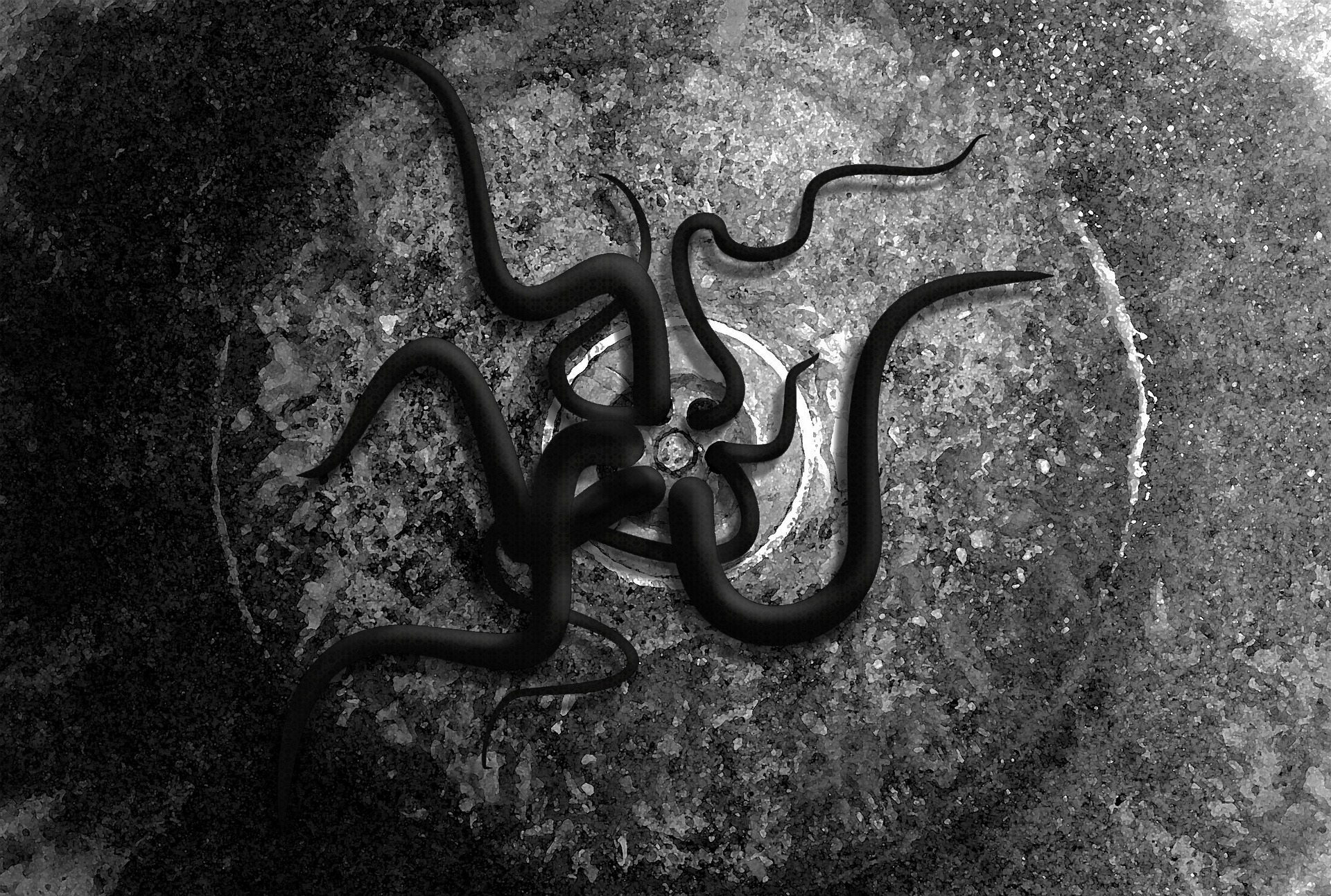 |
| Guys, got a monster! Stop checking for traps and help me! |
Consider this. A majority of the time we put traps in long hallways, cramped corridors, and otherwise empty rooms because (whether we're thinking about it or not) we consider the trap to be the encounter in that area. While some doors might have traps on them (thus allowing the trap to act as the opening salvo of an encounter), that is a one-two punch rather than a genuine combination of a trap and encounter. Like having a burger and fries in the same take out container, but they're still not touching each other.
No, this week's advice is to purposefully and deliberately combine traps with combat encounters as a way to create a more dynamic arena, and to increase the difficulty/challenge rating for your players.
There are a few different ways I would suggest thinking about this. Some of those methods, with examples, include:
- Added Threat: Consider a room with hidden crossbows or arrow traps, but which all fire at a height that will hit a Medium creature and not a Small one, and which go off when triggered by a higher weight than a Small creature possesses. This ensures the goblins in the room can run amok, goading the party to close the distance via certain routes, thus setting off additional, hidden attacks. Bonus points if the bolts/arrows are drugged or poisoned, thus creating an additional danger.
- Ticking Clock: We've all been in a room with a flooding trap before, putting a ticking clock on how long players have before they're drowned... but what if there are hungry crocodiles released into the rising waters? Or skeletal warriors who aren't bothered by things like a need to breathe? The water doesn't hurt the characters in and of itself, but it does add one hell of a challenge.
- Battlefield Control: The party steps into a room with a handful of orc archers firing their longbows. Clearly the solution is for the barbarian to charge them so they can no longer take pot shots at the party. But that's when the roaring brute finds, to their chagrin, that parts of the floor are loose, leading to drops into spiked pits. The enemy knows where the camouflaged pits are, and while the party now has to move carefully, the enemy can fire at will, or engage however they wish to.
These are just a few ways that traps can add additional threats to a situation, and create an additional threat for your party to deal with!
 |
| With that said, consider some of the following caveats... |
Before going ham and adding traps to every encounter, take a deep breath, and let it out slowly. Because when choosing the proper traps to mix into your combat, it's important to consider the following questions:
- Is This An Equal Opportunity Trap? Most traps will likely be avoided by the monsters in the room, but there are some traps which will only be an issue for the party, even if they go off. A poison gas trap, for example, won't affect the zombies in a room, even if it creates a deadly poison cloud that can be a serious danger for the party.
- Is This A Crippling Trap? Most traps are dangerous in-the-moment, but if someone survives the trap, will it create a condition that character now has to deal with for the rest of the dungeon? Something that deals hit points, or which creates a short-term negative is very different than something that gives the victim a permanent negative, or which takes away one of their options to participate in the game going forward. Just like how a monster sundering a fighter's sword is a serious issue that shouldn't be considered lightly, so too is a trap that leaves an effect on a character after the room it's encountered in (other than hit point loss, as that's often reparable).
- Does This Trap Make Sense In This Location? If the party is invading the secret underground lair of a mad alchemist, then it makes total sense for rooms to be rigged with poison gas, explosive traps, and other challenges... but would those same devices be found in the lair of a dragon? Or a defunct crypt that no living person has entered in a century? Just because a trap might make good tactical sense, that doesn't mean it makes sense with the world's internal consistency.
- Is This Avoidable? There shouldn't be a guarantee that a trap goes off. There should be a chance that players avoid it, whether it's moving in a certain way to avoid triggering it, making a Perception check to notice the trap, or having some ability to negate or stop it from going off. Traps that you basically have to set off, or disable while you're under attack, can quickly suck the fun out of an encounter, and they're something you should avoid doing often (or at all, depending on the opinion of your table).
One last thing I would add as a piece of advice here is to choose your traps carefully. Just like how players will get tired of fighting the exact same monster over and over again, or how they'll come up with strategies to deal with specific tactics, a particular trap layout is only going to work so many times before it goes from a new and dangerous threat to an annoyance or frustration.
More importantly, though, is that the real advantage of traps is the uncertainty they create. For example, if your party snuck into a forbidden crypt, and they had to do battle with undead squires to enter the tomb proper, then the lack of a trap might make them confident. But then they have to cross a bridge that is trapped while undead archers fire arrows at them, that might leave their confidence shaken. When they enter the depths of the tomb, and find a skeletal champion and its retainers waiting for them, is the party going to assume this is another straight-up fight? Or will they be moving with caution, wondering where the booby traps are?
A trap only has to happen every now and again for the party to become wary of them. However, traps can grant a serious home field advantage, often allowing a small number of adversaries (or even just one) to take on an entire party of well-armed, well-prepared player characters!
Speaking of Traps...
Part of the reason I was thinking on this topic was that I've been re-reading my recent supplement Ungentlemanly Warfare: A Baker's Dozen of Booby Traps that I put out a little while back for my RPG Army Men: A Game of Tactical Plastic. I'm slowly gearing up to write a few more missions set in this world to follow up the first release A Night At Breckon's Beacon, and at least one of these missions is going to have a lot of traps as part of the challenge a squad is going to have to face.
 |
| Seriously, grab a copy if you haven't yet! |
If you're looking for a game that definitely encourages the use of traps as part of the challenge (for both allies and enemies), then grab yourself a copy of Army Men for the holidays! And if you just want some improvised mayhem in your game, well, Army Men is based off of a 5E engine, so if your game also runs on something 5th Edition, or a 5th Edition port, these booby traps should be equally useful for you as well! And while some are meant for dealing with infantry, there are several that are meant for taking out vehicles, as well as their entire crew... so tread carefully!
Like, Follow, and Stay in Touch!
That's all for this week's Crunch post! To stay on top of all my content and releases, make sure you subscribe to my newsletter at the bottom of the page!
Again, for more of my work, check out my Vocal archive, and stop by the Azukail Games YouTube channel, or my Rumble channel The Literary Mercenary! Or if you'd prefer to read some of my books, like my dystopian sci-fi thriller Old Soldiers, my hardboiled gangland noir series starring a bruiser of a Maine Coon with Marked Territory and Painted Cats, my sword and sorcery novel Crier's Knife or my latest short story collection The Rejects, then head over to My Amazon Author Page!
To stay on top of all my latest releases, follow me on Blue Sky, Facebook, Tumblr, Twitter, and now Pinterest as well! To support my work, consider Buying Me a Ko-Fi, or heading to The Literary Mercenary's Patreon page to become a regular, monthly patron. That one helps ensure you get more Improved Initiative, and it means you'll get my regular, monthly giveaways as a bonus!


