Showing posts with label prestige class. Show all posts

Tuesday, August 16, 2022

Membership in In-Game Organizations Shouldn't Require Specific Class Levels

I remember the first time I came across the opportunity to join in-game organizations was back when I was playing in the Forgotten Realms during the DND 3.5 era. From the Harpers to the Red Wizards of Thay there were particular prestige classes that granted you unique and unusual abilities that were outside the purview of any other classes, and you could join as soon as you met the necessary prerequisites. Even though I never got far enough in a game at that time to reach those prestige classes, it felt like a great, organic addition to my character that would tie me more firmly to the setting, and that desire always sat there in the back of my mind whenever a new game was announced.

Basically what I talked about in What Organizations Does Your Character Belong To?, a little while back.

While I've put my own spin on this idea (more on that later), I wanted to address the other side of the coin this week. Because membership in an in-game organization shouldn't require character levels... if something is a story element, let it be a story element without forcing your players to cut their nose off to spite their faces, mechanically speaking.

And if you haven't grabbed a copy of this book, I would highly recommend it.

Before we get into the nitty gritty this week, don't forget to sign up for my weekly newsletter to get all my updates right in your inbox. Also, if you've got a bit of spare cash that you'd like to use to help keep the wheels turning, consider becoming a Patreon patron!

Lastly, to be sure you're following all of my followables, check out my LinkTree!

Walking That Fine Line Between Roles and Rolls


I mentioned that I first noticed this unique opportunity back in the 3.5 era, but I feel like Pathfinder really brought it home. From prestige classes that covered most major organizations within the Golarion setting, and a slew of class archetypes that you could start taking straight from level one, it felt like the designers really wanted to provide players with opportunities to tie their story to the pillars within the setting to help players make their characters feel more organic... and maybe for some extra wooge.

You can never have too much wooge.

However, it's important to remember that while story and mechanics can converge in perfect harmony, sometimes that isn't the case. And when that happens, it's important to take a step back and find a solution that works well for your particular game.

As an example, consider the hellknight prestige class for Pathfinder. Now, the hellknights are a large organization made up of dozens of orders and chapters, each with its own unique set of special skills and creed that it follows. Whether it's the Order of the Nail and their focus on maintaining law and order, the Order of the Rack and their focus on breaking dissent and putting down rebellions, and so on, and so forth, there's a lot of personality to these orders.

Now, a player could angle themselves toward taking levels in this prestige class once they meet the prerequisites (which involve slaying a devil with hit dice greater than the character while being witnessed by existing hellknights, so not a walk in the park). At that point they can choose which order they join, and gain particular abilities that bolster their character build as they go up in the hellknight prestige class.

However, let's assume you have a character at the table who isn't going to benefit from that class's abilities. The player may not want to expend the extra resources to meet the prerequisites (like heavy armor proficiency, Intimidate ranks, etc.), but they still want their character to become a member of a particular hellknight order for story reasons. The GM is able to do that with a snap of their fingers.
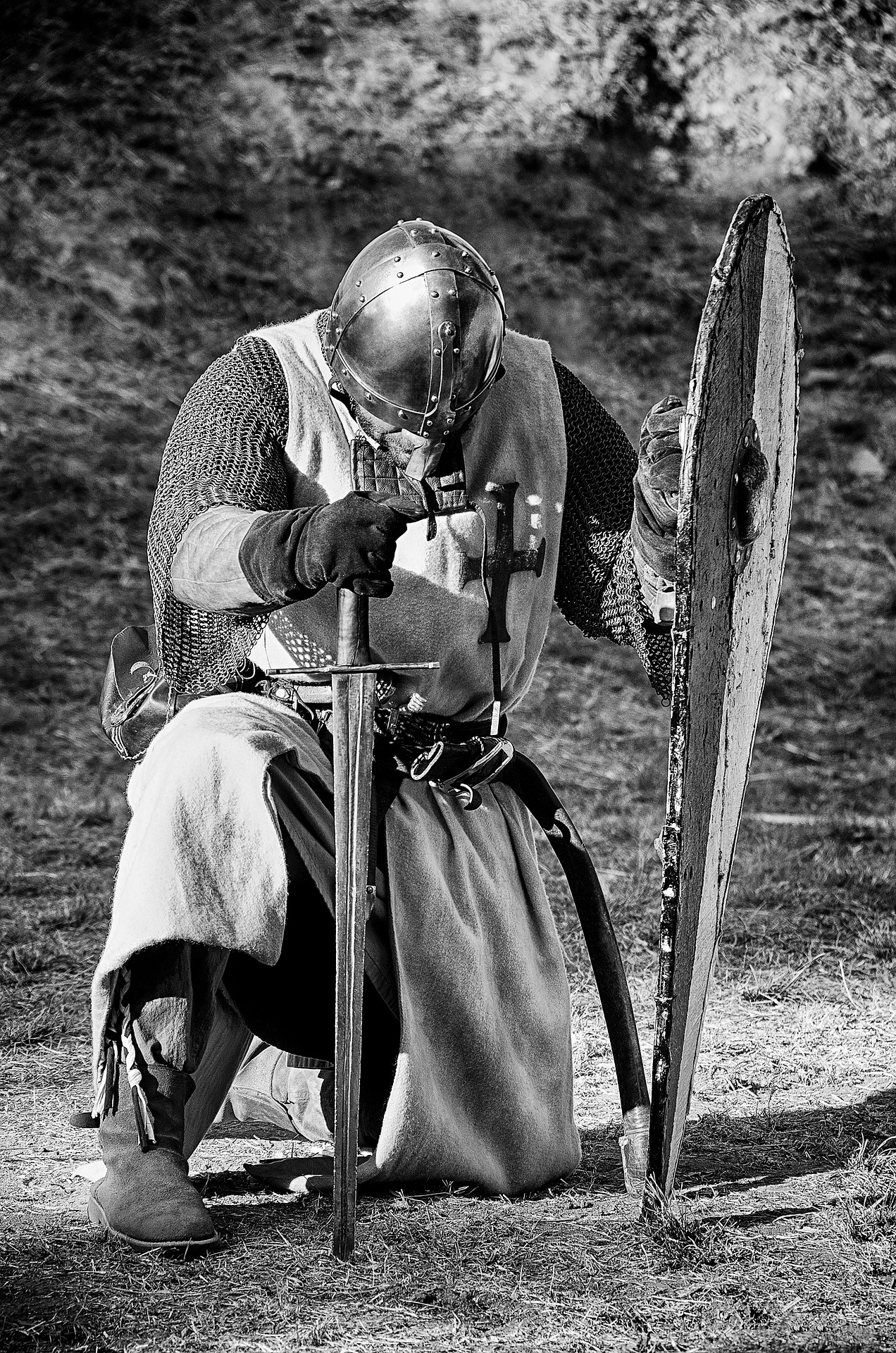
I dub thee Sir Bastard. Now arise, and spread the Law!

Say, as an example, a player was going all-in on a ranger build that focused on tracking and bringing down specific enemies. This might be an ideal candidate for the Order of The Scar, a hellknight order that hunts down killers and assassins. But this character wouldn't benefit from joining the prestige class in a mechanical sense... however, as far as their story goes, they could very easily start the game as a hellknight armiger (essentially a squire), and then at an appropriate time in the story be officially raised to the social position of hellknight (probably after slaying the devil, just for appearances).

This provides the benefits of tying the character more firmly to the setting, providing them with a structure that dictates why they're involved in a given adventure, and the goals they're trying to achieve. It also helps the GM because it tells them what kind of NPCs are likely to figure into this character's interactions, along with the places they've been, and the things they've seen. It also helps lay out a good way to reward the PC for service, allowing them to climb the ranks of the organization and to gain access to other forms of aid, prestige, and social currency.

In the end, it's a win for everyone.

I Talked About This in an Earlier Splat Book of Mine


I told you we'd circle back around to Sellswords of Sundara (available for both Pathfinder and DND 5E), didn't I? For those who are curious, this splat recently got its own audio drama, "The Price of Steel" on the Azukail Games YouTube channel... so toss the channel a sub, and give the track a listen!


Now, Sellswords of Sundara is pretty much what it says on the tin. The splat contains 10 mercenary companies complete with their specialties, uniform style, brief history, combat doctrine, some notable NPCs and rumors, as well as either a subclass (for 5E) or an archetype (for Pathfinder) should one wish to really embody the style of character described.

However, as I explicitly stated in the introduction to the book, players should not be forced to use these mechanical options merely to have their characters be a part of one of these free companies. If someone wants to play a wizard who's part of the Widowmakers free company (a rowdy gang of bruisers and bastards that are little more than cutthroats), they should be allowed to do that. A cleric who specializes in raising and controlling the dead would rise to a command position in the Risen Legion, and shouldn't have to take the fighter-based archetype of the Risen Legionnaire.

And so on, and so forth.

Because the thing about organizations that makes them so useful to you as a GM is that they're never made up of just one kind of character. Even going back to the Forgotten Realms, the Red Wizards of Thay were, of course, all wizards... but those weren't the only people in the organization. There were Thayan Bodyguards (another fun prestige class that came out later) who acted as the muscle to keep the tattooed spellcasters safe. There are the soldiers, the informants, the assassins, and the myriad of people who owe their allegiance to the Red Wizards and their power structures, even if they themselves are not one of those wizards.

Ideally, you want to make these organizations as available as possible because it grounds your player characters in the setting, and provides you with an easier time as the Game Master for telling their stories. While not every character will be drawn to an organization, whether it's a bandit gang, a mercenary company, or a knightly order, they can help provide a lot of useful structure that will save you time and energy going forward.

Recommended Reading


If you're looking for some additional organizations beyond what's available in Sellswords of Sundara, consider the following supplements!

- 100 Secret Societies: Shadowy organizations who seem to have tendrils everywhere, it's possible everyone in the party might be a member of this order and not even know it... or that they each serve a different master when everyone else's back is turned!

- 100 Cults to Encounter: From those who seek the favor of the old gods, to those who delve into outré philosophies, cults come in many forms. Not only that, but they can make quite a useful organization for those seeking a place to... belong.

- 100 Fantasy Guilds: From inventors and explorers, to monster hunters and assassins, guilds dip their fingers into damn near everything... which is why they can be so useful, and flexible, as an organization in your game.

A Baker's Dozen of Noble Families: From the swamp-dwelling clan fam of the Dredgers, to the deep pockets of High Hall, these 13 noble families are fleshed out enough that you can easily make your character a member.

100 Random Mercenary Companies: From the warrior wizards in the Acolytes of Arannis, to the black-clad battalions of the Harbingers of Sorrow, each of these companies offers unique ties for those who signed up for a tour of service.

Like, Follow, and Stay in Touch!


That's all for this week's Moon Pope Monday. To stay on top of all my content and releases, make sure you subscribe to my newsletter at the bottom of the page!

Again, for more of my work, check out my Vocal archive, and stop by the YouTube channel Dungeon Keeper Radio. Or if you'd prefer to read some of my books, like my cat noir thriller Marked Territory, its sequel Painted Cats, my sword and sorcery novel Crier's Knife or my latest short story collection The Rejects, then head over to My Amazon Author Page!

To stay on top of all my latest releases, follow me on FacebookTumblrTwitter, and now Pinterest as well! To support my work, consider Buying Me a Ko-Fi, or heading to The Literary Mercenary's Patreon page to become a regular, monthly patron. That one helps ensure you get more Improved Initiative, and it means you'll get my regular, monthly giveaways as a bonus!

Friday, May 3, 2019

What Organizations Does Your Character Belong To?

When most of us make characters, we focus on who they are as individuals. Krogar the Brute, with his thick mane of black hair and massive great ax, for example, is a feared mercenary and a native of the Western mountains to judge from his accent. Brisheen Fairhair, veiled in silks and able to twist the mind with no more than a glance and a whisper, has a past shrouded in mystery. Hadrick Coster, a light-fingered dwarf with a knowing smile, and a touch of mischief in his one, remaining eye.

No man is an island, though, or so the old saying goes. Every character has someone who raised them to adulthood (whether it was a parent or not), everyone has had friends (or at least casual acquaintances), and most folks had a mentor or teacher of some kind to help them master their particular skill sets. Whether your relationships with these other character are good, bad, or complicated is up to you, but those characters should exist in some capacity.

There is another aspect of who a character is that we often overlook, as well... what groups or organizations they belong to.

Knights of Columbus, perhaps?
While there is no rule in a game saying your character can't fly solo, you can get a lot of mileage out of asking what groups they owe their allegiance to... and if they've turned their backs on those groups, why they did so.

Born, Sworn, and Otherwise


One of the most basic ways that a character ends up becoming a member of a particular group is that they're born into it. If your parents are nobles, then you're a noble as well... whether you like it or not. If you're part of a hill clan of barbarians, or the child of an infamous bloodline, then you have a birthright that sticks with you. Maybe you embrace it, maybe you run from it, but it's there and should contribute to your character's history.

Valgard, what's this symbol on your ring mean?

There are also organizations you find yourself part of that you didn't choose to join, but which you weren't exactly born into. A good example is if your character was taken for mandatory training when they were young. Whether it was like the Spartan agoge, or simply a requirement that all children who show magical talent be trained in its proper use in your home nation, that organization was a huge part of their early life, and likely shaped them in important ways. Alternatively, if your character was taken in off the streets by a gang, or shanghaied onto a pirate ship that acted like a surrogate family, then that will also give you some experiences and allegiances you didn't exactly choose, but found yourself stuck with.

Sworn allegiances, on the other hand, are any groups that you voluntarily chose to join (though in some cases you may have been pressured due to circumstances). Whether you served with a particular military unit, fought beneath a mercenary company's banner, you were a graduate of an arcane college or tradition, or you were a member of a particular religious sect or esoteric order, all of these can play into who you are, how you act, what your goals are, and most importantly what your place in the world is.

If you're looking for inspiration for some groups you could work into your character's history, you might want to check out:

- A Baker's Dozen of Noble Families: From the swamp-dwelling clan fam of the Dredgers, to the deep pockets of High Hall, these 13 noble families are fleshed out enough that you can easily make your character a member.

- 100 Nobles to Encounter: For those looking for siblings, cousins, parents, grandparents, aunts, uncles, and rivals, there are all kinds of nobles in this one. Some of them even go outside traditional aristocracy, such as elven High Boughs, or orcish war dukes.

- 100 Random Mercenary Companies: From the warrior wizards in the Acolytes of Arannis, to the black-clad battalions of the Harbingers of Sorrow, each of these companies offers unique ties for those who signed up for a tour of service.

- 100 Random Bandits to Meet: Filled with gangs, brigands, thugs, and blackguards, this collection is ideal for those who lived that bloody life. Maybe you're still in it, maybe you're trying to get out, but either way there's plenty to work with here.

- 100 Pirates to Encounter: The same as bandits, but on the high seas! With dozens of captains, ships, and odd crew members from the Skull Island Coven, to the galley known as the Floating Forest, this will certainly help spice up your back story.

The important thing to remember is you don't have to have just one of these allegiances throughout your character's history, either. You may have been born a noble, and trained as a knight, only to be on the losing side of a war. Stripped of lands and title, you joined a mercenary unit where you flew your old banner and family colors, defiantly refusing to admit that the past was truly dead. Perhaps you lost your parents early in life, and were adopted by a gang of street thieves. You picked up some skills here and there, but when your talents for magic manifested you used them as your ticket out of that life. While you might be a respected scholar of the arcane now, that tattoo on the inside of your wrist reminds you that once a Red Brand, always a Red Brand... and some of the cutthroats you once called friends haven't forgotten the promises you made to each other more than half a lifetime ago.

The Good, The Bad, and The Ugly


Organizations can say a lot about characters, and often enhance (or deplete) their social currency. If you wear the armor of a Genarian Templar, people may overlook your ill manners and poor hygiene. Even if you left the brig behind years ago, and you've totally reformed, those who see the brand of piracy on your arm beneath the blag flag tattoo of the Blood Tide may fight shy of you. Whether you're up-front about which organizations you belong to (or used to belong to, in case you're trying to keep it on the down low), think about why and how you made those allegiances in the first place.

The results might surprise you!

That's all for this week's Fluff post. If you've used this strategy in your games, leave a comment below and let us know how it went for you!

For more of my work, check out my Vocal and Gamers archives, and stop by the YouTube channel Dungeon Keeper Radio. Or if you'd prefer to read some of my books, like my sword and sorcery novel Crier's Knife, then head over to My Amazon Author Page!

To stay on top of all my latest releases, follow me on FacebookTumblrTwitter, and now Pinterest as well! To support my work, consider Buying Me a Ko-Fi, or heading to The Literary Mercenary's Patreon page to become a regular, monthly patron. That one helps ensure you get more Improved Initiative, and it means you'll get my regular, monthly giveaways as a bonus!

Saturday, December 17, 2016

The Half-Elf, Half-Orc Arcane Archer

Only a fool would claim that a half-orc is an opponent to take lightly. The ferocity of their forebears runs in their veins, and their night sight, in addition to their raw strength and hearty constitutions, can make them a serious threat on the battlefield. A half-orc with a bow can be particularly deadly, especially if his targets lack his ability to pierce the darkness. But when a half-orc archer raises his longbow, whispers a string of elvish words before letting fly, and then a ball of fire erupts where the arrow lands, that is a different kind of threat entirely.

Soldiers are dead, or frantically stamping out flames, and back-lit as they are it's child's play for the arcane archer to send shafts flying into each of them. But how did a half-orc ever learn the elvish magics that mesh with the mastery of the bow?

Maybe he beat it out of a teacher?

The Half-Elf, Half-Orc


If you're playing with the updated version of the rules, then you know that the "elf or half-elf" requirement was dropped from the arcane archer prestige class. However, even with that requirement removed, it's still a class that's associated quite heavily with elvish culture and heritage. But you don't need it to take levels of the class anymore.

With that said, you do still need to be considered an elf for feats like Stabbing Shot, and for certain items and spells that can add some serious punch to your character's abilities.

Now, in Pathfinder (as well as in the base rules for most of the recent editions of Dungeons and Dragons), say you're half-elf and half-orc is pure story flavor. Because while you can say that you are the child of two races, the racial abilities elf blood (for half-elves) and orc blood (for half-orcs) expressly state that you're treated as human and whatever your other race is for the purposes of effects, abilities, feats, etc. (taking classes and prestige classes falling under the "et cetera" label).

So, mechanically speaking, you only gain one half of your heritage. Which is where the Racial Heritage feat comes into things. If you caught my older post Bored Playing Regular Humans? Try Racial Heritage on For Size, then you know where this is going.

Strap in, because this is gonna get ridiculous.
 
So, you begin your character as a half-orc. You're considered an orc, and a human for all intents and purposes. Then, as your first-level feat, you take Racial Heritage (Elf). You are now, mechanically, treated as an orc, a human, and an elf for feats, magic items, spells, classes, prestige classes, and all that other stuff.

That's all it takes to get over that racial requirement hurdle for any abilities you want to add to your character, in a pure, mechanical sense. This is particularly true if you want to wield enchanted weapons that typically grant their abilities only to elves. Is it worth eating your 1st-level feat for access to those things? That's up to you to decide.

What's Your Story?


Getting the mechanics out of the way is easy; it's the story you're trying to tell that's going to be tough. Because someone with the strength of the orcs, and the guidance and grace of the elves, is going to become a terrifying archer with the proper training. But who gave this character that training? How did they unlock this potential?

Oh shit... my half-brother is nocking...
 
For example, did this character seek out a half-elf arcane archer? A mentor who knew how it felt to be sneered at as lesser, and told this was not truly his birthright? Alternatively, did this character get press-ganged into service by an orc tribe, who honed his natural instincts to a razor's edge before he figured out how to meld magic with his arrows? Or, unusually for a PC in an RPG, was this character part of a community that supported those with talent, regardless of where they came from and how they looked? Did the elders, upon putting a bow in his hands, realize that he had inherited more than his father's fine hair and silver eyes, despite the jutting brow and tusks from his mother's side of the bed?

There are all kinds of ways you can combine spellcasting and archery. The magus archetype myrmidarch is one of the simplest methods. If you want the original arcane archer, though, and you want to expand beyond the usual elves and half-elves, this is a fun little trick that lets you get away with something different.

Like, Follow, and Stay Tuned For More!


That's all for this installment of Unusual Character Concepts. Hopefully this one gave you something to chew over, whether you're a player, or a game master.

For more of my work, check out my Vocal archive, and stop by the YouTube channel Dungeon Keeper Radio. Or if you'd prefer to read some of my books, like my alley cat noir novel Marked Territory, my sword and sorcery novel Crier's Knife or my most recent collection of short stories The Rejects, then head over to My Amazon Author Page!

To stay on top of all my latest releases, follow me on FacebookTumblrTwitter, and now Pinterest as well! To support my work, consider Buying Me a Ko-Fi, or heading to The Literary Mercenary's Patreon page to become a regular, monthly patron. That one helps ensure you get more Improved Initiative, and it means you'll get my regular, monthly giveaways as a bonus!

Friday, July 31, 2015

The Ecclesitheurge: Part One of a Powerful Mystic Theurge Build

The Mystic Theurge is one of the most popular prestige classes for players who love spellcasters. Mixing arcane power with divine might, these unique magic users draw their spells from a deeper knowledge of the universe than any single arcane or divine devotee could possibly grasp. From a practical standpoint, Mystic Theurges have a dizzying array of spells to pick from, and they can mix and match the slots from one class to cast spells from another, which can wreck all kinds of holy hell on unwary enemies.

Burning hands from domain spell, and charm person from the bard list.
Now, there are all kinds of class combinations you can put together to meet this build's prerequisites; you just need one that's arcane, one that's divine, and to be able to cast the proper level of spells. Perhaps the most traditional combination, though, is the wizard and the cleric. From the wizard you gain a huge number of spells to choose from, and a bonded item that can let you spontaneously cast a single spell of your choice from your spellbook even if you didn't prepare it that day. From the cleric you gain... exactly the same thing if you take the Ecclesitheurge archetype.

More Magic Than Your Body Has Room For!


The Ecclesitheurge is a very special kind of cleric, found on page 91 of the Advanced Class Guide. The Ecclesitheurge has a very limited selection of weapons, and gives up the ability to use armor or shields. Instead, this unique cleric takes a vow to be protected solely by the power of his or her faith (and whatever spells get cast on the character). You also lose out on the third boost of your channel's power. What you get in return is the ability to switch around the domains you draw your spells from (as long as they're still domains your god has), and you gain a bonded holy symbol (which works just like a wizard's bonded item, but for cleric spells).

Cure this disease, in the name of Cayden Cailean!
This bonded item is a lot more powerful than people give it credit for, because clerics gain access to all their spells. So any time you have that moment of, "shit, if I'd prayed for that spell today I could save the whole party!" you can just cast the spell instead of kicking yourself. And what does it cost you to get this great ability? Weapons you likely weren't going to wield because of how bad your base attack bonus progression is, and armor you probably weren't going to wear since it would have greatly hindered your arcane prowess.

Not only that, but if you're ever unsure about how safe you are, look down the sheer list of magic you have access to. Mage armor and shield never go out of style, and they'll be more than enough to see you through your first few levels until you start growing into your new found power. If you're worried about your offensive capabilities, combining domain powers like the fire bolt from the fire domain, and the telekinetic fist from the wizard's transmutation school mean that you've got plenty of power to throw around without even dipping into your spells.

And if you really want to add some more firepower to your arsenal, then check out How to Power Up Your Pathfinder Characters With The Eldritch Heritage Feats.


As always, thanks for stopping into Improved Initiative! Make sure you don't miss any of my updates by following me on Facebook, Tumblr, and Twitter. If you want to help support me and my blog, then stop on by The Literary Mercenary's Patreon page to become a patron today!

Friday, January 3, 2014

How I Became a Min-Maxing, Number Crunching Point Whore

There comes a time in every gamer's career where he or she has an "ah ha" moment regarding the rules. What was once a collection of rough guidelines that were a little blurry around the edges finally snaps into clear focus, and you realize exactly what they are; building blocks. Once that realization is made, and you as a player realize how to fit them together in order to achieve the results you want, there's no unseeing it.

This is a story about my first time experiencing that.

So, I Was Playing a Frenzied Berserker When...

The DM let you do what now?!
Right, maybe I should begin at the beginning. I'd been a gamer for a few years, and I'd played Dungeons and Dragons 3.5 under a few different DMs. The problem was games just kept falling apart on me, and as such I'd never really been part of a full campaign before. I was invited to join a game run by a fellow named Jer, and he told me to bring whatever I wanted within the basic rules. I told him I had this idea for a barbarian, and he warned me that if I chose to play that class there would be times where he might trigger my rage for story reasons. That little caveat juiced my brain and really got me rolling.

The story I crafted was there was once a settlement in the north. This place was beset by the beasts and monsters of the frozen lands, from frost giants and gnolls to trolls and bugbears. When the forces arrayed against the town became too much, one clan of warriors made a deal with devil. They offered their souls to the spirits that dwelt on the peaks in exchange for the power to protect their friends and families. The spirits granted them the power to deny death, and to destroy their enemies with blood and fury. Heroes one day, the town began to fear the berserkers and the destruction they could wreck. Cast out, the clan became mercenaries who sold their swords to those desperate enough to pay for madness with coin.

Generations passed, and over time some powerful warriors were allowed to marry into the clan. This was a rarity, as only those who could defeat their lovers in fury were given permission to wed. The curse always bred true though, and frenzy came sooner or later. The clan was hired to fight by a nobleman, and fight they did. To the last man, a teenage boy named Sigurd. Sigurd fought bravely, but the only person he killed that day was his own mother, the clan matriarch, whose frenzy gripped her and refused to let go even as she slew those nearest and dearest to her.

Pictured: Sigurd's Mom.
Sigurd, fearing the madness he knew he was destined to grow into, traveled south where no one would know his name or the tale of his clan. He hoped that he might be able to escape the curse, but swordplay and bloodshed were the talents he'd been bred to, and adventure was what called his name.

Things Get Rolling

I came into the game a bit late, and as such I walked into the plot at level 8. When I sat down to character creation I was handed a copy of Complete Warrior, and my eye fell on the Frenzied Berserker prestige class. Because I had a bad case of what I like to call shiny-red-ball syndrome, I thought that Deathless Frenzy was a really cool ability. The DM said I could take the class, but he reserved the right to nerf me if I got stupid with it. So I gave Sigurd a few levels of fighter, a few levels of barbarian, and then started him on his path to death and glory in the tradition of his forebears.

From the point I walked in it was pretty standard high-fantasy stuff. Cults and evil orders are doing bad things, go and stop them. Along the way we just happen to pillage and loot pretty much every stronghold, gangland territory, and black knight's keep we can find. There are a few sentient items here, some really powerful sets of magical armor there, and by and large we're getting to be a pretty beefy bunch of adventurers. Before I knew it I had a character that was more powerful, and higher level, than anything I'd been trusted with up until that point. Nothing crazy yet, but the increased strength from stacking Frenzy with Rage was definitely making me feel pretty good about what I had going. I wasn't destroying entire encounters on my own like I had been at lower levels, but I figured that was normal.

The Moment of Clarity

Like many players trying out a new character concept, I wanted to make sure I had my numbers straight. So before one session I was reviewing my newly gained abilities when I came across Supreme Power Attack. I hadn't really paid much attention to that ability, but I figured I should know what it did. Especially given that we were closing in on the end of the campaign, and I was lingering around level 20. The ability, in short, said that because I had a big, two-handed sword, I got a +4 for every -1 I took from my base attack bonus when using Power Attack instead of a +2. Not bad.

I was busy patting myself on the back when a memory niggled at me. So I did some double checking and researched a few of the feats I'd taken. Leap Attack, which multiplied your power attack damage by 3 with a two handed weapon if you made a successful leap during a charge made my eyes go wide. After that was Combat Brute and Shock Trooper, which gave me the ability to follow through with my power attack on the second round after a charge, and which allowed me to take the negative from my armor class rather than from my base attack bonus respectively. All at once I realized that, without even meaning to, I had created a monster. I conferred with the DM, and he agreed that the feats worked the way I thought they did. He didn't appear worried though. Not right then, anyway.

The Mayhem

Damn Right
So, everyone settles in, we recap from the last game and get rolling. The party is assaulting a huge castle through a basement filled with clockwork golems. Jer, because he was confident in us, beefed up the baddies just to give us a challenge. By a miracle I rolled well on initiative, so I dropped Rage, Frenzy, and charged. In a single blow I dealt enough power attack damage to destroy one of the two big bads utterly. I rolled just because I felt like it, scattering clockwork and scrap metal the length of the field. The rest of the party, confidence boosted, attack the second golem. It tears them a new one, until round two when it also falls to Sigurd's obscenely over-muscled attack. Then, before I get another turn, most of the party dog-piles on the berserker and the cleric pokes Sigurd in the forehead to give him a huge will save bonus so he comes out of his frenzy. Bad guys dead, party victorious, barbarian thoroughly tweaked.

That pretty much set the tone for the rest of the adventure. Our DM kept throwing bigger and bigger bad things at us, and I just kept knocking them down. If I couldn't do it in one hit, then the enemy wasn't likely to live through a second. I had to sit out the last battle sadly, I was out of town at the time it happened, but I will forever remember that moment where a cool story and a pile of feats came together, creating a concept that was significantly more than the sum of his parts.


Got a cool gaming story of your own? Tell us about it, and we just might feature you on Table Talk! As always, thanks for stopping by Improved Initiative. Help support us by bribing the DM in your upper right hand corner, or checking us out on our Patreon page (which now uses PayPal!). To stay up to the minute with our updates, follow Facebook or Tumblr. Hope to see you again soon!