Saturday, December 21, 2019

The Taskmaster Necromancer

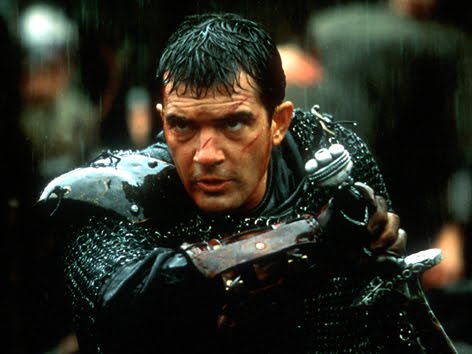
The tall, pale figure of Eladrin Vars glided from body to body in the sepulcher. Each had been laid out in the armor it had been buried with, the sword it wielded in life clasped in its hands. The eyes had long since rotted away to nothing, and she placed an onyx gem in the left socket of every skill. Then, under the slimy remains of their tongues, a platinum coin.

"The wages of your work, my warriors," she said, gently closing the jaw of the last corpse before intoning the final verse of her spell. The limbs seized and spasmed, the stones crumbling to powder as dull, silver flames lit in the empty sockets. The undead rose, turning to their new commander. She smiled at them; a thin, grisly expression. "Let it not be said I did not compensate you for your service."

Ain't a lot of blackrobes out there who will pay you a dying wage.

Quid Pro Quo


While there are dozens of spells that fall under the school of necromancy, from incantations that sap a target's strength, to charms that grant you phantom resilience, these spellcasters are best known for filling the bodies of the dead with profane energies, and using them as pawns to serve their own needs. And whether a necromancer is using these undead servants to protect innocent townsfolk, or to care for the fields to avoid famine, there's still something inherently unsettling about the method behind these spells.

In short, it violates the person's bodily autonomy.


Not to worry, friends, we had an arrangement.

While The Veterinarian Necromancer gets around this sticky point by focusing their energies on beasts who do not have the same awareness as sentient beings, the Taskmaster instead allays this concern by making it clear that the person whose body is being used is being compensated in some way. In some cases it might be leaving an appropriate offering on the body, or in the grave, which balances the act in the eyes of certain death gods. In other circumstances the necromancer might have a standing agreement with a living person that they will be given a payment or a service now, so that their body may be used once they die. Or, if there was no time, then the surviving members of a person's family may be offered compensation for the use of their loved one by the necromancer.

But under no circumstances does this spellcaster simply take the bodies. There has to be some agreement in place, or if there was nothing given up-front, then the compensation must be rendered afterward along with a penance to appease the person's spirit, and the gods who watch over the cycle.


Why Do They Do This?


The individual beliefs and habits of necromancers can vary wildly, and why one might adopt this peculiar behavior is unique to that person. As mentioned, it might be a religious conceit of a necromancer who hopes to wash away the perceived sin of taking someone's body without their permission. It might simply be a quirk of that spellcaster's nation, where necromancers must abide by the laws and codes of their profession in order to remain in good standing. It might be something they personally do to assuage their conscience, or it could be considered good luck. It might even be a way to mark you out from other practitioners, similar to how a smith would stamp the blades made by their forges (particularly if the coins used in your rituals must be of a certain type).

Whatever the reason, it should be central to how they conduct themselves and their spells. Because you have to have standards and rules, otherwise there's nothing to separate you from the others.

Need to have standards.

While keeping these standards doesn't stop you from picking up a capital E in your alignment, thanks to the nature of these spells, it might allow you to hang onto that L. Because unless your powers come from a divine source, then the only person whose rules you have to follow is you.

Would You Like To See More In-Depth Tips For Wizards?


While I wrote my 5 Tips For Playing Better Wizards a while back, and you can find it along with a lot of my other class guides in the 5 Tips archive on this blog, I have been thinking about how each school of magic presents different and unique challenges, styles, and flavors. So I thought I'd ask my readers out there... would you like to see 5 Tips guides for each of the types of caster (necromancer, conjurer, diviner, etc.)?

If so, reach out to me on my Facebook page, or leave a comment below!

Like, Follow, and Stay Tuned For More!


That's all for this installment of Unusual Character Concepts. Hopefully this one gave you something to chew over, whether you're a player, or a game master.

For more of my work, check out my Vocal archive, and stop by the YouTube channel Dungeon Keeper Radio. Or if you'd prefer to read some of my books, like my alley cat noir novel Marked Territory, my sword and sorcery novel Crier's Knife or my most recent collection of short stories The Rejects, then head over to My Amazon Author Page!

To stay on top of all my latest releases, follow me on Facebook, Tumblr, Twitter, and now Pinterest as well! To support my work, consider Buying Me a Ko-Fi, or heading to The Literary Mercenary's Patreon page to become a regular, monthly patron. That one helps ensure you get more Improved Initiative, and it means you'll get my regular, monthly giveaways as a bonus!

Monday, December 16, 2019

Players, Make Sure Your Characters Actually Want To Be Here

I've been talking to the DMs a lot in my Monday posts of late, so I figured it was time to take a moment to address the players out there. Because there's a big trap that almost all of us fall into in our gaming careers, and it can ruin the game for the rest of the folks at the table... especially if more than one of you fell into it without even knowing it.

In short, a lot of us make characters who practically have to be dragged kicking and screaming into the adventure... and we should all take a moment to stop that.

Bandits, huh? Doesn't sound like my problem.

Apathetic Characters Make For Frustrated Storytellers


I mentioned this back in 5 Tips To Get The Most Out of Your Next LARP, and it was the tip that got the most love. As such, I figured it was worth repeating, and elaborating on, for the folks in back.

Do not make a recalcitrant character. Do not make an apathetic character. Do not make a character who is looking for absolutely any reason to abandon the party and go do their own thing. This is a cooperative game, and it works best if everyone has a character they want to play, and that character wants to be part of this story.

Have sword, will travel.
It's true that part of this relies on the DM working with you to make sure your character fits into the game. However, you are responsible for the final form your character takes, the drives they possess, and the actions they end up taking. Which is why it's important to think about not just what would make them fun to play, and what their personal objectives and goals are, but about how they interact with the wider world.

Lastly, it's important for you to come up with reasons for them to get involved.

You Have To Want To Be Involved (Even If The PC Doesn't)


Despite the title of this post, and everything I just said, I will admit that sometimes you want to play the reluctant badass character. The old campaigner who laid their sword aside, the wizard who's just too busy to bother with all this adventuring nonsense, or the monk who's trying to learn deeper meanings of the world instead of brawling with bugbears.


I get it. This is literally one of my favorite archetypes as a player. However, what I will tell you from experience is that if you are going to bring this character to the game, then it is up to you as the player to come up with a reason they are getting involved in the plot rather than putting that burden on the DM.

A blind old woman rolled the bones? Good enough for me!
Take the example of the retired hardass. Sure, he's got the skills, but he hung up his sword when he came back from the war, and he wants to be just a simple farmer now. However, if you want to be involved in the game, you need to provide a reason that Aethor takes that wall hanger down from over the fireplace and hits the campaign trail again.

It could literally be anything you want it to be! For instance...

- He Cares About Another Party Member: Maybe the wizard is his nephew, or the bard is an old friend that he knows gets into trouble when he's not around. Whatever the reason, he's not letting them risk their lives without him to watch their back. He still doesn't care about the bandit lord, or the goblin horde, because those things aren't his prerogative, but he's fully invested.

- It's The Right Thing To Do: Paladins aren't the only ones with a strong code of ethics. If the town is looking for people to make a stand, whether it's against a necromancer defiling graves to build an undead army, or gnolls raiding a settlement and taking people as slaves, somebody has to put a stop to that. Rule 303; you've got the means and skills, so you've got the responsibility to do something about it.

- He Owes Someone a Favor: This is particularly true for scenarios that I mentioned in Did Your Character Have A Former Life? Maybe they don't want to leave the farm, the forge, or the tavern behind, but they've got a debt to pay. It might be an old friend they would have helped for the asking, or a grim, John Wick-style blood debt, but whatever it is should get them out the door and on the adventure path to clear their ledger.

- Someone Ordered Him To: This is, perhaps, the easiest form of motivation in the history of a storytelling; you go to do the thing because it's your job, and your problem. Whether you're the local priest, a militia sergeant, a town guard, a sheriff's deputy, or a hedge knight charged with patrolling the highways, whatever is going wrong is something you've been ordered to fix. And because you like your job, you go do the thing.

Those are just some of the most common instances I could suggest. However, the important thing to remember is that you need to be the one that provides this hook for your PC to get in on the action. This may require you to talk with the DM and hash out some quick ideas, but generally speaking anytime you're saving the person behind the screen the work of roping you in it's something they're going to appreciate.

You Are In Control of Your Character


One of the most frustrating things you can hear as a DM is the phrase, "My character wouldn't be interested in that." Any time you feel the urge to say this, stop, take a step back, and look at the situation from a different angle. Find a reason, even if it means you have to alter your character just a bit in order to smooth the way forward.


They took children, you said? I'm in.
Take Shadrick Vars, known to most as the Gray Man. He's a bad man to fool with, and it's said he won't so much as lift a finger unless there's a coin in it for him. Hardly the sort of character you'd expect to show up to help hunt down a set of kidnappers; especially if the bounty for them is hardly worth a day's work. But if you're the player at the controls, it's your job to ask why he's opted to take on this mostly altruistic task. Even (or especially) if it's out of character for him to do so.

Is it because Shadrick was taken from his parents at a young age, sold to a cartel boss and trained as an enforcer, and he wants to put that part of him to rest by helping this child? Does he know the family, perhaps suspecting they might actually be distant kin of his? Does he have a strict, "No spouses, no kids," rule, and he means to make an example of those who offend his sensibilities on his home turf? All of these are possible, and it wouldn't require changing the fundamental nature of the character. Each one of these reasons gets him out on the adventure, though, and give the character a compelling reason to see this arc through to the end.

The key thing is to take the initiative. Don't sit around waiting for the DM to give you personal attention to get you to come along, or for the rest of the table to ask pretty please; find a reason to set your character to the task, and get involved. Once you do that, the momentum builds, and everything gets a whole lot easier.

Like, Follow, and Stay in Touch!


That's all for this week's Moon Pope Monday. Hopefully you enjoyed, and if you've used run these kinds of games before, leave us a comment to let us know what worked for you!

For more of my work, check out my Vocal archive, and stop by the YouTube channel Dungeon Keeper Radio. Or if you'd prefer to read some of my books, like my sword and sorcery novel Crier's Knife, then head over to My Amazon Author Page!

To stay on top of all my latest releases, follow me on Facebook, Tumblr, Twitter, and now Pinterest as well! To support my work, consider Buying Me a Ko-Fi, or heading to The Literary Mercenary's Patreon page to become a regular, monthly patron. That one helps ensure you get more Improved Initiative, and it means you'll get my regular, monthly giveaways as a bonus!

Saturday, December 14, 2019

4 Tips For Making Long-Lived Characters FEEL Old

Have you ever stopped to really look at just how many playable races have ridiculous lifespans when compared to humans? We know that elves and dwarves can live for centuries, but half-elves, aasimar, tieflings, gnomes, and dozens of other racial options can all live through several generations of humans before age starts catching up with them in any meaningful way.

My, my... you look just like your great-grandfather. The resemblance is eerie, child.
While it can be fun playing characters with decades of experience under their belts, bringing across just how long they've been around can be tough when the character doesn't look that old. However, there are a few tricks I've found to really bring across how long your PC has been in the game, so to speak.

Also, if you're looking for tips for specific races (I've already written RP guides for elves, dwarves, gnomes, and for tieflings and aasimar), then you should stop by and check out the 5 Tips page, too!

Tip #1: What Does Your Gear Say About Your Life?


Huh, that old thing? Oh I've had it... a while, now.
 As I mentioned back in Do Clothes Make The Adventurer?, it's possible to learn a lot about someone based on what they wear, or the gear they carry. This goes double for characters who have been around for decades, and possibly centuries, since something they've had long-term could be a clue about exactly how long they've been around.

This could take dozens of different forms. For example, it might be that your character still wears a particular accessory that's been out-of-fashion for a few generations, such as a brass serpent cloak pin that was all the rage under the last king, or a heavy silver belt buckle that was fashionable among mercenaries during a war that's mostly remembered in history books. Maybe they wear their hair in a particularly old style (a single warrior's braid in an interlocking pattern), or they sport an amulet or a ring that hasn't been since the Academy Magique shuttered its doors.

One of my personal favorites is a character who carries around a noticeable weapon, shield, or suit of armor that tells its own history. The skull-marked blade of Braddock's Privateers that were disbanded over 50 years ago, or one of the fire-touched axes given only to the victors of the siege of Harrastrad, for example.

Possession of an item doesn't mean someone got it when the item was new, but it can raise a few eyebrows, and get the imagination wheels turning round the table for those who made the history check. Also, if you're looking for more fun examples of stuff to throw in there, you should take a moment to check out 100 Legendary Weapons!

Tip #2: For You, It's Not In The Past


You weren't there... you don't know.
 When you're older, the past isn't just a land of dry, dusty facts. These are place you've been, people you've known, and things you've seen; they're real to you in a way they simply aren't to others. These matters aren't just academic; they're your life.

As an example, take the rise of the House of Thrune in the Golarion setting. Cheliax's black and red banners have flown ever since the civil war, and the infernal queens have ruled their evil empire with an iron hand... but they have not been in power long. A few generations, and not much more. Before that, with the god Aroden spurring the nation and its warriors to greater heights, it was a kingdom of glories, and of noble principles, before it fell into corruption.

An elven warrior may have traveled with Chellish knights in his youth. He may have studied under their war masters, and seen the great, selfless acts they could accomplish. He may even have stood shoulder-to-shoulder with them at the Worldwound as they fought against demons and their own hopelessness in the face of their patron god's death, and then watched their nation spiral into depravity and corruption. Seeing them embrace order over justice, and the quiet of the fist over the peace of a prosperous land is a tragedy that he carries with him every day. This character might be disgusted by the hellknights and what they represent, or quietly sad over the state of the nation that was once a beacon of light in the world. They might mourn the loss of what was, or fight tirelessly to push back this black tide. And when they meet someone who upholds the ideals of the old nation, it makes them smile, because all is not lost as long as that spirit yet lives.

These kinds of events (wars, plagues, the rise of nations, or the falls of empires) are mere history for some. For long-lived characters, these are the events that truly make them feel old; burdens they carry with them that can wipe the smiles from their faces, and let those around them see, just for a moment, the ghosts that haunt them.

#3: What Marks Do You Bear?


The Kadashan warlocks were disbanded 200 years ago... but there are some who remember those days.
 No one gets through life without a few marks to show for it, and which marks your character bears can testify as to where they've been, and what they've done.

For example, does your character have the brand of a pirate on their hand; a punishment that's been outlawed for over 70 years now? Does your old soldier have the unit tattoo of the Storm Crows, an irregular fighting force that was removed from service after the fall of the city of Thracean half a lifetime ago? Do they have the blue rings tattooed round the wrists of prisoners of war from the struggle for the throne over 90 years ago? Alternatively, do they have the unique scars worn only by members of the Cultari hunters, a tribe thought extinct for generations? Or do they have the unusual marks of the Iron Mountain monastery, whose monks were slain to a man over a century past?

Tattoos, scars, and brands can all add to your character's story, and make it clear that they've been around for far more than might appear to be the case. Also, they can be marks that distinguish this character in an order or organization, like the Marked or the Razor Skulls found in 100 Gangs For Your Urban Campaigns.

#4: How Do Other People React To You?


Shush, dearie, and tell gran what it is that's upset you so.
 If your character has been around for a long time, how does that manifest in the places they go, and the people they meet? For example, if you're a regular fixture in a particular town, how many generations call you uncle or auntie? Is your name on the charter of the town's founding? Do the old militia sergeants still call you sir, because you were the one who trained them when they were just green farm boys?

This can be as light-hearted or as deep as you want it to be. For example, you might have a reserved table in the local tavern because you've been coming there so long that your total bill has been more than the cost of the place three times over down the years. Alternatively, the other characters might think it's sort of cute how the old woman is sweet on the aasimar... until they find out that he saved her from raiders when she was a little girl. He was her first crush, and though she tried to persuade him, refused to be her lover in the bloom of her youth. She got married, had children, became a grandmother, and buried her husband... but to him she's still the same little girl he carried out of the woods some 80 odd years ago.

Hearing a story like that, and then looking at the character, imparts a weightiness to their experiences that just quoting a number can't do. Because it's not just how many years you have... it's what you've done, and who you've done it with, during those years.

Like, Follow, and Stay in Touch!


That's all for this week's Fluff post! If you've used this in your games, share a story down in the comments!

For more of my work, check out my Vocal archive, and stop by the YouTube channel Dungeon Keeper Radio. Or if you'd prefer to read some of my books, like my sword and sorcery novel Crier's Knife or my recent short story collection The Rejects, then head over to My Amazon Author Page!

To stay on top of all my latest releases, follow me on Facebook, Tumblr, Twitter, and now Pinterest as well! To support my work, consider Buying Me a Ko-Fi, or heading to The Literary Mercenary's Patreon page to become a regular, monthly patron. That one helps ensure you get more Improved Initiative, and it means you'll get my regular, monthly giveaways as a bonus!

Monday, December 9, 2019

5 Gifts For The Gamers in Your Life (And At Your Table)

Before we get started with this Monday's post, I wanted to take a second to share something that came across my feed the other day. It seems that my 5th Edition DND horror module The Curse of Sapphire Lake now has its very own play through, courtesy of FeatherFall Tabletop! So whether you want to see what the module is all about, or check out this gaming podcast, I wanted to lead in with that bit of pleasant news.


There's also a straight-up review of the module, if you'd rather just hear the high points without going step-by-step through the full session!

Anyway, as you're no doubt aware we're in the midst of the holiday season. Black Friday has come and gone, and Cyber Monday is in our rear view mirrors. If you're still not sure what to get for that gamer in your life (assuming they couldn't use a solid module like The Curse of Sapphire Lake or False Valor), well, here are some other things that just might make their eyes light up on the big day.

#1 (Affordable) Metal Dice


When you need the BBEG to really feel that death blow.
Metal dice have become the new hip thing, despite the plastic dice we use today being tested for more rolls than we will ever go through in our careers as gamers. There's something primal about the heft of metal dice... their sheer weight makes them feel more serious when you let them fly. And if you've got some wide margins in your budget then a set from Norse Foundry or SkullSplitter is a great stocking stuffer for the ones you love.

With that said, though, my money's on the Hestya metal dice, pictured above. They've got the heft, certainly, and they're more than a couple bucks cheaper than even the least expensive of the glossy, polished sets on the market. What really caught my eye, though, was the 4d6... enough to roll all your stats with the set you'll be playing with. I might be a little superstitious, but I like that feature.

Whatever set you end up going with, though, a simple dice tray is a great pairing with these dice. Last thing you want is to damage the table because someone got overeager with their new weapons.

#2: A Carrying Case


Have you been a good dungeon master this year?
If that image looks familiar, it's because it's the Enhance tabletop adventurer's bag. With more than enough room for rulebooks, monsters, notebooks, and even your map roll, it's really a one-stop shop for the DM on the go. So if someone you love is always rushing off to a convention, or constantly carrying an armload of folders while heading out to their friend's place, this is quite the lovely gift. It is, however, approaching a C-note, which is a huge price tag for all but the most devoted gamers.

For something a little sleeker, more modern, and more affordable, the USA GEAR compact travel bag might be more your speed. With everything from dice pockets to separated sections for books, folders, modules, etc., it certainly gets the job done as long as someone isn't planning on running two mega dungeons back-to-back.

#3: A DM Writing Tablet


It's useful for players, too, but you get the gist.
I talked about these LCD writing tablets a little while back in Stop Marketing On Your Character Sheet (Seriously, There Are Better Ways), but since I'm putting together a best-of-year list, I figured I'd include this one here. These things cost maybe $10, and the battery they run on can last for years before any fiddling is required. Best of all, they can be used for everything from hit point tracking, to map drawing, to initiative. Cheap, but oh-so-effective!

#4: Campaign Notebooks


Well... it's not wrong...
For the paper and pencil crowd who want something a little more old school, this DM notebook (and several other campaign journals) are available from Adventure Gaming Notebooks. If you want to have a little fun with your fellow players, get your table mates matching journals for the next campaign... and if you're the dungeon master, leave a cryptic clue written on the first page to really get their minds churning about what sort of games are coming in the new year.

Just saying... that's what I would do.

#5: A Spellbook


Yeah, it's real dragon skin, since you ask.
I mentioned these earlier this year in Organize Your Spell Cards With a Portable Spellbook!, but once is not enough for these handy dandy little organization tools. This red dragonhide spellbook holds your caster's spell cards, providing you easy access to all the magic you have available for the day, and making sure you never lose track of what you have and haven't cast (or in some cases, which spells you do and don't actually know).

And if the eldritch evoker isn't really the right look, there are others available. The Tome of Recollection has the standard feel of a leather grimoire that's a little more on the traditional side, whereas the Tome of Corruption has a decidedly Necronomicon vibe to it. In any case, if you know someone who loves spell cards, but who needs a little help getting everything in its proper places, these are a godsend for de-cluttering the table.

What Cool Stuff Have You Found?


My own delvings into the dark markets have only turned up so much... have you found something I didn't mention, or that you'd like to share with other gamers here? Even if the new year has come and gone, leave links in the comments below so we can keep the treasure hunt going all year long!

Also, some stuff I didn't have room to mention above can be found in Need Cheap Minis? SCS Direct Has You Covered, as well as in 4 Tools To Help You Control The Dice At Your Table.

Like, Follow, and Stay in Touch!


That's all for this week's Moon Pope Monday. Hopefully you enjoyed, and if you've used run these kinds of games before, leave us a comment to let us know what worked for you!

For more of my work, check out my Vocal archive, and stop by the YouTube channel Dungeon Keeper Radio. Or if you'd prefer to read some of my books, like my sword and sorcery novel Crier's Knife, then head over to My Amazon Author Page!

To stay on top of all my latest releases, follow me on Facebook, Tumblr, Twitter, and now Pinterest as well! To support my work, consider Buying Me a Ko-Fi, or heading to The Literary Mercenary's Patreon page to become a regular, monthly patron. That one helps ensure you get more Improved Initiative, and it means you'll get my regular, monthly giveaways as a bonus!

Saturday, December 7, 2019

Bucklers Are A Lot More Useful Than Most Folks Give Them Credit For (in Pathfinder)

Bucklers are one of those items that tend to get overlooked in Pathfinder. After all, if you're a character who's going to use a shield at all, chances are you're going to go for something a bit heftier, like a heavy steel shield, or even a tower shield. However, those who read the fine print on a buckler may be surprised at just how useful these items can be... especially if you put a little bit of magic or class features into them.

Don't let its size fool you... this can be a life saver.
Also, if you're looking for more fun uses for an often-ignored piece of equipment, check out my other post In Defense of The Humble Sling (in Pathfinder).

What A Buckler Is (And What It Does)


While there are a lot of arguments about what a buckler is or isn't among historical combat enthusiasts, in terms of Pathfinder a buckler is just a small, metal shield that straps to the user's forearm. It leaves the hand free to hold items, and it provides a +1 shield bonus to the user's armor class. That's half of what you get from a larger wooden or steel shield, but as many players will tell you, a +1 is a +1, and it can make a difference. There is an armor check penalty of -1 for using it, though, and a 5% arcane spell failure chance, if you're an arcane caster. A buckler cannot be used to shield bash with, unless one has the proper feats or class features that specifically give you this ability.

The numbers check out.
There are other advantages to bucklers if you read the fine print, though. For example, though you incur a -1 penalty for using your shield arm to wield a two-handed weapon, or to make an attack with your off-hand using two-weapon fighting (in addition to losing the shield's AC bonus for that round) this is not the case if you're using a bow or a crossbow. So if you're an archer who wants a little added insurance, you can strap on a buckler and just add a little boost to your AC.

The other useful thing about a buckler is that you can use your free hand to cast spells with somatic components. Doing so means you lose the shield's benefit to your AC for the round, but you take no other penalty for this action.

What's The Big Deal About a +1 Bonus?


As with so many other things in Pathfinder, that buckler's bonus to your AC is only a +1 if you do absolutely nothing else to boost it up. And that's not nothing, but it's hardly a big, impressive number. But with all of the options you have to include this handy device in your character's makeup, there are a variety of options you could pursue.

All right, let's see just how potent we can get this brew...
The most obvious benefits are going to be for specific classes that can spontaneously boost their shields with class features, like the Skirnir magus archetype in Ultimate Combat, or the Holy Vindicator prestige class in the Advanced Player's Guide. Both of these classes can spontaneously boost their shields (with the Skirnir actually getting to add bonus magic abilities), and given that they tend to have access to both spellcasting and melee capabilities, a buckler could go a long way in their hands.

However, you don't need the power to spontaneously boost a buckler's abilities to get some solid use out of it. Any enchanted buckler is going to provide an enhancement bonus to its total value, and you can often stack on useful abilities you might have trouble getting in other ways. Arrow Deflection, for example, is an ideal way to make sure that enemy archers have to work a little harder to really hurt you. Mirrored bucklers might be a combination signal mirror and medusa repellent, and a channeling buckler improves the amount of a channel for any wearer, while protecting them from their opposite energy type.

List goes on... point is, a lot of shield special abilities are very useful, and putting them onto a smaller, more versatile shield doesn't diminish that capability. And when you add in the special materials a buckler can be made from (mithril, darkwood, adamantine, etc.), as well as the feats and archetypes surrounding the buckler's use (like the buckler duelist in Inner Sea Primer, the thunderstriker in Ultimate Combat, or the falcata swashbuckler in Weapon Master's Handbook) it grows more and more useful.

With all of that said, the most realistic bonus you could get from your buckler is still fairly low. An enhancement bonus of +2 or +3 is expensive in and of itself, and even augmented with a +1 from a feat like Shield Specialization, you're only going to have a slightly better bonus than if you were using a tower shield. You could pour on the bonuses from specialized classes and feats to add utility, but a buckler isn't going to make or break your build.

But it can provide a surprising amount of protection, often with no additional armor check penalty. That could be just the thing for those who've taken a level dip, and find themselves with a shield proficiency that really isn't something they feel they can get the most out of. Or for those whose main weapon fires arrows or bolts.

Just something worth thinking about!

Like, Share, and Follow For More!


That's all for this week's Crunch topic! For more of my work, check out my Vocal archive, and stop by the YouTube channel Dungeon Keeper Radio! Or if you'd like to read some of my books, like my sword and sorcery novel Crier's Knife, head over to My Amazon Author Page!

To stay on top of all my latest releases, follow me on Facebook, Tumblr, Twitter, and now on Pinterest as well! And if you'd like to help support me and my work, consider Buying Me A Ko-Fi or heading over to The Literary Mercenary's Patreon page to become a regular, monthly patron! Even a little bit of help can go a long way, trust me on that one.

Monday, December 2, 2019

DMs, Remember That "No" is Not The End of The Conversation... It's The Beginning!

One of the most common pieces of advice I've seen for newer dungeon masters is not to be afraid to tell your players no. Whether it's saying no to a race that doesn't fit your setting, or no to a third-party class you're not familiar with, it's important for you to have confidence in your ability to run the game effectively. Sometimes that means saying no to something your players want.

With that said, though, a lot of DMs make the mistake of assuming that their "No" is where the conversation ends, when it's actually the place it should be getting started.

An excellent question, Cindy. I'm gonna have to say no, though, and here's why...

Explain Why You Said "No"


To be clear, here, we're not talking about scenarios where players are asking about the rules as they're written, or checking the hard limits of a game. Those are simple yes/no questions that have a binary answer. However, when a player asks whether it's okay for them to take a certain feat at this level, play a creature of a certain race, or take levels in a particular class, these are usually options that are perfectly legal by the rules of the game.

Or, put another way, it's you as the dungeon master that stops a player from doing this, rather than the game as it's written.

Pay no attention to the man behind the screen!
When it's you, and not the rules, that's preventing a player from moving in a certain direction, it's your job to have a conversation with the player to explain your reasoning. While we all joke about how the dungeon master is god, it's important to remember that your players are just as much a part of the game as you are. They're equal participants, and if you're going to stop them from contributing to the game in a certain way, they at least deserve some kind of explanation as to why.

If, for no other reason, than to help them figure out what you found objectionable, and why so they don't just keep running into a wall.

For example, say that you had a player who wanted to play a tiefling ninja in your Pathfinder game. By the rules, that race is completely legal, and the class is part of the game's rules, so there should be no problem. But maybe you're running a homebrew game where tieflings aren't really a thing, and it didn't come up until just now because no one else asked for a native outsider. Alternatively, you might not feel that the ninja is a proper fit for your game due to its skill set, and that it won't have the chance to really shine taking on the challenges you have planned in the campaign. Maybe you're not comfortable with classes or races outside of the core book, or you've heard horror stories about that class and it makes you worry. Whatever it is, talk about it with your players.

Remember, the more specific you can be here, the better the results you'll generally get. You want your player to see your position, and to understand your reasoning so you can both find an amenable solution.

Hear Your Player's Point of View


The second part of this conversation is letting your player actually respond to your points. Because just like the characters in the game, you're not making these decisions in a vacuum. The game is a group endeavor, and sometimes it needs to be talked out.

All right, I see what you're saying, but hear me out on this...
In order to keep your player enthused with your game, you need to make sure they know they're being heard... so listen to them. If they make good points, discuss those points and see where it leads you. If they find inconsistencies in your rulings, don't hedge or dodge.

The goal here is not to be right, because as pointed out above, there is no right answer when it's not a specific rules question. The goal is to make sure you and your player can both see each other's point of view, and that you're both on the same page moving forward.

Work Together To Find A Solution


Let's return to the concept of the tiefling ninja, to continue our example. Perhaps the thing you're objecting to is not that tieflings don't exist in your setting, but that they are often marginalized and looked down on in the nation where your game is taking place. Having a tiefling PC is going to create a lot of unnecessary friction, and you're worried it could cause problems not just for the player, but for the rest of the party.

What's that? Roll initiative? Ah, well, if you insist...
That's a fair point, and one worth raising. However, the player counters, what if they took the tiefling variant that allowed them to pass for human, displaying very few traits one associates with a tiefling? In this instance they could still have the race they really want to play, and as long as they take a few basic precautions (not putting their feet in the fire and taking no damage, not using their spell-like abilities where it could cast suspicion on them, etc.) then they should be able to keep their true heritage a secret. This could create a fun cat-and-mouse dynamic, and even add another dimension to the game!

Alternatively, if your concern about the ninja is that you don't want your player to portray them in the way we typically see them in fiction (the age old, "No Eastern classes in my Western fantasy!" argument), then an alternative compromise might be to simply rename the class as the Agent, instead. I talked about this a ways back in Want To Play a Ninja, But Your DM Said No? Try Calling it "The Agent" Instead, but the point is that if the objection is to the class's imagined flavor instead of its actual class abilities, just change the flavor to fit your game. In much the same way a monk can be a half-orc prize fighter who's never once set foot in a monastery, a ninja could just as easily be an agent of the crown who fulfills the role of a fantasy James Bond or Black Widow (incidentally, it was the base class I used for my Pathfinder character conversion for Natasha Romanova).

On the other hand, if your primary objection was that you didn't like the class's main features, then a different compromise might be to allow the player to build a rogue, but to take the rogue talent that allows them to substitute ninja tricks, thereby giving them some of the things they wanted from the ninja class, but working it into a core class that you're more comfortable with instead.

Remember don't get so invested in your "No" that you cling to it even in the face of a workable solution.

However, if there is no way to find a compromise for your player's original proposal, then you need to throw them a life preserver instead of letting them flail around and hope to reach the shore. Ask your players why that wanted that class, that race, etc. What was the benefit they needed for their concept to work?

Because if it was just the aesthetic ("I thought being descended from demons would be cool flavor"), then you could propose alternative choices to give them that same look and/or feel without being a full tiefling, such as feats or traits that give them hints of an infernal bloodline, along with small powers to add to the mystique. If they needed a stat boost, maybe you could suggest a race that offered similar benefits they didn't think of ("Hey, catfolk get a boost to that stat, and you'd be considered weird in a positive way"). If they really wanted to combine monk and rogue, you could point out archetypes from either class that give them that kind of strange, dangerous infiltrator feeling, but which don't use the class you'd rather not have at your table.

Leap tall buildings at a single bound? Okay, I think I know a different way to make that work....
Incidentally, talking about tieflings so much reminded me that I came out with 5 Tips For Playing Better Tieflings and Aasimar a little while back. Figured I'd share that, for any folks who find this example I'm using hits a little too close to home.

You're All in This Together


In order to actually run a game, you need to keep your players interested. Even if your initial premise hooked them, you have a finite amount of goodwill from your table. Generally speaking, every time a player has to move to a secondary or tertiary concept, path, or idea, you're going to lose some of that goodwill. The best way to minimize that loss is by having open, frank conversations, and working with them to make sure they're as enthusiastic as possible when it comes time to roll the dice.

Because once a player has lost their enthusiasm for your game, it takes a whale of an effort to reel them back in... and most of the time, it's just not going to happen.

Like, Follow, and Stay in Touch!


That's all for this week's Moon Pope Monday. Hopefully you enjoyed, and if you've used run these kinds of games before, leave us a comment to let us know what worked for you!

For more of my work, check out my Vocal archive, and stop by the YouTube channel Dungeon Keeper Radio. Or if you'd prefer to read some of my books, like my sword and sorcery novel Crier's Knife, then head over to My Amazon Author Page!

To stay on top of all my latest releases, follow me on Facebook, Tumblr, Twitter, and now Pinterest as well! To support my work, consider Buying Me a Ko-Fi, or heading to The Literary Mercenary's Patreon page to become a regular, monthly patron. That one helps ensure you get more Improved Initiative, and it means you'll get my regular, monthly giveaways as a bonus!

Sunday, December 1, 2019

Rise of The Runelords Chapter 22: The Bowels of Necromancy's Tomb

With the apprentice who ruled over evocation burnt to cinders, and the Companions still no closer to finding the solutions they need, the search for Runeforged weapons continues. While necromancy is one of the foulest of arts, it's possible what they seek may lie that way... and that whoever rules within the silent tomb may be more amenable to reason than the evoker.

For those who need to catch up, the previous installments are below:

- Chapter 1: Blood and Butterflies
- Chapter 2: Murder and Glass
- Chapter 3: The Sin Pit
- Chapter 4: Tussles in The Tangle
- Chapter 5: The Assault on Thistletop
- Chapter 6: Secrets Behind The Curtain
- Chapter 7: Murders At The Mill
- Chapter 8: Halflings and Ghouls
- Chapter 9: Fox in The Hen House
- Chapter 10: Something Rotten in Magnimar
- Chapter 11: The Crumbling Tower
- Chapter 12: Demonbane
- Chapter 13: Trouble at Turtleback Ferry
- Chapter 14: The Taking of Fort Rannick
- Chapter 15: Water Over The Dam
- Chapter 16: Mad Lovers, And Lost Captains
- Chapter 17: The March of The Giants
- Chapter 18: The Taking of Jorgenfist
- Chapter 19: The Secrets Beneath Sandpoint
- Chapter 20: At The Gates of The Runeforge
- Chapter 21: Storming The Halls of Evocation
- Chapter 22: The Bowels of Necromancy's Tomb
- Chapter 23: The End of Runeforge
- Chapter 30: The Fall of Karzoug

Ready? Good! Because as the air grows chill, and the Companions turned their steps toward the creeping stench of undeath...

Undying Guardians


Abandon all hope ye who enter here... yep, definitely a graduate level course.
As the Companions left behind the splashing, multicolored fountain, the air around them grew cool as the grave, tainted with the stink of leathery flesh, and ancient preservatives. The taint of the living dead hung in the air, and the symbol on Zhakar's forehead burned brighter in the presence of the foul sorceries. The doors that led further into the chamber were huge, burnished things that looked like they'd been taken from some long-forgotten tomb. Without hesitation, Thok shoved the doors wide, and the Companions entered the halls of necromancy.

Barely had their feet touched the stones, when sarcophagi ground open, and the ancient dead stepped from the walls. The stink of mummies poured forth, wafting over the Companions. Zhakar drew the flametongue, its light bathing the room as he stepped between the diseased guardians and the others. The mummies shuffled and moaned, their heavy fists flailing, slamming against Zhakar's cracking shield. Bostwick dodged aside with the speed born of lightning, smashing the undead creatures with his fists. Thok and Chikara let fly, arrows of freezing cold and sparking lightning burying themselves in the tightly-wrapped horrors. Mirelinda, safe behind her allies, drew forth old scrolls, drawing burning lines in the air, a snake of flame burning the guardians away to nearly nothing.

The fight was over nearly before it had begun, scorched bandages and crumbled skulls littering the corridor. Waiting a moment to be sure they wouldn't rise again, Zhakar stepped forward. Whatever was going to come at them, it would have to get through him to get to the rest of the Companions.

The Dead Work Long


As the Companions penetrated deeper into the lair of the necromancers, they found the whole place in disarray. Huge racks of coffins, all empty, the bodies clearly extracted. Laboratories out of order and falling apart after centuries of use, the discipline of evocation completely absent. While there were other guardians watching over the rooms, most notably a huge construct, and a half-mad surgeon who'd grafted additional arms to himself at some point in the distant past, none of them gave the Companions pause.

Unfortunately, none of them would, or could, answer their questions, either.

Excuse us, sir? Could you... roll initiative? Yeah, that's what the last guy said, too.
It was after another contingent of mummies fell beneath their scything blades and flying arrows that Zordlan noticed something out of the ordinary... a hidden door in a stone wall. Running his slender fingers through the gaps, he found a switch that opened a pitch black hallway. Ducking inside, exchanging his flaming sword for the wickedly curved pick on his other hip, Zhakar ducked into the narrow confines, and pressed open the door at the far end.

What he found was a small room, with a pair of dead bodies on stone tables, and a work bench covered in tools. A figure in a black robe hunched over them, not even bothering to turn toward them. Zhakar called to him in the common tongue, attempting to open a dialogue, but the man didn't respond. Zordlan raised his voice in the language of fallen Thassilon, but still, the figure didn't reply. After a moment it set down the long blade it was cutting with, lifted a staff from the floor, and struck it twice upon the ground. From the space just before the door a dark shape formed, and a huge, floating corpse with its ribs in a spiked cage blocked the room. Its devourer summoned, the lich blocked the doorway with a wall of force, and returned to its work.

The Gloves Come Off


The floating undead horror had one chance, and it laid its hand upon Zhakar's breast, attempting to pull his essence from him. Enraged, his eyes filled with light, and he struck at the creature. The sheer ferocity as his pick sank into its chest, snapping apart the bones, sent it hissing, and when he unleashed his blinding beam of radiance, the creature howled in agony. Its face blackened, its attacks turned aside by the whirling pick, the devourer stumbled back, its head splintering against the wall of invisible force as Zhakar rammed his pick through its teeth, smashing its skull apart.

The wall flickered, and faded as the Companions stepped into the room. The lich turned, its hollow sockets regarding them. It spoke, and though few of the Companions knew what it said, it did not sound pleased.

Roll initiative? Yeah, I guess that's a choice you can make.
Taking to the air, the lich began a deep incantation, interrupted by a scream as Zhakar unleashed another beam of radiance, searing into its bones and ripping at its garments. Unfurling his wings, he leaped to the attack, roaring with a sound that didn't come from a mortal throat. Thok drew and fired, arrows flying into the lich, the magic in them burning into its body. Chikara unlimbered her ax, readying to fly into the melee. But before the Companions could overwhelm it, the necromancer tore at a sigil on the ceiling, and wraiths bled in through the gap. Raking at the Companions, hungry for their life essences, these undead monsters sought to turn the tide of the battle.

It was too little too late. As Thok howled, fending off a shadowy figure, Chikara laid about her with her ax, and Zordlan desperately sought to avoid the creature's touch, Zhakar burst forth, bathing the room in energy. The wraiths withered under the onslaught, and the lich snarled, driven back. Weakened, the wraiths fell away to smoke beneath the Companions' blows, and with a last blow, the lich ceased moving, its body crumbling.

They had very little time, though. Moving quickly, Zordlan found a nearly invisible seam in the floor, containing only an ancient stone sarcophagi. Filled with power, and covered in protections, it pulsed with negative energy... they had found the phylactery.

Keeping the others back, Zhakar rushed into the cellar, and brought his pick down onto the stone. Though it pulsed with dark magic, trying to protect itself, he hammered the sarcophagus again and again, digging deep grooves through its ancient exterior. Then, just as the lich was attempting to force itself back into the world, the stone gave way, and the phylactery crumbled in on itself.

Zhakar flew back into the room with the others, and they looked around at one another. Anger, exhaustion, and frustration were writ large on their faces. They were no closer to finding what they sought, and everyone who could tell them seemed more interested in killing them than in listening to them.

"Enough," Zhakar said, sliding his pick back into his belt. The Companions looked at one another, confused. Thok simply nodded.

"The spirit within speaks," he said. "This wicked place shall know peace no longer."

Next Time on Table Talk!


What else lurks within the Runeforge? Will they find the Runeforged weapons, or will they die trying? How many more wizards will find their graves? Find out on the next installment of Table Talk!

For more of my work, check out my Vocal archives, as well as the YouTube channel Dungeon Keeper Radio where I help out from time to time. Or, to check out books like my sword and sorcery novel Crier's Knife, head over to My Amazon Author Page!

To stay on top of all my latest releases, follow me on Facebook, Tumblr, and Twitter, as well as on Pinterest where I'm building all sorts of boards dedicated to my books, RPG supplements, and greatest hits. Lastly, to help support me and my work, consider Buying Me A Ko-Fi, or heading over to The Literary Mercenary's Patreon page to become a regular, monthly patron! Even a little donation can have a big impact.