Showing posts with label flaws. Show all posts

Saturday, February 26, 2022

"Casters Versus Martials" is Really Just "Toolboxes Versus Hammers"

Perhaps one of the oldest debates in RPGs is the caster versus martials debate. Wizard or fighter? Sorcerer or barbarian? At the end of the day, though, I feel like entirely too many people who want to have this debate are talking past one another rather than actually discussing the same thing. So I wanted to take this week's Crunch topic to weigh in on what I would like to rename the Toolbox Versus the Hammer.

Because I think this actually gets us a lot closer to what is at the heart of a lot of these (sometimes quite heated) discussions.
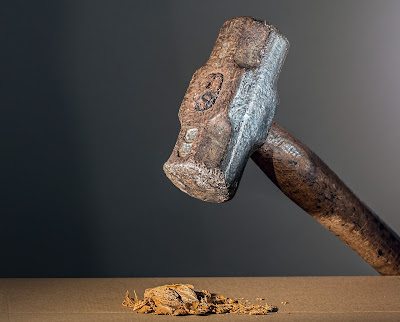
And remember, both are quite useful.

Before we get into the nitty gritty this week, don't forget to sign up for my weekly newsletter to get all my updates right in your inbox. Also, if you've got a bit of spare cash that you'd like to use to help keep the wheels turning, consider becoming a Patreon patron!

Lastly, to be sure you're following all of my followables, check out my LinkTree!

Flexibility Versus Reliability


Before we get too deep into things, I have played through a variety of characters on all sides of these arguments, as well as middle ground concepts like paladins, rangers, magi, etc. who combine the martial and the magical. With that said, I do have a noted preference for brutes, bruisers, and bludgeoners. However, when people hold up full caster classes as "god tier" options for character power level, and treat martial characters without magic as sub-optimal choices hardly worth considering, I find that it's usually because of two major differences.

The first is player philosophy. The second is player goals and ideals, which may or may not be in-line with the goals and ideals of the plot and the game. But we'll get into that.

Let's begin at the beginning, shall we?

The most common reason I've seen people argue that spellcasters are inherently better choices for characters in terms of mechanical advantages is that they have more options; more tools they can bring to the game. A wizard, sorcerer, or cleric, properly equipped, can often overcome problems with a wave of their hand, and a whispered word. The guards don't want to let the party in? A simple enchantment spell can make you their best friend for a little while, or leave them staring off into space while you just walk by. The next stage of the journey is atop a sheer cliff? A spell can easily fly one up there, allowing them to keep progressing with minimal interruption. And if a creature proves hostile, well, there's always a lightning bolt to reduce them to ash.

Now, having both watched and played the utility caster who acts as the party's Swiss army knife, I am not hating on this path. It is astonishingly convenient for all concerned to have a wizard who can magic away problems so that you can progress. It is the flexible solution, allowing you to subtly alter the rules of a given situation so that you can more forward.

However, as a counterpoint, magic is not a reliable solution. This is something that I always keep foremost in my mind as a player, and it is something that I feel entirely too many folks forget when they settle down at the table.

There's a six on each of these dice... just need them both to come up!

Magic, as a solution, has inherent weaknesses that can undermine its usefulness as a tool. For example, a lot of spells give their target a saving throw, and often that means the target walks away unscathed if they make it. There are entire creature types that are immune to certain kinds of spells and effects, and there are a lot of creatures with inherent resistances to spells (in Pathfinder, at least, this doesn't apply as much to the 5E players reading this). Not only that, but a given character only has so many spell slots per day, and they need to have the proper number of the proper spells available to cast. Lastly, an aspect that's often forgotten, spellcasters need to have the proper materials and focuses in order to make their magic work; if these materials are lost, stolen, destroyed, etc., they're rendered powerless. Spells have specific durations, as well, and if you use them too soon they'll wear off before they're needed. On the other hand, if you wait till you're in the thick of danger, you may have to choose between which spells are going to be most effective, finding you're hampered by action economy. Then there's the usual issue with anti-magic fields that always seem to crop up when they're most inconvenient.

Now, none of that is to say that magic isn't useful, or that you can't solve problems with it. That was merely to show that it is not a blanket solution that always succeeds... especially since magic is a limited resource. You can only cast so many spells of each level per day before you're tapped out.

The abilities of martial characters, on the other hand, tend to be far more reliable. The fighter's feats don't run out, the barbarian's damage reduction is always there, and while they might not be a strictly martial class, a rogue's sneak attack is always going to be effective in bringing a target down. Any martial character could just as easily solve the issues mentioned above, as well. The guard doesn't want to let the party pass? Perhaps the charismatic fighter manages to bribe them, using Diplomacy to defuse the situation. It's possible the barbarian swings their reputation around, making an Intimidate check to get the guard to step aside. Or the rogue just knifes them, or uses a poison to render the guard unconscious or dead, allowing the party to walk on past.

There's a mundane solution to most issues in a game. Because yes, you can cast knock, but you can also just pick the lock, or bash down the door. You could fly up a sheer cliff, or onto the roof of an enemy stronghold, but you could also just climb up there, possibly with the aid of a rope and a grappling hook. You can make yourself invisible to avoid detection, that's true, but a decent Stealth roll can do wonders for you. And unlike with magic, these mundane solutions usually don't have built-in limitations on how often you can use them to solve a problem, nor is there a save to resist them. You can Intimidate one guard, or 5, or 10 as need be. You can huck that grappling hook as many times as you need to, and you can haul yourself up an entire mountain hand-over-hand if the need arises. You can pick every lock you come across, if you so desire, and never once worry about needing to rest to regain your daily uses.

The drawback for most martial characters is, of course, they are more limited in the resources they can swing around. As a result they tend to be very good at a select few things, but those select few things don't require them to have a spell component pouch, to worry about anti-magic fields, spell resistance, or saving throws. They just have to hit the target, or beat the DC. But the flip side of this is that you may find yourself trying to solve a delicate problem with a blunt instrument, because when you're a hammer that's the tool you brought to the game.

White Room Power Play


The second part of this debate is one I honestly find odd, but it's something I run into time and time again so I thought I'd comment on it. Now, "white rooming" is when you set up an ideal situation where you have all the time, resources, and preparation you need to achieve a specific thing. Basically it's the RPG equivalent of asking what Batman could accomplish if you gave him a challenge, and enough time to build a specific solution to overcome it.

And things can get rather out-of-hand when it comes to what you can do with spellcasters in a lot of games. From an archmage creating their own demiplane, to clerics creating an army of undead minions, to a sorcerer crafting enchanted items powerful enough to shake the foundation of the setting, these are sometimes held to the gold standard of what the possibilities are of a particular character.

Phenomenal cosmic power!

Sure, that's neat if that's the story you want to tell. However, most of the time accomplishing these things will require massive hoards of treasure in costly spell components, months-to-years of in-game time to complete, and for a character to achieve extremely high levels just to gain access to the spells in question... which are all rather extreme limitations in your average campaign.

This is my way of saying sure, you'll be able to do that eventually, but it likely isn't going to affect the campaign we're actually playing in because you don't have the time, resources, and power you'd need to accomplish those goals.

This is where we get into player goals versus game goals. Because if you're in a game you might have the stated goal of, "Stop the lich king from rising," or, "End the war between these two nations." And if a player wants to uncover the eldritch secrets to folding reality in order to make their own private plane of existence where time stands still, that's cool... but how does that solve the problem of the campaign? More to the point, if the campaign is set to end at level 13-14, but the spellcaster needs to be level 17 before they can even begin to accomplish this goal, it's all epilogue that's out of the realm of the here and now. It would be no different than saying the barbarian became king of his own border nation, or the monk achieved inner perfection and rose to the position of a demigod; it wasn't a part of the campaign, so it's just a part of your personal story and narrative.

To be clear, this is not to knock anyone's preferred storytelling flavor or fun. If that's the kind of narrative that gets your wheels turning, and you enjoy telling the story of just how your character eventually achieved that goal (along with the spreadsheet of how you did it once the campaign was over), then more power to you. However, that kind of setup may do nothing for other players, who get far more excited about the idea of burying an ax in a demon lord's skull, or eventually worming their way into the position of Master of Whispers in a shadowy spy network.

It's just important to remember that if you're comparing toolkits that you need to look at the game in question. Because if this plot is going to benefit from the use of a Hammer, then it's important to have at least one big, ugly sledge at the table.

Check Out Some Gaming Stories!


For folks who haven't been keeping up on my recent changes, I've been largely hosting my Table Talk feature on Vocal, rather than here on Improved Initiative. I talked about this a bit ago in You're Not Missing My Updates (They're Over on Vocal). The short version is that Vocal pays a lot more than my blog does, and I'm trying to capitalize on that as much as I can... but it's tough getting eyeballs and fighting the algorithm. So take a moment to check out some of the following pieces!


Any reads and shares are much appreciated. And, of course, the more traction particular articles get, the more likely it is I'll write more like them in the future. So if you see something you like, help me spread the word on it!

Like, Share, and Follow For More!


That's all for this week's Crunch topic! For more of my work, check out my Vocal archive, and stop by the YouTube channel Dungeon Keeper Radio! Or if you'd like to read some of my books, like my alley cat noir novel Marked Territory, my sword and sorcery novel Crier's Knife or my latest short story collection The Rejects, head over to My Amazon Author Page!

To stay on top of all my latest releases, follow me on FacebookTumblrTwitter, and now on Pinterest as well! And if you'd like to help support me and my work, consider Buying Me A Ko-Fi or heading over to The Literary Mercenary's Patreon page to become a regular, monthly patron! Even a little bit of help can go a long way, trust me on that one.

Saturday, September 22, 2018

6 Dos and Don'ts of Character Flaws

When it comes to making characters, there are a lot of players and dungeon masters alike who feel the process isn't complete until a character has been assigned their flaws. However, before you start rubbing in grit or distressing your PC willy nilly, I have a couple of suggestions that I think might help keep your flaws interesting and engaging, without going overboard and creating problems for the rest of the table.

What's your flaw? "I'm too honest." That's not really a flaw... "I don't give a shit what you think."
To get a sense of what I'm talking about, consider some of the following dos and don'ts. And, for more on this topic, refer to the entry How To Write Flawed Characters over on my sister blog The Literary Mercenary.

And if you're a dungeon master looking for a handy list of fully-fleshed characters, you might want to check out 100 NPCs You Might Meet At a Tavern, which I wrote for Azukail Games a bit ago. A lot of the following suggestions went into the process for making that list.

#1: Do Assign Active Flaws


Geoff just polymorphs into a goat when he's scared. Also he can't cast spells as a goat.
Something a lot of players will do to try to minimize character flaws is to pick specific flaws that won't have any real impact on their character's story, or which aren't going to come up all that often. As an example, say you have a character who has a paralyzing fear of deep water. If the whole game takes place in a desert, where there is never any water deeper than mid-thigh, then this flaw isn't really a flaw. If this character has to get onto a ship, though, or finds themselves in a race against time in a flooding cavern, then this would be a lot more active as a flaw.

If a flaw is never activated, and always hangs out in the background, then it doesn't really matter. If you can go the entire length of a campaign without this flaw ever coming up, choose something else.

#2: Don't Use Character Flaws As An Excuse To Disrupt


"That NPC looked at me funny... I kill him!" That's the king. "So? I'm short-tempered!"
We've all been at a table with that player who picks a flaw specifically to push everyone else's buttons. Maybe they choose to play someone who's really, needlessly aggressive. They might choose to be actively prejudiced for no particular reason. All too often they have some kind of sex addiction, or they're a kleptomaniac. And then when you call them on this behavior, they hold up their hands and say, "Hey, I'm just playing my character's flaw!"

As I said in The Dangers of The Phrase "I'm Just Playing My Character", you don't get to duck the blame for annoying the rest of the table, disrupting the game, or making people uncomfortable. You still made this character, and you are the one who assigned them this flaw. As such, the actions you've chosen to take are still your responsibility as a player.

#3: Do Show Character Development Through Flaws


I bring them in alive, this time. Maybe Haran was right, and I don't have the right to judge them after all.
Nowhere is it written in stone that characters have to face (and overcome) their flaws. In fact, you might end the game with the same swaggeringly overconfident, boorish, more-than-slightly toxic character you started the campaign with. That's fine... but it should be done as a deliberate decision from you, as the player.

Generally speaking, flawed characters are more interesting when we see them struggle with their flaws, and at least attempt to overcome them.

Does the coward learn to face their fears, and leap into the fray in time to save their friends? Will the aloof loner learn to open up and make real connections among the party? Does the arrogant warrior learn humbleness watching the selfless cleric? You don't have to do this, but characters that have development arcs are generally the ones we tell stories about long after the campaign is over.

#4: Don't Just Pick The Big, Sexy Flaws


Yeah, my character's a pyro! Guys? Seriously, guys, why are you laughing?
I have a theory that picking big, sexy flaws for characters comes from the same, knee-jerk reaction that makes players always kill off their character's entire family. Everyone does it, but very few people do it thoughtfully and deliberately. As such, a thing that was supposed to be a single aspect of your character grows, cannibalizes everything else, and becomes their single, defining personality trait. Worse, it often ends up becoming a parody of what it was supposed to be in the first place.

Take the pyromaniac sorcerer. An unhealthy obsession with fire that occasionally tips over into a kind of blind need to burn enemies where they stand can make for a character who feels a little unbalanced, and who is trying to maintain an addiction without hurting themselves or the people around them. That's an interesting, compelling flaw. A character whose first reaction to an NPC not doing what they want, or who simply wants to commit a string of arson across the city for no reason other than because, "He really likes fire, guys!" is not just a boring character, but they've become a parody of what they could have been. The same is true of the character who suffers from dissociative identities, the sadist who wants to torture everyone they come across, or the rage case who reacts to any form of criticism with violence. These aren't flawed characters... these are stereotypes of one specific flaw that are standing in for a character.

Does that mean you should only limit yourself to small flaws? Hell no! If you want to go big and operatic, then do your thing! Just remember that you don't want to Flanderize yourself.

#5: Do Choose Flaws That Appeal To You


My druid has no idea how to people! It's like that intro arc in Tarzan!
A lot of the time players treat flaws like vegetables... they know they should sprinkle a few in there, but they don't want to, because it's just clashing with that they've made. Rather than trying to force a flaw you don't like into your character, consider making a flaw that you actually relish bringing to the table. Big or small, just make sure you are having fun with it (and that it meets the former criteria in the other sections).

A character trying to reform their murderous ways, and thus who has to constantly try to restrain themselves from violence until there's no other way, can be fun. So can a character who tends to be deceitful, or one who has to learn important lessons about manners. Any flaw can work, but you have to want to play it in order for it to be enjoyable. Because if you're not having fun with it, neither will the rest of the table.

#6: Don't Compromise Your Performance


Can he help? I don't know, maybe... but isn't he cool?!
This is a story version of the Shiny Blue Ball syndrome I mention from time to time. In this case, players can get so caught up in the story and potential surrounding their character's flaws that they forget the character also has to perform a function within the story, and as part of the party. Which is why it's worth asking yourself if your flaw is going to get in the way of you doing your job, and thus getting the rest of the party to fire you.

As I said way back in Remember, The Party Is Under No Obligation To Adventure With You, your character is essentially part of a band. Your job is to show up to the gig on time, and do your job (play the drums, slay the goblins, cast the spells, what have you). If your flaw prevents you from doing that, then your character has shot themselves in the foot regarding their usefulness to the game.

In more concrete terms, say you want to play a PC who's a drug addict. Long as they've got their fix, they're good to go. Sharp, strong, and while they might be a little overly enthusiastic, they perform when you need them. But how many times will the party have to dig you out of an opium den and sober you up to go adventuring? How many days will you be fatigued and dealing with a -6 penalty on all your rolls because you didn't get your pipe? And at what point will they decide to just leave you in whatever den of iniquity you holed up in after your last dungeon delve, and just go on without you because you're too much of a liability?

These questions should be asked of all flaws. Whether it's a character who can't control their temper, who commits too many crimes, or who is constantly doing things, "because that's my flaw!" that get everyone else in trouble, too, you need to know how many shenanigans your table is willing to put up with. Because character flaws are best when they aren't a bigger obstacle than the lich king you're trying to oppose.


That's all for this particular Fluff installment! If you've got any particular character flaws you love, or horror stories you want to share, leave them in the comments below! For more of my work, head over to my Vocal page, or just click my Gamers archive to see only my tabletop articles. Alternatively, you could head over to the YouTube channel Dungeon Keeper Radio where I help out quite a bit. To stay on top of all my releases, follow me on Facebook, Tumblr, and Twitter! Lastly, if you'd like to support me, you could Buy Me A Ko-Fi or go to The Literary Mercenary's Patreon page to become a monthly patron. Either way, there's a load of free gaming swag in it for you as a thank you!

Sunday, February 21, 2016

The 4 Major Flaws of Character Building

If you've ever frequented an RPG forum, or spent any time in social media groups dedicated to gaming, you've likely seen your share of ridiculous character builds. Whether it's the warrior with impenetrable armor, the magic user with the one-shot nuclear spell, or the social sledgehammer who can convince anyone of anything, these builds seem like unbeatable titans.

I'll let you in on a little secret, though... most of them are houses of cards.

Quail before me!
The next time you're presented with a seemingly overpowered character build, the first thing you need to do is read the fine print to be sure there were no mechanical mistakes (bonuses that don't stack being added twice, wording that's been changed or interpreted differently from errata, etc.). If all the actual numbers check out, the next thing you need to do is run down this list of flaws which could take a powerful build, and put a big, fat crack right down the face plate.

Mistake #1: Depending on Limited Use Powers


How many bullets does your big gun have?
One of the most common methods of balancing a game is to limit the number of times per day characters can use powerful abilities. Think about every first-person shooter you've ever played, and ask yourself how many rounds of ammo you found for that game's BFG 9000. You know, that ridiculous, kill-almost-anything weapon that was meant for boss battles, but which only had 3 or 4 shots in it if you saved them all till the end of the game?

Some character builds are the equivalent of that gun. Which is why, before you start smack-talking your DM, you should take a look at how many times you can use that big bang. Because it's entirely possible for you to put everything you've got into one, big blast that will send tremors through the very earth... but what happens if there's another big boss that comes after the one you just destroyed? Or if you miss, and can't do it again until you've had a lie down and a full night of sleep?

Mistake #2: Ignoring The Character's Lower Levels


What do you do between levels 1 and 15?
While not every system is level-based, every system does have what's considered a starting point for the average player character. Then as the game progresses and your characters gain strength, you earn experience points, or you're given more power. One of the biggest flaws a character build can have is focusing on what you're going to do once you're a veteran character with a lot of experience under your belt, and not asking how you're going to survive long enough to get there, or how you're going to contribute to the game before hitting your plateau.

The longer it takes a character build to hit its stride, the bigger this flaw becomes. Because sure, if you hit level 20 and you've put all your ducks in a row, then you have a really powerful character. If you're not starting out at your build's sweet spot, though, you need to know what you're going to do until you get there.

Mistake #3: Relying on Rare Equipment/Abilities


Behold, the Sacred Sphere of... what do you mean I can't find one?
Any time a character build requires a character to get his or her hands on powerful relics, or rare powers, it's important to curb your enthusiasm. For example, the book might have stats for the Mallet of Storms, the weapon wielded by the god of thunder, but it is folly to assume that, as a player, you'll be able to find something so rare, much less allowed to wield it. And while it's true that the master of the rare and exotic art of Knoph-Reh can tear an enemy's soul out through his mouth, it's important to make sure that your character will find a master, and be able to learn it before you hinge all your hopes on it.

The easiest way to fix this problem is to sit down with your DM in Session 0 to make sure that what you want to do will be possible within the scope of your game. If you're not sure what that is, then you should check out The Importance of Session 0 in Your Tabletop Games.

Mistake #4: Not Looking For Your Build's Weaknesses


I can totally take that raging green monster!
Everything has a weakness. That's both a truism of storytelling, and a part of an RPG's inherent balance. You're always going to have weaknesses no matter what character you play. It only becomes a problem when you go into the game unaware of your weaknesses, and having no plans for how to deal with situations where your strengths are nullified.

Let's say you have a one-hit wonder; the kind of warrior whose sword can destroy any enemy that comes within reach in a single slash. The problem is that not all enemies will fight fair. So, instead of standing and fighting,the wizard you're fighting floats into the air and out of sword reach. Or, alternatively, rows of crossbow snipers take aim from cover, turning your unbeatable swordsman into a rather shamefaced pincushion. Or you find yourself facing the angry dead, whose insubstantial bodies cannot be harmed by steel, but whose icy touch can sap the life from your bones. Or you could take an example from the other direction. Say you've created a powerful sorcerer who can bend fire to his will... what happens when he has to fight demons, to whom fire is a warm bath? Or creatures of pure elements, who are healed by being bathed in what was supposed to be a torrent of death? Or you have an assassin whose poisons and precise strikes are rendered useless against the walking dead, or creatures from beyond the stars whose anatomies are impossible to understand?

A character should be geared toward a particular end. However, if your big trick isn't going to fix the problem, it's important to have a few other tools in your toolbox so you don't find yourself sidelined. Or, even worse, killed.

As always, thanks for dropping in to check out this week's post. If you'd like to help support Improved Initiative, and keep content like this coming to you on the regular, then stop by The Literary Mercenary's Patreon page to make a pledge. Even as little as $1 a month ($12 a year) can make a big difference. Lastly, if you want to make sure you don't miss any of my updates, then follow me on Facebook, Tumblr, and Twitter, too.