Showing posts with label white room. Show all posts

Sunday, February 11, 2024

Game Masters, When Running Army Men, Avoid White Rooming At All Costs

Since my RPG Army Men: A Game of Tactical Plastic recently dropped (and I'm hard at work on supplemental material for it) I've had it on my brain quite a lot recently. Which is why for this week's Crunch post I wanted to highlight something for the Game Masters who are planning on running a campaign (or even just a handful of missions) with this game.

Namely that under no circumstances should you be running your encounters in open, white rooms that are utterly disconnected from one another, with perfect lighting and fire lines. Because dynamic combat and strategy are the name of the game.

That's initiative! Go! Go!

Before we get into the nitty gritty this week, don't forget to sign up for my weekly newsletter to get all my updates right in your inbox. Also, if you've got a bit of spare cash that you'd like to use to help keep the wheels turning, consider becoming a Patreon patron! Also, be sure you're following all of my followables, check out my LinkTree.

Lastly, for hundreds of extra articles on gaming, weird history, and for more free fiction, check out my Vocal archive, too!

"Tactical" is in The Title, After All


When you sit down to design a game, you build in certain assumptions of play. For example, if you make a high fantasy game where magic is commonly available, then part of the challenge rating of your encounters assumes that players will have access to spellcasting, magic items, and so on. If a Game Master decides to then restrict the availability of magic, that's going to throw off the game's balance and challenge because players are now being forced to participate with one hand tied behind their backs in a way that the designer never intended.

The same thing will happen if you try to run Army Men in an open field where two lines of enemies line up, and keep rolling dice until one side or the other is dead.

Cover! Where is my damn cover!?

When I sat down to create Army Men, I wanted to make a version of the DND 5E ruleset that had more options when it came to combat tactics. From a morale system, to expanded rules for cover, to a wider variety of weapons, there's a lot of stuff in here... but one of the assumptions that I made was that Game Masters would create dynamic encounters that put a lot of different battlefield conditions into play in order to get the most out of the game. It's why there are so many rules for all of these different aspects.

And it's why I would strongly recommend that Game Masters use those rules! Because tactics and strategy is a big part of the challenge your squad will have to face, so remember to consider:

- Lighting Conditions: None of the resinous peoples have darkvision without the aid of gear.
- Cover: A huge concern, everything from trenches and sandbags to trees and chest-high walls.
- Height: Higher ground has always been desirable.
- Ammunition: From the Hollywood Guns rules where you don't bother with ammo tracking at all, to low-ammunition situations where every round is valuable, this is a big deal for challenge
- Time: When a mission is time sensitive, you can't spend days raiding, retreating, and resting.
- Alerting The Enemy: Gunfire travels, and if your squad opens up that's going to attract more threats to their position.

And in addition to all of those reminders, Army Men's first supplement Threat Assessments recently dropped, which is full of additional enemy types with their own, unique abilities that can cause serious problems for your squad (in case you needed more tools to do so).

It Helps To Think Big Picture


When designing encounters in most games, but particularly for Army Men, it's important for a Game Master to look down at the full map, and ask what might go right or wrong when determining challenge for their squad. Because too often we just end up looking at a creature's CR, and plopping them down on the map without utilizing their full breadth of abilities and stretegies that makes up that challenge.

Which is why so often your encounters end up feeling too easy, or you have to bulk up enemy hit points or numbers just to challenge your players. Because this time it's the monsters who have one hand (or other miscellaneous limb) tied behind their backs.

What do you MEAN it's still up?!

As an example, many of the vespoids (the huge, insectoid creatures that are one of the prime antagonists in Army Men) have a hive mind feature. This means that whenever your squad attacks, that information is immediately conveyed to the hive, and it can make decisions based on its available data. That might mean that your squad has 1d6 rounds before more enemies show up. Even if they manage to ambush these bugs and kill them before they know what's going on, their deaths will still be registered to the hive mind... they just won't know the precise nature of the threat.

That feature is a large part of what makes these specific kinds of vespoid such a threat to a squad, because if you fight one of these creatures, you're fighting all of them. There is no way to take out an individual cluster of drones or soldiers without putting all of the others on high alert unless it's done at a range where they're not connected to the rest of the hive. They can act in perfect coordination, and even worse for a squad, hive minds are often immune to fear... which means that the squad has to struggle with Morale effects, while their enemy does not.

Consider, if you will...

It helps to picture a mission from a bird's eye view, and to see all of these separate encounters not as disparate, unconnected events, but as parts of a whole. What a squad does, and how well they succeed or fail, should organically effect the rest of their mission in important ways.

For example, say your squad was tasked with dealing with a criminal syndicate who has been stealing ordnance from the military, and trafficking those arms. If your squad poses as corruptible members of the military, and makes the right overtures to sell additional weapons, they might get in close with the customers. If they pass all the social checks, they might even be able to get everyone drunk enough at a post-sale celebration that they pass out, or are severely hampered. This puts the enemy at an extreme disadvantage when the squad starts cuffing the criminals to hand over for prosecution.

Strategy carried the day in this example, without a shot being fired.

However, say your squad instead snapped up a criminal contact and squeezed them for the information about who was buying guns. Yes, they might get the information about who is behind these crimes, where they are, etc., but that contact going missing could put the gun runners on high alert. And if the squad chooses to go after the war profiteers with their fingers on their triggers, now they're facing a group of people who are ready for a fight, and who have prepared themselves accordingly with a booby trapped and reinforced warehouse where they store their merchandise, body armor, heavy weapons, and other threats that put the squad at a dangerous disadvantage. This version is much more difficult as far as challenge goes, but that challenge is a direct result of actions taken (or not taken) up to this point.

The enemies in question didn't change in both scenarios. All the NPCs you had at the beginning are still there, as are all the weapons, armor, traps, etc., that could have been brought to bear agaisnt your squad. But what options the players chose, the strategy they used, and how well their dice rolled (as they would have a serious fight on their hands if their cover was blown while they were in the middle of enemy territory, and the gang had to get rid of them) all play a part in how events go down.

This is the sort of mindset a Game Master should adopt in order to make their games feel more organic, and to give as much power to their players as possible. Think of the mission as a clock. You choose the pieces, you fit them together, and you set it in motion... from that point onward, you're just watching what your players do, and making sure that all the moving pieces act in accordance to the abilities and strategy they bring to bear. Everything should be connected, because that's what's going to lead to an overall better game.

Like, Follow, and Stay in Touch!


That's all for this week's Crunch post. To stay on top of all my content and releases, make sure you subscribe to my newsletter at the bottom of the page!

Again, for more of my work, check out my Vocal archive, and stop by the Azukail Games YouTube channel, or my Rumble channel The Literary Mercenary! Or if you'd prefer to read some of my books, like my dystopian sci-fi thriller Old Soldiers, my hardboiled gangland noir series starring a bruiser of a Maine Coon with Marked Territory and Painted Cats, my sword and sorcery novel Crier's Knife or my latest short story collection The Rejects, then head over to My Amazon Author Page!

To stay on top of all my latest releases, follow me on FacebookTumblrTwitter, and now Pinterest as well! To support my work, consider Buying Me a Ko-Fi, or heading to The Literary Mercenary's Patreon page to become a regular, monthly patron. That one helps ensure you get more Improved Initiative, and it means you'll get my regular, monthly giveaways as a bonus!

Saturday, February 26, 2022

"Casters Versus Martials" is Really Just "Toolboxes Versus Hammers"

Perhaps one of the oldest debates in RPGs is the caster versus martials debate. Wizard or fighter? Sorcerer or barbarian? At the end of the day, though, I feel like entirely too many people who want to have this debate are talking past one another rather than actually discussing the same thing. So I wanted to take this week's Crunch topic to weigh in on what I would like to rename the Toolbox Versus the Hammer.

Because I think this actually gets us a lot closer to what is at the heart of a lot of these (sometimes quite heated) discussions.

And remember, both are quite useful.

Before we get into the nitty gritty this week, don't forget to sign up for my weekly newsletter to get all my updates right in your inbox. Also, if you've got a bit of spare cash that you'd like to use to help keep the wheels turning, consider becoming a Patreon patron!

Lastly, to be sure you're following all of my followables, check out my LinkTree!

Flexibility Versus Reliability


Before we get too deep into things, I have played through a variety of characters on all sides of these arguments, as well as middle ground concepts like paladins, rangers, magi, etc. who combine the martial and the magical. With that said, I do have a noted preference for brutes, bruisers, and bludgeoners. However, when people hold up full caster classes as "god tier" options for character power level, and treat martial characters without magic as sub-optimal choices hardly worth considering, I find that it's usually because of two major differences.

The first is player philosophy. The second is player goals and ideals, which may or may not be in-line with the goals and ideals of the plot and the game. But we'll get into that.

Let's begin at the beginning, shall we?

The most common reason I've seen people argue that spellcasters are inherently better choices for characters in terms of mechanical advantages is that they have more options; more tools they can bring to the game. A wizard, sorcerer, or cleric, properly equipped, can often overcome problems with a wave of their hand, and a whispered word. The guards don't want to let the party in? A simple enchantment spell can make you their best friend for a little while, or leave them staring off into space while you just walk by. The next stage of the journey is atop a sheer cliff? A spell can easily fly one up there, allowing them to keep progressing with minimal interruption. And if a creature proves hostile, well, there's always a lightning bolt to reduce them to ash.

Now, having both watched and played the utility caster who acts as the party's Swiss army knife, I am not hating on this path. It is astonishingly convenient for all concerned to have a wizard who can magic away problems so that you can progress. It is the flexible solution, allowing you to subtly alter the rules of a given situation so that you can more forward.

However, as a counterpoint, magic is not a reliable solution. This is something that I always keep foremost in my mind as a player, and it is something that I feel entirely too many folks forget when they settle down at the table.

There's a six on each of these dice... just need them both to come up!

Magic, as a solution, has inherent weaknesses that can undermine its usefulness as a tool. For example, a lot of spells give their target a saving throw, and often that means the target walks away unscathed if they make it. There are entire creature types that are immune to certain kinds of spells and effects, and there are a lot of creatures with inherent resistances to spells (in Pathfinder, at least, this doesn't apply as much to the 5E players reading this). Not only that, but a given character only has so many spell slots per day, and they need to have the proper number of the proper spells available to cast. Lastly, an aspect that's often forgotten, spellcasters need to have the proper materials and focuses in order to make their magic work; if these materials are lost, stolen, destroyed, etc., they're rendered powerless. Spells have specific durations, as well, and if you use them too soon they'll wear off before they're needed. On the other hand, if you wait till you're in the thick of danger, you may have to choose between which spells are going to be most effective, finding you're hampered by action economy. Then there's the usual issue with anti-magic fields that always seem to crop up when they're most inconvenient.

Now, none of that is to say that magic isn't useful, or that you can't solve problems with it. That was merely to show that it is not a blanket solution that always succeeds... especially since magic is a limited resource. You can only cast so many spells of each level per day before you're tapped out.

The abilities of martial characters, on the other hand, tend to be far more reliable. The fighter's feats don't run out, the barbarian's damage reduction is always there, and while they might not be a strictly martial class, a rogue's sneak attack is always going to be effective in bringing a target down. Any martial character could just as easily solve the issues mentioned above, as well. The guard doesn't want to let the party pass? Perhaps the charismatic fighter manages to bribe them, using Diplomacy to defuse the situation. It's possible the barbarian swings their reputation around, making an Intimidate check to get the guard to step aside. Or the rogue just knifes them, or uses a poison to render the guard unconscious or dead, allowing the party to walk on past.

There's a mundane solution to most issues in a game. Because yes, you can cast knock, but you can also just pick the lock, or bash down the door. You could fly up a sheer cliff, or onto the roof of an enemy stronghold, but you could also just climb up there, possibly with the aid of a rope and a grappling hook. You can make yourself invisible to avoid detection, that's true, but a decent Stealth roll can do wonders for you. And unlike with magic, these mundane solutions usually don't have built-in limitations on how often you can use them to solve a problem, nor is there a save to resist them. You can Intimidate one guard, or 5, or 10 as need be. You can huck that grappling hook as many times as you need to, and you can haul yourself up an entire mountain hand-over-hand if the need arises. You can pick every lock you come across, if you so desire, and never once worry about needing to rest to regain your daily uses.

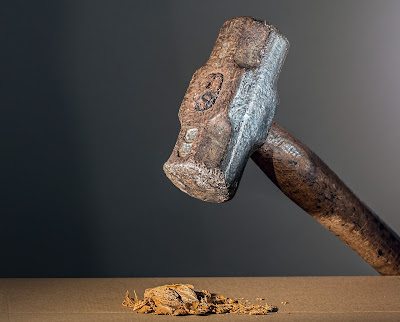
The drawback for most martial characters is, of course, they are more limited in the resources they can swing around. As a result they tend to be very good at a select few things, but those select few things don't require them to have a spell component pouch, to worry about anti-magic fields, spell resistance, or saving throws. They just have to hit the target, or beat the DC. But the flip side of this is that you may find yourself trying to solve a delicate problem with a blunt instrument, because when you're a hammer that's the tool you brought to the game.

White Room Power Play


The second part of this debate is one I honestly find odd, but it's something I run into time and time again so I thought I'd comment on it. Now, "white rooming" is when you set up an ideal situation where you have all the time, resources, and preparation you need to achieve a specific thing. Basically it's the RPG equivalent of asking what Batman could accomplish if you gave him a challenge, and enough time to build a specific solution to overcome it.

And things can get rather out-of-hand when it comes to what you can do with spellcasters in a lot of games. From an archmage creating their own demiplane, to clerics creating an army of undead minions, to a sorcerer crafting enchanted items powerful enough to shake the foundation of the setting, these are sometimes held to the gold standard of what the possibilities are of a particular character.

Phenomenal cosmic power!

Sure, that's neat if that's the story you want to tell. However, most of the time accomplishing these things will require massive hoards of treasure in costly spell components, months-to-years of in-game time to complete, and for a character to achieve extremely high levels just to gain access to the spells in question... which are all rather extreme limitations in your average campaign.

This is my way of saying sure, you'll be able to do that eventually, but it likely isn't going to affect the campaign we're actually playing in because you don't have the time, resources, and power you'd need to accomplish those goals.

This is where we get into player goals versus game goals. Because if you're in a game you might have the stated goal of, "Stop the lich king from rising," or, "End the war between these two nations." And if a player wants to uncover the eldritch secrets to folding reality in order to make their own private plane of existence where time stands still, that's cool... but how does that solve the problem of the campaign? More to the point, if the campaign is set to end at level 13-14, but the spellcaster needs to be level 17 before they can even begin to accomplish this goal, it's all epilogue that's out of the realm of the here and now. It would be no different than saying the barbarian became king of his own border nation, or the monk achieved inner perfection and rose to the position of a demigod; it wasn't a part of the campaign, so it's just a part of your personal story and narrative.

To be clear, this is not to knock anyone's preferred storytelling flavor or fun. If that's the kind of narrative that gets your wheels turning, and you enjoy telling the story of just how your character eventually achieved that goal (along with the spreadsheet of how you did it once the campaign was over), then more power to you. However, that kind of setup may do nothing for other players, who get far more excited about the idea of burying an ax in a demon lord's skull, or eventually worming their way into the position of Master of Whispers in a shadowy spy network.

It's just important to remember that if you're comparing toolkits that you need to look at the game in question. Because if this plot is going to benefit from the use of a Hammer, then it's important to have at least one big, ugly sledge at the table.

Check Out Some Gaming Stories!


For folks who haven't been keeping up on my recent changes, I've been largely hosting my Table Talk feature on Vocal, rather than here on Improved Initiative. I talked about this a bit ago in You're Not Missing My Updates (They're Over on Vocal). The short version is that Vocal pays a lot more than my blog does, and I'm trying to capitalize on that as much as I can... but it's tough getting eyeballs and fighting the algorithm. So take a moment to check out some of the following pieces!


Any reads and shares are much appreciated. And, of course, the more traction particular articles get, the more likely it is I'll write more like them in the future. So if you see something you like, help me spread the word on it!

Like, Share, and Follow For More!


That's all for this week's Crunch topic! For more of my work, check out my Vocal archive, and stop by the YouTube channel Dungeon Keeper Radio! Or if you'd like to read some of my books, like my alley cat noir novel Marked Territory, my sword and sorcery novel Crier's Knife or my latest short story collection The Rejects, head over to My Amazon Author Page!

To stay on top of all my latest releases, follow me on FacebookTumblrTwitter, and now on Pinterest as well! And if you'd like to help support me and my work, consider Buying Me A Ko-Fi or heading over to The Literary Mercenary's Patreon page to become a regular, monthly patron! Even a little bit of help can go a long way, trust me on that one.