Showing posts with label species. Show all posts

Monday, April 3, 2023

Which of My Ongoing Series Would You Like To See Continue?

Over the 10 years or so that I've been running Improved Initiative I've started a lot of different series. While many of them have waxed and waned in popularity, I thought I'd take this Monday to ask my regular readers which one of these series you'd like to see get more attention going forward. And if you're a relatively recent addition to my audience on here, you might find a series you haven't even come across yet!

So if you have a strong opinion about what you want to see more of, leave it in the comments below! Or if you want me to start a new series discussing something I didn't mention here, or haven't covered yet, let me know. If enough people request the same thing then it's definitely something that will get my attention going forward.

The floor is yours!

Before we get into the nitty gritty this week, don't forget to sign up for my weekly newsletter to get all my updates right in your inbox. Also, if you've got a bit of spare cash that you'd like to use to help keep the wheels turning, consider becoming a Patreon patron!

Lastly, to be sure you're following all of my followables, check out my LinkTree!

#1: Character Conversions List


Perhaps the biggest and longest-running list of all the ones on this blog, this series currently has 63 entries on it! They range as far afield as Tyrion Lannister from Game of Thrones, to Harley Quinn from DC Comics, to The Incredible Hulk, Guts from Berserk, all the way to the Death Korps of Krieg in the Warhammer 40K universe.

It's a pretty big project, admittedly.

This series was a major breadwinner for a time, but it's grown steadily less and less popular in terms of views. Which makes sense, given that it was conceived primarily for Pathfinder's first edition, and while I love that game it's definitely seen its player base diminished over the past few years. If you add in the lack of searchability that articles hosted on Vocal have, along with conversion fatigue (since it seems the thirst for this kind of content has largely passed), I've been only adding to it sporadically.

With that said, if folks want to see this project renewed, check out the Character Conversions master list, and share your favorite guides on social media! The more reads they get, the more likely it is that I'll boost this series up over 100 entries.

#2: 5 Tips


Speaking of long-running projects that have gotten pretty involved over the years, my 5 Tips series has quite a number of entries as well! Perhaps the runner-up in terms of numbers (depending on how you count the entries) there are over 40 articles in this series touching on everything from base classes, to player species, to broader pieces of advice like 5 Tips For Creating Fantasy Towns and Cities, 5 Tips For Roleplaying Characters With Mental Disorders, and even 5 Unusual Martial Arts For Your Monks.

There's still plenty of topics to cover with this one!

This series has met with a lot of successes, and a lot of duds, over the years. A recurring theme folks will notice, of course, is that stuff hosted on Vocal hasn't gotten the views I need it to in order to feel like it's worth continuing. That said there are still several books worth of classes I could cover, as well as everything outside the standard species players usually have access to. I could even expand the tips list to cover Starfinder classes and species, or switch this over to cover more World/Chronicles of Darkness concepts, which I already started with entries like 5 Tips For Running Better World of Darkness Games, as well as 5 Tips For Running Changeling: The Lost Games.

#3: Awful Characters You Meet in Your Gaming Career


This series got started off with a one-off joke in the form of The 5 Awful Paladins You Will Meet in Your Gaming Career. The sheer amount of stories people swapped over these 5 archetypes of painful player character took days to die down, and it still sees occasional spikes. It felt like I'd tapped into something people wanted more of, so I followed it up with other entries. While there was still interest, it seemed to have seriously diminishing returns over time. So far the list includes:


While not as numerous as the first two entries on this list, this is the one that felt like it had the most potential in terms of audience interest. What I don't know is whether folks just stopped reading it because the novelty wore off (entirely possible), or the algorithm stopped it from finding its way to folks' faces. Regardless, though, if this is a series you'd like to see more of, share the entries, and maybe comment some of the classes (or even species) you'd like to see more of!

#4: Gaming Etymology


Etymology has a soft spot in my heart, and it's something that always fascinates me. This goes double when it comes to the creatures, classes, etc. that wind up in our games. From articles like What It Really Means To Be a Swashbuckler? to What is a Barbarian?, I had a lot of fun putting these together. When it comes to the projects I work on, though, fun takes a distant second to what will actually get the reads I need to keep the lights on around here.

There are a lot of other subjects to cover, still!

You know the drill by now, of course. If you liked this project, check out the Gaming Etymology master list, and help boost the signal so I can justify putting some more of these together in the near future!

#5: Alignment Deep Dives


While I eliminated the alignment system from my own setting, Sundara: Dawn of a New Age (more on that in the video below), I've always found the absolutism of alignment a fascinating, philosophical discussion. And while it's often very gray and very squishy, sometimes there are enough examples in a character's canon that you can genuinely sus out which of the 9 boxes they fit into... roughly speaking.


The project's original goal was to find at least one character of every alignment box to operate as an example of who best fit into that little square. However, I only got around to really covering The Punisher, Robocop, and Captain America before the project went into the fridge for a while. If you'd like me to pick it back up again, consider suggesting some characters along with sharing any of the existing articles!

Like, Follow, and Stay in Touch!


That's all for this week's Moon Pope Monday. To stay on top of all my content and releases, make sure you subscribe to my newsletter at the bottom of the page!

Again, for more of my work, check out my Vocal archive, and stop by the Azukail Games YouTube channel, or my Daily Motion channel!. Or if you'd prefer to read some of my books, like my sword and sorcery novel Crier's Knife or my latest short story collection The Rejects, then head over to My Amazon Author Page!

To stay on top of all my latest releases, follow me on FacebookTumblrTwitter, and now Pinterest as well! To support my work, consider Buying Me a Ko-Fi, or heading to The Literary Mercenary's Patreon page to become a regular, monthly patron. That one helps ensure you get more Improved Initiative, and it means you'll get my regular, monthly giveaways as a bonus!

Monday, April 18, 2022

What Do You Want To See Next in "Sundara: Dawn of a New Age"?

Regular readers know that since 2021 I've been releasing content for my own fantasy RPG setting Sundara: Dawn of a New Age. This setting is available both for Pathfinder Classic, as well as for Dungeons and Dragons 5th Edition, and my goal with it was to upend a lot of the old stereotypes and conventions that come with fantasy RPGs, but without throwing the baby out with the bath water.

While I covered some of this in my blog What is "Sundara: Dawn of a New Age" All About?, the short version is that I wanted to make a game setting that tossed out monolithic aspects by adding more organic details, and which focused more on embracing new solutions and ways of doing things instead of feeling like it was constantly trying to re-capture some lost, mythic golden age.

Some of the things I've already done include:

- Removing alignment entirely.
- Making the gods more mysterious, and variable.
- Expanded non-human species so they are just as (if not more) varied than humans.
- Removed the concept of countries as we know them today, making power structures more varied.
- Added a bunch of weird guilds, technologies, and uses of magic across the setting.

Stuff is getting strange as the setting spreads out.

While I have plenty of ideas that I could spin up going forward, I wanted to take this week's Monday update to ask what you, the readers, would like to see?

Before we get into it this week, don't forget to sign up for my weekly newsletter to get all my updates right in your inbox. Also, if you've got a bit of spare cash that you'd like to use to help keep the wheels turning, consider becoming a Patreon patron!

Lastly, to be sure you're following all of my followables, check out my LinkTree!

What Would Get You More Interested in The Setting?


When I started this series off it began with Cities of Sundara, providing guides for places like Ironfire: City of Steel and Moüd: City of Bones. After I'd established several of these locations I put out a guide to how gods and the divine work in the setting (which is a lot less structured and established than in many other settings I've seen, where the mythology we hear is often taken as fact), and then moved on to Species of Sundara where I laid out broader diasporas and cultures for dwarves, elves, gnomes, halflings, orcs, and the Blooded (a combination of so-called half-elves and half-orcs). The most recent release, Sellswords of Sundara, covered famous and infamous mercenary companies, and soon there will be a collection of 10 towns with full details.

My question for you, as a Game Master or a player, is what would you be interested in seeing more of going forward? Not just in a, "This would be neat," sense, but in a, "I would pay money to support that," sense.

It's what makes the wheels turn, after all.

Current possible plans include:

- Expansion of locations in the setting (more town and city guides).
- Expansion of species guides (with more creatures and unique player options for them).
- Campaign modules (so players could actually explore some of the setting in more detail).
- World detail guides (moving on from mercenaries to guilds, cults, and other organizations).

While these aren't the only options, there are two projects that are not currently on the roster, and that's releasing a full-sized setting guide, and releasing a full pre-written campaign. The big reason for this is not because I wouldn't be interested in these things, but because this is a one-man show, and those kinds of projects take a lot of time to put together. So, generally speaking, anything that can't be completed in 1-2 months isn't feasible with the audience size Sundara currently commands. If audience demand grows then those things might be possible down the line, but not for the immediate future.

Which is, incidentally, the main reason so much of this content is designed to slot into homebrew games as well. Because if you just want one or two aspects, you can pluck them out of the setting without requiring a bunch of strings to come with it.

Well, most of the time, at least.

Also, for added clarity, I am not the publisher for this setting. I'm just the writer; Azukail Games is the one who's putting out all these splats. So I'm not just asking you what folks would like to see going forward because I want to sell more copies (though that is part of it). It's also because I need to be able to show growing interest in the setting, and to create a track record of positive sales, in order to get further books approved for writing and release.

So tell me what you want to see! Leave a comment below, or reach out to me on social media, but my ears are open for what would get more folks interested in checking out this setting as I add on to it.

Lastly, if you're not familiar with the releases to-date, I've linked them all below with a general description for you. And if you do choose to check them out, I hope they surpass expectation! Don't forget to stop by the Azukail Games YouTube channel, as well, where I have several videos talking about Sundara, the philosophy behind it, and covering some of what I'm trying to do with this particular world. Consider subscribing, as well, as we need to hit 1k followers there, and we haven't even broken 300 yet.


Take a Look For Yourself!


I took a brief break on making new Sundara content at the start of the year, but I'm already back on the wagon! Sellswords of Sundara (available for Pathfinder Classic as well as DND 5E) is full of unique archetypes/subclasses for mercenary companies that come with their own themes, histories, NPCs, rumors, and more, and that should be coming out shortly. Coming soon you'll also have Towns of Sundara, so that folks have some smaller places to put between the cities that are just as interesting and unique in their own ways (and which acts as a good follow up to 10 Fantasy Villages, which kicked this whole project off in the first place).

Cities of Sundara


The setting first began with the Cities of Sundara splats. Self-contained guides to some of the larger and more powerful centers of trade, industry, arms, and magic, these unique locations provide plenty of fodder for character generation and plots. Not only that, but each one comes with unique, mechanical goodies for players and GMs alike to take out for a spin!

- Ironfire: The City of Steel (Pathfinder and DND 5E): Built around the Dragon Forge, Ironfire is where the secret to dragon steel was first cracked. The center of the mercenary trade in the region, as well as boasting some of the finest schools for teaching practical sciences, Ironfire is a place where discovery and danger walk hand in hand!

- Moüd: The City of Bones (Pathfinder and DND 5E): An ancient center of trade and magic, Moüd was lost to a cataclysm, and then buried in myth. Reclaimed by the necromantic arts of the Silver Wraiths guild, this city has once again become a place teeming with life. Despite the burgeoning population, though, it is the continued presence of the undead that helps keep the city running, ensuring that Moüd is not swallowed up once more.

- Silkgift: The City of Sails (Pathfinder and DND 5E): Built on the cottage industry of Archer cloth (an extremely durable material used for sails, windmills, etc.), Silkgift is a place that prizes invention and discovery. From gravity batteries that store the potential of the wind, to unique irrigation systems, to aether weapons, the city positively churns out discoveries... and then there's the canal they cut through the mountains that makes them a major center of trade across the region.

- Hoardreach: The City of Wyrms (Pathfinder and DND 5E): A center of power across an entire region, Hoardreach is ruled over by a Cooperation of five different dragons. A place for refugees and outcasts of all sorts, Hoardreach boasts some of the most unusual citizens and creations from across Sundara. Infamous for their sky ships, which require the cast-off scales and unique arcane sciences of the Dragon Works to take to the air, one never knows just what they'll find in this city built atop a mountain.

- Archbliss: The City of The Sorcerers (Pathfinder and DND 5E): A floating city in the sky, Archbliss has been a refuge for sorcerers for thousands of years. It's only in relatively recent years that the city has allowed those from the ground below who lack the power of a bloodline to join them in the clouds. However, while there are certainly amazing wonders to behold, there is a darkness in Archbliss. Something rotting away at its heart that could, if not healed, bring the city crashing to the ground once more.

Gods of Sundara


Gods of Sundara (available for Pathfinder and DND 5E): In a world with no alignment, and where the gods are often genuinely mysterious forces that are far too large for mortals to truly comprehend, the divine feels genuinely strange and unknown... something that really does have to be taken on faith. This supplement provides a sample pantheon for Sundara, but also provides instructions on how to easily make your own gods in a world where you can't cast a spell and tell whether someone is good or evil.

Species of Sundara


Sundara is filled with creatures that many of us recognize, but I wanted to give greater depth to their cultures, and a wider variety of options. After all, humans always get 15+ ethnicities, languages, and unique histories, while elves, dwarves, orcs, halflings, etc. are almost always left with footnotes, or maybe with a handful of offshoots. So, in short, I wanted to give all the fantastical creatures the treatment that humans usually get in our games.

And there is no human book yet. If readers demand to know more, then I may sit down to pen one... but I figured that humans didn't need to be front-and-center in this setting just yet.

- Elves of Sundara (Pathfinder and DND 5E): Elves are one of the most quintessential fantasy creatures... but if you want to see more than just high elves, wood elves, and elves of the sun and moon, then this supplement has you covered!

- Dwarves of Sundara (Pathfinder and DND 5E): The children of the primordial giants who were meant to fill in the details of the world they'd made (or so the myths say) there are as many kinds of dwarves as their are kinds of giants... and possibly more, depending on who is keeping count.

- Orcs of Sundara (Pathfinder and DND 5E): Supposedly a creation of the elves, none can say for certain exactly how or why orcs have been made. What most agree on is that these creatures are far more than most may think at first glance.

- Halflings of Sundara (Pathfinder and DND 5E): Little cousins to the dwarves, halflings are tough, clever, and not to be underestimated. From living beneath the hills, to taking up residence in the deep forests, halflings in Sundara come in quite a variety!

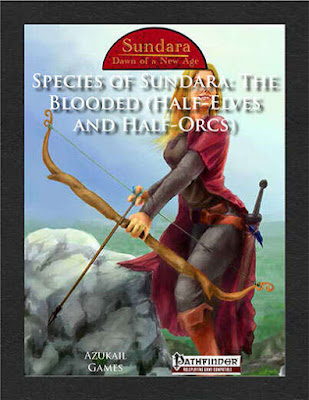
- The Blooded (Half-Elves and Half-Orcs) [Pathfinder and DND 5E]: When orcs and elves mix their bloodlines with other creatures, the result is one of the Blooded. This inheritance takes many forms, and it can even wait generations before manifesting when the right combination of individuals come together to have a child.

- Gnomes of Sundara (Pathfinder and DND 5E): Gnomes are strange creatures, found in places where the spirit of the land has coalesced and made children of its own. The sons and daughters of the ancient nymphs, they are the stewards of these places, and they change as often as the weather and the land.

Like, Follow, and Stay in Touch!


That's all for this week's Moon Pope Monday. To stay on top of all my content and releases, make sure you subscribe to my newsletter at the bottom of the page!

Again, for more of my work, check out my Vocal archive, and stop by the YouTube channel Dungeon Keeper Radio. Or if you'd prefer to read some of my books, like my cat noir thriller Marked Territory, its sequel Painted Cats, my sword and sorcery novel Crier's Knife or my latest short story collection The Rejects, then head over to My Amazon Author Page!

To stay on top of all my latest releases, follow me on FacebookTumblrTwitter, and now Pinterest as well! To support my work, consider Buying Me a Ko-Fi, or heading to The Literary Mercenary's Patreon page to become a regular, monthly patron. That one helps ensure you get more Improved Initiative, and it means you'll get my regular, monthly giveaways as a bonus!

Tuesday, March 1, 2022

"Sundara: Dawn of a New Age" is On Sale Through March 13!

Normally when I put out my first update of the week I like to muse about some aspect of RPGs, offer some insight to Game Masters out there, or give a deeper explanation on something I recently released. However, this week I have some exciting news to share!

Recently my splat Cities of Sundara: Ironfire was the deal of the day at Drive Thru RPG. It got enough attention that the publisher has decided to pass the savings along to all the curious folks out there who decided to grab a copy. As such, my Sundara: Dawn of a New Age setting is on sale until March 13! So if you've been holding off on picking up particular splats, they're currently part of the Drive Thru RPG GM's Day Sale. And if this is your first time hearing about Sundara, well, keep reading and I'll tell you a bit about what my goals are, what I've put out already, and what you're going to see from it going forward.

Seriously, come check it out!

Before we get into the nitty gritty this week, don't forget to sign up for my weekly newsletter to get all my updates right in your inbox. Also, if you've got a bit of spare cash that you'd like to use to help keep the wheels turning, consider becoming a Patreon patron!

Lastly, to be sure you're following all of my followables, check out my LinkTree!

What is Sundara?


The short version is that Sundara: Dawn of a New Age is a fantasy RPG setting that is going to be familiar enough to fans of the genre that they'll be able to pick it up quickly, but that there's still plenty of differences just beneath the surface to make it feel new and unique for those who aren't expecting said changes.

As a for-instance, this setting is available both for Pathfinder's first edition, and for Dungeons and Dragons' 5th Edition. It's full of magic and mystery, and there are all sorts of different species one could choose to play as, as well as hundreds of different monsters roaming the setting. At a glance, it seems like just another cover song of the same genre we've seen before.

But if you scratch the surface you'll notice there's a lot of things you don't expect. Things like:

- No Nations: Sundara's largest political entities are city states, regional confederacies, and guilds.

- No Monolithic Species: Every species in Sundara has a variety of ethnicities and cultures, as well as potential origin stories and creation myths that may or may not be true depending on whom you ask.

- No "Common" Tongue: Language, much like culture, is diverse in Sundara. While some languages are more popular than others, and there are a number of so-called trading tongues, you will not find "Common" on the sheet. Nor are there specific species languages; so no "elven," "dwarven," "orc," etc.

- No Alignment: One of the biggest reader requests was that there be no alignment in the setting going forward. So alignment was removed from classes, gods, faiths, and the world as a whole, which has a lot of far-reaching repercussions.

I even talked about some of this over on the Azukail Games YouTube channel (and if you haven't subscribed yet, you should, because I'm going into greater depth on some topics in the coming weeks).


More than these changes, though, Sundara is a setting that is fundamentally about forward progress. So many settings take their cue from Tolkien and focus on the mythic, lost past, trying to return to former glories. While Sundara has had empires rise and fall, it is fundamentally a setting about not looking back. Rather it is about finding fresh solutions to old problems, and about discovery of new and interesting ways of doing things. From creating mass-produced pattern-welded steel in volcanic furnaces, to building sky ships that take to the air on the cast-off scales of powerful wyrms, Sundara is about invention, curiosity, and finding unique solutions to problems.

Fun as a Whole, Or in Bite-Sized Pieces


For the Game Masters out there who might be reluctant to jump ship to a whole new setting, or who really want to keep using their own, homebrew worlds, I've designed Sundara in such a way that you can have your cake and eat it, too.

Because this is a one-man show, I've purposefully released the setting in small, bite-sized splats. In a way it's kind of like a serial RPG setting, and readers are exploring it along with me as we go along rather than just getting one thick tome of information that contains everything. However, because I chose this method of release, I've also designed each setting to be at least somewhat self-contained. So while there might be small nods and references to other parts of the setting, and callbacks to previous installments, everything is meant to function on its own, or to be folded into a different setting if that's what a Game Master wants to do with it.

Some parts of the setting are weirder than others, I'll admit.

While it's entirely possible to run a session in and around one of the cities I've created, and using the species guides that have been released, it's equally possible for Game Masters to just take elements or aspects that they like and fold them into their worlds. Perhaps they like the sky ships from Hoardreach, and they think the idea is neat. Maybe they enjoy the idea of a city powered by the undead, so they want to put Moüd in their game, but without any of the rest of Sundara. Perhaps they just like the idea of a Wyrm Mark, or the backgrounds I created for career mercenaries, so they make those available. Or they find the approach to gods and the divine a lot more flexible and fun in this setting, so they adopt that without anything else.

One of the goals for these books is to provide Game Masters with the tools that suit their needs. So whether they want all of Sundara, or just a part of it, the goal is to make it as plug-and-play with their particular games as possible. My hope is that the more players and GMs alike read of the setting, the more they're going to want, but I understand that sometimes folks just want one particular tool rather than the entire set, and I want to make something that appeals to them as well.

Why Not Take a Look For Yourself?


I took a brief break on making new Sundara content at the start of the year, but I've already finished one new supplement, and I've started work on the second piece of 2022. Sellswords of Sundara is full of unique archetypes/subclasses for mercenary companies that come with their own themes, histories, NPCs, rumors, and more, and that should be coming out shortly. I'm also working on Towns of Sundara, so that folks have some smaller places to put between the cities that are just as interesting and unique in their own ways (and which acts as a good follow up to 10 Fantasy Villages, which kicked this whole project off in the first place).

Cities of Sundara


The setting first began with the Cities of Sundara splats. Self-contained guides to some of the larger and more powerful centers of trade, industry, arms, and magic, these unique locations provide plenty of fodder for character generation and plots. Not only that, but each one comes with unique, mechanical goodies for players and GMs alike to take out for a spin!

- Ironfire: The City of Steel (Pathfinder and DND 5E): Built around the Dragon Forge, Ironfire is where the secret to dragon steel was first cracked. The center of the mercenary trade in the region, as well as boasting some of the finest schools for teaching practical sciences, Ironfire is a place where discovery and danger walk hand in hand!

- Moüd: The City of Bones (Pathfinder and DND 5E): An ancient center of trade and magic, Moüd was lost to a cataclysm, and then buried in myth. Reclaimed by the necromantic arts of the Silver Wraiths guild, this city has once again become a place teeming with life. Despite the burgeoning population, though, it is the continued presence of the undead that helps keep the city running, ensuring that Moüd is not swallowed up once more.

- Silkgift: The City of Sails (Pathfinder and DND 5E): Built on the cottage industry of Archer cloth (an extremely durable material used for sails, windmills, etc.), Silkgift is a place that prizes invention and discovery. From gravity batteries that store the potential of the wind, to unique irrigation systems, to aether weapons, the city positively churns out discoveries... and then there's the canal they cut through the mountains that makes them a major center of trade across the region.

- Hoardreach: The City of Wyrms (Pathfinder and DND 5E): A center of power across an entire region, Hoardreach is ruled over by a Cooperation of five different dragons. A place for refugees and outcasts of all sorts, Hoardreach boasts some of the most unusual citizens and creations from across Sundara. Infamous for their sky ships, which require the cast-off scales and unique arcane sciences of the Dragon Works to take to the air, one never knows just what they'll find in this city built atop a mountain.

- Archbliss: The City of The Sorcerers (Pathfinder and DND 5E): A floating city in the sky, Archbliss has been a refuge for sorcerers for thousands of years. It's only in relatively recent years that the city has allowed those from the ground below who lack the power of a bloodline to join them in the clouds. However, while there are certainly amazing wonders to behold, there is a darkness in Archbliss. Something rotting away at its heart that could, if not healed, bring the city crashing to the ground once more.

Gods of Sundara


Gods of Sundara (available for Pathfinder and DND 5E): In a world with no alignment, and where the gods are often genuinely mysterious forces that are far too large for mortals to truly comprehend, the divine feels genuinely strange and unknown... something that really does have to be taken on faith. This supplement provides a sample pantheon for Sundara, but also provides instructions on how to easily make your own gods in a world where you can't cast a spell and tell whether someone is good or evil.

Species of Sundara


Sundara is filled with creatures that many of us recognize, but I wanted to give greater depth to their cultures, and a wider variety of options. After all, humans always get 15+ ethnicities, languages, and unique histories, while elves, dwarves, orcs, halflings, etc. are almost always left with footnotes, or maybe with a handful of offshoots. So, in short, I wanted to give all the fantastical creatures the treatment that humans usually get in our games.

And there is no human book yet. If readers demand to know more, then I may sit down to pen one... but I figured that humans didn't need to be front-and-center in this setting just yet.

- Elves of Sundara (Pathfinder and DND 5E): Elves are one of the most quintessential fantasy creatures... but if you want to see more than just high elves, wood elves, and elves of the sun and moon, then this supplement has you covered!

- Dwarves of Sundara (Pathfinder and DND 5E): The children of the primordial giants who were meant to fill in the details of the world they'd made (or so the myths say) there are as many kinds of dwarves as their are kinds of giants... and possibly more, depending on who is keeping count.

- Orcs of Sundara (Pathfinder and DND 5E): Supposedly a creation of the elves, none can say for certain exactly how or why orcs have been made. What most agree on is that these creatures are far more than most may think at first glance.

- Halflings of Sundara (Pathfinder and DND 5E): Little cousins to the dwarves, halflings are tough, clever, and not to be underestimated. From living beneath the hills, to taking up residence in the deep forests, halflings in Sundara come in quite a variety!

- The Blooded (Half-Elves and Half-Orcs) [Pathfinder and DND 5E]: When orcs and elves mix their bloodlines with other creatures, the result is one of the Blooded. This inheritance takes many forms, and it can even wait generations before manifesting when the right combination of individuals come together to have a child.

- Gnomes of Sundara (Pathfinder and DND 5E): Gnomes are strange creatures, found in places where the spirit of the land has coalesced and made children of its own. The sons and daughters of the ancient nymphs, they are the stewards of these places, and they change as often as the weather and the land.

Like, Follow, and Stay in Touch!


That's all for this week's Moon Pope Monday. To stay on top of all my content and releases, make sure you subscribe to my newsletter at the bottom of the page!

Again, for more of my work, check out my Vocal archive, and stop by the YouTube channel Dungeon Keeper Radio. Or if you'd prefer to read some of my books, like my cat noir thriller Marked Territory, its sequel Painted Cats, my sword and sorcery novel Crier's Knife or my latest short story collection The Rejects, then head over to My Amazon Author Page!

To stay on top of all my latest releases, follow me on FacebookTumblrTwitter, and now Pinterest as well! To support my work, consider Buying Me a Ko-Fi, or heading to The Literary Mercenary's Patreon page to become a regular, monthly patron. That one helps ensure you get more Improved Initiative, and it means you'll get my regular, monthly giveaways as a bonus!

Tuesday, February 1, 2022

Nymphs, Gnomes, and Species of Sundara

For those who've been keeping up with all my Species of Sundara releases, you've no doubt picked up on my theme of keeping the same fantasy creatures we know from older games, but trying to show them in a different light by making them unique to this setting in some way, shape, or form. We started with elves, turning them into creatures who fluidly adapted, becoming wildly varied based on their philosophy or environment. The dwarves were the children of the ancient giants, meant to finish the details of the world whose foundation they had laid. Orcs were the results of elves experimenting and changing too much, until they became something entirely new, and halflings were the little cousins of the dwarves, made almost by accident.

It was only a matter of time till I reached the last of the first run, and I wanted to talk about them this week... gnomes.

Seriously, get your copy today if you haven't!

Before we get into the nitty gritty this week, don't forget to sign up for my weekly newsletter to get all my updates right in your inbox. Also, if you've got a bit of spare cash that you'd like to use to help keep the wheels turning, consider becoming a Patreon patron!

Lastly, to be sure you're following all of my followables, check out my LinkTree!

Gnomes and Nymphs, Oh My!


The traditional role of gnomes in fantasy RPGs is (or at least has become) the manic pixie party member. Gnomes are often cast as creatures whose minds move so quickly, or in such unusual ways, that they often focus more on whether they can do something rather than if they should do something. Practical jokers, inventors, tinkerers, and more, in some games their ancestry is left vague, while in settings like Golarion they're full-on fey creatures who return to the First World upon their deaths.

The queen waits for me... but time moves differently there than here.

I wanted gnomes in Sundara to feel unique and different, rather than just being a zanier halfling option. Something inherently magical and unusual, but which was still different from the options I'd seen in other settings which offered its own odd history and unusual background flavor.

And in the event you haven't grabbed your copy of Species of Sundara: Gnomes (available for either Pathfinder or DND 5E), the ancestry of gnomes is that they are the children of nymphs. Representations of nature in its most potent forms, nymphs have been rightly feared and revered across Sundara for generations. Gnomes were, in many cases, meant to take over the lesser responsibilities of these nymphs so they could conserve their strength and rest. In other cases they became agents who delivered the nymph's will and messages beyond the bounds of their own domains.

And when many of the nymphs vanished, it was the gnomes who remembered. Who honored their departed mothers, and who minded the land they'd left behind.

As Varied As The Land Itself


Of all the species of Sundara that have been released thus far, the gnomes are probably the ones that have the most possibility... and that's including the elves! For every kind of nymph out there, from black water swamps to rushing rivers, to mountain ponds and deep forests, there's a type of gnome. Not only that, but gnomes have the potential to shift and change, altering their traits as they take on new, unique aspects.

How and why this happens can seem arbitrary. A gnome may have been born in a swamp, only to find the dark shadows disappearing from their hair and their eyes growing bright when they make their new home on a white water rapid. A gnome from a deep, clear stream might find their nails growing thick and their skin sallow as their old home stagnates, dammed up until it becomes little more than a bog. Some gnomes will change based on the people they meet, and the entities who bless them, but others may remain unchanged their whole lives through, stoically maintaining themselves despite all the currents that surround them.

And while there are only 5 variations in this first splat book, there's potential for more going forward should the audience make their desire for more content like that known!

Remember To Check Out The Other Species of Sundara!


If you enjoy my take on gnomes, and you want to see what other changes I've made to the core species we're all so used to, make sure you take a moment to check out the rest of the Species of Sundara series that's been coming out the past few months! And if you like them, don't forget to check out the rest of my Sundara: Dawn of a New Age setting as well!

- Elves of Sundara (Pathfinder and DND 5E): Elves are one of the most quintessential fantasy creatures... but if you want to see more than just high elves, wood elves, and elves of the sun and moon, then this supplement has you covered!

- Dwarves of Sundara (Pathfinder and DND 5E): The children of the primordial giants who were meant to fill in the details of the world they'd made (or so the myths say) there are as many kinds of dwarves as their are kinds of giants... and possibly more, depending on who is keeping count.

- Orcs of Sundara (Pathfinder and DND 5E): Supposedly a creation of the elves, none can say for certain exactly how or why orcs have been made. What most agree on is that these creatures are far more than most may think at first glance.

- Halflings of Sundara (Pathfinder and DND 5E): Little cousins to the dwarves, halflings are tough, clever, and not to be underestimated. From living beneath the hills, to taking up residence in the deep forests, halflings in Sundara come in quite a variety!

- The Blooded (Half-Elves and Half-Orcs) [Pathfinder and DND 5E]: When orcs and elves mix their bloodlines with other creatures, the result is one of the Blooded. This inheritance takes many forms, and it can even wait generations before manifesting when the right combination of individuals come together to have a child.

Like, Follow, and Stay in Touch!


That's all for this week's Moon Pope Monday. To stay on top of all my content and releases, make sure you subscribe to my newsletter at the bottom of the page!

Again, for more of my work, check out my Vocal archive, and stop by the YouTube channel Dungeon Keeper Radio. Or if you'd prefer to read some of my books, like my cat noir thriller Marked Territory, its sequel Painted Cats, my sword and sorcery novel Crier's Knife or my latest short story collection The Rejects, then head over to My Amazon Author Page!

To stay on top of all my latest releases, follow me on FacebookTumblrTwitter, and now Pinterest as well! To support my work, consider Buying Me a Ko-Fi, or heading to The Literary Mercenary's Patreon page to become a regular, monthly patron. That one helps ensure you get more Improved Initiative, and it means you'll get my regular, monthly giveaways as a bonus!

Monday, December 27, 2021

Combining Half-Orcs and Half-Elves Into One Category... The Blooded

When it comes to fantasy species in RPGs there is never more debate than you find around the so-called "half" options. Whether it's arguing about which species can have children with which, what powers their offspring inherit, or stating that you need X amount of a bloodline in order to qualify for these species at all, these arguments often get pretty far into the weeds.

It was with these discussions in mind that I recently created the Blooded for my Sundara setting... a category of species that I hope gives more players more freedom, and expands options in a way that everyone can enjoy.

Because more options leads to better games all-around!

Before we get too deep into the latest release, don't forget to sign up for my weekly newsletter. If you've got a little extra dosh, and you want to help me keep the content coming, then consider becoming a Patreon patron, too!

Lastly, if you want to make sure you're following all of my followables, make sure you stop by my Linktree, too!

What Are The Blooded?


I've been putting out more and more setting expansions with the Species of Sundara splat books for Pathfinder, and so far I've covered elves, dwarves, orcs, and halflings (and if you prefer the DND 5E versions you can get them here at elves, dwarves, orcs, or halflings). And in those books I've made it clear when individuals are capable of having children with other species, and when they aren't. Elves, for example, are capable of having children with any other sentient species... some partners may take more work (and pose more risk) but it is possible. While orcs are not as capable as elves, the fact that they can have so many children of mixed heritage is one of the reasons so many people believe that orcs were created by the elves (or, in some tales, that orcs were elves who had transformed themselves far enough away from their base species that they became something entirely new).

This, of course, led to the "half" question that has led to so many debates around so many tables. So I thought I would change things up with the creation of the Blooded as a category of creature.

My great-grandmother always said we had elven blood...

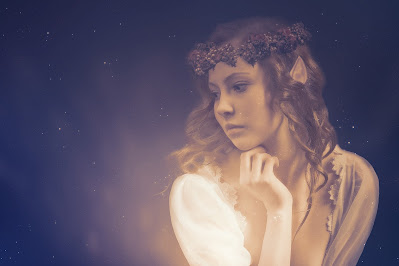
First and foremost, this eliminates the "half" idea that one parent was one species and the other parent was a different species. The status of "Blooded" simply means that whatever your heritage, it is dominant enough that particular traits manifested in you, conferring the species template. So someone may have had elven ancestors on their grandfather's side, but it's not until their birth that those traits manifested. Alternatively, someone might have orcish blood on their mother's side, but it doesn't become dominant until they've had children.

In addition to the Blooded not necessarily being the specific, first-generation offspring of an elf or an orc with another species, this species option makes it clear that anyone capable of having children with elves and orcs may fit under this category. This means you may have Blooded who are small-sized, combining halflings and elves. You may have an orcish child of elven blood. And so on, and so forth, according to the limitations put out in the respective splats. Other than those rules, and the fact that you only gain elven or orc blood as the dominant part of your Blooded heritage, the sky's the limit!

Lastly, there's been this pervasive idea in RPGs that so-called half-elves and half-orcs are always outsiders or outcasts in some way, shape, or form. Half-elves are stifled by their elven culture, and fetishized or misunderstood by humans. Half-orcs are sneered at by "true" orcs, and feared by humans. We've seen this time and time again, and I kicked this idea right to the curb.

Each of the five cultures laid out for elves and orcs has specific names and social niches for the Blooded within their ranks. I expanded on them, listing alternative species traits and abilities to represent their unique heritages, and talked a bit about the sort of treatment they receive, and the expectations (or lack thereof) that are placed on them. Because the Blooded aren't some new and strange phenomenon, so the cultures of Sundara have grown and changed over time to accommodate them.

And because I seem to have forgotten to put the link in here in the first place, check out The Blooded for both Pathfinder Classic, as well as Dungeons and Dragons 5E!

Don't Forget To Check Out The Rest of Sundara As Well!


I'm taking a short break from Sundara for the holidays, but I'll be coming back to add more to the setting once I'm back home and stuck in for more heavy lifting.  But while you wait, consider checking out the stuff that's already come out to bring yourself up to date while you get ready for new cities, new species, items, and more!

- Ironfire: The City of Steel (Pathfinder and 5E): Built around the Dragon Forge, Ironfire is where the secret to dragon steel was first cracked. The center of the mercenary trade in the region, as well as boasting some of the finest schools for teaching practical sciences, Ironfire is a place where discovery and danger walk hand in hand!

- Moüd: The City of Bones (Pathfinder and 5E): An ancient center of trade and magic, Moüd was lost to a cataclysm, and then buried in myth. Reclaimed by the necromantic arts of the Silver Wraiths guild, this city has once again become a place teeming with life. Despite the burgeoning population, though, it is the continued presence of the undead that helps keep the city running, ensuring that Moüd is not swallowed up once more.

- Silkgift: The City of Sails (Pathfinder and 5E): Built on the cottage industry of Archer cloth (an extremely durable material used for sails, windmills, etc.), Silkgift is a place that prizes invention and discovery. From gravity batteries that store the potential of the wind, to unique irrigation systems, to aether weapons, the city positively churns out discoveries... and then there's the canal they cut through the mountains that makes them a major center of trade across the region.

- Hoardreach: The City of Wyrms (Pathfinder and 5E): A center of power across an entire region, Hoardreach is ruled over by a Cooperation of five different dragons. A place for refugees and outcasts of all sorts, Hoardreach boasts some of the most unusual citizens and creations from across Sundara. Infamous for their sky ships, which require the cast-off scales and unique arcane sciences of the Dragon Works to take to the air, one never knows just what they'll find in this city built atop a mountain.

- Archbliss: The City of The Sorcerers (Pathfinder and 5E): A floating city in the sky, Archbliss has been a refuge for sorcerers for thousands of years. It's only in relatively recent years that the city has allowed those from the ground below who lack the power of a bloodline to join them in the clouds. However, while there are certainly amazing wonders to behold, there is a darkness in Archbliss. Something rotting away at its heart that could, if not healed, bring the city crashing to the ground once more.

Gods of Sundara (available for Pathfinder and DND 5E): In a world with no alignment, and where the gods are often genuinely mysterious forces that are far too large for mortals to truly comprehend, the divine feels genuinely strange and unknown... something that really does have to be taken on faith. This supplement provides a sample pantheon for Sundara, but also provides instructions on how to easily make your own gods in a world where you can't cast a spell and tell whether someone is good or evil.

Like, Follow, and Stay in Touch!


That's all for this week's Moon Pope Monday. To stay on top of all my content and releases, make sure you subscribe to my newsletter at the bottom of the page!

Again, for more of my work, check out my Vocal archive, and stop by the YouTube channel Dungeon Keeper Radio. Or if you'd prefer to read some of my books, like my cat noir thriller Marked Territory, its sequel Painted Cats, my sword and sorcery novel Crier's Knife or my latest short story collection The Rejects, then head over to My Amazon Author Page!

To stay on top of all my latest releases, follow me on FacebookTumblrTwitter, and now Pinterest as well! To support my work, consider Buying Me a Ko-Fi, or heading to The Literary Mercenary's Patreon page to become a regular, monthly patron. That one helps ensure you get more Improved Initiative, and it means you'll get my regular, monthly giveaways as a bonus!

Monday, September 27, 2021

What I'm Doing Differently With Dwarves in Sundara

Folks who have been tuned-in to my release schedule have no doubt caught a few of the releases for my Sundara: Dawn of a New Age RPG setting. A world that looks forward, seizing the unique resources found in a fantastical setting, I'm attempting to upend several of the old standbys players and game masters associate with these games, while also providing just enough familiar ground that no one gets lost or confused.

While the setting began with Cities of Sundara, where I released splat books as guides to prominent locations throughout the world, I've since moved into releasing Species of Sundara. What I hope to accomplish with these books is to provide a more nuanced take on the traditional species we're used to playing in our fantasy games, giving players and GMs alike different cultures, abilities, and potential histories to work with, while tossing things like species-based alignment, universal religion, and species-wide languages (mostly) into the trash.

The first release dealt with elves (and is available for Pathfinder, as well as DND 5E), painting them as masters of biomancy, science, and with several cultures that kept and preserved knowledge, while others concerned themselves with the art of war, with travel, or with growing and preserving their communities. It was a fun exercise, but I wanted to follow it up with something a little bigger, and a little bolder.

Which is why Dwarves of Sundara was next on the list!

Because I know there's dwarf lovers aplenty out there!

Before I get more into the details of what I did to change up dwarves in Sundara, don't forget to join my weekly mailing list if you want to stay on top of all my latest releases. Also, if you have a little dosh to spare (and you'd like to help me keep the wheels turning), consider becoming a Patreon patron today!

What's New About Dwarves in Sundara?


As most of us know, Tolkien folded a lot of old Norse myths into his works in Middle Earth. Dwarves, in their mythical forms, were more like spirits who lived in the earth, and often they were indistinguishable from other elves (the alfar, who feel more like Elrond and his countrymen). Tolkien defined them differently for his setting, making them mortal in many important ways, giving them an alphabet, and showing us some of the places they called home. Then over the years we codified them more and more through our fiction, our games, and through our art.

Think about what immediately comes to mind when you hear the words RPG dwarf. Chances are good you're picturing something like Gimli right now, potentially with a tankard in hand, and likely with a heavy Scottish accent (though points for those who went with Swedish instead).

My goal was to change that, and to provide more variety while still keeping dwarves recognizable.

Familiar in some ways, strange in others.

The first thing to remember is that, for this particular world, the origins of species are not set in stone. There are common beliefs and attributions, but as the creator I'm not coming out and saying the creation story of one culture or people is completely, factually correct. With that said, it is commonly believed by the dwarves that they are the children of the primordial giants; the ancient creatures who formed the world, and whose work they live in to this day. Each type of giant went and made their own children, pouring spirit and life into them so that the dwarves could go into this world and finish its creation; to bring beauty to the details the giants themselves were too large to handle with grace and subtlety.

Whether or not that is technically true, different cultures of dwarves unmistakably have affinity with different elements and environments. Those who take a look will find:

- The fiery Takatori tend to live on volcanic islands, and their physical form is often compared with the fire giants they feel were their creators. Heavily tattooed, and with complex, multi-partner marriages, they have a deep sense of family, and will often travel hundreds of miles to help the most distant of relations to help strengthen their clan bonds.

- The Hasrada live lives of relative luxury in their mountain strongholds. These stony dwarves are regarded as scholars and sages, and they rely on their elemental masters to handle the bulk work of maintaining their societies. Boasting many expert craftsmen and artists, as few of their number need to haul stones, dig shafts, or even stand guard, the Hasrada are welcoming, while also maintaining firm boundaries.

- The Kraskar live deep in swampy holdfasts, and are thought strange by even those who know them. With connections to ancient giants, and nearly as ancient black dragons, these dwarves are insular and clannish. With that said, they are loyal, steadfast friends... and dire enemies.

- The robust Gannar'Gon keep to the fields and hills. Known for hosting games, prodigious feats of strength, and for being welcoming to all those who come to their homes, these hillfolk are praised as good neighbors, and firm friends.

- The Arasta keep their own counsel deep in the scorching empty of the desert sands. Mysterious to outsiders, they are easy to understand for those who learn their ways, and to interpret the silences that often surround them.

These are, by no means, the only types of dwarves in the setting. And while each of these cultures is associated with certain traits, intermarrying, adoption, and simple immigration means that dwarves which bear the traits of one culture may wind up in another... or in none, if they were raised outside one of these umbrellas. Many of these cultures could even make room for non-dwarven members, though that is far from the norm.

Also, one thing I'm particularly proud of is adapting the idea of a common language, without making it an aspect of a mono-culture among dwarves. In Sundara every type of dwarven culture speaks the elemental language associated with their patron giant as their common tongue. However, just as the giants created Aelthark (the "giant" language) to communicate with one another during their communal efforts, so the dwarves created Firthark (commonly called "dwarven") which is more of a trade language that was meant to let all the different dwarves speak to one another. It's sort of limited in terms of concepts and function, and lots of ideas don't translate well into it, but it's functional, easy to learn, and for many non-dwarves it's the fastest way to make oneself understood. There was no way to gracefully fit that in there, but I'm pleased with it all the same.

So if that sounds like something you want to get in on, get your copy of this Species of Sundara installment for both Pathfinder Classic as well as Dungeons and Dragons 5th Edition!

So What's Next?


Currently the plan is to cover a lot of the starting species for the setting, and then to evaluate what the readers would like more of. Whether that's more locations, if they'd like to see some modules, or possibly some short(ish) stories set in Sundara, complete with stats for any new class archetypes, magic items, etc. featured in the tale, there's a lot of possibilities going forward!

But while you wait, consider checking out the stuff that's already come out to bring yourself up to date!

- Ironfire: The City of Steel (Pathfinder and 5E): Built around the Dragon Forge, Ironfire is where the secret to dragon steel was first cracked. The center of the mercenary trade in the region, as well as boasting some of the finest schools for teaching practical sciences, Ironfire is a place where discovery and danger walk hand in hand!

- Moüd: The City of Bones (Pathfinder and 5E): An ancient center of trade and magic, Moüd was lost to a cataclysm, and then buried in myth. Reclaimed by the necromantic arts of the Silver Wraiths guild, this city has once again become a place teeming with life. Despite the burgeoning population, though, it is the continued presence of the undead that helps keep the city running, ensuring that Moüd is not swallowed up once more.

- Silkgift: The City of Sails (Pathfinder and 5E): Built on the cottage industry of Archer cloth (an extremely durable material used for sails, windmills, etc.), Silkgift is a place that prizes invention and discovery. From gravity batteries that store the potential of the wind, to unique irrigation systems, to aether weapons, the city positively churns out discoveries... and then there's the canal they cut through the mountains that makes them a major center of trade across the region.

- Hoardreach: The City of Wyrms (Pathfinder and 5E): A center of power across an entire region, Hoardreach is ruled over by a Cooperation of five different dragons. A place for refugees and outcasts of all sorts, Hoardreach boasts some of the most unusual citizens and creations from across Sundara. Infamous for their sky ships, which require the cast-off scales and unique arcane sciences of the Dragon Works to take to the air, one never knows just what they'll find in this city built atop a mountain.

- Archbliss: The City of The Sorcerers (Pathfinder and 5E): A floating city in the sky, Archbliss has been a refuge for sorcerers for thousands of years. It's only in relatively recent years that the city has allowed those from the ground below who lack the power of a bloodline to join them in the clouds. However, while there are certainly amazing wonders to behold, there is a darkness in Archbliss. Something rotting away at its heart that could, if not healed, bring the city crashing to the ground once more.

Gods of Sundara (available for Pathfinder and DND 5E): In a world with no alignment, and where the gods are often genuinely mysterious forces that are far too large for mortals to truly comprehend, the divine feels genuinely strange and unknown... something that really does have to be taken on faith. This supplement provides a sample pantheon for Sundara, but also provides instructions on how to easily make your own gods in a world where you can't cast a spell and tell whether someone is good or evil.

Like, Follow, and Stay in Touch!


That's all for this week's Moon Pope Monday. To stay on top of all my content and releases, make sure you subscribe to my newsletter at the bottom of the page!

Again, for more of my work, check out my Vocal archive, and stop by the YouTube channel Dungeon Keeper Radio. Or if you'd prefer to read some of my books, like my cat noir thriller Marked Territory, its sequel Painted Cats, my sword and sorcery novel Crier's Knife or my latest short story collection The Rejects, then head over to My Amazon Author Page!

To stay on top of all my latest releases, follow me on FacebookTumblrTwitter, and now Pinterest as well! To support my work, consider Buying Me a Ko-Fi, or heading to The Literary Mercenary's Patreon page to become a regular, monthly patron. That one helps ensure you get more Improved Initiative, and it means you'll get my regular, monthly giveaways as a bonus!