Monday, February 7, 2022

No-Win Scenarios Ruin Games (ESPECIALLY Horror Games)

Generally speaking every RPG you ever play needs to have a victory condition of some kind. A "good ending" if we're thinking about it like a video game, or a choose-your-own-adventure book. An ending where you stop the cult, save the princess, defeat the dragon, or whatever other scenario you happen to be faced with. There is a mistake a lot of Game Masters make when they settle in behind the screen, though. Sometimes they make this decision out of a genuine attempt to tell a compelling story with an impactful ending, and sometimes they make it out of spite, or pettiness, but it remains a mistake nevertheless.

It is, in short, putting the players in a no-win scenario... because that's not fun for anyone.

You need some light at the end of the tunnel. Trust me.

Before we get into the nitty gritty this week, don't forget to sign up for my weekly newsletter to get all my updates right in your inbox. Also, if you've got a bit of spare cash that you'd like to use to help keep the wheels turning, consider becoming a Patreon patron!

Lastly, to be sure you're following all of my followables, check out my LinkTree!

If They Can't Win, Why Are They Playing?


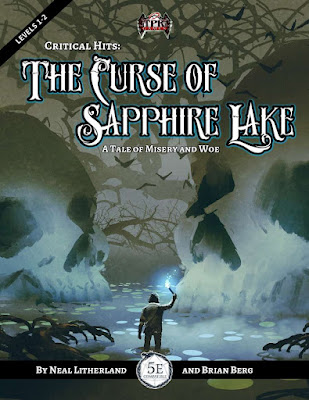
For folks who don't know my history, and who aren't regular readers, I've been playing and designing RPGs for a while. And while I've made content for fantasy games like DND 5E with modules like The Curse of Sapphire Lake and Ghosts of Sorrow Marsh, I've also put together a lot of content for World and Chronicles of Darkness games to help storytellers really bring out the flavor of their settings. Some of my more popular supplements there include Evil Incorporated: 10 Pentex Subsidiaries (for Werewolf: The Apocalypse players), 100 Resources and Rumors to Find on SchreckNet (for the Vampire: The Masquerade lovers), and 100 Strange Sights to See in The Hedge (for all the Changeling: The Lost enthusiasts).

I mention my bona fides because, while this advice doesn't pertain solely to horror games, it is the genre where it shows up most often as a justification.

Trust me, bleakness impresses no one.

So what are we talking about, here? In short, we're talking about games where things don't just feel hopeless, but where they are hopeless. Games where no matter how well the PCs roll, how clever their plans are, or how hard they try there is no scenario where they can hope to really win. They are going to fail to achieve their goals, and most likely die in the process. You've already written the ending, and nothing that transpires is going to change it.

Some folks reading this are likely confused right now, so I will state it clearly. Hopelessness is bad for any RPG, but it is toxic to a horror game. Because if you have no hope of winning, if there is no chance you could do anything to come out ahead, then the horror loses all meaning. The darkness only has weight if you're trying to stop it from claiming the light. If it's all darkness no matter what, it will drown any enthusiasm your players have in relatively short order.

Happily For Now Vs. The Ever-Present Threat


About a decade or so ago I was just getting started in my career as an author, and one of the only clients who'd work with me without a publishing history were smaller romance houses. A lot of them had requirements that stories had either an HEA or HFN ending... Happily Ever After, or Happily For Now. While we all know what the former means, the latter meant that while there might be storm clouds on the horizon and issues left unsettled, the couple had overcome adversity and had found their way into each other's arms for the time being.

For RPGs (and particularly for horror RPGs) we can use the same framing. VEA or VFN... victorious ever after, or victorious for now.

We won... but at what cost?

This ties into the Ever-Present Threat that is part of so many RPGs, but particularly those in the horror genre. Whether it's the Wyrm in Werewolf: The Apocalypse, the True Fae in Changeling: The Lost, or the Great Old Ones in Call of Cthulhu, these games often have antagonists who can't be decisively beaten. You can't just shoot them in the head, stab them in the heart, or recite an ancient spell to slay them... these threats are amorphous. They are beyond the ken of mortals. They often pre-date mankind, and will continue to exist long after its demise. They are perils the likes of which the heroes, whatever their powers, cannot hope to ever destroy.

But that doesn't mean those heroes should be denied their smaller victories. That they cannot carry the battle today, even if that does not win the war. That is key to making this whole story work.

Take Call of Cthulhu for example. The players cannot kill Cthulhu. They cannot snuff out Yog-Sothoth. The idea they could even wound a creature like Nyarlathotep is unthinkable. But that shouldn't be the definition of victory in those cases. Because there are things the players can do, and that will make a difference for the time being. They can stop the ritual meant to take place during the planetary alignment, for example, rescuing sacrifices and ensuring an enemy cult has to wait another 85 years to try again. They can kill a wizard who's been stealing bodies to try to become immortal, ending his spree of murders. They can ferret out agents of the Mi-Go and either destroy them, or drive them off. They can ensure that dangerous artifacts are placed somewhere safe, or that deadly grimoires are burned to ashes so no one can learn the dread knowledge within them.

Players can achieve lowercase "w" wins in these games. Not only can they, they should achieve them in order to keep their spirits up. To keep them ready for the next challenge, and interested in the next session, the next mystery, etc. Because while there will always be another monster in the dark corners of the earth, or another dark cult trying to renew an ancient pact, there should be things they can achieve. Things that will allow them to be victorious for now... but tomorrow there will always be something else.

You Need Light To Make Dark Shadows


Have you ever been in a game where you had to deal with an NPC who was just all around unpleasant? A nasty person who had no redeeming qualities, and who you would gladly kick down a flight of stairs if you could get away with it? Imagine that NPC being bitten in half by a dragon, and the Game Master expecting the party to be sad about it. It just doesn't work, because that's not the emotional tie that was created. In order for that death to be meaningful and impactful that NPC would have to be friends with the PCs. They would have to feel protective of them at best, and to actually like them at the very least.

The same thing happens when it comes to the balance of hope and grimness. Because if players experience nothing but frustration, with victory always being snatched out of their grasp, that's going to kick sand onto the fire of their enthusiasm. You need to feed that fire with little victories, and to show them that they can win. Because the potential to fail only means something if it isn't the default state... if you had a legitimate chance to grasp victory, but you failed.

More GM Advice


If you liked this and you want to see more, check these out:

- 100 Tips and Tricks For Being a Better Game Master: Pretty much what it says on the tin. This supplement collects some of the best GM tips and tricks off this blog and presents them in a simple, easy-to-utilize fashion... useful for any game!

- Why Game Masters Should Understand Dread, Terror, and Horror: Speaking of running better horror games, this post was surprisingly popular. It illustrates the kind of specific language that can make a horror game more enjoyable, and examines various concepts from different angles.

Like, Follow, and Stay in Touch!


That's all for this week's Moon Pope Monday. To stay on top of all my content and releases, make sure you subscribe to my newsletter at the bottom of the page!

Again, for more of my work, check out my Vocal archive, and stop by the YouTube channel Dungeon Keeper Radio. Or if you'd prefer to read some of my books, like my cat noir thriller Marked Territory, its sequel Painted Cats, my sword and sorcery novel Crier's Knife or my latest short story collection The Rejects, then head over to My Amazon Author Page!

To stay on top of all my latest releases, follow me on FacebookTumblrTwitter, and now Pinterest as well! To support my work, consider Buying Me a Ko-Fi, or heading to The Literary Mercenary's Patreon page to become a regular, monthly patron. That one helps ensure you get more Improved Initiative, and it means you'll get my regular, monthly giveaways as a bonus!

Tuesday, February 1, 2022

Nymphs, Gnomes, and Species of Sundara

For those who've been keeping up with all my Species of Sundara releases, you've no doubt picked up on my theme of keeping the same fantasy creatures we know from older games, but trying to show them in a different light by making them unique to this setting in some way, shape, or form. We started with elves, turning them into creatures who fluidly adapted, becoming wildly varied based on their philosophy or environment. The dwarves were the children of the ancient giants, meant to finish the details of the world whose foundation they had laid. Orcs were the results of elves experimenting and changing too much, until they became something entirely new, and halflings were the little cousins of the dwarves, made almost by accident.

It was only a matter of time till I reached the last of the first run, and I wanted to talk about them this week... gnomes.

Seriously, get your copy today if you haven't!

Before we get into the nitty gritty this week, don't forget to sign up for my weekly newsletter to get all my updates right in your inbox. Also, if you've got a bit of spare cash that you'd like to use to help keep the wheels turning, consider becoming a Patreon patron!

Lastly, to be sure you're following all of my followables, check out my LinkTree!

Gnomes and Nymphs, Oh My!


The traditional role of gnomes in fantasy RPGs is (or at least has become) the manic pixie party member. Gnomes are often cast as creatures whose minds move so quickly, or in such unusual ways, that they often focus more on whether they can do something rather than if they should do something. Practical jokers, inventors, tinkerers, and more, in some games their ancestry is left vague, while in settings like Golarion they're full-on fey creatures who return to the First World upon their deaths.

The queen waits for me... but time moves differently there than here.

I wanted gnomes in Sundara to feel unique and different, rather than just being a zanier halfling option. Something inherently magical and unusual, but which was still different from the options I'd seen in other settings which offered its own odd history and unusual background flavor.

And in the event you haven't grabbed your copy of Species of Sundara: Gnomes (available for either Pathfinder or DND 5E), the ancestry of gnomes is that they are the children of nymphs. Representations of nature in its most potent forms, nymphs have been rightly feared and revered across Sundara for generations. Gnomes were, in many cases, meant to take over the lesser responsibilities of these nymphs so they could conserve their strength and rest. In other cases they became agents who delivered the nymph's will and messages beyond the bounds of their own domains.

And when many of the nymphs vanished, it was the gnomes who remembered. Who honored their departed mothers, and who minded the land they'd left behind.

As Varied As The Land Itself


Of all the species of Sundara that have been released thus far, the gnomes are probably the ones that have the most possibility... and that's including the elves! For every kind of nymph out there, from black water swamps to rushing rivers, to mountain ponds and deep forests, there's a type of gnome. Not only that, but gnomes have the potential to shift and change, altering their traits as they take on new, unique aspects.

How and why this happens can seem arbitrary. A gnome may have been born in a swamp, only to find the dark shadows disappearing from their hair and their eyes growing bright when they make their new home on a white water rapid. A gnome from a deep, clear stream might find their nails growing thick and their skin sallow as their old home stagnates, dammed up until it becomes little more than a bog. Some gnomes will change based on the people they meet, and the entities who bless them, but others may remain unchanged their whole lives through, stoically maintaining themselves despite all the currents that surround them.

And while there are only 5 variations in this first splat book, there's potential for more going forward should the audience make their desire for more content like that known!

Remember To Check Out The Other Species of Sundara!


If you enjoy my take on gnomes, and you want to see what other changes I've made to the core species we're all so used to, make sure you take a moment to check out the rest of the Species of Sundara series that's been coming out the past few months! And if you like them, don't forget to check out the rest of my Sundara: Dawn of a New Age setting as well!

- Elves of Sundara (Pathfinder and DND 5E): Elves are one of the most quintessential fantasy creatures... but if you want to see more than just high elves, wood elves, and elves of the sun and moon, then this supplement has you covered!

- Dwarves of Sundara (Pathfinder and DND 5E): The children of the primordial giants who were meant to fill in the details of the world they'd made (or so the myths say) there are as many kinds of dwarves as their are kinds of giants... and possibly more, depending on who is keeping count.

- Orcs of Sundara (Pathfinder and DND 5E): Supposedly a creation of the elves, none can say for certain exactly how or why orcs have been made. What most agree on is that these creatures are far more than most may think at first glance.

- Halflings of Sundara (Pathfinder and DND 5E): Little cousins to the dwarves, halflings are tough, clever, and not to be underestimated. From living beneath the hills, to taking up residence in the deep forests, halflings in Sundara come in quite a variety!

- The Blooded (Half-Elves and Half-Orcs) [Pathfinder and DND 5E]: When orcs and elves mix their bloodlines with other creatures, the result is one of the Blooded. This inheritance takes many forms, and it can even wait generations before manifesting when the right combination of individuals come together to have a child.

Like, Follow, and Stay in Touch!


That's all for this week's Moon Pope Monday. To stay on top of all my content and releases, make sure you subscribe to my newsletter at the bottom of the page!

Again, for more of my work, check out my Vocal archive, and stop by the YouTube channel Dungeon Keeper Radio. Or if you'd prefer to read some of my books, like my cat noir thriller Marked Territory, its sequel Painted Cats, my sword and sorcery novel Crier's Knife or my latest short story collection The Rejects, then head over to My Amazon Author Page!

To stay on top of all my latest releases, follow me on FacebookTumblrTwitter, and now Pinterest as well! To support my work, consider Buying Me a Ko-Fi, or heading to The Literary Mercenary's Patreon page to become a regular, monthly patron. That one helps ensure you get more Improved Initiative, and it means you'll get my regular, monthly giveaways as a bonus!

Monday, January 24, 2022

Why Game Masters Should Understand Terror, Horror, and Revulsion

For those just joining us, I like horror games. Not only that, but I'm also a big fan of introducing horror themes and stories into settings that are not explicitly horror games themselves. So while I've got plenty of World of Darkness content out there, such as Evil Incorporated: 10 Pentex Subsidiaries for Werewolf: The Apocalypse lovers, or 100 Resources and Rumors to Find on SchreckNet for Vampire: The Masquerade players and STs, I've also got modules for Dungeons and Dragons 5th Edition like The Ghosts of Sorrow Marsh or The Curse of Sapphire Lake. That's in addition to writing horror short stories for years, and incorporating a lot of elements of the genre into my other, longer books.

It's why I wanted to talk this week about how a lot of Game Masters out there misunderstand what makes a horror game work, and to discuss some of the terminology of what makes horror work in a way that might make things clearer, and easier to understand.

And if you need a bit of a guide, grab some of my supplements!

Before we get into the nitty gritty this week, don't forget to sign up for my weekly newsletter to get all my updates right in your inbox. Also, if you've got a bit of spare cash that you'd like to use to help keep the wheels turning, consider becoming a Patreon patron!

Lastly, to be sure you're following all of my followables, check out my LinkTree!

Dread, Terror, Horror, And Why It Matters


One of the primary mistakes that I think a lot of Game Masters make when they decide they want to run a horror game (whether it's specifically written as a horror game or merely one that will have horror themes and elements) is that they focus on trying to actually scare their table. To shock them in some way, shape, or form.

I want to start this off right now by saying that is precisely the wrong attitude to take to running a quality horror game. It's the equivalent of a movie putting in a lot of jump scares to keep the audience's blood pressure spiking, or including gross-out or exploitative content for no reason other than to make the audience uncomfortable. Your goal shouldn't be to slap your players across the face with what's going on... rather, it should be to draw them into the dark waters, and make them wonder what's swimming in there with them.

No, seriously guys, did you hear that?

This is where we get into the terminology. And while it isn't perfect, this is a setup discussed in Danse Macabre by Stephen King. put it pretty well. I'm paraphrasing, but his breakdown took the following, basic form:

- Terror: Terror points at future events that haven't happened, but which one is afraid of happening. It could be specific ("Oh god, what if the minotaur finds me in this labyrinth?") or vague ("Ships disappear here all the time, and no one knows why... what if we're next?"), but it's future-focused. Might be the distant future or the immediate future, but the situation in question hasn't happened yet.

- Horror: Immediate. Horror is what most of us think of as that point where we jump, we scream, and where the event is here, right now (when the werewolf charges out of the mist, the graboid explodes from the ground, etc.).

- Revulsion: Revulsion is a third category that's usually referred to as the cheap thrill, or the attempt to hit the gag-reflex. It's a quick shock that puts adrenaline in your system, or which attempts to go right for the lizard brain. Revulsion can also be backward-looking, however, where one thinks of things they've already seen or experienced (Kurtz moaning, "the horror... the horror," in Heart of Darkness is a good example).

There are discussions to be had on this, and some people might suggest alternative terminology, phrasing, etc., but I find this structure tends to work pretty well. Also, despite the name of the genre (horror), it's actually more important to cultivate terror in order to make one of these games work... both in the short and in the long-term.

Plant The Seed, And Let It Grow


The thing with a horror game (as opposed to horror the emotion) is that you can't just sit people down and throw a bunch of decaying zombies, masked serial killers, and threats to life and limb down on the table and expect them to have a positive reaction. Or even much of a reaction beyond, "... okay?" A horror game more than almost any other kind of game requires investment from your players. You need to establish the stakes, and make sure they've bought in as completely as anyone can.

And then you need to start priming the pump.

This is the end goal, not your starting point.

As the Game Master, you need to use all the elements at your disposal to begin inducing that necessary terror. Sometimes it can be heavy (the small hamlet on the swamp with the mist rolling in, and locals telling tales about monsters kidnapping people) or it can be subtle (local news reports in the background, or gossip at a frat party about some kind of fracas in one of the dorms), but you need to lead the table down into the muck. You don't start with horror or revulsion, because those things with no build-up is just a jump scare; cheap, forgettable, and often annoying. Horror or revulsion with build-up, though, becomes the thing players talk about for ages once they've put their dice away and moved on to something else.

There's an old saying about horror movies; the monster is more frightening the less you see of it. From Jaws to Alien, there's nothing scarier than the viewer's mind filling in the blanks on their own. The same is true when we talk about horror games. Because terror is often a result of little hints being dropped, or of the temperature being increased bit by bit on the pot that is the game. It's is what you get when the PCs stumble across the band of renegade orc warriors they were planning to fight, only to find them torn limb from limb by something far more dangerous. It's what happens when they meet an NPC with just enough knowledge to be afraid of what's coming, and who tells them it's already too late... if they know this much, they've been marked. It's what starts making them paranoid that the terror hasn't come upon them yet, but knowing in their hearts that it will... sooner or later, it will.

The benefit of terror is that it acts like a marinade for the horror to come. If you just took your monster reveal, or your big scare, and served it up all by itself, you probably wouldn't get too much of a reaction. But if you spent some time marinating your table in terror, making them listen to legends, having them hear the screams, watching as they tried to go deeper and deeper only to wonder too late if they can turn back, then even a minor horror is going to be enhanced by all that lead up.

Something to think about when it comes time to run a "horror game" and you want to have clearer language. Because while it might be more accurate to say you want to run a game with dark themes relying on building dread as the PCs circle ever-closer to the reveal of horror, and then have to live with what they experienced and survived, that isn't the way a lot of us talk about what we expect from a game.

But clear communication can often be a big help in getting you from concept to execution!

Also, for those looking for more GM advice, don't forget to take a flip through 100 Tips and Tricks For Being a Better Game Master!

Need More Horrific Supplements?


For all the folks out there who need some extra resources and tools for adding to their games and settings, I've been putting out all kinds of horror-related content the past few years. In addition to the examples in the intro, consider checking out:

- 13 Fiends: A Baker's Dozen of Devils: If you want unusual outsiders just waiting to make bargains with the unwary, then this one has you covered. References to it also show up in 100 Cults to Encounter, for those who are looking for shadowy organizations to pepper your world with.

- 100 Kinfolk Bundle: Kinfolk are the backbone of garou society in Werewolf: The Apocalypse, and this bundle has over 1,300 NPCs for you to fill your setting with! And if you enjoy this game, consider picking up a copy of Tales From The Moot as well!

- 100 Strange Sights to See in The Hedge: An entry for all my Changeling: The Lost fans out there, this one is for the storytellers who just can't pluck out surreal events off the top of their head. It pairs quite well with 100 Hobs To Meet in The Hedge as well as 100 (Mostly) Harmless Goblin Fruits and Oddments to Find in The Hedge should you want a more complete package!

Like, Follow, and Stay in Touch!


That's all for this week's Moon Pope Monday. To stay on top of all my content and releases, make sure you subscribe to my newsletter at the bottom of the page!

Again, for more of my work, check out my Vocal archive, and stop by the YouTube channel Dungeon Keeper Radio. Or if you'd prefer to read some of my books, like my cat noir thriller Marked Territory, its sequel Painted Cats, my sword and sorcery novel Crier's Knife or my latest short story collection The Rejects, then head over to My Amazon Author Page!

To stay on top of all my latest releases, follow me on FacebookTumblrTwitter, and now Pinterest as well! To support my work, consider Buying Me a Ko-Fi, or heading to The Literary Mercenary's Patreon page to become a regular, monthly patron. That one helps ensure you get more Improved Initiative, and it means you'll get my regular, monthly giveaways as a bonus!

Monday, January 17, 2022

A Decade Worth of Advice in "100 Tips And Tricks For Being a Better Game Master"

It's Monday, and I wanted to take a moment to talk about one of my latest releases. Because 100 Tips and Tricks For Being a Better Game Master has done something that none of my other supplements have managed in a long time... it hit Silver status within 1 week of being released! And since that doesn't happen to me more than once every year or two, I figured I'd remark on this occasion by talking a little about the supplement, and asking my readers some questions.

Because being in the big chair ain't an easy gig.

As always, if you want to stay on top of all my releases, subscribe to my weekly newsletter! And if you want to help keep the lights on and the wheels turning, consider becoming a Patreon patron.

Lastly, to follow all of my followables check out my LinkTree!

A Best Hits List of GM Tips!


For folks who haven't checked out 100 Tips And Tricks For Being a Better Game Master for yourself, its creation was pretty simple as far as such things go. Because, you see, I'd already done all the research and field testing for the tips between these covers. And if you're a regular reader, you've probably seen a lot of the content before... because it's shown up right here on this blog!

Because it turns out GM advice articles tend to do well.

Around the time I hit tip 15 and started losing my immediate traction, I just opened up my blog one page after another, and scrolled through all the previous advice I'd given folks on how to run games. It's why you'll find all kinds of tips from Knife Theory, to flavor-based perception checks to avoid lore dumps, to diversifying the arenas and enemy tactics used against your PCs; I've covered it all before, but never in a single document.

And as the introduction says, there's something in here for everyone. Whether you're an old hand that's been behind the screen since the 1980s, or you're relatively new to the big chair and you're not entirely certain how to be a Game Master, this collection's got tricks to help you make your game the best it can possibly be. A majority of these tips have been tested by yours truly in the games I've run (both personally, and at conventions), and the tips I haven't tried myself I've watched other folks use. While not every single thing in here is going to work for every player or every game (some players might like 3 Truths And A Lie for making their character stories, for instance, while others don't), all of it is worth at least trying out to see how your table likes it.

Should I Make More Supplements Like This One?


While it took about 10 years of actively playing, running, and writing about RPGs to get the advice to make this supplement, the rather large reaction it garnered has me wondering if that's something more of my readers want to see going forward? Should I put together a list of 100 Character Motivations, perhaps? 100 Tips To Avoid Being "That Guy" At The Table, maybe? 100 Bad Habits of Unsuccessful Game Masters?

What are folks thinking? Are those things you'd like to see more of, or should I focus on releasing more stuff for Sundara? Perhaps additional World of Darkness supplements? More fiction tie-ins?

I go where the sales are at this point in my career, so if you're one of my regular readers make sure you leave a comment below with what would actually get you to click that Buy button!

Like, Follow, and Stay in Touch!


That's all for this week's Moon Pope Monday. To stay on top of all my content and releases, make sure you subscribe to my newsletter at the bottom of the page!

Again, for more of my work, check out my Vocal archive, and stop by the YouTube channel Dungeon Keeper Radio. Or if you'd prefer to read some of my books, like my cat noir thriller Marked Territory, its sequel Painted Cats, my sword and sorcery novel Crier's Knife or my latest short story collection The Rejects, then head over to My Amazon Author Page!

To stay on top of all my latest releases, follow me on FacebookTumblrTwitter, and now Pinterest as well! To support my work, consider Buying Me a Ko-Fi, or heading to The Literary Mercenary's Patreon page to become a regular, monthly patron. That one helps ensure you get more Improved Initiative, and it means you'll get my regular, monthly giveaways as a bonus!
Monday, January 10, 2022

Smart Game Design Leaves Room For Player Creativity

As folks who've been keeping up with my releases throughout 2022 know, I've been doing a lot of world building and game designing. However, there is an issue I've been running into for years that I wanted to talk about, and while this is aimed largely at fellow game designers there's some leftover attention for Game Masters out there as well.

In short, when you are designing mechanics for your game, leave plenty of room for player creativity. Because the less room they have to add their own creativity, flair, and detail, the more restrictive it's going to feel... and there's a real possibility this will kill interest in what would otherwise have been a really great game.

What do you mean I can't have a glowing horn? Why not?

As always, before we get too deep into this week's topic, remember to sign up for my weekly newsletter to make sure you don't miss any of my content. And if you want to help me keep the wheels turning, consider becoming a Patreon patron! Even a small donation makes a big difference.

Lastly, to make sure you're following all of my followables, check out my Linktree as well!

Players Need To Be Able To Make It Their Own


A perfect example of game design that leaves players plenty of room to make characters and concepts their own, while still providing a solid underlying structure, is Changeling: The Lost. I've been pretty deep into this game for content design purposes, as evidenced by supplements like 100 Hobs To Meet in The Hedge as well as 100 Mourning Cant Dialects, Phrases, and Meanings, and one of the things that drew me to this game in the first place is how much freedom it gives you in your character design.

Seriously, give them a look if you're a Lost fan!

In this game you play someone who was stolen by the True Fae, and whose experience altered them, filling them up with magic. You choose a Seeming, which grants you broad abilities and weaknesses. You may then choose a Kith, which grants you an additional, smaller power if you wish.

As an example, someone might choose to play an ogre (a Seeming known for its raw, physical power and ability to intimidate). While they could make this ogre a huge, hulking individual with a massive chip on their shoulder, they could instead be petite and adorable, always trying to make friends until they get riled up. They could be a hacker, a doctor, a politician, or a guardian... all of those things are left up to the player. Same with the specific details of their appearance, from fangs and tusks, to bizarre skin and eyes, or not, it's largely up to the player. All the Seeming does is grant them specific sets of mechanics, but it doesn't tell the player how they must make their character. The same is true for the other Seemings as well. A Fairest (known for their social graces and beauty) might be a foul-mouthed bastard with a disagreeable disposition. A Wizened (the crafters and makers) could just as easily be a soldier-of-fortune with a weapon on their hip and a love of the fight. A Beast (those who were transformed into animals) might be a well-spoken professor, a private detective, or a medical technician.

And so on, and so forth.

What this game also does, though, is that the more specific an ability or power is, the less wiggle room it gives players, and the more closely tied to the setting lore it is. For example, while many kiths are quite general and open to interpretation (like the Soldier, which gives you bonuses with bladed weapons), others will have some specific requirements (such as the Metalflesh, whose skin appears to be made of a particular kind of metal, or the Far Walker who generally share an appearance more common to the yeti or sasquatch).

Then at the far end of the game you have add-ons and powers your players may choose to take, but which have organic ties to the world, and specific meanings within the setting that exist outside the character entirely. For example, an Entitlement (something that's like a prestige class in Lost's first edition, for those more familiar with class-based RPGs) is a specific organization that a character may become part of. In order to become a member the character must meet all the prerequisites, and adhere to the ethos, mission, and standards of this Entitlement. Because, in this instance, the Entitlement isn't something meant for the player to design to their own specifications and story; it's a part of the setting for them to interact with if they so choose. Like a faction, alliance, or other element, it will exist with or without them.

How Much Room Are You Giving Players?


Whether your game is class-based or skill-based, whether it's sci-fi, fantasy, horror, or a blend of genres, it's always important to ask yourself what limitations you're putting on player creativity, and whether those things improve the game, or undermine it. And, as mentioned above, whether something is required as part of character creation, or if it's something that's part of the setting rather than a tool specifically for the players.

And the question is pretty much universal to every system out there.

Why, for example, do you feel we must all be the same color?

If your game has tieflings and aasimar, do they only come in specific, proscribed varieties? Or are they more like the Primtouched in my Gods of Sundara setting, who come in an infinite array of creatures ranging from the merely unusual to the absolutely bizarre? If you have dragonborn, do they have a number of different features and body types to differentiate them (tails, wings, horns, jaw styles, etc.) or is it all down to color and energy type? Are your barbarians limited to specific backgrounds, or can you find them in noble courts as often as you do in the back waters of the wilds? Is every paladin out there a knight, or can anyone be touched by the divine, and allowed to uphold their holy vows in the face of an enemy?

There's always going to be some limitations in a game. Spycraft is meant to portray different varieties of the super spy genre, so for all its strange gadgets and impossible feats, all the characters in it are human. Call of Cthulhu is a game that takes place in the world of the Cthulhu Mythos, and so it has certain themes it's trying to maintain, and a particular canon that exists within the world. But whenever you look at the game you're writing (or the campaign you're planning) you should always ask yourself whether you're leaving enough room for the players' concepts to breathe on their own.

Because if not, it might be a good idea to go back to the drawing board.

In Case You Didn't See It


For those who aren't plugged-in to all my new releases, my latest drop from Azukail Games is practically burning up the sales chart. 100 Tips and Tricks For Being a Better Game Master went Copper within 24 hours of its initial release, and my goal is to try to get it to Silver before the end of the month. So if you haven't grabbed your copy yet, take a moment to check it out!


Like, Follow, and Stay in Touch!


That's all for this week's Moon Pope Monday. To stay on top of all my content and releases, make sure you subscribe to my newsletter at the bottom of the page!

Again, for more of my work, check out my Vocal archive, and stop by the YouTube channel Dungeon Keeper Radio. Or if you'd prefer to read some of my books, like my cat noir thriller Marked Territory, its sequel Painted Cats, my sword and sorcery novel Crier's Knife or my latest short story collection The Rejects, then head over to My Amazon Author Page!

To stay on top of all my latest releases, follow me on FacebookTumblrTwitter, and now Pinterest as well! To support my work, consider Buying Me a Ko-Fi, or heading to The Literary Mercenary's Patreon page to become a regular, monthly patron. That one helps ensure you get more Improved Initiative, and it means you'll get my regular, monthly giveaways as a bonus!
Monday, January 3, 2022

It's 2022, And You Can Finally Find Me on YouTube and TikTok

There's an old saying that tells us insanity is doing the same thing over and over again, yet expecting a different result. And in a racket that requires you to command as many eyeballs as possible in order to make sure you can reach a big enough audience to actually keep the lights on and tacos in your tummy, this hits particularly close to home. I've been running this blog for going on a decade, and while I have no intention of stopping, I have decided to try branching out into other mediums at the repeated urging of several of my readers.

So if you're one of the people out there who've been waiting to see me on YouTube and/or TikTok, you'll find me guest-starring on the Azukail Games channel, and regularly updating my own content on TableTopTips! So before you do anything else make sure to subscribe there to stay on top of all the updates.


Before I get into the nitty gritty this week, make sure you subscribe to my weekly newsletter! And if you've got some cash to spare now that the holidays are done (and you'd like to help me keep the content flowing) consider becoming a Patreon patron.

Lastly, to make sure you're following all of my followables, check out my LinkTree as well!

Lights, Camera, Action?


People have been asking me for years why I didn't make video content to go along with my various blogs and articles. After all, there are dozens of popular YouTube channels, podcasts, and more out there, and it's quickly become a really popular way for players and Game Masters alike to consume their content... so why wasn't I leaping in on that with both feet?

Well, there are a lot of reasons.

First and foremost, you can't just start a YouTube channel, put up some videos, and get paid. As I said in Writers on YouTube? Prepare For an Uphill Battle, the platform has a rather high bar for you to even earn a side hustle as a creator. You need a minimum of a thousand subscribers, along with thousands of hours of watched content in the past year. So unless you get really lucky and something goes viral, leading thousands of people to subscribe and share your video to hell and back, this could take a year or more of work just so you can maybe start getting paid. And it isn't retroactive; you don't get back pay for all the watched hours you earned to get to that point.

When I helped out on Dungeon Keeper Radio for a year and change, and we barely got halfway past the subscriber goal, and nowhere near the watched content goal. TikTok is even stingier when it comes to getting money into creators' hands, with most people's income coming from sponsorships and their audience rather than from the platform directly (no matter how popular they are as creators).

That's bad enough, but there's more.

Secondly, creating video content is a whole different beast than writing blogs and articles. Because while I could still write a snappy script, and I could still make use of the various branches of knowledge I possess, I'd have to learn a whole new set of skills. From editing videos, to adding sound effects, to finding fresh angles and topics, all of that is stuff I wasn't really trained to do. Beyond that, it would require getting hold of new materials and tools, in addition to figuring out how to use them.

So, in short, it would have taken a lot of energy for me to learn a bunch of new skills, and to put several months to several years into this endeavor while likely not earning any extra income, and making no sales. And now that I've gotten started, I can confirm, this is a lot to try to squeeze into an already packed schedule of writing dozens of articles and several game supplements a month.

So Why Did I Finally Do It?


There's another phrase out there that often gets bandied about by folks trying to make a living doing what I do. "You miss 100% of the shots you don't take." So while it is definitely unlikely that I will make a living (or even an additional, small side income) making video content, I figured I should at least give it my best shot and see what I can manage.

However, I'm hedging my bets.

This is why, for example, I'm choosing to help out on the Azukail Games YouTube page instead of trying to make my own channel. This allows me to collaborate with other creators, and it means that all of us are bending our efforts toward getting views, monetizing the channel, and getting more eyes on the stuff we make. It also means that we can all reap the rewards once we reach that goal. this allows me to create content as I have time and energy, and to ask for help and tips from others so it's not just me trying to do everything all on my own. Again.

As for TikTok... well, I don't actually expect to make any real money off of it. Mostly it was just to test the waters, and to see what I see. Currently my most popular piece of advice, Game Masters, Liven Up Your Taverns, hasn't even broken 1k views. The platform doesn't let me share sales links for my supplements, and the extremely short-form video means I need to get to the point quickly... but who knows, it just might be the thing that catches folks' eyes and leads them to the rest of my work. And even if it doesn't, those videos are far easier to produce, so they take up far less in terms of time, energy, and resources.

What Can You Do To Help?


As with anything else, if you want to see me actually produce more video content, then help support the endeavor! Share videos you enjoy, leave some likes, and subscribe to the Azukail Games YouTube channel, and TableTopTips if you want to see them get bigger. If you've got suggestions for topics you'd like to see me cover regarding game design, or about any of my products, then leave them in the comments below! And, of course, if you become a Patreon patron that support would allow me to make more time for creating more varied content, rather than focusing purely on things that have the biggest paycheck attached to them.

Like, Follow, and Stay in Touch!


That's all for this week's Moon Pope Monday. To stay on top of all my content and releases, make sure you subscribe to my newsletter at the bottom of the page!

Again, for more of my work, check out my Vocal archive, and stop by the YouTube channel Dungeon Keeper Radio. Or if you'd prefer to read some of my books, like my cat noir thriller Marked Territory, its sequel Painted Cats, my sword and sorcery novel Crier's Knife or my latest short story collection The Rejects, then head over to My Amazon Author Page!

To stay on top of all my latest releases, follow me on FacebookTumblrTwitter, and now Pinterest as well! To support my work, consider Buying Me a Ko-Fi, or heading to The Literary Mercenary's Patreon page to become a regular, monthly patron. That one helps ensure you get more Improved Initiative, and it means you'll get my regular, monthly giveaways as a bonus!
Saturday, January 1, 2022

Illusion Spells Are Far More Tactical Than We Give Them Credit For

When we think of magic, we tend to picture the big, flashy spells first; lightning bolts, mind control, walls of fire, and raising the dead to do our bidding. The spells a lot of us ignore, though, are illusions. After all, outside of disguising the party to look like guards or townsfolk during a stealth mission, becoming invisible, or creating the occasional distraction, what is illusion good for, anyway?

Well, if you're creative with it, this particular school of magic can be a literal game changer.

May not be real, but it sure is effective.

While the following tips are geared toward Pathfinder, make sure you read the fine print in your particular edition. You may find that the power level of illusion is something you underestimated in a lot of other games, too.

As usual, if you want to stay on top of all my content subscribe to my weekly newsletter! And with the new year upon us, consider becoming a Patreon patron if you haven't yet! Lastly, to make sure you're following all of my followables take a moment to check out my Linktree.

Wasting The Enemy's Time, Energy, and Resources


Illusionists are never going to deal the most damage in a combat situation. That role will go to the sorcerers and evokers if we're talking about spellcasters, or to the fighters, rangers, and barbarians overall. Actually putting the hurt on the enemy isn't an illusionist's job once initiative is rolled... it's ensuring that the enemy can't make sound tactical decisions because you have limited their options.

What do you mean there's no gunships? I can SEE them!

Take, for example, one of the most basic illusion spells; silent image. This spell allows you to create a rather large illusion that takes up several 10-foot squares even at a low level. Even better, you can make larger and larger illusions as you go up in level. Now say there are archers up on the hill, and they're preparing to tear apart your allies with a vicious volley... you have the ability to conjure an illusory wall between them and your allies. While the wall isn't real it will block their ability to see. This gives your allies a 50% miss chance, and if they step out of the squares they were in before the wall manifested then the archers are essentially firing blind. While the wall won't stop any projectiles, or hinder movement, it is an effective protection that enemies would have to interact with in order to disbelieve it.

For a 1st-level spell, that's not nothing.

This mindset can put a lot of other illusion spells into a different perspective for many players. For example, minor image might be able to conjure an image of a warrior about to strike that would fool a mindless undead, or distract a goblin from a fellow PC. Even if they just waste one turn attacking that smoke and mirrors, that's one turn their actions didn't harm your party. And if they fail a save after interacting with it, then hoo boy, your illusion can eat up several rounds of that enemy's efforts as they try to fight something that isn't even there while your allies seize the advantage.

While bigger illusion spells may be quasi-real in the case of shadow effects, or impose negatives on those who fail saves against them (like you see with illusory poison or wall of nausea), the way to get the most out of them in a tactical situation is to make sure they waste as much of the enemy's time (or suck up as many of their resources) as possible. Even if it's just putting a misty barrier between an ally and the enemies surrounding them that can cut off flanks, grant concealment, and buy the ally some much-needed relief as they try to do their job.

Because while mirror image and invisibility spells are useful, and phantasmal killer is always going to be classic, your real job is to ensure the enemies are swinging, shooting, and casting at things that aren't really there. Because they have to interact with the illusion to know it isn't real, and that buys you and your allies time.

Assuming, that is, you don't use your illusions to avoid combat in the first place by turning invisible and getting the guards to chase figments that look like you and the party down a side corridor.

Weaknesses to Watch Out For


While illusions are more useful than a lot of us give them credit for, they're also a nuanced school of magic that has a lot of holes in it. Illusions come in many different shapes and sizes, and with a lot of different labels. Some are mind-affecting, and some aren't. Some are patterns, some are shadows, and some are figments. It's important to read them carefully so that you know which ones are going to be effective on which enemies, and in what situations.

Additionally, creatures that have alternative senses simply aren't going to be affected by certain illusions. A blind creature with tremorsense, for instance, isn't going to react to a purely visual illusion. A creature who tracks by scent, or by hearing, won't react to an illusion with no smell or sound respectively. Any creatures with true sight are going to look right past anything that isn't real (a major concern for later in the game), and spell resistance is going to be an issue for a lot of creatures.

None of these are deal breakers, of course. It's simply important to know and understand what the strengths and limitations of your spells are before you go too deep into using your special effects to alter the battlefield in favor of your friends.

Check Out Some Gaming Stories!


For folks who haven't been keeping up on my recent changes, I've been largely hosting my Table Talk feature on Vocal, rather than here on Improved Initiative. I talked about this a bit ago in You're Not Missing My Updates (They're Over on Vocal). The short version is that Vocal pays a lot more than my blog does, and I'm trying to capitalize on that as much as I can... but it's tough getting eyeballs and fighting the algorithm. So take a moment to check out some of the following pieces!


Any reads and shares are much appreciated. And, of course, the more traction particular articles get, the more likely it is I'll write more like them in the future. So if you see something you like, help me spread the word on it!

Like, Share, and Follow For More!


That's all for this week's Crunch topic! For more of my work, check out my Vocal archive, and stop by the YouTube channel Dungeon Keeper Radio! Or if you'd like to read some of my books, like my alley cat noir novel Marked Territory, my sword and sorcery novel Crier's Knife or my latest short story collection The Rejects, head over to My Amazon Author Page!

To stay on top of all my latest releases, follow me on FacebookTumblrTwitter, and now on Pinterest as well! And if you'd like to help support me and my work, consider Buying Me A Ko-Fi or heading over to The Literary Mercenary's Patreon page to become a regular, monthly patron! Even a little bit of help can go a long way, trust me on that one.